Support

Swamimalai

About

Swamimalai is a true gem of the southern region, nestled in the state of Tamil Nadu, just 5 kilometers from the city of Kumbakonam. The town lies in the heart of the fertile Kaveri River valley, surrounded by emerald rice fields and dense coconut groves. This picturesque and peaceful India is what attracts travelers seeking harmony and a chance to escape the hustle and bustle of metropolises.

Despite its modest size and a population of just over 9,000 people, the town holds immense cultural significance. The ancient history of Swamimalai is felt here at literally every step: from the narrow streets filled with the aroma of spices to the majestic religious structures. This is a place where time seems to slow down, allowing guests to enjoy a steady pace of life.

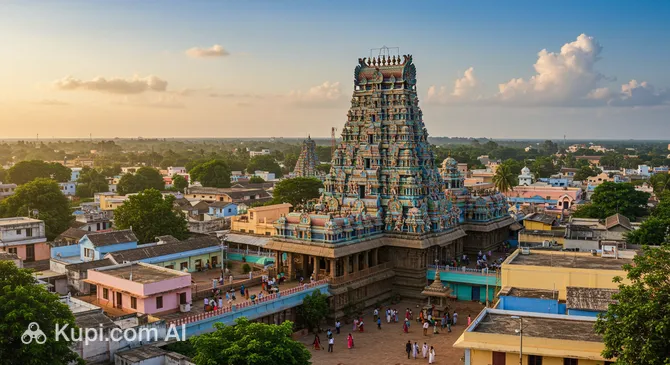
Swamimalai. Illustration.
Source: Kupi.com AI

Swamimalai is known as an important spiritual center, attracting pilgrims and seekers of silence with its meditative atmosphere. Here, you can wander through temple courtyards, get acquainted with authentic traditions, and discover new facets of Eastern culture. If you are looking for a deep spiritual experience and want to see the genuine beauty of the southern states, this hospitable town is definitely worth including in your itinerary.

Weather Overview

The climate of Swamimalai can be characterized as hot and tropical, with high temperatures throughout the year. Even in the "coolest" months, such as January and December, the average air temperature stays at a comfortable 25-26°C, and the night chill rarely drops below 21°C. This makes the beginning of the year one of the most pleasant periods for visiting temples and long walks.

With the arrival of spring, the heat intensifies. The hottest months are May and June, when the average temperature reaches 32°C, and during the day the air often warms up to 36-37°C. During this period, the sun is especially active, so travelers are recommended to plan excursions for the morning or evening hours. Summer here smoothly transitions into the rainy season, which reaches its peak in autumn.

October and November are the wettest time of year: the number of rainy days in November can reach 24 days per month. During this period, the town is lush with greenery, but frequent downpours require an umbrella and a flexible travel schedule. To choose the ideal dates for your visit and avoid missing the season, you will find the detailed weather in Swamimalai useful. In general, expect a hot summer with a gradual increase in humidity and heavy rainfall at the end of the year, followed by a dry and warm winter.

Average monthly temperature

Average monthly precipitation

Interesting Facts

In addition to its main attractions, Swamimalai holds many fascinating secrets and legends that give this place a special mystical aura. Here are a few facts that will help you look at the town from a new perspective:

  • The Son as the Father's Teacher. Swamimalai is one of the few places in Hindu mythology where a son acts as a mentor to his father. According to legend, it was here that the young god Murugan revealed the secret meaning of the sacred syllable "OM" to the great Shiva. The name of the town itself translates to "God's Hill" ("Swami" — God/Teacher, "Malai" — hill), immortalizing this legendary moment of wisdom transmission.

  • A Hill from Demon Ashes. The elevation on which the famous temple stands is considered only partially man-made. Local legends say that the hill was formed from the ashes of the demon Tarakasura after he was defeated in an epic battle. It is believed that climbing the temple steps helps cleanse karma and brings good luck in business.

  • The Ancient Art of Casting. The town is a recognized center for making bronze statues in the traditional Chola style. Local artisans, "sthapathis," have passed down their knowledge through generations for centuries, using unique lost-wax casting techniques. Their works are considered the standard of sacred art and decorate temples and museums across the globe.

How to Get There

When planning a trip to this spiritual center of Tamil Nadu, it is worth thinking through the logistics in advance, as there are no direct flights to the town itself. Usually, tourists fly to the state's major transport hubs and cover the rest of the way by land. You can find out more about how to get to Swamimalai to plan the most convenient route considering your budget and time.

There is no airport in Swamimalai itself, but you can fly to Tiruchirappalli International Airport (IATA: TRZ) in the city of Tiruchirappalli, which is about 71 km from Swamimalai. This is the nearest air gateway, serving both domestic and some international flights. The journey from here by taxi or bus takes about 2 hours. You can find a link to detailed information about this hub in the table below.

For those flying from afar, a convenient option is Chennai Airport (IATA: MAA), located in the city of Chennai. It is one of India's largest aviation hubs with a huge passenger flow. Despite the fact that it is located about 242 km from Swamimalai (about 6–7 hours by car), it is chosen due to the wide geography of flights and their frequency.

For clarity, here is a summary of information on the main airports:

AirportPassenger trafficDistance
Tiruchirapalli International Airport1.8 mln71 km
Pondicherry Airport85 000123 km
Kankesanturai40 000152 km
Salem130 132166 km
Madurai Airport1.4 mln184 km

In addition to air travel, railway transport plays an important role. Although there is no major station in Swamimalai itself, the town is effectively a suburb of Kumbakonam, which serves as an important railway hub for the region. Travelers often take a train to the station in Kumbakonam, from where Swamimalai can be reached by auto-rickshaw or taxi in just 15–20 minutes. A developed network of bus routes also connects the town with neighboring regions of Tamil Nadu.

Main Attractions

Swamimalai is not just a point on the map, but a place with deep religious roots and a unique cultural heritage. The city's main attractions are closely linked to spirituality and ancient crafts that have made this region famous throughout the country. Here are a few places that are definitely worth visiting to feel the atmosphere of this amazing corner of the world.

Swaminathaswamy Temple is the heart of the city and one of the six sacred abodes of the god Murugan (Arupadaiveedu). The uniqueness of the temple lies in the fact that it is located on an artificial hill. To worship the deity, pilgrims must climb 60 steps, each symbolizing one year of the 60-year cycle of the Tamil calendar. This place is steeped in legends: it is believed that it was here that the young Murugan passed on sacred knowledge to his father, the god Shiva. The majestic architecture and powerful spiritual energy make this complex a must-visit.

Equally interesting are the Bronze Casting Workshops, which have earned Swamimalai worldwide fame. The city is a recognized center for the production of traditional bronze statues in the Chola dynasty style. Local master craftsmen, called "sthapathis," have kept the secrets of this unique casting technology for centuries. Visiting such a workshop is a rare chance to see with your own eyes how elegant deities, which decorate museums and temples all over the world, are born from metal. This is living history that you can literally touch.

Very close to the city is the Thiruvalanchuzhi Vinayagar Temple, dedicated to the god Ganesha. This ancient temple is famous for its unusual statue of the deity, which, according to legend, was created from sea foam and is white in color (Sweta Vinayaka). The complex also captures the imagination with its architecture, especially the exquisite stone carvings and delicate latticed windows. This quiet and peaceful place perfectly complements a visit to the lively Swamimalai.

Local Cuisine

Swamimalai's cuisine is a vivid reflection of the culinary traditions of Tamil Nadu, where the simplicity of ingredients is combined with a richness of flavors and aromas. The basis of the diet here consists of vegetarian dishes, generously seasoned with spices. Travelers should definitely start the day with a traditional breakfast: try idli — fluffy steamed rice cakes served with spicy chutney and a savory vegetable stew called sambar. Another gastronomic symbol of the region is the dosa — a thin, crispy pancake made from fermented batter, often stuffed with spicy potatoes.

For those with a sweet tooth, the local cuisine has prepared special treats. A source of local pride is payasam — a delicate rice pudding with added nuts, raisins, and cardamom. Also popular are laddu balls, made from chickpea flour and ghee. On the streets of the town, you can often find stalls selling fresh deep-fried samosas and a variety of vegetable snacks that are ideal for a quick bite while walking between attractions.

As for drinks, the best remedy for the tropical heat here is considered to be freshly squeezed sugar cane juice. It is prepared right in front of customers at street stalls and is very refreshing. Food culture in Swamimalai is closely intertwined with religious life: during festivals, prasad — blessed free treats — are often distributed on the streets. Visiting local farmers' markets is also an interesting experience: they are always lively, smelling of curry and coconut, and you can buy the freshest fruits and spices.

Travel Tips

Traveling to Swamimalai is an immersion into the atmosphere of ancient traditions and the tranquility characteristic of the Tamil Nadu hinterland. To ensure your visit to this sacred town goes smoothly and leaves only pleasant impressions, we have prepared a list of practical recommendations to help you easily navigate the local realities.

  1. Clothing and Dress Code. Since Swamimalai is an important religious center, a conservative style of dress is expected here. To visit temples, be sure to choose outfits that cover shoulders and knees (for both men and women). Due to the hot tropical climate, loose clothing made of natural cotton is best. An important detail: wear shoes that are easy to take off (for example, sandals or flip-flops), as it is mandatory to remove your footwear at the entrance to any temple or even some shops.

  2. Transport and Moving Around. The town is small, and its center can easily be explored on foot. For short distances or trips to neighboring Kumbakonam, it is most convenient to use auto-rickshaws. Taxi apps may not work here or may be unstable, so you will have to flag down transport on the street. Always agree on the price of the trip before getting in, as meters are rarely used.

  3. Finances and Cash. A "cash culture" prevails in Swamimalai. Bank cards are accepted only in large hotels or souvenir shops at workshops, but in small shops, cafes, and for temple donations, you will need rupees. There are few ATMs in the town itself, and they may be empty, so it is strongly recommended to withdraw the necessary amount in advance in a major city or at the airport.

  4. Health and Hygiene. Strictly avoid drinking tap water; buy only sealed bottled water from well-known brands. Given the humid climate and the presence of rice fields around, there may be mosquitoes, so be sure to bring repellent. There are pharmacies in town, but the assortment may be limited to local generics, so it is better to bring specific medications with you.

  5. Language Barrier. The main language of communication is Tamil. English is understood by hotel staff and souvenir vendors, but ordinary people on the street may not speak it. Learn a few words, for example, "Vannakkam" (Hello) and "Nandri" (Thank you) — this will bring a genuine smile and the goodwill of the locals.

  6. The Right-Hand Rule. In India, the left hand is considered "unclean." When passing money, eating (if you eat with your hands like the locals), or giving gifts, always use only the right hand. This is an important rule of etiquette, the violation of which may be perceived as disrespect.

  7. What to Avoid. Refrain from public displays of affection (hugging and kissing) on the streets — this is not accepted in conservative society. It is also strictly forbidden to photograph deities inside the sanctuary (garbhagriha) of a temple; usually, there are signs, but it is better to double-check with the staff.

  8. Shopping Tip. If you plan to purchase a famous bronze figurine, do so directly in the artisans' workshops rather than in reseller shops. This way, you will not only get a quality guarantee and the best price but also be able to see the process of creating the masterpiece. Bargaining is appropriate, but do it with a smile and respect for the craftsman's work.

By following these simple rules, you can feel confident and safe, enjoying the unique flavor of Swamimalai. The locals are very hospitable to those who respect their culture, so openness and friendliness will be your best companions on this journey.

Entertainment & Nightlife

Entertainment and nightlife in Swamimalai have their own unique, slow-paced rhythm, which is radically different from noisy metropolises or beach resorts. Since it is a sacred temple town, you won't find the usual nightclubs, discos, or 24-hour bars with loud music here. Evening leisure here is permeated with spirituality, tranquility, and immersion in local culture. City life winds down quite early, usually by 9:00 PM – 10:00 PM, so you should plan your activities with this schedule in mind.

The center of attraction in the evening is invariably the area around the Swaminathaswamy Temple and the adjacent Sannidhi Street. As the sun sets, the temple is transformed: thousands of oil lamps are lit, traditional music (nadaswaram and thavil) is heard, and the evening puja (worship service) begins. This is a fascinating sight, accessible to every tourist. The atmosphere here is solemn and mystical, and the crowd consists mainly of pilgrims and families. The dress code is strict: modest clothing, no shoes; one should behave quietly and respectfully.

For tourists wishing to spend an evening in a more secular setting, heritage hotel restaurants are the best choice. These are the only places in town where you can enjoy a long dinner in exquisite interiors.

Here are a few establishments worth checking out:

  • Indeco Hotels Swamimalai — this is not just a hotel, but a real open-air museum located in a restored old estate. Their restaurant offers an exclusively vegetarian menu with traditional Tamil dishes. An 19th-century atmosphere reigns here, ideal for a quiet romantic evening or a family dinner to the sounds of live classical music.

  • Sterling Swamimalai — another place where you can spend a comfortable evening. The hotel's restaurant offers a more varied menu and a high level of service. It is a safe and cozy oasis for travelers to relax after a busy day.

If you are looking for bars or want to order alcoholic drinks, it is important to know: in Swamimalai itself, as a sacred city, the sale and consumption of alcohol in public places are restricted. For a classic bar experience, you will have to go to the neighboring city of Kumbakonam, located just 5–6 km away (about 15–20 minutes by taxi). There, in large hotels like Quality Inn Viha or Hotel Rayas, there are bars offering cocktails and beer in a setting familiar to Europeans.

Safety and Transport: Swamimalai is a very safe place. Evening walks along the lit streets around the temple do not pose a threat; however, you should be careful in dark alleys due to uneven road surfaces. Public transport stops running early, so if you are staying late at a restaurant or heading to Kumbakonam, arrange an auto-rickshaw in advance or order a taxi through your hotel's reception. The average price for a rickshaw ride to the neighboring city in the evening can range from 150 to 250 rupees.

As for daytime entertainment, it is mostly educational in nature. The town is famous for its craft traditions, so during the day, it is worth visiting the bronze casting workshops where masterpieces for temples all over the world are created. You can also take a stroll to the banks of the Kaveri River to observe rural life or take a trip to neighboring Darasuram to see the magnificent Airavatesvara Temple, a UNESCO World Heritage site.

Parks & Museums

Swamimalai is a unique place where the boundaries between everyday life, nature, and art are practically erased. Here, you won't find huge state museums behind glass displays or large-scale European-style landscape parks. Instead, the town offers travelers a concept of "living heritage": craft workshops serve as museums, and the picturesque banks of sacred rivers and green agricultural lands serve as parks.

The main natural attraction of the town is the banks of the Kaveri River and its tributaries. This is not just a waterway, but a center of social life and a place of power. A walk along the river at sunrise or sunset will give you a sense of deep peace. Here you can observe traditional bathing rituals, see lush tropical vegetation, and enjoy the coolness emanating from the water. For nature lovers, walks through the surrounding rice fields and coconut groves, which surround the town in a dense green ring, creating picturesque landscapes for photographs, will also be of interest.

The cultural heart of the town beats in the numerous bronze casting workshops, which are effectively active open-air museums. Swamimalai is world-famous for its masters (sthapathis) who preserve the techniques of the Chola dynasty. Tourists are free to visit these studios to see the entire process of creating sacred sculptures: from preparing wax models to breaking clay molds and polishing the metal. This is a unique chance to touch a living art form that is exported to the best galleries in the world.

Another important cultural site is the grounds of the Indeco Hotels Swamimalai complex. This is the only museum-hotel of its kind in the town, located in a restored 19th-century mansion. The owners have preserved the historical architecture and collected an impressive collection of antiques, household items, musical instruments, and traditional Thanjavur paintings. Even if you are not staying at the hotel, its territory is interesting as an ethnographic museum immersing you in the atmosphere of old Tamil Nadu.

For those looking for hidden gems, we recommend paying attention to the small home shrines and private galleries in the artisans' houses. Often, it is here, away from tour groups, that you can see rare unfinished works and hear legends about the origin of divine images firsthand. Such a walk through the narrow streets of Swamimalai will be the best way to understand the soul of this craft town in India.

Getting Around

The transport system of Swamimalai is quite simple and traditional, perfectly matching its status as a small temple town. You won't find a metro, trams, or complex transfer schemes here. The town is so compact that many distances are easily covered on foot, and for trips to neighboring towns or distant attractions, locals and tourists use buses and the ubiquitous auto-rickshaws.

The main type of public transport connecting Swamimalai with the outside world is state and private buses. Since the town is effectively a suburb of the larger Kumbakonam, bus connections between them are excellent. Town buses run at intervals of 10–15 minutes from early morning until late evening. Stops usually do not have clear markings in English, so look for groups of people or ask locals — they will always tell you where to wait for the desired route.

The fare payment system in buses is as simple and conservative as possible: transport cards, validators, or mobile apps are not used here. Tickets are purchased directly on the bus from the conductor for cash. The fare is very affordable and costs only a few rupees. It is extremely important to have small bills and coins with you, as the conductor may not have change for large banknotes. Keep your ticket until the end of the trip, although inspector checks on such short routes are rare.

The most popular and convenient transport for tourists within the city remains the auto-rickshaw (tuk-tuk). These nimble three-wheeled carriages can navigate the narrowest streets where a bus cannot reach. They can be caught on almost any corner or found at special stands near the Swaminathaswamy Temple. It is important to remember that meters are practically not used here. The price of the trip must be agreed upon with the driver in advance, before you get into the cab. Bargaining is not just appropriate, it is expected: feel free to name a price lower than what was offered, but remain polite.

Ride-hailing apps or car-sharing services familiar to metropolises may not be available in Swamimalai itself, or the wait time for a car may be unreasonably long. If you need a comfortable air-conditioned car for a trip to the airport or a tour of the surroundings, it is best to order a taxi through your hotel's reception or arrange it with a local travel agency. Renting a car without a driver in such an area is not recommended due to chaotic traffic and specific driving rules; it is much safer and calmer to hire a car with a professional driver.

For independent exploration of the town, many pilgrims and tourists choose walking. The center of Swamimalai around the main temple is closed to through traffic of heavy vehicles, making walks relatively comfortable. However, sidewalks are not available everywhere, so be careful when moving along road shoulders. Also, in some guesthouses, you can ask about bicycle rentals — this is an excellent and eco-friendly way to see the green surroundings and ride along picturesque rice fields at your own pace.

Accommodation

Где остановиться:

Accommodation options in Swamimalai, despite its modest size, are divided into two categories satisfying completely different traveler needs. Here you will find either simple and budget-friendly guest houses (lodges) catering to pilgrims, or unique resort hotels offering immersion into the history and culture of the region. There are no large Western-style chain hotels in the town itself, which helps preserve its authentic atmosphere.

When choosing an area to stay, you should base it on the purpose of your visit. If you have come for spiritual practices and want to attend morning worship services, it is best to stay in the immediate vicinity of the Swaminathaswamy Temple. Here, in the surrounding streets, many inexpensive guesthouses are located. If your goal is a relaxed holiday and getting to know the local flavor in comfortable conditions, choose hotels on the outskirts of the town, nestled in lush gardens and palm groves.

Among the specific options, places that have become attractions in their own right deserve special attention. For example, Indeco Hotels Swamimalai is not just a hotel, but a restored 19th-century Tamil village where you can live in genuine historical interiors. Another popular option is Sterling Swamimalai, offering modern comfort combined with traditional architecture. These complexes are often chosen by tourists who want to combine excursions with quality relaxation.

Booking Tip: Swamimalai is a popular pilgrimage site, so during major Hindu festivals such as Skanda Shashti or Thaipusam, it is virtually impossible to find a free room. If your trip falls on holiday dates, you must book accommodation several months in advance. In ordinary times, there are usually no problems finding a room.

The price range in the town is very wide. A night in a simple guest house near the temple may cost 800–1500 rupees per night, while staying in historical resort hotels will cost 4000 rupees and up. Budget lodges often require booking by phone or paying in cash on the spot, while resort hotels can easily be booked through popular international online platforms.

Nearby Cities

For those who want to explore the surroundings, Swamimalai serves as an excellent base for day trips to several interesting nearby locations. Its location in the heart of the Kaveri River delta allows tourists to quickly reach significant cultural and religious centers of Tamil Nadu.

Just a few minutes' drive away is the famous Kumbakonam — the "city of temples," which is often called the cultural capital of the region. It is the perfect place for those who want to see the grandeur of Dravidian architecture: hundreds of shrines are located here, including the grand Sarangapani Temple and the sacred Mahamaham tank. In addition to spiritual treasures, the city is famous for its silk and brassware, making it a great place for shopping.

Another interesting destination is Papanasam. The name of the town translates to "Destruction of Sins," and pilgrims flock here to visit the Papanasanathar Temple and see the 108 Shiva lingams. This is a quiet and picturesque place on the riverbank, where you can escape the hustle and bustle and enjoy the rural landscapes of South India. Also worth mentioning is Thirunageswaram, known for its unique temple dedicated to the shadow planet Rahu, which attracts thousands of believers with its mystical rituals.

CityPopulationDistance
Pattiswaram9 1134 km
Kumbakonam140 1566 km
Papanasam21 6536 km
Ullur10 2708 km
Valangiman14 89010 km

These nearby destinations provide an insight into the region's diverse culture and landscapes, making your journey more fulfilling and memorable.

Shopping & Souvenirs

Shopping in Swamimalai is a unique experience that is radically different from the usual shopping trips in major tourist centers. Here you won't find fashion boutiques or glossy window displays. Trade in this town is inextricably linked to its religious status and centuries-old craft traditions. The main goal for shoppers here is not clothing or electronics, but works of art and spiritual attributes. Swamimalai rightfully prides itself on its status as a world center for the production of bronze products, and it is for these that collectors and connoisseurs of beauty come from all over India and from abroad.

The main commercial life is concentrated around the town's main shrine — the Swaminathaswamy Temple. Sannidhi Street and its adjacent alleys represent one large open-air shopping zone. Here, amidst the noise and scents of incense, are dozens of small shops selling everything necessary for pilgrims. Walking through this area, you can not only make purchases but also observe city life: vendors lay out bright flower garlands, and craftsmen often put the finishing touches on their products right at the shop entrance.

If you are used to air-conditioned galleries and food courts, you should know: there are no shopping malls in Swamimalai. It is a traditional town with a patriarchal way of life. For modern shopping, branded clothing, or electronics, tourists are recommended to head to neighboring Kumbakonam (only 5–6 km away), where there are larger shops and small shopping complexes. In Swamimalai, the atmosphere of antiquity and manual labor reigns supreme.

The town's markets are informal in nature and mainly oriented towards local residents. The morning market is a place where you can buy the freshest tropical fruits, vegetables, coconuts, and flowers for offerings. For a tourist, this is a great opportunity to purchase spices at very low prices or try local seasonal fruits. Of particular interest are the shops with puja kits (attributes for worship): they sell camphor, sandalwood paste, kumkum (red powder), and oils, which can make authentic and inexpensive gifts.

The main souvenir worth visiting Swamimalai for is, undoubtedly, bronze statues. The town holds a Geographical Indication (GI tag) for its bronze products made using the "lost wax" method. Here is what to look for:

  • Deity Sculptures. Exquisite statues of Ganesha, Shiva Nataraja, or the goddess Lakshmi, made by local masters (sthapathis), are considered the standard of quality. They can be either miniature (for a home altar) or huge.

  • Kuthu Vilakku. Traditional tall oil lamps made of brass or bronze, which will make an elegant interior decoration.

  • Thanjavur Dolls. Bright and amusing bobblehead dolls that are often sold in the region's souvenir shops.

When planning your shopping, consider the local working hours. Most private shops open around 9:00 AM – 10:00 AM and work until late evening (until 9:00 PM); however, in the afternoon, from 1:00 PM to 4:00 PM, many close for a long break (siesta) to escape the heat. Bronze casting workshops usually operate throughout the daylight hours.

As for payment, cash still rules in Swamimalai. Credit cards (Visa, Mastercard) are accepted only in large government emporiums (craft shops) or at expensive hotels. In small shops and at the market, you can only pay in rupees. Also, be prepared to bargain: fixed prices are rare here, and polite bargaining is part of the communication culture.

The Tax Free (VAT refund) system does not operate in the small shops of Swamimalai. However, if you buy an expensive bronze statue in a certified government shop or a large workshop, be sure to ask for an official receipt and certificate of origin. This will not only confirm the authenticity of the item but may also be needed when going through customs control when leaving the country to prove that you are taking out a souvenir and not an ancient antique.
Nearby cities

Have you reached the end of the page?

So the route has been studied inside and out