Support

Holi Gate

About

Holi Gate is one of the iconic landmarks of the city of Vrindavan in India, closely associated with the bright and colorful Holi festival. This gate is not just an architectural structure, but a symbolic place that marks the beginning of the festivities dedicated to the victory of good over evil. Vrindavan, being a sacred city with many temples, gives special significance to this location, which becomes the epicenter of joy during the festival.
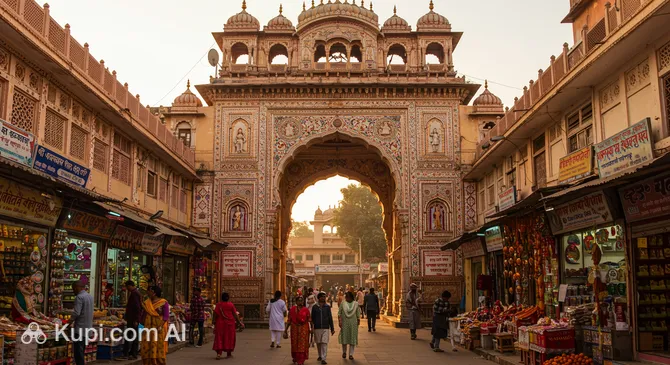
Holi Gate. Illustration.
Source: Kupi.com AI

Traveler photos:

During the Holi celebrations, Holi Gate and the surrounding areas come to life. It is here and around this spot that traditional activities unfold: people enthusiastically throw colored powders at each other and splash colored water. This tradition symbolizes the blurring of social differences, renewal, and the arrival of spring, creating a unique atmosphere of universal fun and spiritual unity.

For Vrindavan, Holi Gate is an important cultural and religious symbol. It attracts not only local residents but also numerous tourists and pilgrims from all over the world, eager to experience the ancient traditions of India and become part of this amazing celebration. Visiting this place during Holi leaves unforgettable impressions and allows for a deeper understanding of the region's culture.

Contacts

Holi Gate does not have its own official website or direct contact details such as a phone number or email address. To find out details about the Holi celebrations at this iconic location in Vrindavan or to get information about guided tours, it is recommended to contact local travel agencies or official Uttar Pradesh state tourism centers.

How to contactContact
Addresscity congress, Tilak Dwar, Mathura, Uttar Pradesh 281001, India

What to Do

Visiting Holi Gate in Vrindavan provides a unique opportunity to immerse yourself in the heart of one of India's most vibrant and dynamic festivals — Holi. Tourists can directly participate in traditional games with colorful powders and dyes, which guarantees a kaleidoscope of emotions and unforgettable photos. During the festival, the streets around the gate are filled with energetic music, dancing, and joyful cries of "Holi Hai!", creating a unique atmosphere of general merriment and unity.

Beyond the Holi celebration itself, the area around Holi Gate offers many interesting activities. You can take a walk through the nearby streets, where picturesque temples and sacred sites are located, each with its own history and atmosphere. This is a wonderful opportunity to get to know the local culture more deeply, try authentic Indian dishes in small cafes, and observe the daily life and religious rituals of local residents. Additionally, Vrindavan is famous for its pilgrimage routes, many of which pass in close proximity to the gate, making it a significant spot for spiritual seekers.

Getting There

To reach Holi Gate, you first need to travel to Vrindavan itself. This sacred city is located in the state of Uttar Pradesh in India and is accessible from major regional hubs like Delhi and Agra. The most popular starting point is Delhi, from where regular buses and trains run to Vrindavan. You can also use taxi services or book a private transfer. The journey from Delhi usually takes about 3-4 hours, depending on the chosen mode of transport and traffic conditions.

Once in Vrindavan, finding Holi Gate is quite easy. The city itself is small, and many attractions, including the famous gate, are easily reachable on foot while enjoying the atmosphere of the ancient streets. If you prefer a faster way to get around or have a lot of luggage, local rickshaws or taxis are always at your service. Keep in mind that streets in the central part of Vrindavan can be quite narrow and busy, especially during festival days, which only adds local color to your journey to this iconic landmark.

Nearest city: Vrindavan

History & Facts

Holi Gate is inextricably linked to the ancient festival of Holi, which has its roots in deep antiquity and symbolizes the triumph of good over evil. According to tradition, the celebration of Holi originated from the games of Lord Krishna, who, as legends say, loved to shower the gopis (cowherd girls) with colored powders. The city of Vrindavan, where this famous gate is located, is considered one of the most sacred places, sanctified by the life and deeds of Krishna, giving the festival here a special depth and significance.

Historically, Vrindavan was an important center of religious pilgrimage, and over time, the Holi celebrations here took on a truly grand scale and exceptional importance. Holi Gate began to play the role of a symbolic entrance to this amazing festive space, where thousands of people gather to share the joy and riot of colors. It marks a boundary beyond which a world of fun, music, and universal unity begins.

Notably, the Holi festival and its unique traditions have not only been preserved in Vrindavan for many centuries but have also continued to evolve, enriched with new colors and meanings. Thanks to this, Vrindavan remains one of the main and most attractive centers for Holi celebrations in all of India, drawing pilgrims and tourists from around the world who wish to touch this living history.

Time Needed

When planning a trip to Holi Gate in the city of Vrindavan, India, it is worth thinking ahead about how much time you are willing to spend at this iconic site. If you just want to see the gate itself, take some commemorative photos, and walk around the area a bit, 1-2 hours will likely be enough. This time is sufficient for an initial introduction to the landmark and its atmosphere.

However, if your trip coincides with the Holi festival, or if you seek to deeply experience the unique spirit of Vrindavan and the culture of India, you should plan for significantly more time—from several hours to a whole day. Participating in vibrant festive processions, enjoying the music, traditional color games, and simply observing the bustling life around Holi Gate will require a longer visit. To fully feel the festive atmosphere and get to know the local traditions, it is best to set aside a whole day, as even a simple walk during this time can take longer but will undoubtedly provide unforgettable memories.

Working Hours

Holi Gate in Vrindavan, India, is an open-access landmark and a symbolic entrance to the festive zone, so it does not have strict fixed operating hours. Generally, the gate itself is accessible for viewing 24/7. However, it is important to understand that the main festivities, public celebrations, and the most active atmosphere around Holi Gate are observed during the daytime, especially during the famous Holi festival period.

Since this is a public architectural structure, no special ticket booking or prior registration is required to simply see Holi Gate. Access is open year-round. Nevertheless, if your trip coincides with the Holi celebrations or you wish to attend specific cultural events associated with the gate, it is highly recommended to check the schedule and possible conditions in advance on the official Vrindavan tourism portals, at local information centers, or with event organizers. This will help you get the most up-to-date information and plan your visit in the best possible way.

Open 24 hours

Nearby

Visiting Holi Gate in Vrindavan will undoubtedly be a highlight of your journey through India. However, to make your experience even more enriching and complete, we recommend exploring the nearby attractions. Vrindavan is a city with a rich history and a spiritual atmosphere, and discovering its surroundings will allow you to dive deeper into the local culture and see more interesting sites.

Exploring nearby temples, sacred sites, or even just strolling through the colorful streets can lead to unexpected discoveries and complement your impressions of Holi Gate. Below is a list of some attractions located nearby, along with the distance to them.

NameDistance
Government Museum, Mathura0.7 km
Agrawal Family Dhaba & Restaurant1.1 km
Bhuteshwar Mahadev Temple1.7 km
Potra Kund1.8 km
Mathura Restaurant2.8 km
Chaurasi Digambar Jain Temple3.1 km
Birla Mandir3.4 km

Have you reached the end of the page?

So the route has been studied inside and out