Support

Vrindavan

About

Vrindavan is not just a city, but one of the most revered and sacred places in India, permeated with an atmosphere of deep spirituality and devotion. Located in the state of Uttar Pradesh on the banks of the sacred Yamuna River, Vrindavan is considered the place where Lord Krishna spent his childhood and youth, filling this land with divine pastimes and miracles. The city literally breathes ancient legends, and its narrow streets, numerous temples, and ashrams create a unique sense of immersion into the world of Hindu culture.
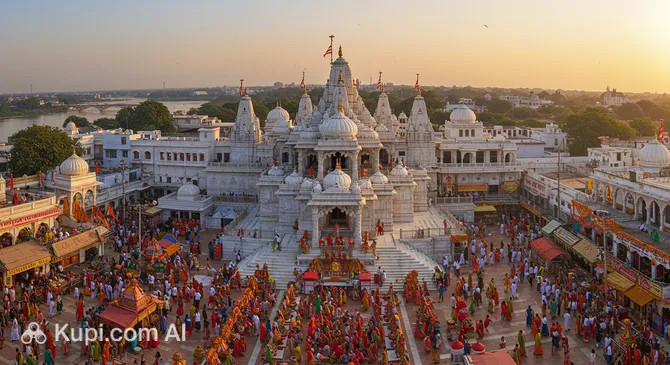
Vrindavan. Illustration.
Source: Kupi.com AI

Vrindavan attracts pilgrims and tourists from all over the world with its unique shrines. Notable among them are the Banke Bihari Temple, where the image of Krishna known for his mysterious smile is worshiped; the majestic ISKCON Temple (Sri Sri Krishna Balaram Mandir), which serves as an international center for the study of Vedic culture; and the relatively new but already famous for its beauty Prem Mandir, which impresses with the elegance of its marble carvings and evening light shows. Furthermore, an integral part of Vrindavan are its many ghats—steps leading down to the Yamuna River, where believers perform ritual ablutions.

A trip to Vrindavan is an opportunity to touch a living spiritual tradition, experience peace, and gain unforgettable impressions. This city, where every stone seems to tell a story, undoubtedly deserves your attention if you are interested in culture, religion, or are simply looking for a place for deep reflection and inner renewal.

You can find more interesting facts on the history of the city of Vrindavan page.
Weather Overview

When planning a trip to Vrindavan, it is worth considering its climatic features with pronounced seasons. Expect hot summers, transitioning into a monsoon season with heavy rains, and a cool, dry winter. The hottest period lasts from April to June: the average temperature during this time is between 29°C and 33.5°C, and the maximum can rise to 38-39°C. From July to September, the monsoon season arrives, bringing the bulk of the annual precipitation—July and August are particularly rainy (with more than 20 days of precipitation in each). Winter, from December to February, is usually mild and dry, with average temperatures around 13°C - 18°C, making this period quite comfortable for travel. For more detailed planning, study the information about the climate of Vrindavan.

Average monthly temperature

Average monthly precipitation

Interesting Facts

Vrindavan is not only a hub of famous pilgrimage routes but also a real treasure chest full of amazing legends and curious details. Behind the facades of majestic temples and sacred ghats lie stories that give this holy city even more of an almost mystical charm, making it irresistibly attractive to explorers of spirit and culture.

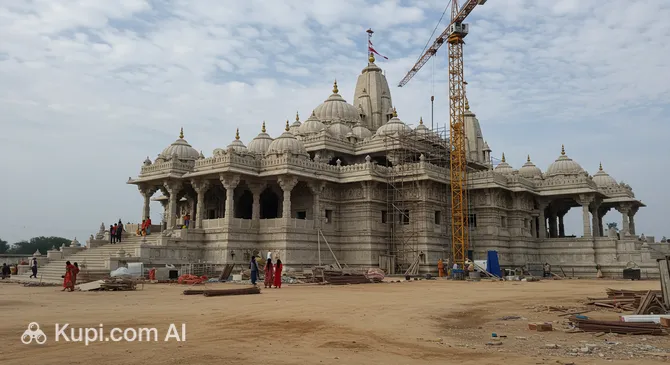
Vrindavan Chandrodaya Mandir. Illustration.
Source: Kupi.com AI

Traveler photos:

  • Mystery of the Sacred Groves: According to ancient legends, in places like Nidhivan and Seva Kunj, Lord Krishna and his beloved Radha perform their divine dances—Rasa Lila—every night. At sunset, access to these groves is strictly forbidden, as it is believed that anyone who tries to glimpse this sacred act risks facing inexplicable consequences.

  • City of a Thousand Shrines: Although the exact number is difficult to name, Vrindavan is often called the city of over five thousand temples. Each one, from tiny ancient shrines to grand modern complexes, is dedicated to Krishna and Radha and possesses its own unique atmosphere and history.

  • Culinary Traditions of Purity: In accordance with Vaishnava canons, in many temples and ashrams of Vrindavan, food offered to the deities and pilgrims (prasad) is prepared without the use of onions and garlic. These ingredients are considered "tamasic" (carrying lower energies) and not conducive to spiritual practice, so they are replaced by other aromatic spices.

  • Reaching for the Heavens: Vrindavan is the site of one of the most ambitious religious projects of modern times—the Vrindavan Chandrodaya Mandir. Upon completion, this temple is set to be one of the tallest religious buildings in the world, with its spire reaching a height of 213 meters.

  • Forest of Living Prayers: There is a beautiful belief that every Tulsi (sacred basil) tree or bush growing on the land of Vrindavan is actually a gopi—a devoted cowherd girl of Krishna who has taken the form of a plant to serve him eternally and purify the space with her holiness. Therefore, Tulsi is treated here with special reverence.

How to Get There

Reaching the sacred city of Vrindavan can be done in various ways, but most often travelers combine a flight or a train journey with a subsequent transfer by taxi or bus. Since there is no airport in the city itself, the capital serves as the main hub for foreign tourists. You can learn more about how to get to Vrindavan on the dedicated page of our guide.

The nearest airport to the city is Kheria Airport (IATA: AGR), located in Agra, about 54 km from Vrindavan. A taxi ride from there takes about an hour and a half. However, this airport handles a limited number of domestic flights.

For most international travelers, Indira Gandhi International Airport (IATA: DEL) in Delhi remains the most convenient option. It is the region's largest aviation hub with a massive passenger flow, receiving flights from all over the world. It is located approximately 124 km from Vrindavan. The journey from Delhi airport by taxi or bus usually takes about 3–3.5 hours, depending on traffic.

For clarity, here is a summary of the main airports:

AirportPassenger trafficDistance
Kheria168 36254 km
Indira Gandhi International Airport77.8 mln124 km
Ghaziabad (Hindon)1.8 mln130 km
Gwalior Airport334 729152 km
Bareilly121 746200 km

Rail travel is another extremely popular and budget-friendly way to reach the holy sites. While Vrindavan has its own small railway station, it only serves a small portion of local trains. The main gateway for travelers is the major junction station Mathura Junction, located in the neighboring city of Mathura, just 10–15 km from the center of Vrindavan. High-speed trains from Delhi, Mumbai, Chennai, and other Indian metropolises arrive here. From Mathura station, you can easily and affordably reach Vrindavan by auto-rickshaw or taxi in 20–30 minutes.

It is also worth noting the excellent road connections. Vrindavan is conveniently located near the modern Yamuna Expressway, which connects Delhi and Agra. This makes a car or bus trip from the capital fast and comfortable.

Main Attractions

Vrindavan, the legendary city of Lord Krishna's pastimes, beckons travelers from around the world with its numerous temples and shrines. Each is not merely an architectural structure but a place filled with deep spiritual meaning and ancient stories. Let's explore some of the key attractions of this amazing city.

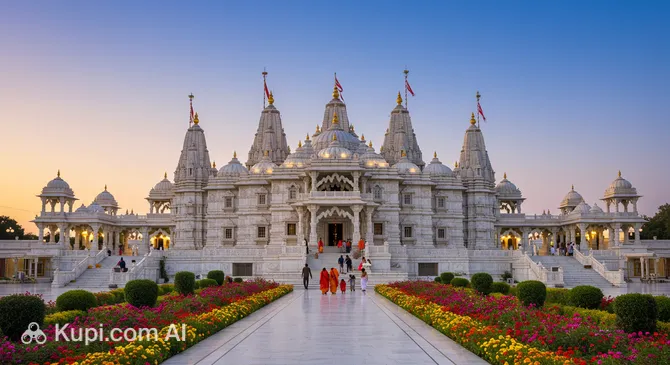
One of the most impressive modern buildings in Vrindavan is Prem Mandir, which means "Temple of Divine Love." This magnificent complex, constructed of pure white Italian marble, delights with its exquisite architecture and intricate carvings illustrating episodes from the lives of Radha and Krishna. The temple looks especially enchanting in the evening when the multi-colored lighting is turned on, creating a truly fairytale atmosphere. Prem Mandir is not only an architectural masterpiece but also a place dedicated to pure love and devotion, attracting both pilgrims and connoisseurs of beauty.

Prem Mandir. Illustration.
Source: Kupi.com AI

Traveler photos:

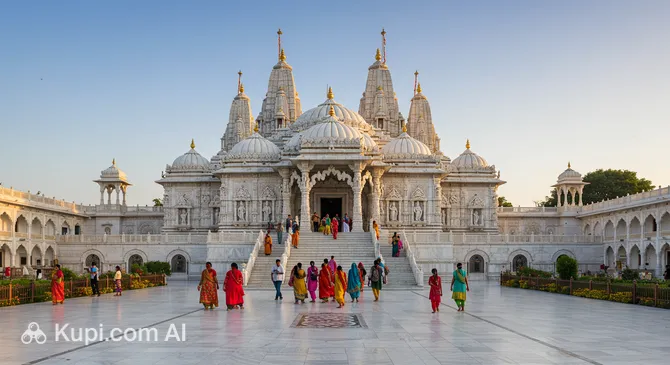
The famous Sri Sri Krishna Balaram Mandir, widely known as the ISKCON temple, is one of the most important spiritual centers of the International Society for Krishna Consciousness. Founded according to the instructions of Srila Prabhupada, the founder of ISKCON, this temple receives thousands of followers and guests every day. Here, you can not only see the beautiful deities of Krishna and Balarama but also immerse yourself in the atmosphere of kirtans (congregational chanting of holy names), listen to lectures on Vedic philosophy, and feel the living energy of devotional service. This place is ideal for those seeking a deeper understanding of Gaudiya Vaishnavism.

Sri Sri Krishna Balaram Mandir. Illustration.
Source: Kupi.com AI

Traveler photos:

Currently, an ambitious project is being realized in Vrindavan—the construction of the Vrindavan Chandrodaya Mandir. According to its creators, it will be one of the tallest temples in the world, symbolizing the rising of the moon over Vrindavan and the greatness of Krishna's teachings. In addition to its impressive height, the future complex will include theme parks, exhibition halls, and an extensive cultural center. Even during the construction phase, this project generates enormous interest, promising to become a new iconic landmark demonstrating the harmony between ancient traditions and modern technology.

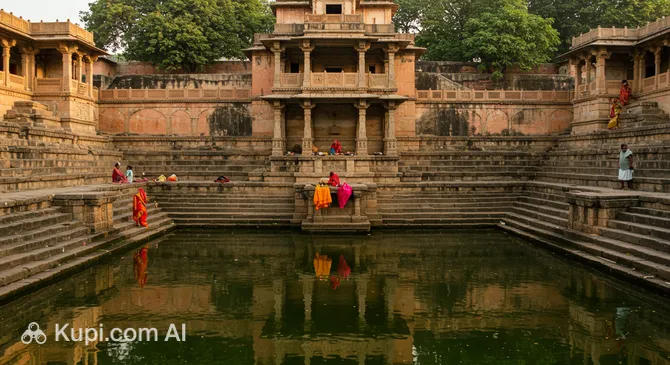
Among the ancient shrines of Vrindavan, Potra Kund holds a special place. This is a sacred water tank (kunda) that, according to tradition, is inextricably linked with Lord Krishna's childhood. Legend says that it was here that Yashoda, Krishna's foster mother, washed his childhood clothes (potra). For pilgrims, Potra Kund is a place of deep veneration, reminding them of the tender and touching moments of the divine pastimes of baby Krishna. Visiting this site allows one to touch ancient history and experience the special atmosphere of holiness associated with the deity's early years.

Potra Kund. Illustration.
Source: Kupi.com AI

Traveler photos:

Local Cuisine

The cuisine of Vrindavan is an integral part of its spiritual atmosphere, offering travelers a unique gastronomic experience. As a holy city, Vrindavan is famous for its predominantly pure vegetarian (sattvic) cuisine, where the focus is on fresh ingredients, simple preparation, and dishes that promote peace of mind and body. You won't find meat delicacies here, but you will discover the rich flavors of traditional North Indian cooking.

The foundation of the local diet consists of various vegetable dishes—sabzi, prepared with aromatic spices but often without onion and garlic, following Vaishnava traditions. These are perfectly complemented by hearty dal (thick lentil soup) and various types of Indian bread, such as thin roti or chapati, and fluffy fried puri. You will often encounter thali—a large tray serving several dishes at once: rice, dal, a couple of types of sabzi, raita (yogurt with vegetables or spices), and bread. It's an excellent way to get to know the variety of local cuisine in one meal.

Sweets hold a special place in Vrindavan's gastronomy, many of which have sacred significance and are associated with Lord Krishna's pastimes. Be sure to try makhan-mishri—delicate fresh-churned white butter with sugar crystals, considered baby Krishna's favorite treat. No less famous are pedas—milk sweets, especially those brought from neighboring Mathura, Krishna's birthplace. Also popular are kheer (sweet rice pudding) and juicy, syrup-soaked jalebis.

Among drinks, the refreshing lassi—a thick yogurt drink that can be sweet, salted, or flavored with fruit—is ubiquitous in Vrindavan. Of course, no introduction to Indian cuisine is complete without aromatic masala chai, prepared here with milk and spices. In hot weather, nimbu pani (fresh lemonade) quenches thirst perfectly. It is important to note that Vrindavan is a city with deep religious traditions, so alcoholic beverages are practically non-existent and their sale is restricted.

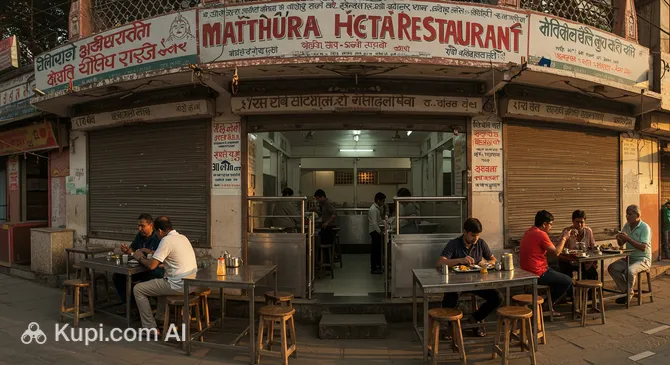
Food culture in Vrindavan is closely intertwined with spiritual life. Many pilgrims prefer to consume prasad—food offered to the deities in temples and then distributed to the faithful. This is considered especially blessed. Furthermore, the city is full of small local restaurants and dhabas (simple roadside cafes) where you can eat cheaply and tastily. Street food also offers many temptations—from hot samosas to sweet gulab jamun balls. If you want to try authentic dishes in a more organized setting, you can visit, for example, Matura Restaurant, known for its traditional cuisine.

Mathura Restaurant. Illustration.
Source: Kupi.com AI

Traveler photos:

The gastronomic scene of Vrindavan attracts with its sincerity, purity, and the opportunity to touch ancient culinary traditions. This is not just food, but part of the unique spiritual experience that this holy city provides. Tasting local dishes, especially iconic ones like makhan-mishri or a traditional vegetarian thali, will be a bright and memorable moment of your journey through India.

Travel Tips

Welcome to Vrindavan, a city with a deep spiritual atmosphere and rich history! To make your journey to this sacred place in India as comfortable and memorable as possible, we have prepared some practical tips.

  1. Clothing and Essentials: Vrindavan is an important pilgrimage site, so choose modest clothing that covers shoulders and knees, especially when visiting numerous temples. Given Uttar Pradesh's hot climate, light, breathable fabrics are preferred. Be sure to bring comfortable shoes for long walks around the city and temple complexes. Don't forget sunscreen, a hat, and a universal power adapter for electronics.
  2. Transport: The main modes of transport in Vrindavan are auto-rickshaws and cycle-rickshaws—an authentic and convenient way to move short distances. Local buses are also available but can be overcrowded. For trips to neighboring cities, taxis can be used. Renting a car for travel within Vrindavan itself is usually not required, as the streets can be narrow and busy.
  3. Finance: The local currency is the Indian Rupee (INR). Money can be exchanged at banks or authorized exchange offices. Credit and debit cards are accepted in some hotels and large shops, but for small purchases, paying rickshaws, and in small establishments, it is better to have cash. ATMs are available in the city. A rough daily budget can vary, but be prepared for the fact that in holy sites, prices for some services for tourists may be higher. Tipping is welcome for good service, usually 5-10% of the bill.
  4. Health and Safety: There are pharmacies in Vrindavan, but it is recommended to carry a basic set of medications. Drink only bottled water. Be mindful of your belongings, especially in crowded places and temples. Beware of monkeys, which can be persistent and grab food or small items; keep bags closed. In general, Vrindavan is considered a relatively safe city for tourists, but always follow general precautions.
  5. Communication: The main language of communication is Hindi. In tourist spots, many people speak English, but knowing a few phrases in Hindi (e.g., "Namaste" – hello, "Dhanyavad" – thank you) will be appreciated by the locals. A SIM card with internet access can be purchased upon presentation of a passport and visa. Wi-Fi is available in most hotels and some cafes.
  6. Local Etiquette: Show respect for local traditions and customs. When entering temples, it is necessary to remove your shoes. Photography inside some temples may be prohibited—pay attention to signs or ask for permission. Ask for permission before photographing people, especially sadhus (holy ascetics). Vrindavan is a vegetarian city, and consuming meat and alcohol in public places is not welcomed.
  7. What to Avoid: Refrain from public displays of affection, as this is not customary in conservative Indian society, especially in holy places. Do not feed monkeys by hand, as this can provoke aggressive behavior. Be cautious of overly persistent offers of services from "guides" or "priests" at temples; it's better to turn to official sources or hotel recommendations.
  8. Special Tip: Vrindavan is known for its many festivals dedicated to Krishna. If your trip coincides with one (e.g., Holi or Janmashtami), you will have an unforgettable experience, but be prepared for large crowds. Also, remember that cows are sacred here and roam freely in the streets—treat them with respect.

We hope these tips help you better prepare for your trip and enjoy every moment of your stay in amazing Vrindavan. May your journey be filled with bright impressions and spiritual discoveries!

Entertainment & Nightlife

Vrindavan, being one of India's most important spiritual centers, offers its guests a completely unique evening and night experience. Instead of the noisy nightclubs and bars typical of many tourist cities, evening in Vrindavan immerses you in an atmosphere of peace, spiritual chanting, and quiet walks. It is a place where "nightlife" has a more meditative and cultural character than an entertaining one in the usual sense.

The main events of evening Vrindavan are the colorful temple services—Aarti. Evening Aartis are particularly crowded and spiritual in the city's main temples, such as the Banke Bihari Mandir or ISKCON. The sounds of kirtans (religious chants) and bells fill the air, creating an unforgettable atmosphere. The audience here consists of pilgrims and local residents immersed in prayer. There is no specific dress code, but modest clothing covering shoulders and knees is recommended, as for any temple visit. Evening activity is mainly concentrated around the temple complexes and their adjacent streets.

Mathura Restaurant. Illustration.
Source: Kupi.com AI

Traveler photos:

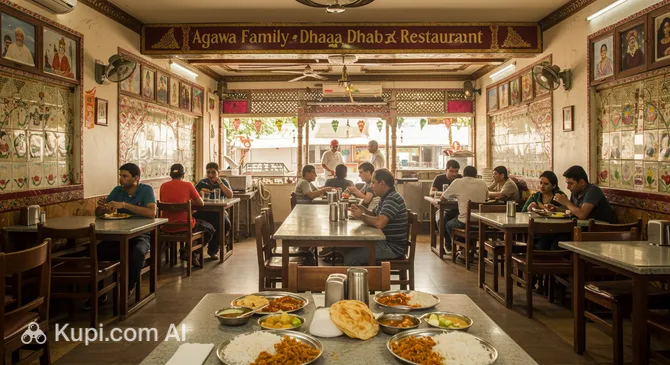
As for dinner, Vrindavan has restaurants that operate in the evening. Here you can enjoy traditional Indian vegetarian cuisine. Among the establishments where you can have dinner, the Matura Restaurant is worth noting, offering a variety of local dishes. Also popular is the Agrawal Family Restaurant and Dhaba, known for its authentic cuisine and welcoming atmosphere. Remember that Vrindavan is predominantly a vegetarian city, and alcohol is not served in most establishments.

Agrawal Family Dhaba & Restaurant. Illustration.
Source: Kupi.com AI

Traveler photos:

For evening strolls, choose well-lit streets, especially in temple districts. You can move around the city in the evening by auto-rickshaws; however, their numbers may be fewer than during the day, so it's better to arrange a ride in advance or use taxi services through your hotel. In general, Vrindavan is considered a safe enough city, but one should always take standard precautions, especially after dark, and keep an eye on your belongings.

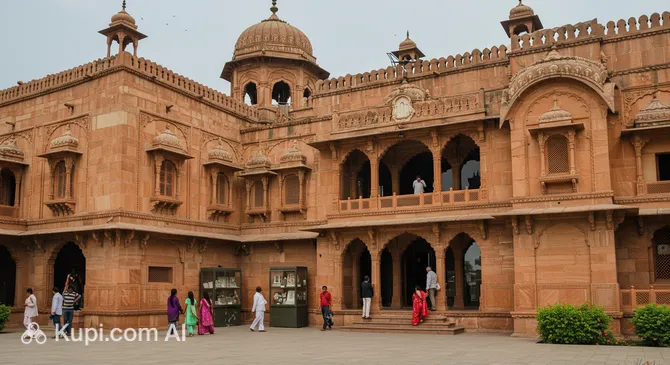
Government Museum, Mathura. Illustration.
Source: Kupi.com AI

Traveler photos:

During the day, Vrindavan offers many opportunities for exploration. The main points of attraction are, of course, the numerous temples, each with its unique history and architecture, such as Prem Mandir or Sri Sri Krishna Balaram Mandir. For those interested in the history and culture of the region, the Government Museum, Mathura will be interesting, featuring archaeological finds and art objects. Walks along the ghats (steps to the Yamuna River) are also an integral part of getting to know the city. There are no typical amusement parks or major theaters in the European sense here, as the city's focus is shifted towards spiritual life.

Parks & Museums

Vrindavan, the sacred city of India, offers its visitors a unique blend of spiritual practices, cultural heritage, and special green zones closely linked to the legends of Krishna. Here, parks and museums are not just places for recreation and exhibition, but spaces filled with deep meaning and history.

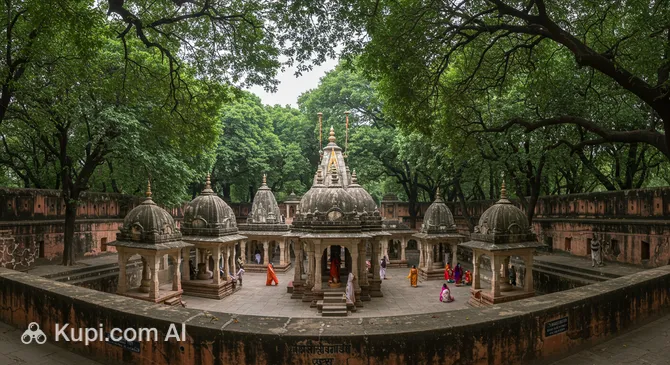
Instead of traditional city parks, Vrindavan is famous for its sacred groves and kunj-as (forest areas). One of the most famous is Seva Kunj—a secluded spot where, according to tradition, Krishna spent time with his beloved Radha. This grove with dense Tulsi trees is considered sacred, and visiting it gives a sense of peace and tranquility. Another iconic place is Potra Kund, a sacred water tank associated with Krishna's childhood. It is believed that it was here that Yashoda washed baby Krishna's clothes. Many temple complexes, such as the magnificent Prem Mandir, are also surrounded by well-kept gardens where you can rest in the shade and enjoy the beauty of floral arrangements, making them a kind of green oasis in the city.

Seva Kunj. Illustration.
Source: Kupi.com AI

Traveler photos:

If we talk about museums in the classical sense, the nearest and most significant is the Government Museum, Mathura. Although located in the neighboring city of Mathura, its collection is of immense importance for understanding the history and art of the entire Vrindavan region. It features priceless artifacts and sculptures from the Gandhara and Mathura schools, reflecting the rich cultural heritage of this land. Vrindavan itself can be called a "living museum," where every temple and every street holds stories and legends. Many temples, such as Sri Sri Krishna Balaram Mandir (ISKCON), have small exhibitions or dioramas telling the life of Krishna.

Prem Mandir. Illustration.
Source: Kupi.com AI

Traveler photos:

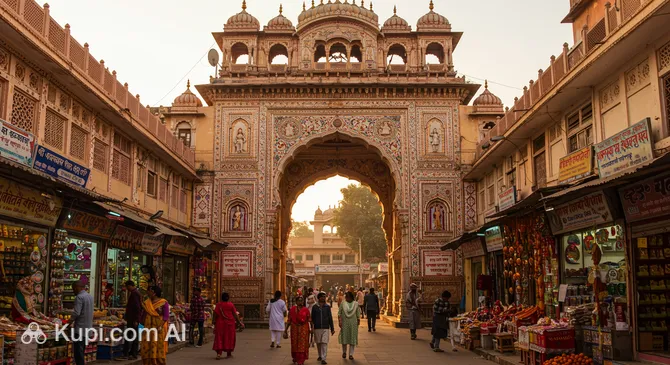
The architectural and historical heritage of Vrindavan is impressive. In addition to countless temples, each an architectural and faith monument, iconic places like the Holi Gate—historic gates symbolizing the entrance to the sacred city—are worth noting. A walk through the old quarters of Vrindavan will reveal unique examples of traditional Indian architecture. Temples such as the Radha Vallabh Temple or the Sri Radha Madan Mohan Temple are not only places of worship but also important historical sites preserving centuries-old traditions.

Holi Gate. Illustration.
Source: Kupi.com AI

Traveler photos:

For a deeper immersion into the city's atmosphere and to find authentic experiences, we suggest exploring the lesser-known ghats (steps to the Yamuna River) at dawn or sunset. This is a time when you can observe local rituals and enjoy the calmness of the sacred river. It is also worth looking for small, less touristy temples hidden in narrow lanes—that is where you can feel the true spirit of old Vrindavan.

Sri Sri Krishna Balaram Mandir. Illustration.
Source: Kupi.com AI

Traveler photos:

Getting Around

Moving around Vrindavan has its own peculiarities, typical of small Indian cities with a rich historical heritage. You won't find the usual metro or trams here; however, the local transport system allows you to comfortably explore this amazing city. The main emphasis is on more traditional and flexible modes of transport, ideally suited for narrow streets and short distances.

The main "workhorses" of Vrindavan's transport system are auto-rickshaws (motorized three-wheeled taxis, often called "tuk-tuks") and cycle-rickshaws. This is the most popular and convenient way to get to most temples and attractions. Auto-rickshaws are faster and suitable for longer trips within the city and its surroundings, while cycle-rickshaws offer a slower and more authentic ride over short distances. Also, local buses run in the city, connecting different parts of Vrindavan and can be useful for budget travel; however, their routes and schedules may not always be obvious to tourists, and the buses themselves are often overcrowded.

The payment system in Vrindavan is predominantly cash-based. For trips on auto-rickshaws and cycle-rickshaws, one pays cash directly to the driver. It is critically important to agree on the fare in advance before getting into the vehicle, as most rickshaws do not have fixed rates or meters. Do not hesitate to bargain; it is a common practice. Fares on local buses are fixed and paid to the conductor upon entry. In general, moving around by public transport in Vrindavan is very affordable. Specialized tourist passes or unified transport cards are generally not available.

Here are some practical tips for tourists: bus tickets are purchased from the conductor. No tickets are required for rickshaws. Most types of transport start working from early morning until late evening. However, the number of rickshaws may decrease at night. Given the compactness of many holy sites and the narrow streets of the old city, walking is an excellent way to explore Vrindavan, especially the central districts and temple complexes. For trips to neighboring cities like Mathura, you can use taxi services, which can be ordered through the hotel or found at designated stands. Taxi-hailing apps common in large cities may be less popular or have limited coverage in Vrindavan.

Accommodation

In Vrindavan, the sacred city of India, travelers will find various accommodation options to suit different budgets and preferences. Both budget guesthouses and ashrams offering a simple but authentic experience, as well as mid-range hotels and more comfortable options, are represented here. There are few luxury resorts in the Western sense, as the city's main focus is on spiritual life, but finding clean and cozy accommodation is entirely possible.

Many tourists prefer to stay in areas located near the main temples, such as the Banke Bihari Mandir or the Sri Sri Krishna Balaram Mandir (ISKCON), as well as along the Parikrama Marg—the pilgrimage path around the city. This provides easy access to the main shrines and allows for deeper immersion into the atmosphere of Vrindavan. Some hotels and guesthouses are also located in quieter lanes, offering a peaceful rest after a busy day.

VrindWoods Hotel. Illustration.
Source: Kupi.com AI

Traveler photos:

Among the available options, one can find both simple rooms and better-equipped rooms with air conditioning and other amenities. For example, options like the VrindWoods Hotel or Radha Krishna Dham offer comfortable accommodation. The choice of housing in Vrindavan is wide enough to satisfy the needs of both pilgrims and tourists seeking cultural enrichment.

The price range varies from very budget to mid-range and above average. It is recommended to book accommodation in advance, especially if your trip coincides with major Hindu festivals such as Holi or Janmashtami, when the city receives a massive number of pilgrims. Bookings can be made through popular online platforms or by contacting hotels and guesthouses directly.

Nearby Cities

For those who want to explore the surroundings, Vrindavan serves as an excellent starting point for day trips to several interesting nearby places:

CityPopulationDistance
Mathura441 8948 km
Semri11 70319 km
Barsana12 14029 km
Nandgaon123 19133 km
Hathras156 49839 km

These nearby destinations provide an insight into the region's diverse culture and landscapes.

Shopping & Souvenirs

Shopping in Vrindavan is an immersion into the world of spirituality, traditions, and unique handicraft items. The city is not famous for modern shopping centers, but it offers a rich selection of goods reflecting its sacred status and India's cultural heritage. Here you will find many shops and stalls specializing in religious paraphernalia, traditional clothing, Ayurvedic products, and handmade souvenirs.

The main retail outlets are concentrated on the busy streets leading to the major temples, such as Banke Bihari Mandir or the Sri Sri Krishna Balaram Mandir, as well as along Parikrama Marg. One of the most famous and bustling shopping areas is Loi Bazaar, where you can find almost everything—from clothing and jewelry to books and items for puja (religious rituals). The streets around temples like the Radha Vallabh Temple are also teeming with small shops offering goods for pilgrims and tourists.

Radha Vallabh Temple. Illustration.
Source: Kupi.com AI

Traveler photos:

You won't find large modern shopping malls in the European sense in Vrindavan. The city maintains its traditional way of life, and shopping here is more about exploring colorful local markets and small family-run shops rather than visiting multi-story malls. This gives the shopping process a special, authentic charm.

The markets of Vrindavan are the heart of its commercial life. They are lively bazaars where a wide assortment of goods can be found. In addition to the mentioned Loi Bazaar, there are many smaller market zones, often spontaneously arising near temples. Here they sell fresh flowers for offerings, fruits, sweets (prasad), as well as various souvenirs, fabrics, and household items. The atmosphere in the markets is very lively, filled with the aroma of incense and the sounds of traditional music.

As souvenirs from Vrindavan, it is worth bringing items associated with Krishna and Radha: small statues (murtis), images of deities, prayer beads (japa mala) made of Tulsi or Rudraksha, and books about Krishna's life. Traditional Indian clothing is popular: bright saris, comfortable kurtas, and shawls. You can also purchase natural incense, essential oils, Ayurvedic cosmetics, and medicinal herbs. Interesting items made by local craftsmen include carved boxes, jewelry, and decorative objects.

Most shops and stalls in Vrindavan open around 10:00-11:00 AM and work until 8:00-9:00 PM. Some small shops may close for a lunch break in the middle of the day. The primary method of payment, especially in markets and small stalls, is cash (Indian Rupees). Larger shops and hotels may accept bank cards, but it is better to always carry enough cash. Bargaining is appropriate and even expected in markets and small souvenir stalls.

The possibility of a tax refund (Tax Free) for tourists in Vrindavan is generally not common, as most purchases are made in small shops and markets that do not participate in this system. The focus of shopping here is more on unique local goods than on branded items for which tax refunds are usually provided.

Reached the end of the page?

That means the route is fully explored