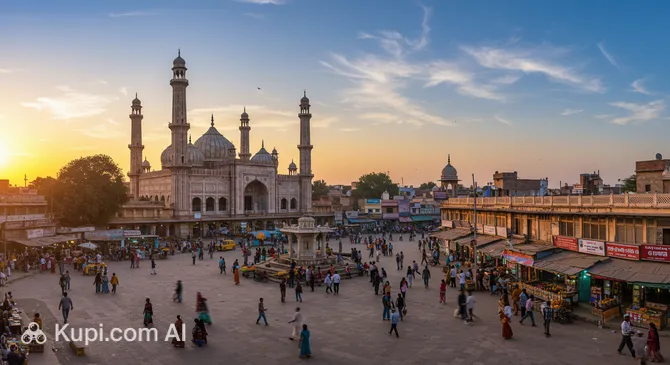
Bulandshahr is a vibrant administrative and commercial center located in the state of Uttar Pradesh in northern India. The city is situated approximately 65 kilometers southeast of Delhi, forming part of the National Capital Region (NCR). Its name translates as "elevated city," highlighting its location on the high bank of the Kali River. This place is steeped in the atmosphere of the traditional Indian province, where the modern pace of life is closely intertwined with centuries-old agricultural traditions.
Bulandshahr. Illustration.
Source: Kupi.com AI
The rich history of the city, which was once called Barana, dates back to ancient times, as far as 1200 BC. Today, Bulandshahr is a key hub for the trade of grain, cotton, and sugarcane. Although the city is primarily focused on business and administration, it attracts travelers with its authenticity and the opportunity to see the real life of the Gangetic Plain without embellishment.
For a tourist, Bulandshahr is interesting as an important transit point and a place where one can get acquainted with the lifestyle of the Uttar Pradesh region. While there isn't an abundance of classic landmarks, a walk through the central markets and an introduction to the local architecture allow you to feel the true spirit of the region. We recommend visiting this city to those seeking immersion in the everyday culture of India far from the well-trodden tourist paths.
Weather Overview
Bulandshahr is located in a typical subtropical climate zone of North India, characterized by three distinct seasons: a hot summer, a monsoon period, and a cool, dry winter. When planning a trip, it is important to consider that air quality and temperature can change significantly throughout the year. The current climate of the city dictates its own rules for travelers.
Summer in Bulandshahr arrives in April and lasts until June, bringing exhausting heat with temperatures sometimes reaching +45°C. From July to September, monsoons prevail: this is a time of intense rain when humidity rises sharply, and rainfall in July and August can exceed 200 mm per month. Winter, lasting from November to February, is considered the most comfortable time for a visit—it is sunny and warm during the day (around +20°C), but nights can be quite cool, with the thermometer dropping to +7°C.
Expect extremely hot summers with dry winds and a humid rainy season in the middle of the year, followed by clear and dry winter months. For a comfortable stay, it is best to plan your trip for the period from October to March, when the weather is most favorable for walking and exploring the region.
Average monthly temperature
Average monthly precipitation
Interesting Facts
The name of the city Bulandshahr translates from Persian as "elevated city," which is due to its location on high ground.
The ancient history of these places dates back to 1200 BC. It is believed that the city was closely connected with the legendary capitals from the epic "Mahabharata"—Indraprastha and Hastinapur.
Before its official renaming, the city was known by the name Barana.
The city is an important center for the production of sugar and cotton; processing plants and endless sugarcane plantations can be seen everywhere here.
Bulandshahr is part of the National Capital Region (NCR), making it a strategically important satellite of the Indian capital.
How to Get There
The transport accessibility of Bulandshahr is largely determined by its proximity to the Indian capital. The city is conveniently located at the intersection of important road arteries, making it easily accessible from various parts of the state of Uttar Pradesh and neighboring regions. The main flow of travelers arrives here from Delhi, covering a distance of about 65 kilometers by highway. Detailed information about routes can be found in the section how to get to Bulandshahr.
The nearest major international air hub is Indira Gandhi International Airport (DEL) in Delhi, located approximately 70-80 kilometers from the city. The journey from the airport by car or taxi can take from 2 to 4 hours depending on the traffic intensity, which can be quite heavy in the National Capital Region.
Rail communication also plays a key role. The city has the Bulandshahr Railway Station, which receives trains from Delhi and other major cities in the region, such as Meerut and Aligarh. This is one of the most accessible and popular ways of travel among the local population and tourists.
Station
Passenger traffic
Distance
Ghaziabad railway station
10
49 km
Anand Vihar Terminal
11
59 km
Aligarh railway station
6
61 km
Hazrat Nizamuddin railway station
14
62 km
New Delhi railway station
27
67 km
In addition to trains, there is a developed network of intercity buses. State buses from the UPSRTC company regularly run between Bulandshahr and neighboring districts. The travel time from Delhi by bus is usually about 3 hours.
Main Attractions
Bulandshahr is primarily known as an administrative center, so you should not expect an abundance of world-famous monuments here. Nevertheless, the city possesses its own charm. The center of attraction for guests and residents alike is the traditional markets and the squares around the municipality. A walk through these places allows you to see the life of a typical Indian district center, where the trade of agricultural products—grain, cotton, and sugar—never stops for a minute.
One of the interesting historical points associated with the city is the Kuchesar Fort (also known as Rao Raj Vilas). Although it is located some distance from the center of Bulandshahr itself, it is often visited by tourists looking for historical heritage in the district. This fort provides an idea of the former grandeur of local rulers and the architectural style of the region.
It is also worth paying attention to the colonial-era administrative buildings and the railway station, which is an important infrastructure monument in its own right. Bulandshahr serves as an excellent base camp for exploring the surrounding villages and settlements, such as ancient Ahar, which was once a significant cultural center after the decline of ancient Hastinapur.
Local Cuisine
The gastronomic culture of Bulandshahr is a classic embodiment of Uttar Pradesh cuisine. Hearty vegetarian dishes rich in spices dominate here. The basis of the diet consists of grains and legumes. You should definitely try the local dal (thick lentil soup), served with hot roti or naan flatbreads. Various types of sabzi—vegetable curries made from seasonal products—are also popular in local diners.
Sweets hold a special place in the residents' diet, which is not surprising for a region where sugarcane is actively grown. Freshly squeezed sugarcane juice is a popular street drink, and desserts based on it are a great way to end a meal. Among drinks, it is also worth highlighting traditional masala chai with spices and milk, and on hot days—refreshing lassi (a yogurt-based drink).
The food culture in the city is closely linked to street food and local markets. On every corner, you can find stalls with crispy samosas and spicy chaat snacks. Restaurants in the city center offer a more relaxed atmosphere and a menu that includes Punjabi and Awdhi cuisines. This is simple, honest, and very aromatic food that perfectly conveys the character of this agricultural region.
Travel Tips
When planning a trip to Bulandshahr, check out our practical recommendations to help make your visit comfortable and safe.
Clothing and essentials: Choose light clothing made from natural fabrics for the summer and be sure to bring warm items (sweater, jacket) if you are traveling in December-January, as nights can be cold. For visiting religious sites, clothing should cover shoulders and knees. Comfortable closed shoes are essential for walking through dusty markets.
Transport: For moving around the city, it is most convenient to use auto-rickshaws. If traveling from Delhi, it is better to use Uber or Ola apps for a fixed price.
Finances: Always carry a sufficient supply of cash Rupees. International cards are only accepted in large hotels and some chain stores; elsewhere, cash reigns supreme.
Health: Drink only bottled water from known brands. Avoid ice in drinks and carefully choose places for street snacks, preferring those where locals eat.
Communication: The main language is Hindi. In hotels and administrative offices, you can find English speakers, but for markets, it is better to learn a few basic phrases. It's best to get a SIM card in advance in Delhi.
Local Etiquette: Greet people with a polite "Namaste." Don't forget to remove your shoes before entering temples and private homes.
What to Avoid: Try not to visit outlying areas and slums, especially in the evening. It is also not recommended to photograph administrative facilities and people without their consent.
Air Quality: During the winter period, the region often suffers from smog, so travelers with respiratory problems should carry a protective mask.
May your introduction to the real India in Bulandshahr be bright and memorable. Have a pleasant trip!
Entertainment & Nightlife
The entertainment scene in Bulandshahr is predominantly traditional and quiet. As the city is a provincial center, there are almost no noisy nightclubs or bars in the Western sense. The evening life of local residents is centered around the main squares and markets, which remain lively until dark. This is a great time to enjoy street food and the atmosphere of the evening bustle.
For those looking for more modern formats of recreation, there are basic cinemas in the city showing the latest Bollywood releases. This is a popular spot for family leisure. For vibrant nightlife, large shopping malls, and elite restaurants, residents and guests usually head to neighboring Delhi, which is about a two-hour drive away.
During the day, as an alternative, you can visit local park areas near administrative buildings or take a walk along the sugarcane fields surrounding the city. For those who appreciate quiet weekend trips, nearby towns such as Khurja, famous for its ceramics, or Aurangabad are popular destinations.
Parks & Museums
Bulandshahr is primarily an urbanized administrative center, so there are few large park complexes or world-class state museums here. Nevertheless, there are small municipal gardens and green zones near government buildings in the city where locals like to relax from the urban bustle. These green islands help cope with the summer heat and dust.
For those seeking cultural enlightenment, the city itself may seem like an "open-air museum" due to its layout and preserved fragments of old architecture. However, for classic museum exhibits and galleries, travelers usually head to Delhi, which is a couple of hours' drive away. The capital hosts national museums that also tell the history of the Uttar Pradesh region.
For nature lovers, we recommend paying attention to the rural landscapes outside the city limits. Endless fields of sugarcane and mustard, especially during the flowering period, are a picturesque sight and serve as natural recreational areas for residents. The proximity to the Ganges and Yamuna rivers also opens up opportunities for suburban trips to nature within the district.
Getting Around
Public transport in Bulandshahr is represented by a set of transportation modes typical for Indian cities. The basis of internal communication consists of auto-rickshaws and cycle-rickshaws. This is the fastest and most affordable way to get from one point of the city to another; however, you should always agree on the price of the trip with the driver in advance, as meters are rarely used.
For travel between districts and to neighboring cities, residents actively use state and private buses. The central bus station connects Bulandshahr with Delhi, Meerut, and Aligarh. State trips by the UPSRTC company are considered the most reliable and budget-friendly. There is no metro in the city, but the proximity to Delhi allows residents to use the capital's subway by reaching the nearest NCR stations by bus or taxi.
Alternatively, you can use taxi services through mobile apps (such as Uber or Ola), which is especially convenient for trips to Delhi or the airport. During peak hours, serious traffic jams can occur on the main roads to the city, so tourists are recommended to allow extra travel time, especially if they need to catch a train or flight.
Accommodation
Accommodation options in Bulandshahr are mainly oriented towards transit travelers, business tourists, and those visiting the city for administrative matters. Budget hotels and mid-range guesthouses predominate here. Most hotels are concentrated in the central part of the city, near the markets and the railway station, which is convenient for quick movement.
Among the most popular options are 2-3 star level hotels, such as Hotel City Park. These establishments offer a basic set of services: air-conditioned rooms, Wi-Fi, and restaurants serving local cuisine. There are no luxury five-star resorts in the city itself; for those, it is better to look in the neighboring NCR metropolises.
If you plan a trip during major holidays or agricultural fairs, we recommend booking accommodation in advance, as the demand for quality rooms in the center can increase sharply. For long-term stays, you can also consider renting apartments, which are often chosen by expats and specialists working in the region.
Nearby Cities
Bulandshahr serves as an excellent starting point for exploring the surroundings and small towns of the Uttar Pradesh region. Thanks to the developed bus and rail links, travelers can easily organize day trips to neighboring settlements, each possessing its own unique character.
Just a few kilometers away is Chanderu, a small town that can be visited on the way to larger centers. For those interested in the history and culture of India's small towns, Shikarpur, located 21 kilometers away, will be of interest. Also among the popular destinations for short visits are Khanpur and Jahangirpur, which allow you to see the typical rural way of life in the state.
City
Population
Distance
Chanderu
10 733
7 km
Shikarpur
33 130
21 km
Salehpur
9 546
22 km
Khanpur
12 066
25 km
Jahangirpur
9 319
29 km
In addition to small towns, it is convenient to get to large centers such as Meerut or Aligarh from Bulandshahr. The region around the city offers many opportunities for those who want to see the real, non-tourist India with its endless fields and hospitable residents.
Shopping & Souvenirs
Shopping in Bulandshahr is primarily about visiting traditional Indian bazaars. You won't find huge shopping malls with glass storefronts here, but you can immerse yourself in the atmosphere of bustling markets. The main shopping spots are concentrated in the center, in the municipality area and near the railway station. These are ideal places for buying daily goods, spices, and fresh produce.
The city is famous for its agricultural products, so local sugarcane sweets and high-quality cotton honey make excellent gifts or purchases. The markets also offer a wide selection of fabrics and textiles, for which the state of Uttar Pradesh is famous. Here you can find both simple clothing and cuts of fabric with traditional embroidery.
Shops usually operate from 10 AM to 8–9 PM, and markets come alive from dawn. Payment in most market stalls is made in cash (Indian Rupees); cards are accepted only in some modern stores. If you are looking for specific handicrafts, it is worth looking into the neighboring town of Khurja, which is famous for its unique ceramics and is located in the immediate vicinity of Bulandshahr.