Support

Mathura

About

Mathura is not just a large settlement, but a true spiritual magnet and the heart of the Braj region. Located on the scenic banks of the sacred Yamuna River, this city attracts travelers with its mystical atmosphere and deep traditions. Situated in the state of Uttar Pradesh, just 150 kilometers from Delhi and 50 kilometers from Agra, it serves as a convenient starting point for exploring the unique culture that India is so famous for.

With a population of about 440,000, the city wonderfully combines the dynamic rhythm of modern life with the breath of eternity. It is one of the oldest capitals of the subcontinent, and the rich history of Mathura can be traced at literally every step—in the intricate labyrinths of ancient streets and the majestic architecture of temple quarters. Here, the past is not hidden behind museum glass but is harmoniously woven into the daily lives of the local residents.
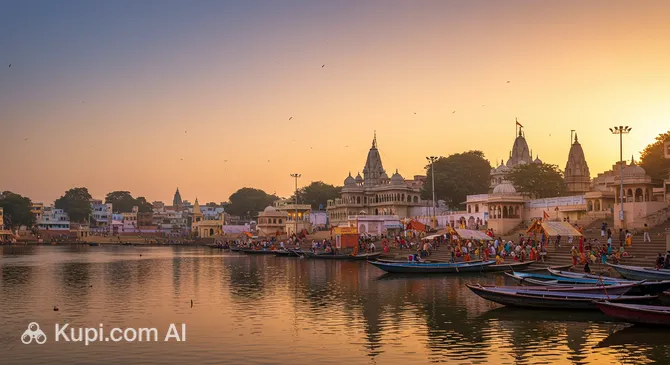
Mathura. Illustration.
Source: Kupi.com AI

The key feature of the city that makes it unique for tourists is its status as the birthplace of Krishna, one of the most revered deities in Hinduism. The atmosphere here is steeped in legends of his childhood and feats, while numerous temples and ghats (stepped embankments leading to the water) create a unique architectural ensemble. Travelers flock here not only for pilgrimage but also to witness the colorful festivals and celebrations held here on an especially grand scale.

A visit to Mathura will be an unforgettable experience for those seeking authentic impressions and wishing to touch the origins of Eastern spirituality. This city is definitely worth including in your itinerary to see living traditions with your own eyes and feel the special energy of an ancient civilization.

Weather Overview

The climate in Mathura is characterized by distinct seasonality, which is important to consider when planning a trip. Weather conditions here vary from sweltering heat to pleasant coolness, so the choice of clothing and timing for your visit plays a key role.

The summer season, lasting from April to June, is characterized by high temperatures. In May and June, average figures reach 32-33°C, and on the hottest days, the air warms up to 39°C. Following the heat comes the monsoon season: July and August bring heavy rainfall (up to 23 rainy days per month), although the temperature remains high, around 30°C. September becomes a transition period when the rains gradually recede.

The most comfortable time for excursions is considered to be the winter period. In December and January, dry weather sets in with average temperatures around 13-15°C. Nights can be quite cold: in January, the thermometer sometimes drops to 7.7°C, so warm clothing will be necessary. Expect a hot summer, a wet monsoon season, and cool, dry winters.

To make your trip as comfortable as possible, we recommend checking the detailed weather in Mathura by month in advance and choosing dates that match your preferences.

Average monthly temperature

Average monthly precipitation

Interesting Facts

Beyond its well-known temples, Mathura holds many fascinating stories and cultural treasures that make it unique even by the standards of India, a land rich in wonders. Here are a few facts that reveal this city from a new perspective:

  • One of the seven sacred cities. Mathura is revered as one of the Sapta Puri sites, where millions of pilgrims flock for spiritual purification. The culmination of the city's life is the Janmashtami festival—Krishna's birthday—when the streets turn into a massive theatrical stage with colorful performances and dances.

  • Birthplace of a distinct school of art. The city gave its name to the famous "Mathura school" of sculpture, which flourished from the 3rd century BC. The local Archaeological Museum houses one of the best collections of ancient statues in Asia. Many are carved from characteristic red sandstone and serve as priceless evidence of the beliefs of ancient inhabitants.

  • Holi Gate as an architectural symbol. The entrance to the old city is marked by a massive gate with exquisite carvings. This structure is notable for its style: it harmoniously combines traditional Indian patterns and Mughal arches, creating a unique architectural ensemble.

  • The legend of Vishram Ghat. Among the many steps to the Yamuna River (ghats), Vishram Ghat is considered the most important. According to legend, it was on these steps that Krishna rested after his victory over the evil King Kansa. Today, it is a popular spot for boat rides, especially during colorful sunsets.

How to Get There

Mathura enjoys excellent transport accessibility thanks to its strategic location between Delhi and Agra. The city is an important hub for both pilgrims and regular tourists. You can find more details on how to get to Mathura by various means of transport, but most often travelers choose a combination of air travel followed by a train or taxi ride.

There is no airport in the city of Mathura itself, so the main international arrival hub is Indira Gandhi International Airport (DEL) in Delhi. It is located about 132 km from Mathura. This is the country's largest aviation hub, receiving flights from all over the world. The journey from Delhi airport to Mathura by taxi takes about 2.5–3 hours, depending on traffic, or you can use a high-speed express train.

The closest airport to the city is Kheria (AGR), located in Agra, just 47 km from the center of Mathura. This is a regional airport with less passenger traffic, but it is convenient for domestic flights. A taxi ride from here will take only about 1 hour. It is also worth mentioning Jaipur Airport (JAI), which is further away but may be convenient when planning complex itineraries through the "Golden Triangle."

For clarity, here is a summary of the main airports:

AirportPassenger trafficDistance
Kheria168 36247 km
Indira Gandhi International Airport77.8 mln132 km
Ghaziabad (Hindon)1.8 mln138 km
Gwalior Airport334 729144 km
Jaipur Airport6.2 mln199 km

Railway communication is one of the most popular and budget-friendly ways to reach Mathura. The city's main station—Mathura Junction—is a vital hub on the Delhi-Mumbai and Delhi-Chennai lines. Trains regularly arrive here from most major Indian cities. A train journey from Delhi usually takes 1.5 to 2.5 hours, and from Agra, less than an hour. This is a convenient option for those who want to avoid traffic jams.

Additionally, Mathura is easily accessible by bus or car. The city is connected to Delhi and Agra by the modern Yamuna Expressway. State and private buses run regularly, offering various comfort levels—from basic to air-conditioned sleeper buses (Volvo/AC buses).

Main Attractions

Mathura is a true treasure trove for history and spirituality enthusiasts. In this city, considered one of the oldest in the country, the landmarks are closely intertwined with mythology and daily life. A journey through India would be incomplete without visiting these sacred sites where ancient legends come to life.

The undisputed center of attraction for all visitors is the Shri Krishna Janmabhoomi Temple. This is not just a religious structure but a place of powerful energy, as it is believed that Krishna was born right here, in the prison cell of King Kansa. The complex impresses with its scale and atmosphere of reverence. Tourists can visit the small shrine symbolizing the birthplace and stroll through the well-kept grounds. It becomes especially crowded and colorful during the Janmashtami festival, when the temple is decorated with thousands of lights and flowers.

Another architectural gem of the city is the Dwarkadhish Temple, built in the early 19th century. Dedicated to Krishna in his form as the "King of Dwarka," it is famous for its exquisite stone carvings and vibrant paintings characteristic of the Rajasthani style. This place is the epicenter for celebrating the famous Holi festival of colors. If you find yourself here during this time, be prepared for an incredible explosion of emotions and colors, but even on ordinary days, the temple charms with its grandeur and the rhythmic ringing of bells during services.

For those who want to feel the rhythm of life on the sacred river, Vishram Ghat is a must-visit. This is the main of the 25 ghats in Mathura. According to legend, it was here that Krishna washed his hands and rested after defeating the tyrant. The best time to visit is in the evening, when the Aarti ceremony is held. Hundreds of small oil lamps are floated on the dark waters of the Yamuna, creating a mesmerizing sight. You can also rent a boat here to see the city panorama from the water.

Not far from the city lies the famous Govardhan Hill, which also attracts many travelers. Legend has it that the young Krishna lifted this hill on his little finger to protect the inhabitants from the wrath of the rain god Indra. Today, pilgrims and tourists perform a 21-kilometer circumambulation (parikrama) around the hill, enjoying the scenic views and visiting small shrines along the way. This is an excellent opportunity to see the authentic life of the region and enjoy nature.

Local Cuisine

A gastronomic journey to Mathura is an immersion into a world of rich aromas and sweet traditions. The city is rightfully considered a paradise for those with a sweet tooth, and its main hallmark is the famous Mathura Peda. This delicate treat made from condensed milk with added sugar and cardamom is prepared here according to ancient recipes. Locals claim that the true taste of this dessert can only be experienced here, as the secret lies not only in high-quality ingredients but also in the special skill of the confectioners. Besides Peda, you should definitely try the melt-in-your-mouth Rasgulla and Rabri—a thick milk dessert with nuts and saffron.

Street food in Mathura is a distinct art form accessible to every traveler. Strolling through the busy streets, it is impossible to resist the aroma of freshly fried samosas and golden kachauris—crispy flatbreads with a spicy filling, often served for breakfast with potato curry. Fans of savory snacks will enjoy fried batata (sweet potato), generously seasoned with local chaat masala spices and lemon juice. Street vendors here are true virtuosos, turning a simple snack into a small gastronomic show.

Among drinks, the absolute favorite is the traditional lassi. In Mathura, this thick, whipped yogurt drink is traditionally served in disposable clay cups called kulhads. The clay gives the drink a unique earthy aroma and keeps it perfectly cool in the heat. Lassi is often topped with a thick layer of cream (malai) and dried fruits. You can also find hot, fragrant tea with milk and spices on every corner, which is both invigorating and warming.

Food culture in the city is closely intertwined with spiritual life. During major holidays such as Janmashtami and Holi, Mathura turns into a massive open-air dining hall. Gastronomic festivals are held during these days, where guests are offered free treats, and chefs compete in skill. A visit to the local farmers' markets will also be a vivid experience: the stalls overflow with fresh fruits, vegetables, and spices that make the cuisine of this region so colorful and unforgettable.

Travel Tips

Preparing for a trip to one of the sacred cities of India requires special attention to detail, as spiritual traditions are intertwined here with a bustling lifestyle. To make your journey to Mathura comfortable and safe, we have gathered the most important practical recommendations to help you feel confident in any situation.

  1. Clothing and Footwear. Given the religious status of the city, dress modestly: shoulders and knees should be covered for both men and women. The most important accessory is comfortable shoes that are easy to take off (such as sandals or flip-flops). You will have to remove your shoes before entering every temple, and you will have to do this often.
  2. Transport. There is no metro inside the city, and the streets are often too narrow for taxis. The most effective way to get around is by auto-rickshaws (tuk-tuks) and cycle rickshaws. Be sure to agree on the price of the trip before boarding, as meters are rarely used. Taxi-hailing apps may work unstably, so it's better to have cash to pay private drivers.
  3. Finances. Bank cards are accepted only in large hotels and some restaurants. City life is built on cash: carry a supply of small bills (10, 20, 50, 100 rupees). These will be needed for paying rickshaws, buying water, street food, and making small donations in temples. ATMs exist, but they may be empty, so it's better to withdraw money in advance.
  4. Health and Safety. The main specific problem in Mathura is monkeys. They can be aggressive and often steal glasses, phones, and food right out of people's hands. Take off your glasses (or wear contacts), hide shiny objects, and do not tease the animals. Also, drink only bottled water and avoid ice in drinks from street vendors.
  5. Communication. The main language of communication is Hindi and the local Braj dialect. English is understood in tourist areas, but rickshaw drivers may not speak it. We recommend downloading offline maps and a translator in advance. It's better to buy a SIM card immediately upon arrival in Delhi, as registration in a small city can take more time.
  6. Local Etiquette. In the Braj region, to which Mathura belongs, instead of the usual "Namaste" or "Hello," it is customary to greet people with the phrase "Radhe Radhe" (the name of the goddess Radha). Using this greeting instantly wins over local residents and evokes a sincere smile.
  7. What to Avoid. Do not agree to the services of unofficial "guides" who persistently offer to take you into a temple without a queue or show you "secret spots." This is most often a way to extract money. Also, be careful with requests for donations: give as much as you see fit and firmly refuse if you are pressured.
  8. Extra Tip. If you plan to attend the evening Aarti ceremony on the Yamuna River, arrive at Vishram Ghat 30–40 minutes before sunset. The best view is not from the shore, which is very crowded, but from the water—rent a small boat in advance to enjoy the fire ritual in a calm atmosphere.

Mathura is a city with powerful energy that may initially overwhelm you with its rhythm and colors. However, by following these simple rules and showing respect for local customs, you will be able to see the deep spirituality and hospitality of this ancient place behind the external bustle.

Entertainment & Nightlife

Nightlife in Mathura is a unique blend of ancient spiritual traditions and a gradually emerging modern leisure culture. Unlike megacities like Mumbai or Delhi, you won't find noisy discos at every turn. An evening in this sacred city begins not with cocktails, but with the mesmerizing sounds of bells and fire rituals on the waterfront, though areas for lovers of more conventional entertainment are starting to appear.

The main evening event that cannot be missed is the Aarti ceremony at Vishram Ghat. As the sun sets, the banks of the Yamuna River are illuminated by thousands of oil lamps. This is a time when the city plunges into a mystical atmosphere: mantras are chanted, the scent of incense rises into the air, and flickering light offerings float on the dark water. After the ceremony, many tourists head out for a night boat ride to enjoy the silence and the view of the sleeping temples from the water.

If you are looking for more secular entertainment, it is important to consider the city's specifics. In the zones around the main temples, there is a strict ban on alcohol and non-vegetarian food. However, outside these "dry zones" and in large hotels, you can find establishments with modern music and a relaxed atmosphere. Local youth and tourists often choose places like Club Blue Eyes Lounge or Hype Night Club (located in the Gurukripa Grand Hotel). Here you can have dinner, listen to contemporary tracks, and relax with friends, although the format of these venues is closer to a lounge cafe than a European nightclub.

Gastronomic adventure seekers should head to the night markets in the Holi Gate and Tilak Dwar areas. Life here bustles until late evening. The streets are filled with the aromas of street food: at night, it is especially pleasant to drink hot masala tea or try the famous hot milk with saffron and nuts, sold in huge cauldrons right on the street. This is a great way to feel the true rhythm of the city and chat with the locals.

When planning your evening, keep a few important points in mind:

  • Safety: Mathura is a fairly conservative city. The central streets and ghat areas are safe for walking until 10:00–11:00 PM, but in later hours, it is better to move around by taxi or a pre-booked transfer. Avoid dark alleys alone.
  • Transport: It may be harder to find a cycle rickshaw at night, and auto-rickshaw ("tuk-tuk") prices increase. It is better to agree with a driver in advance to wait for you or use taxi-hailing apps if available in your area.
  • Dress code: Even in bars and lounges, the style of dress remains modest (casual). Overly revealing outfits may attract unwanted attention on the street.

During the day, Mathura offers a rich cultural program: from visiting the Government Museum of Mathura, which houses unique ancient sculptures, to strolling through numerous parks. But it is in the evening that the city reveals its soul, allowing you to see the harmony between eternal sanctity and the rhythm of modern life.

Parks & Museums

While Mathura is primarily known as a pilgrimage center, the city offers travelers an interesting combination of green spaces for relaxation and rich museum collections preserving the region's thousand-year history. Here you can find peace in the shaded gardens of temple complexes and touch the ancient art that made this land world-famous.

Among the green zones, the gardens of the Krishna Janmabhoomi complex hold a special place. This is a vast, well-maintained area with neatly manicured lawns and flower beds surrounding the main temple. For tourists, it is a true oasis of tranquility in the middle of a noisy city, where you can rest after excursions and enjoy the silence. Another natural attraction is the scenic banks of the Yamuna River. Although not a park in the classic sense, the walking area along the ghats at sunrise or sunset allows you to observe river fauna, including numerous birds and turtles, surrounded by the natural beauty of the sacred river.

For an immersion into the history and culture of India, a visit to the Government Museum of Mathura is a must. This is one of the country's best archaeological museums, founded back in 1874. It is famous for its unique collection of red sandstone sculptures dating back to the Kushan Kingdom and the Gupta Empire. It is here that you can see masterpieces of the famous "Mathura school of art," which had a huge impact on the development of Indian sculpture. The museum will interest anyone who wants to understand what the city looked like two thousand years ago and see rare statues of Buddha, Jain Tirthankaras, and Hindu deities.

Another significant cultural site acting as a kind of open-air gallery is Gita Mandir (Birla Temple). This magnificent architectural monument, located on the outskirts of the city on the road to Vrindavan, is known for its "Bhagavad Gita Stambha." All 700 verses of the holy scripture, the Bhagavad Gita, are engraved on the temple walls and a high column. The area around the temple is decorated with statues and fountains, creating an atmosphere of a museum of spirituality and architecture.

History buffs should look for Kans Qila—the ruins of an ancient fort located on the banks of the Yamuna. Although only fragments of the walls and fortifications remain of its former greatness, this place breathes history. The fort's architecture is an interesting fusion of Hindu and Mughal styles, as it was rebuilt by the Rajput ruler Raja Man Singh I. The high walls offer a panoramic view of the river and the city's ghats. Nearby is the Sati Burj—a four-story red sandstone tower 17 meters high, built at the end of the 16th century, which serves as a reminder of the city's medieval architecture.

Insider Tip: If you want to see a truly unusual historical site hidden from most tourists, find Potara Kund. This is a massive stepwell (baoli) with greenish water, which, according to legend, was used to wash the clothes of the infant Krishna. The place has a special authentic atmosphere of antiquity and is perfect for atmospheric photos.

Getting Around

The public transport system in Mathura differs significantly from what residents of megacities are used to. There is no metro or tram, and the rhythm of movement is set not by strict schedules but by the living flow of the streets. The city is compact, and the main way to get around for both locals and tourists is through various types of rickshaws and small-scale transport, perfectly suited for maneuvering through dense traffic and narrow alleys.

The most popular and affordable type of transport is e-rickshaws. They ply throughout the city, operating quietly and ecologically. This is an ideal option for short-distance trips, such as from your hotel to a temple or market. For longer trips, especially if you plan to visit neighboring Vrindavan, it is better to use classic fuel-powered auto-rickshaws (tuk-tuks). They are more powerful and faster. There are both private rickshaws, which carry only you, and "shared autos," which pick up several passengers and follow a fixed route for a minimal fee.

In the old part of the city, where the streets become very narrow, cycle rickshaws are indispensable. This is a slow but very atmospheric way to get around, allowing you to see the architecture and feel the flavor of the ancient city. In some areas, you can still find tongas—horse-drawn carriages. Although they are used less frequently now and more as an attraction, they offer a unique opportunity to dive into the past and travel the route as pilgrims did centuries ago.

Bus service in Mathura is mainly represented by state buses from the UPSRTC corporation. They are useful not so much for moving within the city as for connecting Mathura with Vrindavan, Govardhan, and other nearby sacred sites. Buses depart from the old and new bus stands. Comfort is basic, and air conditioning is not available everywhere, but it is the most budget-friendly way to reach neighboring towns.

Regarding fares, cash is king in Mathura's public transport. There are no unified travel cards or validators here. Always carry a supply of small bills (10, 20, 50, 100), as drivers often don't have change for large banknotes. In state buses, tickets are purchased from the conductor inside. With rickshaw drivers, the price must be agreed upon strictly before the trip begins. Bargaining is not just appropriate; it is mandatory, as the initial price for tourists can be inflated several times.

Alternatives to public transport include taxi aggregators like Ola and Uber. They operate in the city, but the car arrival time can be longer than in major capitals, and drivers sometimes cancel orders. For a comfortable day of sightseeing, it is wiser to rent a car with a driver through your hotel or a local travel agency. Car-sharing and car rentals without a driver are not popular here due to the chaotic driving style, which is difficult for an unprepared tourist to adapt to.

Accommodation

Mathura offers travelers a diverse range of accommodation options that reflect the city's dual nature: it is both an ancient pilgrimage center and a growing tourist hub. The spectrum of lodging varies from simple, ascetic guesthouses to modern hotels with a full range of amenities and resort complexes on the outskirts.

When choosing a location, it is important to consider the purpose of your visit. If you want to dive headlong into the spiritual atmosphere and be within walking distance of the main shrines, consider hotels in the Holi Gate area or near the Krishna Janmabhoomi temple. However, be prepared for noise, heavy traffic, and constant bustle. For those seeking peace and comfort, the Civil Lines area or hotels located along the main highways are ideal choices. Here, the streets are wider and quieter, and the center is easily accessible by rickshaw in 10–15 minutes.

The most common and budget-friendly type of accommodation is dharamshalas (traditional pilgrim houses) and inexpensive lodges. They offer basic conditions at very low prices but often lack familiar services. Tourists who prefer a European level of comfort are better off looking at mid-range hotels and above. In such places, air conditioning, hot water, Wi-Fi, and an on-site restaurant with hygienic food are usually guaranteed, which is important when traveling through India.

The price range in the city remains very affordable. Budget accommodation will cost between 800 and 1,500 rupees per night, while comfortable mid-range and high-end rooms vary from 2,500 to 6,000 rupees. It is most convenient to book accommodation through major international aggregators or popular Indian online platforms, which allow you to check reviews and photos in advance.

Booking Tip: Mathura lives by the rhythm of the religious calendar. If your trip coincides with the major festivals—Holi (February-March) or Janmashtami (August-September), it is necessary to book a hotel at least 2–3 months in advance. During these days, the city's population increases manifold due to pilgrims, and finding a free room upon arrival is almost impossible, while prices for remaining options can triple.

Nearby Cities

For those who want to explore the surrounding area, Mathura serves as an excellent starting point for day trips to several interesting nearby places:

The undisputed leader for a short trip is Agra, located less than an hour's drive away. This city needs no introduction, as it is home to the immortal symbol of love—the Taj Mahal—as well as the powerful Red Fort. Agra allows you to touch the greatness of the Mughal era and see architectural masterpieces of global significance.

Nature and peace lovers should look toward Bharatpur. The crown jewel of this place is Keoladeo National Park (formerly known as the Bharatpur Bird Sanctuary). This UNESCO World Heritage site is considered one of the best places in Asia for bird watching. Here you can rent a bicycle or a cycle rickshaw and spend the day surrounded by wildlife, observing rare species of birds.

Those who want to delve deeper into the spiritual traditions of the Braj region will be interested in Nandgaon. This small town is considered the home of Krishna's foster father, Nanda Baba. It is situated at the foot of a hill, atop which stands a beautiful temple. Nandgaon is particularly famous for its unique and colorful Holi festival traditions, but even on ordinary days, an authentic atmosphere of the Indian heartland reigns here.

CityPopulationDistance
Vrindavan56 6188 km
Semri11 70326 km
Barsana12 14034 km
Bharatpur252 34235 km
Sadabad31 73736 km

These nearby destinations provide insight into the diverse culture and landscapes of the region, making your journey even more fulfilling.

Shopping & Souvenirs

Shopping in Mathura is fundamentally different from the sterile shopping malls of megacities. It is more of a deep cultural immersion that allows you to feel the authentic atmosphere of India than a mere pursuit of purchases. The city does not claim to be a capital of fashion or electronics, but it is a true paradise for those seeking unique handicrafts, traditional fabrics, and sacred attributes. The trading process here is a ritual accompanied by lively conversation, street noise, and the timeless art of bargaining.

The epicenter of commercial activity is the Holi Gate area. This majestic gate, marking the entrance to the old city, is an ideal starting point for your route. Around it lies a web of busy bazaars where stalls overflow with bright saris, spices, and costume jewelry. Another important commercial artery is Tilak Dwar street. Here, the concentration of shops reaches its peak: locals buy everything they need for the home, and tourists can find colorful souvenirs at very pleasant prices.

If you want to take a break from the bustle of the oriental bazaar and enjoy the air-conditioned cool, head to Highway Plaza. This is one of the few modern shopping complexes in the city, conveniently located on the Delhi-Agra highway. Famous Indian and international brands are represented here, and there is a food court and a cinema. This is the best place to buy quality clothing at fixed prices or for a quiet family outing.

For the most exquisite finds, head to ancient markets like Chatta Bazar. Known for its narrow, winding alleys, this market specializes in items made of precious metals. Local jewelers are famous for their craftsmanship with silver and gold, creating not only jewelry for women but also luxurious adornments for temple deities. A stroll here feels like time travel, where the scents of incense mix with the aromas of street food.

The main gastronomic souvenir that you cannot leave the city without is the legendary "Mathura Peda" sweet. A box of this delicate treat made from boiled milk will be the best gift for loved ones. Additionally, Mathura is a major center for the production of religious paraphernalia. Travelers often purchase elegant brass statues of Krishna, prayer beads made of sacred basil (tulsi), and "poshak"—colorful, gold-embroidered outfits for home altars.

When planning your shopping, keep in mind that most shops open around 10:00–11:00 AM and work until 9:00–10:00 PM. An important nuance: many markets have a day off during the week (most often Tuesday or Thursday), so it is better to check the schedule at your hotel. In street stalls and bazaars, cash rupees remain the main means of payment. Bank cards are accepted mainly in shopping centers like Highway Plaza. Mobile payments via QR codes are popular, but it's more reliable for tourists to carry a supply of cash.

Regarding the Tax Free system, in Mathura, as in most non-tourist cities in the country, it practically does not work. Local shops rarely issue documents for VAT refunds to foreigners. However, prices here are often significantly lower than in the capital, so purchases will be profitable even without additional deductions.

Reached the end of the page?

That means the route is fully explored