Support

Barsana

About

Barsana is a true gem of the Mathura district, located in the state of Uttar Pradesh, India. This cozy town, nestled among the picturesque Brahmachal Hills, lies about 40 kilometers northwest of the famous Vrindavan. Barsana is considered the heart of the ancient Braj region, a cradle of spiritual traditions and legends deeply rooted in Hindu culture.

With a population of around 12,000, Barsana maintains the charming atmosphere of a small yet vibrant town. A special energy prevails here: the streets are filled with the scent of incense, and colorful murals and inscriptions dedicated to Radha—the central figure of local lore and the eternal companion of Krishna—can be found at every turn. For pilgrims and tourists, Barsana holds a profound significance, often comparable to the larger spiritual centers of the region.
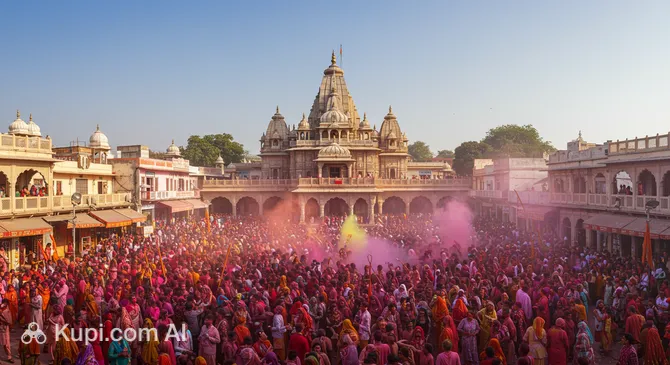
Barsana. Illustration.
Source: Kupi.com AI

Barsana attracts travelers with its sincere spirituality and unique features. The town is famous for its ancient temples, where an atmosphere of peace reigns, vibrant markets offering local goods and souvenirs, and its distinctive architecture. Of particular note are the bright festivals held here, which transform the town into a real open-air theater, giving guests unforgettable impressions.

A visit to Barsana is a wonderful opportunity to touch its amazing history, feel its deep spirituality, and immerse yourself in the vibrant culture of this unique place. This journey will undoubtedly leave a warm mark on your soul and grant you many discoveries.

You can find more interesting facts on the Barsana city history page.

Weather Overview

The weather in Barsana is characterized by significant seasonal fluctuations. Summer, especially in May and June, is very hot, with average temperatures exceeding 32°C and maximum values reaching nearly 39°C. From July to September, the monsoon period arrives, bringing relief from the heat but accompanied by significant rainfall—up to 22 rainy days in July. Winter, from December to February, is mild, with average temperatures around 14-18°C and minimal precipitation. Thus, in Barsana, you can expect a very hot summer transitioning into a rainy season, and a comfortable, dry winter. For more detailed information, you can explore the Barsana climate.

Average monthly temperature

Average monthly precipitation

Interesting Facts

Beyond its spiritual aura, Barsana holds many amazing stories and traditions that make this town truly unique. Here are just a few interesting facts to help you better understand this wonderful place:

  • Barsana is not just a town but, according to belief, the earthly manifestation of the pastimes of Radharani, the eternal beloved of Lord Krishna. Legends say that even the hills surrounding the town are manifestations of her parents, making this place particularly sacred for followers of Hinduism.

  • Every year, Barsana becomes the stage for the unique and colorful Lathmar Holi festival. This is not just a festival of colors, but a performance where women playfully "beat" men with sticks (lathis), while the men protect themselves with shields. This vibrant tradition attracts thousands of spectators and pilgrims from all over India and the world.

  • The majestic Shri Radha Rani temple, the town's main shrine, sits atop Brahmachal Hill. It is believed that its terraces offer one of the most picturesque panoramic views of the surroundings, and the temple itself is the most important center of spiritual life and worship of Radha.

  • Barsana is famous not only for its temples but also for its sacred lakes, such as Kusum Sarovar. According to legend, this lake is connected to the romantic stories of Radha and Krishna, and its waters are considered holy. It is an ideal spot for meditation and peaceful walks, allowing visitors to touch ancient legends.

How to Get There

You can reach the sacred town of Barsana in various ways; however, keep in mind that the town itself has neither an airport nor a railway station. Travelers will need to combine a flight or train journey with a subsequent transfer by car or bus. You can find all ways to get to the city on a separate page, while below we will look at the main options.

The nearest major international aviation hub is Indira Gandhi International Airport (DEL), located in Delhi. This is the main point of arrival for most foreign tourists. The airport is approximately 106 km from Barsana. A taxi ride from here will take about 3 hours, depending on traffic. This is the most convenient option for those flying from afar, thanks to the vast number of flights and developed infrastructure.

The closest airport to the town is Kheria Airport (AGR) in Agra, located at a distance of about 79 km. Travel time by taxi is approximately 2 hours and 20 minutes. However, note that this is a small airport with a limited number of flights. You can also consider flying into Jaipur International Airport (JAI), located in Jaipur (about 180 km from Barsana), if you are planning a trip through India's "Golden Triangle."

For convenience, here is a summary of the main airports:

AirportPassenger trafficDistance
Kheria168 36279 km
Indira Gandhi International Airport77.8 mln105 km
Ghaziabad (Hindon)1.8 mln118 km
Gwalior Airport334 729172 km
Jaipur Airport6.2 mln180 km

As for rail connections, there is no station in Barsana itself. The nearest major railway hub is Mathura Junction, located in the neighboring city of Mathura, about 40–50 km from Barsana. Numerous trains from Delhi, Mumbai, Agra, and other major Indian cities arrive here. From Mathura station, you can easily reach Barsana by taxi, auto-rickshaw, or local bus; the journey takes about an hour. There is also a small station called Kosi Kalan, which is closer (about 10–15 km), but fewer express trains stop there.

The final stage of the journey to Barsana always takes place on the roads. The roads leading to the town are quite picturesque and pass through the rural countryside of Uttar Pradesh. It is recommended to agree on the fare with taxi or rickshaw drivers in advance if you are not using official fixed-price taxi services.

Main Attractions

Barsana, located in the state of Uttar Pradesh, is a sacred place for followers of Hinduism, as it is here, according to legend, that Radha, the beloved of Lord Krishna, was born and spent her youth. The town is steeped in an atmosphere of devotion and attracts pilgrims and tourists with its ancient temples and shrines, each telling its own unique story.

One of the main jewels of Barsana is the Shri Radha Rani Temple (Shreeji Mandir). This majestic temple, dedicated to Radha in her form as the Queen of Vrindavan, stands atop the Brahmachal Hill. To reach it, pilgrims must climb about 200 steps, but the view of the surroundings from the top and the spiritual atmosphere of the temple itself are worth every step. The temple is known for its exquisite architecture, vibrant paintings depicting the leelas (divine pastimes) of Radha and Krishna, and, of course, the opportunity to connect with the sacred. It is especially crowded during festivals such as Radhashtami (Radha's appearance day) and the famous Lathmar Holi.

Another significant temple in Barsana is Maan Mandir, located on the summit of Maan Garh Hill. It is believed to be the place where Radha would retreat in moments of "maan"—her loving pique or lovers' quarrel with Krishna, who would then come to console her. The temple offers visitors not only spiritual solace and a place for meditation but also breathtaking panoramic views of the town and the surrounding landscape. This is a place to deeply feel the emotions and divine games of Radha and Krishna.

Kirti Mandir is a relatively new but already immensely popular temple dedicated to Kirti, Radha's mother. It is unique as it is claimed to be the only temple in the world where Radha is worshipped sitting on her mother's lap, symbolizing the tender bond between mother and daughter. The temple is built of beautiful white and pink stone, decorated with intricate carvings, and impresses with its calm, peaceful atmosphere. A visit to this temple gives a sense of warmth and maternal love.

One cannot overlook Rangili Mahal, which, while not an ancient temple in the traditional sense, plays an important role in the spiritual life of Barsana. Founded by Jagadguru Shri Kripalu Ji Maharaj, this complex includes a beautiful temple and palace where satsangs (spiritual discourses) and kirtans (chanting of holy names) are regularly held. Here you can see magnificent dioramas and images illustrating the life of Radha-Krishna and immerse yourself in an atmosphere of devotional service and joy.

Local Cuisine

The gastronomy of Barsana is a true immersion into the world of North Indian flavors, where every dish is steeped in centuries-old traditions and closely linked to the spiritual life of the city. Travelers should definitely try the famous local sweets, such as peda—delicate milk fudges—and laddu—fragrant balls of chickpea flour, which are an integral part of all festivals and temple offerings. These delicacies are prepared according to ancient recipes passed down from generation to generation.

Fresh dairy-based dishes hold a special place in Barsana's cuisine. Enjoy the taste of homemade cottage cheese, thick yogurts, or milk flavored with saffron and nuts. For drinks, be sure to try the refreshing chaas—a slightly salted yogurt drink that perfectly quenches thirst on a hot day—and, of course, the aromatic masala chai, prepared with a rich blend of spices that will warm you and provide a boost of energy.

The food culture in Barsana is very authentic. The main gastronomic experiences await you on the busy streets and local markets, where you can find not only fresh fruits, vegetables, and aromatic spices from nearby farms but also a variety of street food. During the numerous religious festivals, the city turns into a real gastronomic festival: the air fills with the scents of fried flatbreads, sweet syrups, and dishes prepared over an open fire, such as the sweet gulab jamun balls or the delicate kheer rice pudding. Locals warmheartedly treat pilgrims and tourists to traditional delicacies.

Barsana's dining scene attracts with its simplicity, freshness of ingredients, and deep connection to local culture and spirituality. This is a unique opportunity to touch real Indian cuisine, try dishes prepared according to old recipes, and experience the hospitality of this amazing city, where food is not just about satisfying hunger, but an important part of cultural heritage.

Travel Tips

Planning a trip to Barsana? Wonderful! To ensure your journey to this unique corner of India goes smoothly and leaves only pleasant impressions, we have prepared some practical tips.

  1. Clothing and Essentials:

    In Barsana, located in the state of Uttar Pradesh, it is hot and humid for most of the year, especially from April to October. Winter (December-February) is milder and more pleasant.
    • Bring light, breathable clothing made of natural fabrics (cotton, linen). Long sleeves and trousers will protect you from the sun and insects.
    Barsana is an important pilgrimage site with many temples. When visiting them, modest clothing is mandatory: shoulders and knees must be covered. Women may need a headscarf.
    • Don't forget comfortable shoes (sandals or light sneakers), sunscreen, a hat, sunglasses, and insect repellent. A universal power adapter will also be useful (types D and M are used in India).

  2. Local Transportation:

    Barsana is a small town, and the best way to see its central part is on foot.
    • For traveling longer distances or to neighboring towns, you can use auto-rickshaws—the main form of local transport. Bargain for the price in advance.
    • Local buses also run, but their routes and schedules may be inconvenient for tourists.
    • Ride-hailing apps (like Uber or Ola) may not be as common here as in India's larger cities. Renting a car without local driving experience is not recommended.

  3. Financial Matters:

    The local currency is the Indian Rupee (INR).
    • It's best to exchange currency at banks or authorized exchange offices in larger cities on your way to Barsana, as options within the town itself may be limited. Always get official receipts.
    • Credit and debit cards may be accepted in some hotels, but you will need cash for everyday expenses (meals in small cafes, souvenirs, transport). Check with your bank about using your cards in India and any associated fees.
    • ATMs may exist in Barsana, but they are few. Do not count on their constant availability.
    • An approximate daily budget: 1500-2500 rupees per person (excluding expensive accommodation and shopping) should be sufficient.
    • Tipping is not mandatory but appreciated for good service in restaurants (5-10% of the bill). It is customary to leave small donations in temples.

  4. Health and Safety:

    • Bring a first-aid kit with basic medications. There are pharmacies in Barsana, but the selection may be limited, and not all are open 24/7.
    • Medical assistance for tourists: be sure to get travel insurance with good coverage before your trip. In case of serious problems, transport to a hospital in a larger city may be required.
    Barsana, as a religious center, is generally considered a safe place. However, follow standard precautions: watch your belongings, especially in crowded areas and during festivals, and avoid displaying expensive jewelry or large amounts of money. It is not recommended to walk alone on poorly lit streets late at night.
    Drink only bottled water and avoid ice in drinks unless you are sure of its source.

  5. Communication:

    • The primary language is Hindi and local dialects like Braj Bhasha. English is understood in tourist areas and hotels, but not everywhere.
    • Learn a few simple Hindi phrases: "Namaste" (Hello/Goodbye), "Dhanyavad" (Thank you), "Aap kaise hain?" (How are you?), "Kitna?" (How much?).
    • It's easier to buy a local SIM card (e.g., Airtel, Jio, Vi) in a large city upon arrival in India, as setup may require time and documents (passport, photo).
    • Wi-Fi is available in most hotels and some cafes. Mobile internet usually works reasonably well.

  6. Local Etiquette and Traditions:

    • Greet locals with "Namaste" and palms joined at the chest.
    • Show respect for religious customs. Remove your shoes before entering temples and homes.
    • Do not point your foot at people or sacred images—it is considered offensive. Use your right hand for eating, passing money, and objects, as the left hand is traditionally considered "unclean."
    • Photograph people, especially women and sadhus (holy ascetics), only after getting their prior permission.
    • It is customary to make small donations (dakshina) in temples.

  7. Things to Avoid:

    Public displays of affection (like hugging or kissing) are not customary and may cause disapproval.
    • Wearing overly revealing or tight clothing, especially for women and when visiting religious sites. This may be seen as disrespectful.
    • Engaging in arguments about religious or political topics. Be an observer rather than a critic.

  8. Special Tip for Barsana:

    Barsana is world-famous for its unique celebration of Lathmar Holi (a festival of colors involving the ritual "beating" of men by women with sticks), which usually takes place in February or March. If your trip coincides with this time, be prepared for an incredibly vibrant but very crowded and specific spectacle. Protect your camera equipment, wear clothes you don't mind ruining, and be ready to be covered in colors from head to toe. It's an unforgettable experience but requires preparation and caution.

We hope these tips help you better prepare for your trip and get the most out of visiting Barsana. We wish you an unforgettable journey to this amazing city!

Entertainment & Nightlife

If you are looking for nightlife in Barsana in the conventional sense—with loud clubs, bars open until morning, and dedicated entertainment districts—this sacred town will offer you a completely different experience. Barsana, being a deeply spiritual center, is not known for traditional nightlife establishments. Instead, evenings here are filled with tranquility and the chance to experience the unique local culture.

Primary evening activity in Barsana centers around its many temples. After sunset, many of them come alive with evening services (aarti), accompanied by chants and rituals that create a special, almost mystical atmosphere. The main points of attraction at this time are iconic sites such as the Shri Radha Rani Temple and the Kushal Bihari Ji Temple. Visiting these temples in the evening allows you to feel the spiritual pulse of Barsana more deeply. The atmosphere here is exceptionally peaceful and blessed, attracting pilgrims and those seeking silence. Modest clothing covering shoulders and knees is recommended for temple visits.

There are no specialized "nightlife districts" or streets filled with bars in Barsana. Instead, you can take a leisurely stroll through the town's streets, where small shops selling religious paraphernalia, souvenirs, and local sweets may stay open until late evening. Some local eateries also remain open, offering simple traditional vegetarian cuisine. You won't find large concert venues or night markets in their classic sense here.

Practical tips for an evening in Barsana: Evening services in temples usually begin after sunset; it is best to check the exact schedule on-site. Entry to temples is generally free, though donations are welcome. Prices in local eateries are very moderate. Barsana is a small town, and many points of interest are reachable on foot. Public transport may be limited in the evening, so for longer distances, you can use cycle rickshaws or auto-rickshaws; it is recommended to agree on the fare in advance. The town is considered quite safe, especially in pilgrimage areas. Nevertheless, standard precautions, especially after dark, are advisable. Avoid poorly lit and deserted areas. You can usually order an auto-rickshaw through your hotel or find one at busier points on the street.

Regarding daytime entertainment, Barsana primarily offers pilgrimage and cultural tourism. The main activity for visitors is visiting the numerous temples and holy sites. There are no classic theaters, large museums, or amusement parks in Barsana. However, the town itself, with its atmosphere of devotion and ancient traditions, serves as a kind of living open-air museum where every corner can tell its own story.

Parks & Museums

Barsana, a sacred town in the state of Uttar Pradesh, offers travelers a unique immersion into spiritual heritage and natural beauty, which are closely intertwined here. Instead of traditional city parks and museums in the Western sense, the main attractions are ancient temples, sacred hills, and sites steeped in the legends of Radha and Krishna, each telling its own fascinating story and holding a piece of cultural heritage.

While you won't find expansive municipal parks in Barsana, its natural charm reveals itself in the sacred hills and picturesque surroundings. Brahmachal Hill, atop which the famous Shri Radha Rani Temple majestically stands, is not only a key spiritual center but also a wonderful observation point offering panoramic views of the surrounding area. The climb up the hill itself is part of the pilgrimage experience, allowing you to soak in the special atmosphere of this holy place. The town's outskirts are also decorated with small groves and sacred ponds (kunds), which play an important role in local lore and offer secluded spots for contemplation and rest.

The role of museums in Barsana is successfully fulfilled by its numerous temples, each a true treasure trove of history, religious art, and living cultural traditions. The primary among them, without a doubt, is the Shri Radha Rani Temple (Shreeji Mandir). This ancient temple dedicated to the goddess Radha attracts thousands of pilgrims and tourists with its unique architecture, vibrant frescoes depicting divine pastimes, and a deep spiritual atmosphere. It serves as a living testimony to the centuries-old traditions and beliefs of the region.

Another significant site combining cultural and natural appeal is Rangili Mahal. Although primarily an ashram and spiritual center, it impresses visitors with its exquisite architecture and well-maintained gardens, creating an atmosphere of peace. Here, you can delve deeper into the philosophy and culture associated with Radha and Krishna. Also noteworthy is Kirti Mandir, dedicated to Radha's mother, Kirtida. This relatively new but already beloved temple, crafted with great artistry, demonstrates the continuity of temple traditions and is an important point on Barsana's spiritual map.

For a deeper and more authentic immersion into the atmosphere of Barsana, try to visit the temples during the morning or evening service (aarti)—it is an unforgettable experience filled with enchanting music, chants, and the fragrance of incense. Additionally, a leisurely walk through the town's narrow streets and the scenic trails leading to lesser-known shrines and ashrams can grant you unexpected discoveries and a calmer, more personal connection with the spirit of this amazing place.

Getting Around

Public transport in Barsana is adapted to the size of this small town and the needs of its residents and guests. Getting around here is quite simple, although the system may differ from what is typical in large metropolises.

The main types of transport in Barsana and its surroundings are buses and auto-rickshaws (tuk-tuks). Buses generally serve longer routes, connecting Barsana with neighboring settlements and moving along the main streets of the town itself. Also popular are tempos (large auto-rickshaws or mini-buses) and jeeps that operate like shared taxis, especially for trips to nearby villages.

Auto-rickshaws are the most common and flexible way to travel short and medium distances within Barsana. They can take you to almost any point in the town. In some areas, you can also find cycle rickshaws, which offer slower but authentic trips for very short distances.

The payment system in Barsana is predominantly cash. On buses, tickets are usually purchased from the conductor or driver. The fare for auto-rickshaws and cycle rickshaws is generally negotiable—the price should be agreed upon with the driver before starting the journey. There are no specialized transit cards or mobile apps for public transport payment here yet.

Tourists are advised to always carry small bills for fares. Before taking an auto-rickshaw, check with locals for the approximate cost to your destination to better navigate prices. Public transport is usually most active during the day; the number of trips may be limited in the evening and at night.

Alternatives to public transport include taxis (private cars that can be hired for trips) and, of course, walking, especially if you want to explore the central part of town and its shrines. For groups or long-distance travel, you can consider renting a car with a driver. Organized bike rentals may be unavailable, but you can sometimes arrange to rent a bicycle privately.

A feature of Barsana's transport system is its simplicity and focus on traditional regional modes of travel. There are no metros or trams, but the existing system handles passenger transport quite well, offering an authentic experience of local life.

Accommodation

When planning a trip to Barsana, you will find that the town offers a range of accommodation options, primarily catering to pilgrims and tourists visiting its holy sites. The typical range of housing includes budget guesthouses, small mid-range hotels, and potentially ashrams offering a simple and authentic stay. Luxury resorts are generally few here; the emphasis is on functionality and proximity to spiritual centers.

For tourists, the most convenient areas to stay are those located near the main temples, such as the famous Radha Rani temple, or in the central part of town, where key points are easily accessible. Choosing accommodation in these zones will allow you to immerse yourself more deeply in the atmosphere of Barsana and save time on travel.

While Barsana may not boast many large international hotel chains, local hotels and guesthouses offer guests the necessary comfort. It is recommended to look for options on popular online booking platforms where you can read reviews and check current prices. The price range mostly varies from budget to mid-range, making Barsana accessible to a wide range of travelers.

Booking Tip: It is especially important to book accommodation in advance if your trip coincides with major festivals like Lathmar Holi or other important dates on the Hindu calendar. During these periods, the demand for accommodation spikes sharply, and the best options can sell out quickly. Bookings can be made through well-known travel websites or, in some cases, by contacting the hotel directly.

Nearby Cities

For those who want to explore the surrounding area, Barsana serves as an excellent starting point for day trips to several interesting nearby locations:

CityPopulationDistance
Nandgaon123 1919 km
Semri11 70316 km
Vrindavan56 61829 km
Mathura441 89434 km
Nagar25 57237 km

Among these cities, Mathura, located just 34 km away, is a sacred place for Hindus, known as the birthplace of Lord Krishna, and offers pilgrims and tourists many ancient temples and ghats. A little further away, at 49 km, is Bharatpur, which attracts nature lovers with its famous Keoladeo National Park—a UNESCO World Heritage site and an important wintering ground for thousands of birds. It is also worth considering a trip to Aligarh (75 km), known for its historic fort and the prestigious Aligarh Muslim University, which is of interest to history and architecture enthusiasts.

These nearby destinations provide a more complete picture of the region's rich culture, history, and natural beauty, including both the shrines of Uttar Pradesh and the attractions of neighboring areas.

Shopping & Souvenirs

Shopping in Barsana offers a unique experience closely tied to its religious and cultural heritage. The town is not known for large shopping centers or designer boutiques, but here you can find authentic goods reflecting the spirit of this holy place in India. The main focus is on religious items, local handicrafts, and traditional clothing.

Primary shopping points in Barsana are concentrated around the main temples and on the busy streets leading to them. Here you will find many small stalls and shops offering a variety of goods. Walking through these streets is an interesting experience in itself, allowing you to immerse yourself in the local atmosphere.

There are no large modern shopping centers in Barsana that residents of big cities might be used to. Shopping here is more traditional, oriented toward pilgrims and tourists seeking something special and connected to the local culture.

Local markets play an important role in the commercial life of Barsana. Here you can find fresh fruits, vegetables, spices, as well as various household items. Of particular interest are the stalls with religious paraphernalia, flower garlands for offerings, and small souvenirs. The atmosphere at the markets is very lively and colorful.

As souvenirs from Barsana, it is worth bringing back images of Radha and Krishna, to whom the town is dedicated, small figurines of deities, prayer beads (japa mala), incense sticks, and oils. Traditional Indian fabrics, clothing such as saris or kurtas, and bright bangles are also popular. Local sweets, like peda, can also be a delightful gastronomic souvenir.

Shops in Barsana are typically open from the morning (around 9:00-10:00) until the evening (19:00-20:00), often with a lunch break in the middle of the day, especially during the hot season. Trading starts earlier at the markets. The primary method of payment in small shops and markets is cash. In some larger stores, bank cards or local mobile payment systems may be accepted, but it is better to always have enough cash with you.

The Tax-Free refund system for tourists on goods bought in small shops and markets in Barsana is generally not available. This service is more common at major international airports and authorized stores in large cities of India when purchasing expensive items.

Reached the end of the page?

That means the route is fully explored