Support

Bandar Abbas International Airport

About the Airport

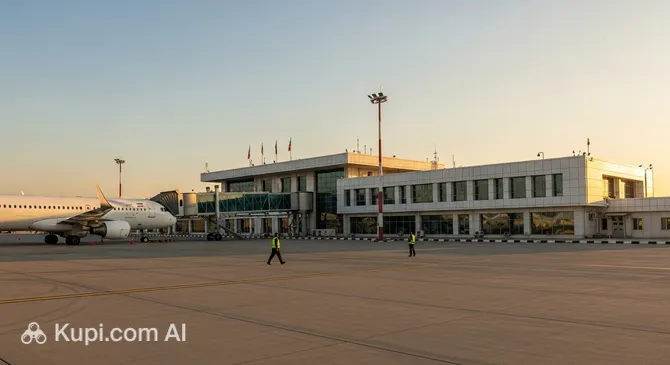
Bandar Abbas International Airport. Source: Kupi.com Binoculars

Bandar Abbas International Airport is the key aerial gateway to southern Iran, opening the way to the picturesque coast of the Persian Gulf and the strategically important islands of the Strait of Hormuz. For many travelers, the acquaintance with this colorful port region and its unique atmosphere begins right here. The airport not only serves an active flow of business trips related to the major seaport but also welcomes tourists eager to see the unique landscapes of Qeshm and Hormuz.

IATA Code BND
ICAO Code OIKB
City Bandar Abbas
Distance to centre About 9 km
Status International
Annual Passengers Over 1 million

Features and Infrastructure

The airport has two terminals: Terminal 1 serves international flights (predominantly to Persian Gulf countries, such as the UAE), while Terminal 2 is intended for domestic flights, which make up the bulk of the traffic. Given the region's hot and humid climate, the terminal buildings are equipped with powerful air conditioning systems, ensuring coolness even in the summer heat.

For the convenience of passengers, all necessary services are provided at the airport: cafes and small restaurants with local cuisine, souvenir shops, bank branches, and ATMs are in operation. Prayer rooms and 24-hour parking are also available. Transport accessibility is ensured by an official taxi service, with counters located at the terminal exits, allowing for a quick and safe journey to the city centre or the seaport.

Contact Information

Below is the main contact information for Bandar Abbas International Airport (BND). We recommend checking the data on official resources for accuracy before your trip.

  • Official Website: bandarabbas.airport.ir
  • Information Desk Phone: +98 76 3361 1011
  • Address: Bandar Abbas International Airport, 15th Khordad Blvd, Bandar Abbas, Hormozgan Province, Iran
  • Email: It is recommended to use the contact form on the official website or a phone call for communication, as a dedicated email address for general inquiries may not be available.
  • Lost and Found: For inquiries regarding lost items and luggage, you should first contact your airline's representative office at the airport.
  • Passenger Support: For consultations and assistance with general questions, please use the main airport information desk phone number.

How to Get to the Airport

Getting to Bandar Abbas International Airport (BND) from the city centre of Bandar Abbas is quite simple, as it is located near the main urban districts. Travelers can choose from several convenient methods, among which taxis are the most popular, and car rental is an excellent option for independent trips.

Taxi and Private Transfer is the easiest and most recommended way to get to the airport. Official taxis are easy to find anywhere in the city, as well as at the terminal exits. The trip from the centre of Bandar Abbas to the airport usually takes about 15-25 minutes depending on traffic conditions. The estimated cost of the trip is 250,000 – 500,000 Iranian Rials. It is important to remember that prices can change, and it is better to agree on the fare with the driver in advance to avoid misunderstandings. For added convenience, you can book a transfer through your hotel or an online service.

For those who prefer to travel around Iran independently, car rental will be an excellent solution. Both local and international rental companies operate at the airport and in the city. A rented car gives you freedom of movement and allows you to explore not only the city but also its picturesque surroundings. The cost of renting an economy class car starts from approximately 30-40 USD per day, but this may vary depending on the company, season, and car class. The airport provides both short-term and long-term parking where you can leave your car during your travels.

Public Transport, mainly represented by city buses, also runs in the airport area. This is the most budget-friendly option, but it can be inconvenient for tourists, especially those with luggage. Routes and schedules can be confusing for those unfamiliar with the local transport system, and the journey may take significantly longer due to stops. Therefore, to save time and ensure comfort, most travelers prefer taxis or car rentals.

Terminals and Map

Bandar Abbas International Airport (BND) is a compact and functional air hub that is easy to navigate even for an inexperienced traveler. All passenger infrastructure is concentrated in one main terminal, which serves both domestic and international flights.

The terminal is divided into two main zones: for domestic flights within Iran and for international destinations. Thanks to the airport's small size, navigation is intuitive. Signs are generally in Farsi and English, which makes orientation easier. It is practically impossible to get lost here, as all key zones—check-in counters, security screening, boarding gates, and waiting lounges—are located within a single building.

Departure and arrival zones are clearly delineated. The ground floor usually houses check-in counters and the arrival zone with baggage claim belts and customs control. After check-in, passengers proceed to the first floor, where they undergo security screening and passport control (for international flights), after which they enter the waiting area with boarding gates. Since there is only one terminal, transitions between different parts of the building are done on foot and take just a few minutes.

The time required to complete all formalities at Bandar Abbas Airport is usually less than in major global hubs. For a domestic flight, it is worth allocating about 45–60 minutes for check-in and screening, however, the standard recommendation is to arrive at the airport 2 hours before departure. For international flights, it is better to arrive 2.5–3 hours in advance to pass through passport control calmly. For easy navigation, simply follow the signs for "Domestic Flights" or "International Flights" immediately after entering the terminal.

Airport History

The history of Bandar Abbas International Airport (BND) is inextricably linked with the strategic development of the city as the main port hub in southern Iran. Although a small airfield existed here previously, the modern airport was officially founded and began operations in 1971 to meet the growing demand for air transport in this economically important region.

The first stages of development followed immediately after the opening. In the 1970s, as the importance of Bandar Abbas as a key trading harbour grew, the airport's infrastructure was significantly expanded. The runway was lengthened and strengthened to accommodate larger aircraft, and the passenger terminal was modernized. This allowed for the establishment of stable air connections with the capital and other major Iranian cities, as well as the launch of the first international flights, predominantly to neighboring Persian Gulf countries.

The next significant milestone in the airport's history occurred in the late 1990s and early 2000s. During this period, a new international terminal was built and put into operation. This project significantly increased capacity, separated the flows of domestic and international passengers, and raised the level of service to modern standards. In parallel, new navigation systems were implemented, which improved flight safety.

Today, the airport is rightfully considered the main aerial gateway to Hormozgan province and popular tourist islands such as Kish and Qeshm. An interesting fact: the airport has a dual purpose, serving not only civil but also military aircraft, which highlights its strategic importance. It continues to play a key role in the development of both tourism and business ties across the country's southern region.

Services and Amenities

Bandar Abbas International Airport (BND) offers passengers a set of basic services and amenities to make waiting for a flight more comfortable. Although the airport is not among the largest hubs, everything necessary for travelers is available here.

Within the terminal, you will find several cafes and small restaurants where you can grab a bite of local and international cuisine, as well as enjoy coffee or soft drinks. Additionally, shops are in operation, including Duty Free, where you can purchase souvenirs, perfumes, sweets, and other goods.

For passengers preferring enhanced comfort, lounges are available, including a VIP lounge. Here you can relax in a quieter atmosphere, enjoy complimentary snacks and beverages, and work in silence. Access to such lounges is usually provided for a fee or for holders of specific airline cards and loyalty programmes.

The airport provides access to wireless internet (Wi-Fi), allowing you to stay in touch with loved ones or handle work matters. For passenger convenience, mobile phone and electronic device charging stations are provided in the waiting halls.

Financial services are represented by bank branches and currency exchange offices, where you can exchange money upon arrival or before departure. ATMs for cash withdrawal are also installed within the terminal.

In case of need, a medical station operates at the airport to provide first aid. For passengers traveling with small children, a mother and child room is equipped where you can feed and change a baby in a calm environment. The airport also provides services for passengers with reduced mobility, including ramps and staff assistance during boarding and disembarking.

Although there are no hotels directly on the airport grounds, several hotels are located in the immediate vicinity, in the city of Bandar Abbas, which can be reached quickly by taxi. For business travelers, basic business services, such as workspaces and internet access, may be available in the VIP lounges.

Where to Eat

At Bandar Abbas International Airport (BND), you won't find a wide variety of international chains, but this is a wonderful opportunity to experience authentic Iranian cuisine. The main cafes and eateries are located in the public area, before security control (landside), so if you plan to have a full meal, it is better to do so before checking in. In the departure area (airside), the selection is usually limited to drinks and light snacks.

For a quick bite, look for stalls with fresh pastries (`shirini`), sandwiches, and, of course, aromatic Iranian tea. If you have time for a substantial lunch or dinner, pay attention to establishments offering classic Persian cuisine. The menu often includes:

  • Kebabs: Don't limit yourself to ordinary shish kebab. Try Jujeh Kabab (chicken) or Kabab Koobideh (minced meat), which are served with saffron rice and grilled tomatoes.
  • Hearty soups and stews: Look for dishes such as Ash-e Reshteh (thick soup with noodles, beans, and herbs) or Khoresh-e Bademjan (eggplant stew with meat). This is a great way to warm up and have a filling meal.
  • Drinks: Besides tea, be sure to try Doogh — a refreshing savory yogurt-based drink with mint.

Important information for travelers with specific dietary needs: all food at the airport, as throughout Iran, is Halal by default. Vegetarians will find it easy to find suitable dishes, as Iranian cuisine is rich in vegetables, legumes, and rice — the same Ash-e Reshteh soup or various vegetable appetizers will be an excellent choice. However, finding certified vegan or gluten-free dishes can be extremely difficult, so with strict restrictions, it is better to have a small supply of food with you.

Prices in airport establishments are moderate but expectedly higher than in the cafes of Bandar Abbas city. It should be noted that cafes and restaurants do not operate 24/7. Their opening hours are closely tied to the flight schedule: they open a few hours before the first departure and close after the last plane departs. Therefore, at night or between flights, all establishments may be closed.

Travel Tips

To ensure your journey through Bandar Abbas International Airport goes smoothly, take advantage of these useful tips. A thoughtful approach will help avoid stress and save time, especially if you are flying to Iran for the first time.

Arrival Time and Check-in. It is recommended to arrive at the airport at least 2-2.5 hours before domestic flights and 3-4 hours before international flights. This will give you enough time to complete check-in, baggage drop, and security checks, which may take longer during peak hours. Keep your passport and ticket handy for quick inspection.

Customs Control and Hand Luggage. Be especially attentive to import and export regulations. Strict restrictions apply in Iran. It is categorically forbidden to transport any alcoholic products, pork, as well as materials that may be deemed inappropriate (for example, certain magazines or printed matter). Liquids in hand luggage must comply with international standards (up to 100 ml per container), and all sharp objects must be checked in.

Saving Time and Money. Check the baggage allowance with your airline in advance to avoid excess weight fees. International bank cards are practically not accepted at the airport or in the city of Bandar Abbas, so make sure to carry a sufficient amount of cash in Iranian Rials to pay for taxis, food, and other services.

Seat Selection and Connections. If you have a connecting flight, ensure there is enough time between flights when booking — at least 2-3 hours. Check if you will need to collect and re-check your luggage. When choosing a seat on the plane, consider that the windows offer picturesque views of the Persian Gulf coast or the country's desert landscapes, so a window seat can be an excellent choice.

In Case of Flight Delay. If your flight is delayed, first contact your airline's counter for information and instructions. Monitor updates on the departure boards. It is useful to have a portable charger, a small bottle of water, and a light snack in your hand luggage in case of a long wait.

Reached the end of the page?

That means the route is fully explored