Support

Daroogheh Historical House

About

In the heart of the historical part of Mashhad lies a true architectural treasure—the Darougheh Historical House. This magnificent mansion, built at the end of the 19th century (around 1921), is one of the most striking examples of Qajar-era residential architecture in Iran. Occupying an area of over 1,100 square meters, it impresses with its scale and elegance of lines.

One of the house's main highlights is its unique origin: Russian architects worked on its creation. Thanks to this collaboration, the building acquired a unique appearance where classical Iranian style, with its enclosed courtyards and pools, intertwines with elements of Russian architecture. This cultural synthesis makes Darougheh House an important monument of national heritage.
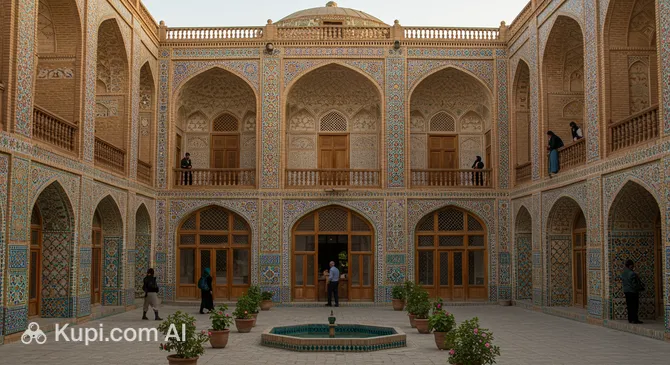
Darugheh Historical House. Illustration.
Source: Kupi.com AI

Traveler photos:

The house was built at the request of the city's first police chief and served as a private residence for a long time. After a period of neglect, the building was acquired by the municipality in 2012, underwent thorough restoration, and in 2015 was transformed into a museum accessible to all admirers of history and beauty.

Contacts

For those planning a visit to this architectural monument, it is useful to save the basic contact details for navigating the city. The Darougheh Historical House is located in the Samen district, making it easily accessible for most tourists staying in the city center.

Below is detailed information to help you contact the museum administration or find the site on a map.

How to contactContact
Address7JPC+WWH District Samen, Mashhad, Razavi Khorasan Province, Иран
Phone+98 51 3369 1610

What to Do

The main pleasure of visiting Darougheh House is the opportunity to literally step back in time and witness the lifestyle of the aristocracy from a century ago. Be sure to linger in the inner courtyard: here you'll find a traditional central pond and two small gardens that provide cool shade even on the hottest days. The building was designed with the seasons in mind, so you can see a clear division into summer and winter living areas.

Pay attention to the technical innovations of the time, which appeared here for the first time in the region. You will see the first private bath and the first fireplace in a Mashhad residence. Also of interest are the two-story bakery, the traditional kitchen, and the cool basement that served as a natural refrigerator.

For architecture lovers, the rooms with badgirs (wind towers)—a unique air conditioning system—will be of particular interest. The entire mansion functions today as a museum, where every interior element, from carved doors to brickwork, tells its own story of the life of the Iranian nobility during the Qajar era.

Getting There

Darougheh Historical House is located in one of the oldest districts of Mashhad, on Nawab Safavi Street. To find the entrance, head to the right side of Hoz-e Mesgaran and turn into the Darougheh alley. This area is steeped in the atmosphere of the old city, making the walk there an attraction in its own right.

The most comfortable way to reach the site is by taxi, which is relatively inexpensive in Iran. If you prefer public transport, you can take the metro to the nearest station in the city center and then transfer to a bus or walk, enjoying the views of the local neighborhoods.

Since Mashhad is a major transport hub in the northeast of the country, it is easily accessible via Mashhad International Airport, from where you can reach the historical center in about 20–30 minutes, depending on traffic.

Nearest city: Mashhad

History & Facts

The building's name is directly linked to its owner: the house was commissioned by Yousef Khan Herati, who was the last darougheh (governor) of Mashhad at the end of the Qajar dynasty. He was the first head of the Nezamiyeh department after the Constitutional Revolution, and his status required a residence of such caliber.

One of the most interesting features of the Darougheh Historical House is its architectural origin. The building was designed and constructed by Russian architects, making it a unique hybrid. Here, Persian building traditions—such as inner courtyards and wind towers—blend harmoniously with elements of Russian design from that period.

The house's history following the change of power was complex: until 1981, it was owned by the governor's heirs, and then the building was sold to representatives of the village of Shahidieh for religious ceremonies. It wasn't until 2002 that the site was officially added to Iran's National Heritage list, recognizing its exceptional value.

In 2012, the city municipality purchased the mansion to save it from ruin. After an extensive and painstaking restoration that managed to recover the smallest decorative details, Darougheh House reopened its doors to the public in 2015, becoming one of the region's most brilliant architectural gems.

Time Needed

To leisurely explore all levels of the house, peek into its secret rooms, and take beautiful photos in the inner courtyard, visitors usually need 1 to 2 hours. This is plenty of time to soak in the late 19th-century atmosphere and appreciate the builders' craftsmanship.

If you are an enthusiast of architectural photography or enjoy studying antique interiors in detail, we recommend setting aside a little more time. The mansion is rich in small details, such as intricate carvings and unique heating systems, which deserve close attention.

Working Hours

Darougheh Historical House welcomes guests daily from Tuesday to Sunday. The museum's doors are open from 08:00 to 18:00. Please note that Monday is usually a closing day, and the house may also be closed during public and religious holidays.

Tickets can be purchased directly at the entrance. As the operating schedule may change slightly depending on the season or restoration work, it is recommended to check for up-to-date information on the city's official tourism resources before your trip.

08:00–18:00

Nearby

Visiting Darougheh House is just one part of the cultural program that ancient Mashhad has to offer. Numerous interesting spots are concentrated around this location, from modern theme parks to quiet gardens where you can relax after exploring historical buildings.

Exploring the surrounding area will help you better feel the contrast between ancient architecture and the modern rhythm of life in the largest city in the northeast of the country.

NameDistance
Arman Shopping Center0.5 km
Astan Quds Razavi Museums0.6 km
Tomb of Nader Shah1.4 km
Green Dome1.8 km
Ferdowsi Shopping Center2.4 km
Pesaran Karim Restaurant2.7 km
Mashhad Garden3.9 km

What to see in nearby cities

Reached the end of the page?

That means the route is fully explored