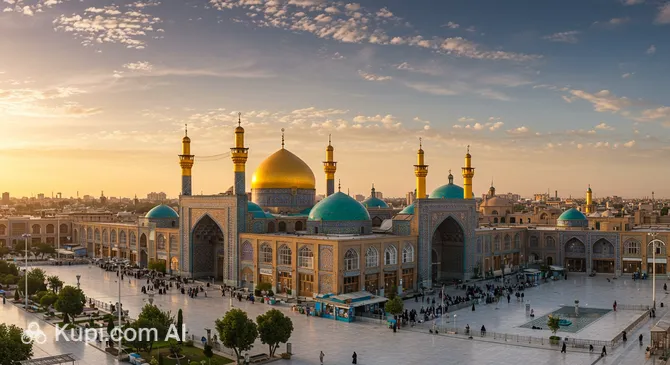
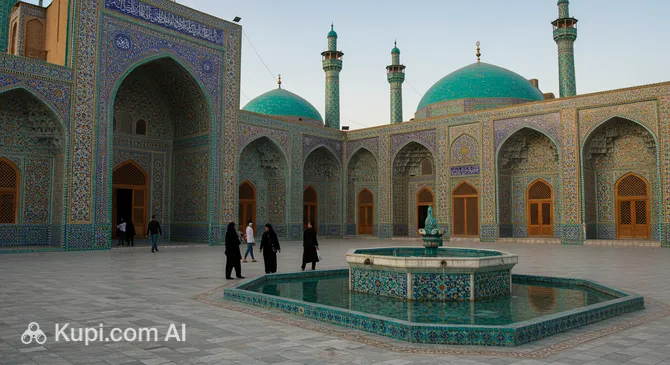
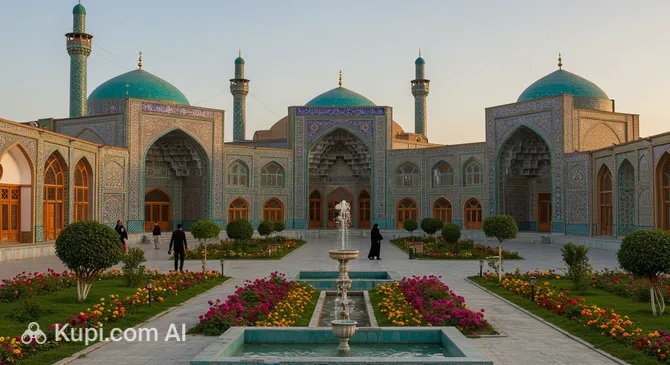
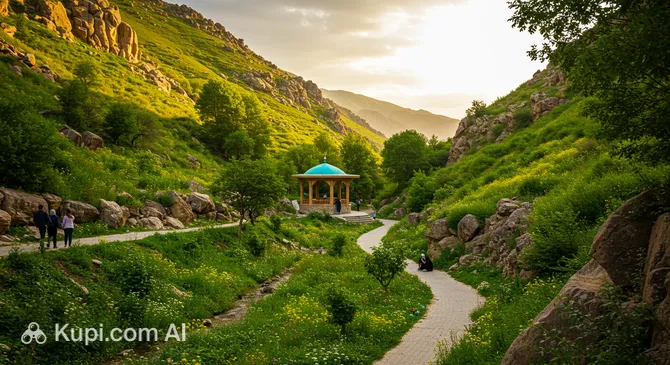
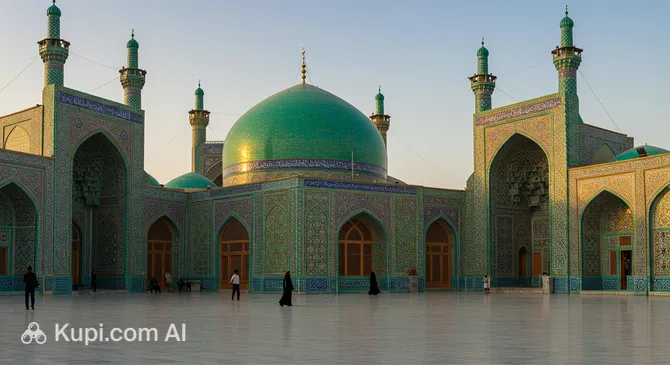
Mashhad stands as the spiritual capital and the second-largest city in Iran, offering a profound blend of religious significance and vibrant urban life. Located in the northeast of the country within the Razavi Khorasan Province, this sprawling metropolis is home to over 3.3 million residents. It serves as a major hub for millions of pilgrims and travelers each year, creating an atmosphere that is both bustling and deeply reverent.
The city's identity is inextricably linked to its past. Delving into the history of Mashhad reveals its evolution from a modest settlement into a significant cultural center following the martyrdom of Imam Reza in the 9th century. This historical depth is reflected in the city's architecture and the enduring traditions of its people.
Mashhad. Illustration.
Source: Kupi.com AI
For visitors, the crown jewel of the city is undoubtedly the Imam Reza Shrine, one of the largest and most magnificent mosque complexes in the world. Its golden domes and intricate tile work are truly breathtaking. Beyond the shrine, travelers can explore the tomb of the legendary poet Ferdowsi in nearby Tus, or wander through the lively Bazaar-e Reza to shop for high-quality saffron, turquoise, and Persian carpets.
Whether you are drawn by architectural wonders, spiritual curiosity, or the desire to experience authentic local culture, Mashhad offers a unique and memorable journey. It is a destination that invites you to discover the warm hospitality and rich heritage of this fascinating region.
Weather Overview
Mashhad experiences a semi-arid climate characterized by distinct seasonal changes, making the timing of your visit an important factor in your travel planning. Generally, the city enjoys clear skies for much of the year, though conditions vary significantly between the seasons. For a detailed breakdown of monthly averages and current forecasts, you can consult the guide to the weather in Mashhad.
Summers, spanning from June to August, are typically hot and very dry. July is the warmest month, with average temperatures around 26.2°C and daytime highs reaching up to 33.1°C. During this period, rainfall is virtually non-existent, and you can expect long, sunny days perfect for exploring the city's architecture, provided you dress lightly for the heat.
In contrast, winters are cold, with temperatures dropping noticeably from December through February. January sees the lowest temperatures, with averages hovering around 2.7°C and nighttime lows often dipping to -3.0°C. Spring brings milder weather and is the wettest time of the year, particularly in March, which sees about 10 wet days. Expect hot, dry summers and cold winters with occasional precipitation, which is most frequent during the spring months.
Average monthly temperature
Average monthly precipitation
Interesting Facts
Beyond the main attractions, Mashhad holds many fascinating secrets that reveal its status as a cultural and recreational powerhouse in the region. The city offers a surprising mix of ancient heritage and modern leisure that often exceeds the expectations of visitors.
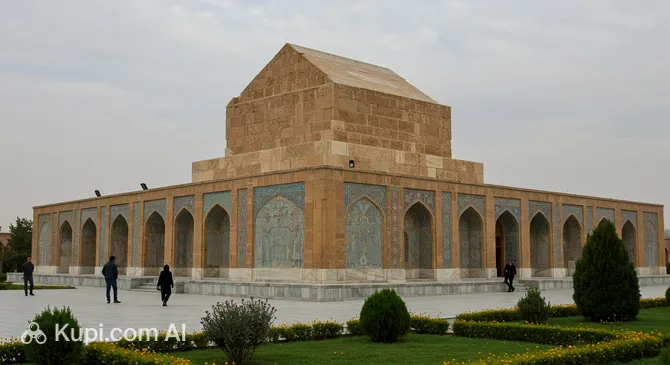
Tomb of Ferdowsi. Illustration.
Source: Kupi.com AI
Traveler photos:
The region surrounding the city is the undisputed global capital of saffron, producing over 90% of the world's supply of this "red gold," which is meticulously harvested by hand.
Despite its location in a semi-arid province, Mashhad is famous for having an unusually high concentration of massive indoor water parks, such as Water Waves Land, which was once the largest of its kind in the Middle East.
The city is the gateway to the resting place of the savior of the Persian language; the Tomb of Ferdowsi honors the poet who dedicated 30 years to writing the Shahnameh to preserve Persian culture and history.
Mashhad is renowned for a specific culinary delight called "Shishlik," a premium grilled lamb chop dish that originated in the nearby area of Shandiz and is considered a must-try meal for any traveler in Iran.
How to Get There
Reaching this major spiritual and cultural hub is straightforward, with air travel being the most popular choice for international and domestic visitors. For a comprehensive look at all available routes and transport tips, you can view more about how to get to Mashhad in our dedicated section.
The primary gateway to the city is Mashhad International Airport (MHD). It is conveniently located just 7.5 km from the city center, allowing for a quick transfer of approximately 30 minutes by taxi or local bus. As a major transport hub with high passenger traffic, it offers numerous connections. Travelers might also note the presence of Ashgabat Airport (ASB) in the city of Ashgabat. However, this airport is situated about 217 km away from Mashhad, meaning a transfer would take significantly longer, estimated at around 5 to 6 hours by road.
For clarity, here is a summary of the main airports:
For those looking at regional rail options provided in the surrounding area, the Serkhas station is located in the city of Sarahs, approximately 146 km from Mashhad. Travelers arriving here would need to arrange a taxi or bus transfer, which could take roughly 4 hours. Another station in the wider vicinity is Serkhetabat, located in the city of Serhetabat, about 272 km away from Mashhad.
Below is a table of the closest railway stations listed:
Station
Passenger traffic
Distance
Serkhas
50 000
146 km
Serkhetabat
—
272 km
Main Attractions
While the holy shrine is the spiritual heart of the city, Mashhad offers a diverse array of historical and recreational sites that provide a deeper understanding of Persian culture and leisure. From grand mausoleums to lush gardens, the city's attractions cater to history buffs and nature lovers alike.
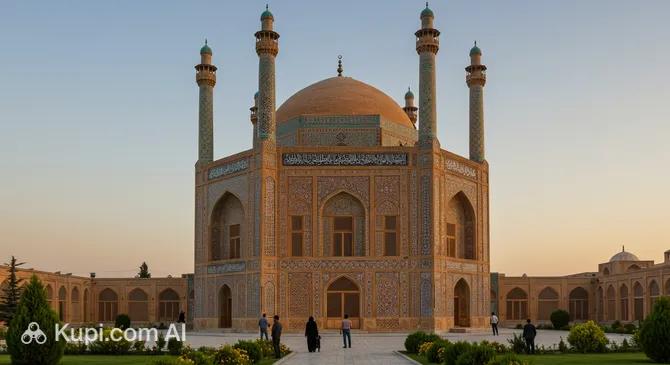
One of the most significant historical monuments is the Tomb of Nader Shah. Dedicated to the founder of the Afsharid dynasty, often referred to as the "Napoleon of Persia," this site features a striking grey granite statue of Nader Shah riding a horse. It is interesting to tourists not only for its imposing modern architecture but also for the on-site museum, which displays an impressive collection of weaponry, armor, and artifacts from the Afsharid era.
Tomb of Nader Shah. Illustration.
Source: Kupi.com AI
Traveler photos:
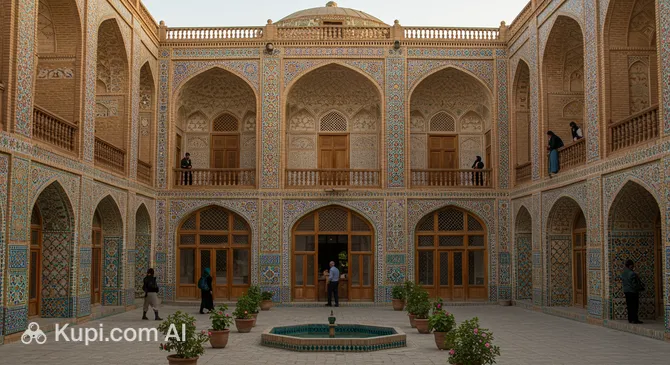
For a glimpse into the traditional lifestyle of the late Qajar period, the Darugheh Historical House is a must-visit gem. Built by Russian architects for the city's police chief, the house blends Iranian architecture with unique Russian elements. Visitors are charmed by its beautiful courtyard, intricate tile work, and wooden carvings, making it a perfect spot for photography and appreciating historical residential design.
Darugheh Historical House. Illustration.
Source: Kupi.com AI
Traveler photos:
Cultural enthusiasts should not miss the Astan Quds Razavi Museums. Located within the shrine complex, this institution houses a vast treasure trove of Islamic art and history. The collections include rare Qurans, exquisite Persian carpets, ancient coins, and gifts presented to the shrine over centuries. It offers a fascinating insight into the religious and artistic heritage of the region.
Astan Quds Razavi Museums. Illustration.
Source: Kupi.com AI
Traveler photos:
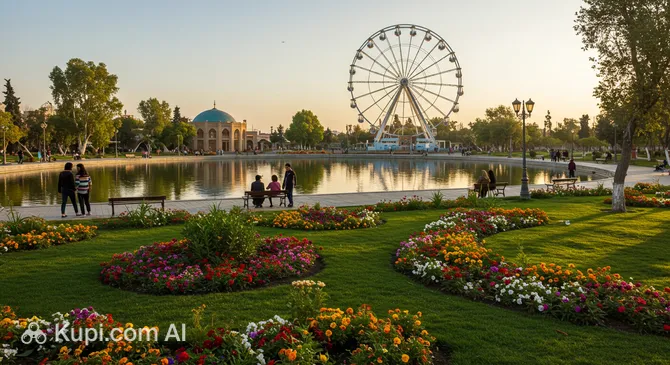
When it comes to outdoor leisure, Mellat Park serves as the city's largest and most popular green space. It is a favorite among locals for evening walks and picnics. The park is particularly famous for housing a massive Ferris wheel, which is one of the tallest in the Middle East, offering panoramic views of the city skyline. It provides a relaxing break from the bustling city streets.
Mellat Park. Illustration.
Source: Kupi.com AI
Traveler photos:
Just a short drive from the city, the Chalidarreh Tourist Complex offers a refreshing escape into nature. Centered around a dam and lake, this recreational area is perfect for families and adventure seekers. Tourists can enjoy boating, take a ride on the chairlift for scenic views of the valley, or simply relax in the cool climate, which is especially welcome during the warmer months.
Chalidarreh Tourist Complex. Illustration.
Source: Kupi.com AI
Traveler photos:
Local Cuisine
The culinary landscape of Mashhad is a dream for meat lovers, defined by rich flavors, generous portions, and the abundant use of the region's "red gold"—saffron. As the capital of the Razavi Khorasan Province, the city offers a distinctive gastronomy that revolves heavily around high-quality lamb and slow-cooked stews. Dining here is not just about sustenance; it is a ritual often enjoyed in large family groups, particularly in the scenic garden restaurants on the city's outskirts.
The undisputed king of Mashhadi cuisine is Shishlik. These are succulent, marinated lamb chops skewered and grilled to perfection, traditionally served with saffron rice and grilled tomatoes. While you can find this dish throughout Iran, Mashhad (and the nearby town of Shandiz) is its true home, and locals will insist it tastes different here. Another dish unique to the city is Sholeh Mashhadi, a dense and hearty stew made from meat, various legumes, and abundant spices. It is so culturally significant that it is often prepared in massive cauldrons during religious ceremonies, though visitors can also find it in select local eateries.
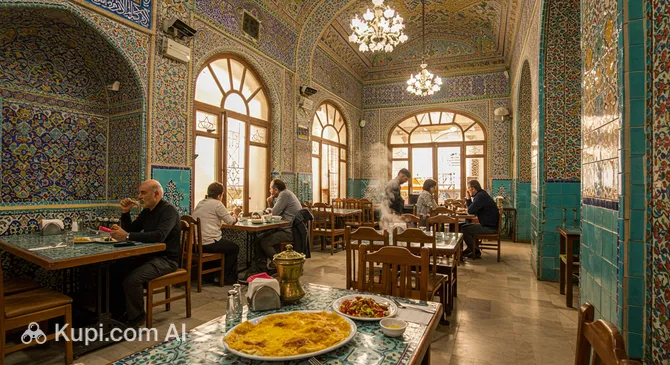
For those seeking the finest lamb dishes, Chelo Mahiche (slow-cooked lamb muscle or shank served with rice) is a must-try. The meat is cooked until it is incredibly tender and falls off the bone. One of the most famous establishments to experience this delicacy is the renowned Pesaran Karim Restaurant. It is a favorite among both locals and tourists for its consistent quality and traditional preparation methods.
Pesaran Karim Restaurant. Illustration.
Source: Kupi.com AI
Traveler photos:
When it comes to beverages, tea (Chai) is the staple drink consumed throughout the day, often flavored with saffron or cardamom. With meals, the most popular accompaniment is Dough, a savory, carbonated yogurt drink often mixed with dried mint or rose petals. It is important for travelers to remember that alcohol is strictly prohibited in Iran. Instead, you can try various fruit syrups (Sharbat) or non-alcoholic malt beverages, which are widely available in various fruit flavors.
The food culture in Mashhad extends beyond just the food itself; it is about the atmosphere. Many locals prefer to drive to the cooler, mountainous areas nearby, such as Torqabeh and Shandiz, to dine on traditional "takhts" (raised wooden platforms with rugs). However, excellent options exist within the city as well. The Eram Restaurant is another distinguished venue where you can enjoy top-tier Shishlik and other Persian classics in a more formal setting. Whether you are eating street food near the bazaar or dining in a luxurious hall, the hospitality and flavors of Mashhad are sure to leave a lasting impression.
Travel Tips
Visiting Mashhad is a unique experience that blends deep spiritual heritage with bustling city life. To ensure your trip to this fascinating Iranian metropolis is comfortable and respectful of local customs, here are some essential practical tips.
Clothing and Gear: Mashhad is a holy city, so modesty is paramount. Women must wear a headscarf and loose-fitting clothes that cover the arms and legs at all times in public; a chador (full-body wrap) is usually mandatory to enter the Imam Reza Shrine and is often available to borrow at the entrance. Men should wear long trousers and avoid shorts entirely. Pack light, breathable fabrics for the hot summers, but bring a warm coat and sturdy shoes if you visit during the cold winter months.
Transportation: The city boasts a modern and efficient Metro system that connects the airport to the city center and the shrine area, making it a budget-friendly option. For door-to-door convenience, use ride-hailing apps like Snapp (the local equivalent of Uber), which are affordable and overcome language barriers. Taxis are plentiful, but always agree on a fare before the ride if the meter is not used.
Finances: It is crucial to know that international credit cards like Visa and Mastercard do not work in Iran. You must bring enough cash (USD or EUR) for your entire trip and exchange it at official exchange offices (*Sarafi*). Be aware of the currency confusion: the official currency is the Rial, but locals almost always quote prices in Toman (1 Toman = 10 Rials). Always clarify which unit is being discussed to avoid overpaying.
Health and Safety: Mashhad is generally very safe for tourists, even at night. Pharmacies (*Daru-khaneh*) are widely available, and main hospitals offer good medical care. While tap water is treated, short-term visitors are advised to drink bottled water to avoid any stomach adjustments. As in any crowded tourist hub, keep a close watch on your valuables in busy areas like the Bazaar-e Reza.
Communication: The primary language is Persian (Farsi). While staff in major hotels may speak English, it is less common among taxi drivers and shopkeepers. It is highly recommended to purchase a local SIM card (such as Irancell) upon arrival to stay connected. Downloading an offline map and a translation app before you arrive will be incredibly helpful for daily interactions.
Local Etiquette: Iranian culture involves Taarof, a complex system of politeness. If a shopkeeper or driver refuses payment initially, you must insist on paying; it is a gesture of respect, not a free offer. In public transport, strictly observe gender-segregated sections; on city buses, men typically sit at the front and women at the back, while the metro has specific carriages for women.
What to Avoid: Public displays of affection between couples, such as kissing or holding hands, are culturally frowned upon and should be avoided. Also, be very careful with photography; never take photos of government buildings, military sites, or people without their permission. Inside the Holy Shrine, photography with professional cameras is prohibited, though mobile phones are generally tolerated in the courtyards.
Saffron Shopping: Since you are in the saffron capital of the world, buying "red gold" is a popular activity. To ensure quality, avoid buying pre-ground saffron from unknown street vendors. Instead, purchase whole threads from reputable shops in the bazaar. A simple test is that high-quality saffron should color cold water yellow-orange, not red, and it should smell sweet but taste slightly bitter.
By keeping these practical tips in mind, you will be well-prepared to navigate the streets of Mashhad with confidence and ease. Embracing the local customs will not only make your travel smoother but will also help you connect more deeply with the genuine warmth and hospitality of the people in this historic city.
Entertainment & Nightlife
Nightlife in Mashhad offers a distinct and culturally rich experience that differs significantly from Western norms. As a holy city in Iran, you will not find alcoholic bars, dance clubs, or discos here, as they are prohibited by law. Instead, the city's evening energy is channeled into vibrant bazaars, modern shopping centers, tea houses, and beautifully illuminated parks where families and friends gather to socialize until late hours. The atmosphere is safe, welcoming, and bustling, particularly around the Holy Shrine, which remains the spiritual and social heart of the city 24 hours a day.
For a taste of modern urban leisure, the commercial districts come alive after sunset. One of the most prominent destinations is the Almas Shargh shopping mall. Known for its mesmerizing diamond-shaped dome that lights up the night sky, this complex is not just for shopping; it is a major social hub. Inside, you can find a variety of coffee shops and food courts serving traditional snacks and non-alcoholic beverages. It is an excellent place to observe local life, enjoy some window shopping, and experience the contemporary side of the city.
Almas Shargh. Illustration.
Source: Kupi.com AI
Traveler photos:
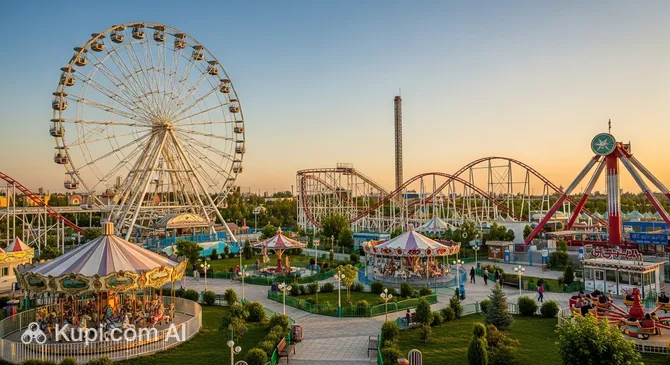
If you are looking for excitement and entertainment, the Ghahramanan Amusement Park is a fantastic option for an evening out. As one of the premier amusement parks in the region, it offers a wide range of thrilling rides and attractions that cater to all ages. The park is beautifully lit at night, creating a festive atmosphere that draws large crowds of locals. It is a perfect spot to mingle with residents and enjoy a fun-filled break from historical sightseeing.
Ghahramanan Amusement Park. Illustration.
Source: Kupi.com AI
Traveler photos:
For those who prefer a more tranquil evening in nature, the Vakilabad Garden provides a refreshing escape. Located in a valley with flowing streams and old trees, this historic park is a favorite destination for evening picnics and strolls. The air is cooler here, and the sound of water creates a relaxing backdrop for tea and conversation. It is common to see families spreading rugs and enjoying dinner outdoors, a tradition you are welcome to join if you bring some snacks.
When it comes to dining, the areas of Shandiz and Torqabeh, located just outside the main city limits, act as the primary nightlife districts for food lovers. These areas are lined with garden restaurants that stay open late, serving grilled meats and hookahs (shisha) in traditional settings. The dress code in all these public spaces remains modest; headscarves for women and long trousers for men are required even during recreational activities.
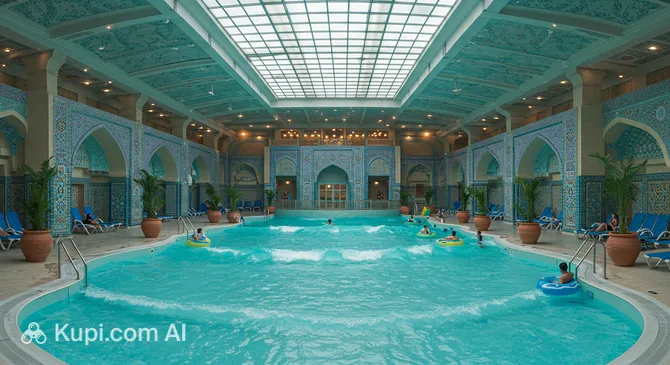
While the nights are for socializing, daytime entertainment in Mashhad offers its own unique thrills. The city is famous for its water parks, most notably Water Waves Land. As a massive indoor water park, it allows visitors to enjoy slides and pools regardless of the weather outside. Additionally, cultural enthusiasts can spend their days exploring the various museums scattered throughout the city, which provide deep dives into Persian history and art.
Water Waves Land. Illustration.
Source: Kupi.com AI
Traveler photos:
Practical Tips for the Night: The best time to experience Mashhad's nightlife is from 8:00 PM to midnight. The city is generally very safe for walking at night, even for solo travelers, though standard precautions with valuables should be taken in crowded bazaars. To get around, the ride-hailing app Snapp is the most convenient and affordable option, sparing you the hassle of negotiating taxi fares. Prices for evening entertainment and dining are reasonable, with a lavish dinner often costing significantly less than in European cities.
Parks & Museums
Mashhad is not only a destination for pilgrimage but also a city of blooming gardens and rich cultural repositories. Beyond the golden domes of the holy shrine, the city offers expansive green spaces and museums that narrate the long and storied history of the Khorasan region, providing a peaceful respite and educational depth to any visit.
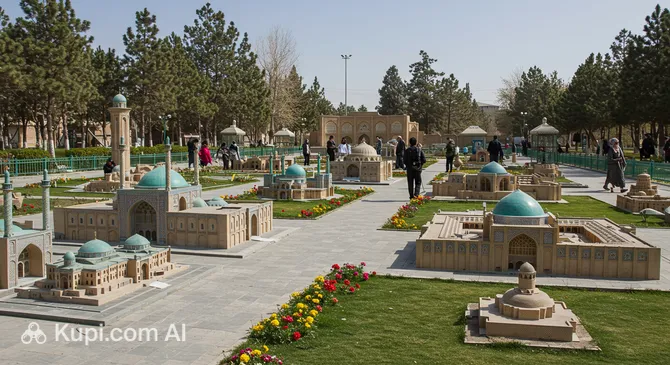
One of the most beloved natural spots in the city is Kooh Sangi Park (Stone Mountain Park). It is an ancient recreational center where visitors can climb rocky hills for a commanding view of the city skyline or relax by the large pools at the base. For a unique perspective on the country's architectural heritage, the Mashhad Miniature Park is a fascinating stop. Here, you can walk among scaled-down replicas of Iran's most famous historical sites, from the ancient ruins of Persepolis to the bustling Tabriz Bazaar, allowing you to "tour" the entire country in a single afternoon.
Mashhad Miniature Park. Illustration.
Source: Kupi.com AI
Traveler photos:
Nature enthusiasts should venture a bit further to the Arghawan Valley (Dareh Arghavan). Located near the village of Torqabeh, this valley is famous for its purple Judas trees (Arghavan) which bloom spectacularly in the spring. The contrast of the vibrant purple flowers against the rugged riverbed creates a stunning landscape that is perfect for hiking and nature photography.
Arghawan Valley. Illustration.
Source: Kupi.com AI
Traveler photos:
To understand the depth of the region's history beyond the religious sites, a visit to the Great Museum of Khorasan is essential. Located within the grounds of Kooh Sangi Park, its architecture is inspired by the historic Sun Palace of Kalat. The museum showcases a vast collection of artifacts ranging from the Paleolithic era to the Islamic period, offering a comprehensive look at the civilization of Greater Khorasan. Another cultural gem is the Anthropology Museum of Mashhad, housed in the historic Mehdi Gholi Bik Bathhouse near the shrine. It features displays of traditional clothing, tools, and intricate murals that depict the daily life and customs of past centuries.
Among the city's architectural treasures is the Green Dome (Gonbad-e Sabz). This Safavid-era mausoleum stands out in the city center with its distinct turquoise-colored dome and intricate floral tile work. It is the resting place of the mystic Sheikh Momen and serves as a quiet, spiritual reminder of the city's lineage amidst modern urban development.
Green Dome. Illustration.
Source: Kupi.com AI
Traveler photos:
For a truly local experience, try to visit the parks in the late afternoon or evening when Iranian families gather for tea and picnics. If you are traveling in late April or early May, prioritizing a trip to the Arghawan Valley is highly recommended, as the purple canopy is a fleeting but unforgettable sight that defines the natural beauty of the region.
Getting Around
Navigating Mashhad is surprisingly convenient thanks to a well-developed and modern public transport network designed to handle the millions of pilgrims and visitors the city receives annually. The system is reliable, affordable, and covers most major points of interest, including the Holy Shrine, shopping districts, and recreational parks. The backbone of this network consists of a metro system and an extensive fleet of buses, supplemented by readily available taxis.
The Mashhad Urban Railway (Metro) is the most efficient way to travel, especially for avoiding traffic during peak hours. Currently, there are two operational lines. Line 1 is particularly useful for tourists as it connects Mashhad International Airport directly to the city center and the western recreational area of Vakilabad. This makes Mashhad one of the few cities in the region where you can take a train straight from the terminal to your hotel area. Line 2 runs north-to-south, intersecting with Line 1 at Shariati Station, providing access to other commercial and residential districts.
For destinations not reached by the metro, the bus network is comprehensive. It includes standard buses and a faster BRT (Bus Rapid Transit) system that operates on dedicated lanes. When using buses, it is crucial to observe the local custom regarding seating arrangements: men sit in the front section, while women sit in the back. On the metro, there are dedicated carriages for women at the ends of the train, although women may choose to travel in the mixed central carriages if they prefer.
Payment across the public transport network is unified through a smart card known as the Man Card (or "My Card"). Cash is generally not accepted on buses or at metro turnstiles. You can purchase and top up these rechargeable cards at any metro station ticket booth, electronically at kiosks, or at specific newsstands near major bus stops. The fares are incredibly low by international standards, making public transport an extremely budget-friendly option for getting around.
If you prefer more direct transport, taxis are abundant. Official taxis are yellow or green and can be hailed on the street, though you should negotiate the fare before getting in if the meter is not used. However, the most popular option for tourists is using ride-hailing apps like Snapp (the local equivalent of Uber). These apps are highly recommended as they offer fixed pricing, eliminate the need for language proficiency, and allow you to pay in cash or via the app if you have a local bank card.
Public transport typically operates from around 6:00 AM to 10:00 PM, with slightly extended hours on holidays or special religious occasions. During rush hours (7:00–9:00 AM and 5:00–8:00 PM), the metro and buses can become quite crowded. For a smooth experience, buy your Man Card upon arrival at the airport or the nearest metro station, and always carry small bills if you plan to use taxis without an app.
Accommodation
As the primary destination for religious tourism in Iran, Mashhad boasts an exceptionally well-developed hospitality sector, reportedly holding more than half of the country's total hotel capacity. The sheer volume of visitors ensures a diverse range of accommodation options, catering to every budget and preference. Travelers can find everything from opulent 5-star luxury hotels with modern amenities to budget-friendly guesthouses (known locally as Mosaferkhaneh) and a vast array of apartment hotels, which are particularly popular among families seeking self-catering facilities.
The location of your stay largely depends on your priorities. The most sought-after area is undoubtedly the immediate vicinity of the Imam Reza Shrine. Streets radiating from the shrine, such as Imam Reza Street, Tabarsi, and Shirazi, are lined with hundreds of hotels. Staying here offers the convenience of walking to the holy complex at any time of day or night. However, this convenience comes with bustling crowds and higher noise levels. For a quieter and more upscale experience, visitors often look towards the districts along Vakilabad Boulevard or Ahmadabad, which are further from the center but offer a more relaxed atmosphere and easy access to modern shopping malls and parks.
A unique feature of accommodation in Mashhad is the prevalence of apartment hotels (Hotal Aparteman). These are an excellent choice for tourists traveling in groups or those planning a longer stay. They typically provide spacious suites with kitchenettes, allowing for a more home-like experience. While many international-standard hotels offer high-end services including swimming pools and multiple dining options, the budget sector is also robust, providing clean and basic rooms for pilgrims focused solely on their spiritual journey.
Booking Tips: The price and availability of accommodation fluctuate wildly depending on the Islamic calendar. During major religious occasions such as the martyrdom anniversary of Imam Reza, Ashura, or the Nowruz (Persian New Year) holidays, the city reaches full capacity. It is highly advisable to book your accommodation well in advance if your trip coincides with these peak periods. Conversely, visiting during the off-peak season can secure you excellent rooms at a fraction of the cost.
Regarding payment and reservations, international travelers should be aware that major global booking platforms often do not list Iranian hotels due to financial restrictions. Booking is typically done through local Iranian travel agencies or specific online portals dedicated to Iran tourism. Furthermore, since international credit cards are not accepted, you will likely need to pay in cash (Euros or US Dollars are often accepted for exchange) upon arrival, or arrange prepayment through a travel agency. Prices are generally very affordable for foreign tourists, offering great value for the level of comfort provided.
Nearby Cities
To explore the region beyond the bustling streets of Mashhad is to dive deeper into the rich tapestry of the Razavi Khorasan Province. The surrounding area is dotted with ancient cities that have played pivotal roles in Persian history, literature, and trade. From the legendary turquoise mines to the resting places of world-renowned poets, these nearby destinations offer rewarding day trips or short excursions for travelers eager to see more of Iran.
Below is a list of the closest major cities that are easily accessible from Mashhad:
City
Population
Distance
Nazerabad
34 237
18 km
Torqabeh
20 998
20 km
Shandiz
13 987
30 km
Kharv-e Sofla
13 535
56 km
Chenaran
53 879
58 km
Nishapur is undoubtedly the most significant historical gem in the vicinity. Located just a short drive away, it was once one of the greatest cities of the ancient world and a major cultural hub on the Silk Road. Today, it attracts literature lovers who come to pay homage at the tombs of the famous poets Omar Khayyam and Attar. The city is also globally renowned for its high-quality turquoise mines, making it the perfect place to purchase authentic turquoise jewelry.
Traveling further west, you will reach Sabzevar, a city with a history dating back to the 1st millennium BC. Known as the city of the "Sarbedaran" (Head on Gallows), a movement that sought freedom from Mongol rule, it holds a special place in Iranian history. Visitors can explore the impressive Jameh Mosque of Sabzevar and several historic caravanserais that whisper tales of ancient travelers.
To the south lies Torbat-e Heydarieh, an essential stop for those interested in the region's agricultural fame. This city is a major center for saffron production, often referred to as the "red gold" of Iran. The surrounding fields bloom with purple crocus flowers during the harvest season in late autumn, creating a spectacular landscape. Additionally, the city is known for its silk industry and the historic tomb of Qotboddin Heydar, from whom the city takes its name.
Another notable destination is Kashmar, famous for its vineyards and the production of raisins. It is also home to the Jameh Mosque of Kashmar and the shrine of Seyed Morteza. Meanwhile, to the northwest, Quchan offers a glimpse into the nomadic Kurdish culture of the region, known for its local music, traditional wrestling (Chookheh), and vibrant handicrafts.
Shopping & Souvenirs
Shopping in Mashhad offers a fascinating contrast between the old and the new, reflecting the city's dual identity as a historic pilgrimage site and a modern metropolis. Visitors can navigate through bustling traditional bazaars filled with the scent of spices or explore contemporary shopping complexes that offer international brands and entertainment. Whether you are looking for religious keepsakes or high-end fashion, the city's markets provide a window into the local culture and economy.
For most travelers, the top priority is purchasing the region's famous souvenirs. Mashhad is the global hub for saffron, often referred to as "red gold." You will find it everywhere, packaged in various grades. It is best to buy from reputable shops where you can inspect the threads. Alongside saffron, barberry (Zereshk) is a popular buy, used to add a tart flavor to Persian rice dishes. The city is also the primary market for turquoise (Firoozeh), mined in nearby Nishapur. You can find beautifully crafted silver rings and jewelry set with these blue-green stones throughout the city's markets.
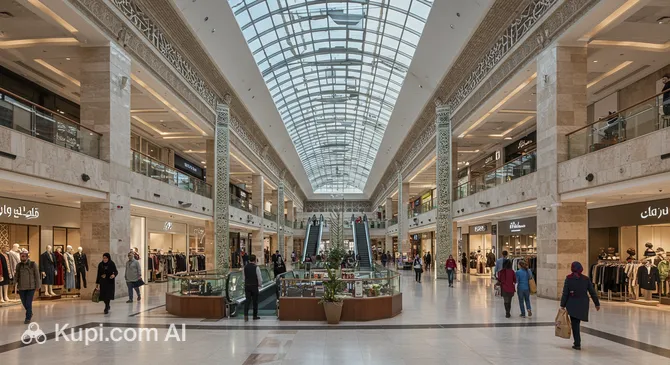
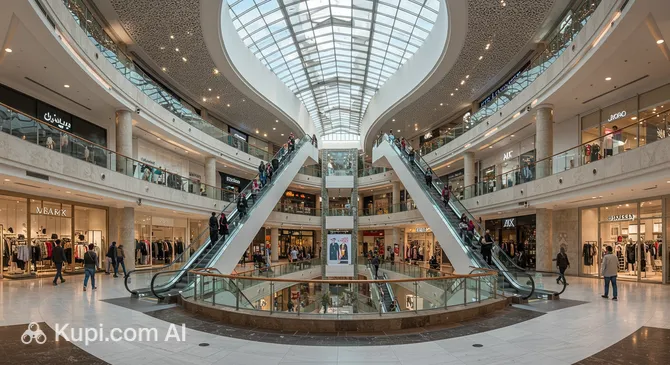
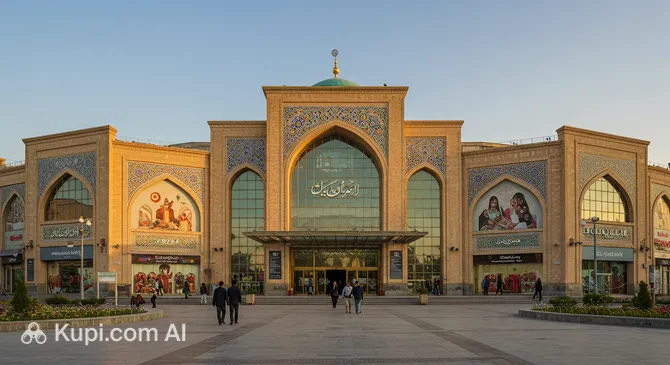
One of the most impressive modern retail destinations is the Arman Shopping Center. Located on Navvab Safavi Street, relatively close to the Holy Shrine, this mall is known for its striking interior design, which includes a massive central statue and water features that create a unique atmosphere. It combines luxury shopping with leisure, offering a wide range of clothing, cosmetics, and home goods, making it a favorite for those who prefer a comfortable and upscale shopping environment.
Arman Shopping Center. Illustration.
Source: Kupi.com AI
Traveler photos:
While the Almas Shargh complex is often visited for its entertainment value, it remains a key spot for shoppers. Its distinct architecture houses hundreds of stores spread across multiple floors. Here, you can find a mix of handicrafts, bags, shoes, and decorative items. It is particularly noted for its variety of goods, allowing visitors to find both traditional Iranian crafts and modern necessities under one diamond-shaped roof.
Another significant commercial hub is the Ferdowsi Shopping Center. Situated on Mofatteh Boulevard, this center is largely dedicated to apparel and fashion. It is a go-to place for finding men's and women's clothing at competitive prices. The center is organized and spacious, providing a more relaxed shopping experience compared to the crowded bazaars.
Ferdowsi Shopping Center. Illustration.
Source: Kupi.com AI
Traveler photos:
No trip to Mashhad is complete without experiencing the Bazaar-e Reza. Stretching for nearly a kilometer near the shrine, this two-story traditional market is the beating heart of the city's commerce. It is the best place to find religious items such as prayer rugs (Sajadah), rosaries (Tasbih), and perfumes. The upper floor is home to workshops where you can watch artisans crafting turquoise jewelry and embroidery, offering a glimpse into the city's artisanal heritage.