In the heart of Ashgabat rises one of the most beautiful and majestic landmarks of the region — the Ertugrul Gazi Mosque (also known as the Azadi Mosque). This magnificent example of Islamic-Byzantine architecture was built in a classical Turkish style and resembles the famous Blue Mosque in Istanbul. As the largest mosque in the capital, it has become a true symbol of friendship and cultural unity between Turkmenistan and Turkey.
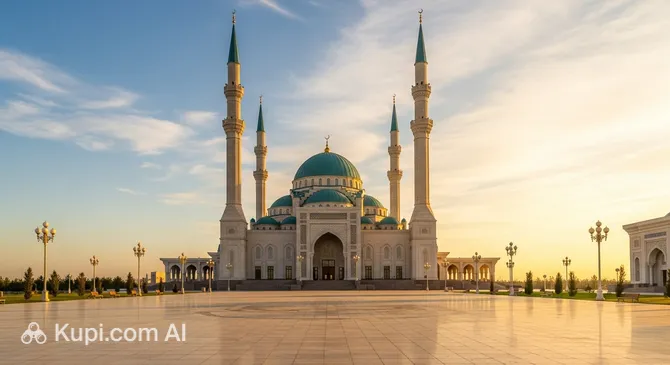
Ertugrul Gazi Mosque. Illustration.
Source: Kupi.com AI
Traveler photos:
The appearance of the mosque is striking in its scale and elegance: the building is crowned by four snow-white minarets over 62 meters high, with a massive dome soaring over the central hall. The interior and the spacious courtyard cover an area of about 2,800 square meters, allowing it to accommodate up to 5,000 worshippers simultaneously. The first floor is traditionally for men, and the second floor is for women, creating a harmonious space for prayer.
The interior decoration of the mosque is of particular value. Here you can see luxurious doors created by Turkish masters without a single nail, exquisite paintings and stained glass, as well as hand-applied gilded calligraphic inscriptions from the Quran. The atmosphere of serenity that reigns inside is complemented by the sound of the fountain in the courtyard, making this place a must-visit for all lovers of architecture and spiritual culture.
Contacts
To clarify visiting details or organize a tour, it is recommended to contact the city's information centers or representatives of local travel agencies, as direct contact numbers for the mosque are rarely published in open sources.
The main reason to visit is the opportunity to experience exquisite architecture. Be sure to pay attention to the details: the massive wooden doors with a unique hexagonal ornament and the delicate paintings inside the dome. Photographers will find endless inspiration here in the symmetry of the arches, the play of light in the stained glass, and the contrast of the white marble against the bright blue sky.
A walk through the spacious courtyard with its central fountain allows you to feel the scale of the structure and enjoy the coolness even on a hot day. This is an ideal place for meditation and quiet reflection away from the hustle and bustle of the city. Inside the mosque, you can see how ancient traditions are interwoven with modern craftsmanship, expressed in gilded verses from the Quran and soft handmade carpets.
For those interested in culture and religion, the mosque offers a unique chance to observe traditional rituals (while maintaining silence and respect for the worshippers). It is especially atmospheric here during major holidays, when the mosque fills with believers and a spirit of unity is felt in the air. Speaking with local imams can help you gain a deeper understanding of the foundations of Islam and the history of the religion's spread in this region.
Getting There
Finding this architectural masterpiece is easy, as it is located in the central part of the city on Azadi Street. Thanks to its tall white minarets, the mosque serves as an excellent landmark amidst the white marble buildings. You can get here from the center by taxi, which is relatively inexpensive in the city, or by shuttle buses that stop within walking distance.
If you prefer walking, the path from the main squares and parks of the city center will take about 15–20 minutes, while the distance from the Independence Monument is approximately 5–10 kilometers depending on the chosen route. For those traveling by their own or a rented car, parking is available directly in the courtyard of the complex.
When visiting, remember to follow the dress code: clothing should cover the shoulders and knees, and women must have a headscarf. The best time to visit is during daylight hours, when the sun's rays highlight the whiteness of the walls and the shine of the domes.
Nearest city: Ashgabat
History & Facts
The history of this majestic structure is closely linked with the period of the country's independence. The idea for its construction arose in 1992 during an official visit by Turkish Prime Minister Süleyman Demirel. The first stone was laid in January 1993, and the grand opening took place in 1998, marking a significant event for the entire Muslim community in the region.
The shrine was named in honor of Ertuğrul Gazi — the prominent ruler and father of Osman I, the founder of the Ottoman Empire. The choice of name emphasizes the deep cultural and historical ties between the nations and their shared Turkic roots. The mosque was one of the first major religious buildings erected in the capital after gaining sovereignty, symbolizing spiritual revival and freedom.
The architectural design of the building was inspired by classical Ottoman traditions. The construction process was supervised by Turkish craftsmen who used unique techniques — for example, the massive wooden doors were hand-assembled without the use of a single nail. More than 160 tons of lead were used to protect the roof and domes from the elements.
Today, the Ertugrul Gazi Mosque is not only a place of worship but also a living monument to diplomacy and friendship. It continues to play a key role in the life of the city's residents, serving as a center for major religious holidays such as Kurban Bayrami and Ramadan, preserving traditions and passing them on to new generations.
Time Needed
To leisurely explore the architectural details, step inside, and stroll through the courtyard, most travelers need about 1–2 hours. This is plenty of time to appreciate the craftsmanship of the woodcarvers, examine the stained glass, and take beautiful photos against the backdrop of the four 62-meter minarets.
If you plan to visit the mosque during prayer or want to spend time in silence and meditation in the courtyard by the fountain, you should set aside a little more time. The atmosphere of tranquility here encourages long contemplation, so a visit may last longer, especially in the evening hours when the impressive illumination is turned on.
Working Hours
The doors of the shrine are open to visitors daily and 24/7. This allows you to see the mosque both in the morning sunlight and in the glow of the evening illumination, which gives the building a special charm.
Despite the open schedule, tourists are advised to avoid visiting the inner halls specifically during Friday prayers (Jumu'ah), when the mosque is full of worshippers. Before planning a visit on holidays, it is advisable to check for possible changes in access on the city's official tourism portals.
Open 24 hours
Nearby
Exploring the surroundings of the mosque will allow you to dive deeper into the atmosphere of the capital and see how modern architecture sits alongside monuments to prominent figures and cozy urban spaces. A walk through the adjacent blocks will reveal Ashgabat from different perspectives — from the cultural and historical to the gastronomic.