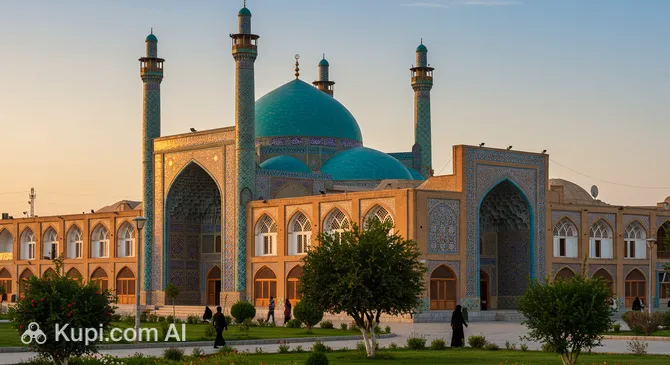
Najafabad is a vibrant and authentic city located in the heart of Iran, in the Isfahan Province. Situated just 28 kilometers west of the famous Isfahan, it harmoniously combines the features of an important suburban hub and a traditional Iranian settlement. With a population of over 235,000 people, the city lives at a rhythm dictated by its proximity to the metropolis while maintaining its unique identity and welcoming atmosphere.
Najafabad. Illustration.
Source: Kupi.com AI
The city sits at an altitude of about 1,648 meters above sea level, which largely determines its climate. Looking into the history of the city, one can see how it transformed from a small settlement into a significant residential and cultural node. Najafabad is known throughout Iran not only for its compact urban layout but also as the birthplace of prominent figures who have contributed to the country's science and religion.
One of the most striking features of this place is its "pomegranate" fame. The surrounding areas are renowned for cultivating these fruits, which are considered some of the best in the region. Additionally, the city unexpectedly serves as a platform for contemporary art: it is here that the country's only legal indie music festival takes place, attracting creative youth.
A visit to Najafabad is an excellent opportunity to see the real, non-touristic Iran, feel the daily life of the locals, and enjoy genuine Oriental hospitality. This city will be a wonderful addition to an itinerary through the central part of the country for those seeking sincerity and tranquility away from the beaten tourist paths.
Weather Overview
The climate of Najafabad is characterized as semi-arid, typical for central Iran. Due to its location at an altitude of 1,648 meters, there is a noticeable contrast between the seasons. Summer in the city is hot and very dry: in July, the average temperature is about 28.4°C, and daytime maximums often reach 36°C and above. Winters are moderately cold, with cold nights when the thermometer can drop to -5°C in January.
Precipitation in the region falls mainly in the winter and spring months, with February usually being the wettest period. During the summer months, rain is very rare. When planning your trip, you can check in advance what the weather in the city will be like to choose your wardrobe correctly. Overall, April, May, and October are considered the most comfortable months to visit, with mild and sunny weather.
Average monthly temperature
Average monthly precipitation
Interesting Facts
Najafabad is a city that knows how to surprise with its hidden details and unusual records. Here are a few curious facts to help you get to know this place better:
The city is home to Iran's only legal indie music festival, which takes place annually at the Haroon Theater.
Najafabad is recognized as one of the main centers for pomegranate cultivation in the province, and this fruit is considered the unofficial symbol and primary local product of the city.
The population density here is over 2,680 people per square kilometer, indicating an extremely compact and efficient urban development.
The city is the birthplace of many influential Iranian figures, including the famous Professor Mostafa Moeen and Ayatollah Hossein-Ali Montazeri.
Due to its role as a residential area and its convenient location, Najafabad has a very high level of pendulum migration—thousands of people commute from here to work in Isfahan every day.
How to Get There
The transport accessibility of Najafabad is directly linked to its proximity to Isfahan, which is the region's main logistical hub. Most travelers arrive here from this historical center. To plan your route as efficiently as possible, we recommend studying the detailed information on how to get to the city by various means of transport.
For those traveling by air, the closest gateway to the region is Isfahan Shahid Beheshti International Airport. It is located approximately 45 kilometers from Najafabad. After arrival, it is most convenient to use a taxi or transfer service, which will take about 45–60 minutes. There are no direct flights to Najafabad itself, as it is served by the infrastructure of the neighboring metropolis.
There is no railway service in the city itself; however, the nearest major train station is in Isfahan. From there, intercity buses and taxis regularly run to Najafabad, departing from the Kaveh or Soofeh terminals. The journey by car on a modern highway takes about 30–45 minutes, but you should consider potential traffic jams during morning and evening rush hours when traffic increases significantly due to local residents commuting to work.
Station
Passenger traffic
Distance
Isfahan Railway Station
6
33 km
Isfahan Railway Station
6
33 km
Kashan railway station
3
150 km
Qom Railway Station
7
227 km
1
283 km
Main Attractions
Even though Najafabad is not a world-renowned tourist destination, it possesses the special charm of a "hidden gem." The main cultural point on the city map is the Haroon Theater. This venue gained wide fame for hosting an annual indie music festival—a unique event for Iran that gathers independent performers and fans of modern alternative culture.
Strolling through the central streets, it is worth looking into the local bazaars. There is no pretentiousness of capital malls here, but real life is in full swing. Of particular interest to travelers are the agritourism opportunities: visiting nearby pomegranate farms allows you to see the process of growing the legendary fruits and taste them at their freshest. This is an ideal place for those who appreciate authenticity and want to learn more about the region's agriculture.
For a deeper immersion into the history and architecture of the region, many guests prefer to take short trips to neighboring Isfahan; however, cozy corners can also be found within Najafabad itself. The city's central squares serve as meeting places for locals, where a warm atmosphere of traditional Iranian socializing, free from the hustle and bustle of large tourist centers, is created in the evenings.
Local Cuisine
The gastronomic identity of Najafabad is inextricably linked with the rich traditions of the Isfahan Province. The basis of the local cuisine consists of hearty meat dishes and aromatic rice. You should definitely try classic Iranian kebabs, especially koofteh and joojeh kebab, which are prepared here with special skill. Another favorite is abgoosht—a thick meat soup with chickpeas and potatoes, served in clay pots.
The main treasure of the local cuisine is rightfully considered the pomegranate. The fruits grown in the gardens of Najafabad find their way into a variety of dishes: from freshly squeezed juices sold on every corner during the season to exquisite meat sauces and vibrant additions to traditional salads. Locally produced pomegranate syrup makes an excellent gastronomic souvenir, preserving the taste of the Iranian sun.
The dining culture in the city is centered around small traditional restaurants and cozy tea houses (chaikhane). Locals appreciate simple, home-cooked food, so you can always find freshly baked flatbreads and polo (pilaf) with saffron and barberries in the local eateries. Among drinks, besides tea, the refreshing yogurt drink doogh, with added mint, is extremely popular and perfectly quenches thirst on a hot day.
Travel Tips
Planning a trip to Najafabad requires taking into account some local characteristics that will make your visit comfortable and pleasant. These practical tips will help you better navigate the daily life of the city.
Clothing and Dress Code: As in all of Iran, the Islamic dress code should be followed in Najafabad. Women need a headscarf (hijab) covering the hair and loose clothing covering the arms and legs. Men are not recommended to wear shorts. Be sure to bring comfortable shoes for walking through local markets.
Finance and Currency: The main currency is the Iranian rial. International bank cards (Visa, Mastercard) do not work here, so bring enough cash (euros or dollars) and exchange them at official exchange offices in Isfahan or Najafabad.
Transport: Within the city, it is most convenient to move by taxi. For trips to Isfahan, use buses, but remember the heavy traffic jams at the city exits during morning and evening hours.
Communication: A local SIM card (Irancell or MCI) can be bought at specialized stores. Wi-Fi is available in some cafes, but mobile internet is usually more reliable.
Local Etiquette: It is customary to remove shoes when entering homes or mosques. Use your right hand for greetings and passing items. Don't forget the "taarof" rules of politeness when communicating with locals.
Health: Pharmacies are easy to find in the city center. It is recommended to drink bottled water and always have hand sanitizer with you.
What to Avoid: Avoid photographing government buildings or people without their permission. Also, try not to discuss political topics in public places.
Best Time to Visit: The ideal time is spring (April-May) or autumn (September-October) when the climate is mildest and the famous pomegranates ripen in the gardens.
Following these simple rules will allow you to fully enjoy the hospitality and beauty of this authentic corner of Iran!
Entertainment & Nightlife
Entertainment in Najafabad is quiet and family-oriented, which is typical for the conservative cities of central Iran. You won't find noisy nightclubs or bars here, as the evening leisure of locals is traditionally centered around visiting tea houses and walking through central urban spaces. The atmosphere here is conducive to leisurely conversations over a cup of aromatic tea and local sweets.
The center of cultural attraction is the Haroon Theater, where rare but significant concerts and theatrical performances take place. The main event of the year remains the indie festival, which briefly transforms the city into a vibrant musical venue. At other times, youth and families prefer to spend their evenings in the central squares, which become lively spots for picnics and meetings during the warmer months.
For those looking for a more active nightlife, cinemas, or modern entertainment centers, the best solution would be a trip to neighboring Isfahan. There is good communication between the cities, and many residents of Najafabad go there for new experiences. Safety in the city is high, so even late-night walks in the central areas are quite comfortable for tourists, provided local etiquette norms are observed.
Parks & Museums
Parks and recreation areas in Najafabad play an important role in the lives of citizens, given the high density of development. Although the city lacks grand botanical gardens, local city squares and small parks provide a real escape on hot days. They are equipped for family recreation, and in the evenings, you can see many people enjoying the coolness near the fountains or arranging small picnics on the grass.
In terms of museum infrastructure, Najafabad currently trails behind Iran's major cultural capitals. At the moment, there are no large state museums here; however, the Haroon Theater has taken on the role of cultural guardian, becoming a symbol of the region's contemporary art. Visitors interested in history can satisfy their curiosity by exploring the traditional architecture of some old districts and local bazaars, which are "living museums" of daily life themselves.
For those seeking large-scale park complexes or historical galleries, the parks of Isfahan, located a half-hour drive away, will be an ideal addition to the trip. Nevertheless, Najafabad attracts visitors precisely with its simplicity—the opportunity to just sit in the shade of trees in a local park, observing the daily life of Iranians without the hustle and bustle of tourist crowds.
Getting Around
The transport system of Najafabad is organized to connect residential areas with neighboring Isfahan as quickly as possible. The backbone of public transport consists of municipal buses. They regularly run along the main streets of the city, providing reliable communication between the center and the outskirts. This is the most budget-friendly way to get around, used by most local residents.
Special intercity routes are provided for trips to Isfahan, departing from major stops. It is important to note that during rush hours (7:00 to 9:00 AM and 5:00 to 7:00 PM), buses can be overcrowded due to the large flow of people commuting to work or study. Fares are usually paid in cash or using local contactless cards, which can be purchased at kiosks at the main stops.
As an alternative to buses, taxis are very popular in Najafabad. You can use either the standard yellow taxis or ride-hailing services through apps (such as Snapp). Taxis are ideal for those who value comfort and want to save time. In the central part of the city, many people prefer to move around on foot, as the main commercial and administrative facilities are located quite compactly.
Accommodation
The hotel sector in Najafabad is primarily oriented toward local travelers and those visiting the city for business or to see relatives. Modest guesthouses and apartments predominate here, offering a basic level of comfort at very affordable prices. This is an excellent option for those who want to save money and immerse themselves in the authentic environment of an Iranian suburb.
For tourists accustomed to a higher standard of service or classic chain hotels, it is often more practical to stay in Isfahan. Thanks to the short distance and frequent transport links, you can easily visit Najafabad during the day and return to a more developed tourist area for the night. Nevertheless, booking an apartment directly in the city can be an interesting experience for expats or travelers planning a long stay.
When choosing accommodation in Najafabad, it is recommended to focus on the central areas, where major shops and transport stops are within walking distance. Since the city is not a mass tourist destination, booking accommodation through international platforms can be difficult—it's better to use local resources or arrange it on the spot. During peak seasons, such as the Iranian New Year (Nowruz), it is worth taking care of your placement in advance.
Nearby Cities
Najafabad is a convenient starting point for exploring the surrounding towns and villages, each possessing its own flavor. The region around the city is crisscrossed with roads leading to quiet agricultural communities and interesting suburbs where life flows slowly and peacefully.
Just a few kilometers away is Goldasht, which is often visited for its green gardens. You should also pay attention to Khomeyni Shahr, a large neighboring center with a rich history. For lovers of the authentic atmosphere of the Iranian province, trips to Gahderijan and Falavarjan, which can be reached quickly by taxi or bus, will be of interest. Don't forget the small settlement of Koushk, located nearby.
Of course, the most significant destination for a day trip remains the majestic Isfahan with its world-class bridges and squares. Exploring the surroundings of Najafabad will allow you to see the diversity of life in the center of the country, moving from quiet pomegranate orchards to the lively urban markets of neighboring settlements.
Shopping & Souvenirs
Shopping in Najafabad is primarily an introduction to local markets, where trading traditions haven't changed for decades. The main goal for any shopper here is agricultural products. During the season, the bazaars are overflowing with famous local pomegranates, juicy and sweet, sold fresh as well as in the form of thick juices and pastes.
The city's central shopping streets offer a standard set of goods: from clothing and footwear to household appliances. There are no huge malls with international brands here, but there are many specialized shops. Local markets are especially interesting for those looking for authentic Iranian sweets, spices, and dried fruits. Prices here are usually lower than in touristic Isfahan, and sellers are always ready for friendly haggling.
As souvenirs from Najafabad, it is worth bringing back pomegranate products, local textiles, or handmade items that can be found in small workshops in the city center. Most shops are open from morning until late evening with a lunch break during the hottest hours. It is better to always have cash rials with you for payment, as the use of international cards in Iran is limited.