Support

مرقد الشيخ الدكتور احمد الوائلي

About

In the heart of the spiritual life of Najaf lies a significant pilgrimage site — the Mausoleum of Sheikh Dr. Ahmed al-Waeli. This memorial complex is dedicated to the memory of the outstanding Iraqi scholar, poet, and legendary orator, whom contemporaries respectfully called the "Dean of the Husayni pulpit." The mausoleum is not just a burial site but also an important cultural center, attracting admirers of the Sheikh's talent from all over the world.
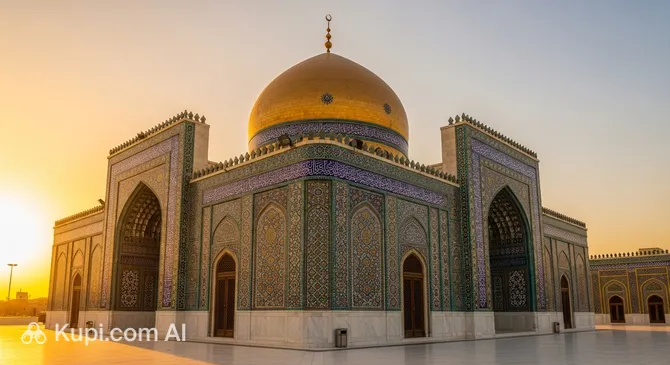
Mausoleum of Sheikh Dr. Ahmed Al-Waeli
Mausoleum of Sheikh Dr. Ahmed Al-Waeli. Иллюстрация. Источник: Kupi.com AI

The uniqueness of this site lies in its location: the Sheikh's private tomb is situated within the larger complex of the marqad of Kumayl ibn Ziyad al-Nakha'i, a companion of Imam Ali. This proximity highlights the Sheikh's deep connection to Islamic history and the traditions of Iraq. The mausoleum's architecture is characterized by noble simplicity, and its centerpiece is an elegant window-marqad (shbak), recently renovated by patrons.

In addition to the tomb itself, relics associated with the scholar's life, such as a tree planted by the Sheikh himself, are preserved on the grounds. For tourists and pilgrims, this place is a peaceful oasis of spirituality where one can connect with the legacy of one of the 20th century's most influential preachers.

Contacts

To plan your visit to this spiritual landmark, it is helpful to know its exact location in the city. The mausoleum is located within a larger religious complex, making it easier for pilgrims and tourists to find.

How to contactContact
Addressداخل مزار كميل بن زياد النخعي اليماني رض، Najaf, Najaf Governorate, Ирак

What to Do

Visiting the mausoleum is primarily an experience of spiritual immersion. Visitors can approach the Sheikh's marqad to recite the Fatiha prayer and honor the scholar's memory. The atmosphere here is filled with tranquility, making it an ideal place for reflection on the life path and wisdom of Ahmed al-Waeli.

Be sure to explore the complex's architectural details. Note the new window-marqad (shbak), which impresses with its fine craftsmanship, and visit the family vault (sardab). Inside the complex, you will also see the graves of the Sheikh's family members, providing a better understanding of the private side of this public figure's life. One of the living attractions is a tree planted by the Sheikh: pilgrims often linger near it, considering it a symbol of the continuity of life and knowledge.

Since the mausoleum is located inside the Kumayl ibn Ziyad complex, the visit becomes twice as interesting. You can see two shrines simultaneously, comparing their styles and historical significance. Many pilgrims, especially from India and other countries, come here in groups to participate in communal prayers, so visiting the complex also offers a chance to see the diversity of Islamic culture and the traditions of Najaf.

Getting There

The mausoleum is located in the historic Al-Hannana district, which is an important hub for all who visit the city's shrines. Reaching here from the central part of the city is best done by taxi — it is the fastest and most convenient method for international tourists. The journey from Najaf International Airport takes approximately 20–30 minutes depending on traffic conditions.

If you are already in the area of key shrines, such as the Imam Ali Mosque, you can reach the Al-Hannana complex on foot or by local minibus, which run regularly between religious sites. Public transport here is highly oriented towards pilgrims, so finding the correct route to the Al-Hannana district is straightforward.

For those who prefer navigating on their own, using coordinates for online maps is recommended. The complex is easily recognizable, and parking areas are provided nearby, which is convenient for those renting a car or traveling with a private guide.

Ближайший город: Najaf

History & Facts

Sheikh Ahmed al-Waeli, for whom the mausoleum is named, was a truly outstanding figure of his time. He was born on September 3, 1928, in Najaf and dedicated his life to the study of Islamic sciences. In 1972, he earned his doctorate from Al-Azhar University in Cairo, becoming one of the most educated religious figures of his era. He was famously called the "Dean of the Husayni pulpit" for his unsurpassed oratorical talent and deep knowledge of poetry and literature.

Sheikh al-Waeli was known far beyond Iraq; his sermons were heard in the Gulf countries, Lebanon, Syria, and even the United Kingdom. His voice became a symbol of wisdom and enlightenment for millions of Muslims. Following his death on July 14, 2003, funeral processions took place through the country's major cities, including Karbala and Kufa, gathering thousands of people who wished to pay their final respects to the great scholar.

The mausoleum was established in his private tomb, located within the complex of the companion Kumayl ibn Ziyad. This site has become a symbol of the succession of generations and respect for the Sheikh's intellectual legacy. In recent years, specifically in 2023–2024, the complex underwent renovation: a new decorative window-marqad (shbak) was installed, and access was opened to the family vault (sardab), where the Sheikh's relatives are buried.

An interesting historical artifact on the grounds is an old tree planted during Dr. Ahmed al-Waeli's lifetime. It is carefully preserved as a living memory of a man whose contribution to Islamic rhetoric and culture remains invaluable to this day.

Time Needed

For a standard tour of the mausoleum and its surrounding grounds, 1–2 hours is sufficient for most visitors. This time is enough to pay respects to the Sheikh, say a prayer at the tomb, and examine the architectural features of the renovated window-marqad.

If you also plan to visit the mausoleum of Kumayl ibn Ziyad, located in the same complex, and descend into the family vault for a more detailed look at the Sheikh's family history, you should budget about 3 hours. The peaceful atmosphere of the site encourages leisurely reflection and a break from the city's hustle and bustle.

Working Hours

The Mausoleum of Sheikh Dr. Ahmed al-Waeli is open to visitors daily, making it easy for pilgrims and tourists to include it in their itinerary. The opening hours are quite extensive:

  • Monday — Saturday: 08:00 to 22:00
  • Sunday: 07:00 to 22:00

While there is a consistent schedule, it is recommended to check for up-to-date information on-site, especially during religious holidays when visiting hours may vary.

DayWorking hours
понедельник08:00–22:00
вторник08:00–22:00
среда08:00–22:00
четверг08:00–22:00
пятница08:00–22:00
суббота08:00–22:00
воскресенье07:00–22:00

Nearby

A visit to the mausoleum can easily be combined with exploring other points of interest. The Al-Hannana district and its surroundings are rich in both religious shrines and modern recreational areas, allowing for a full day's itinerary.

NameDistance
Al Sheraa Entertainment Complex0.9 km
Yassub al-Din Rest Area1.4 km
99 Grill2.1 km
Marah City2.5 km
Gold Shopping Center3.4 km
Great Mosque of Al-Sahla5.2 km

Reached the end of the page?

That means the route is fully explored