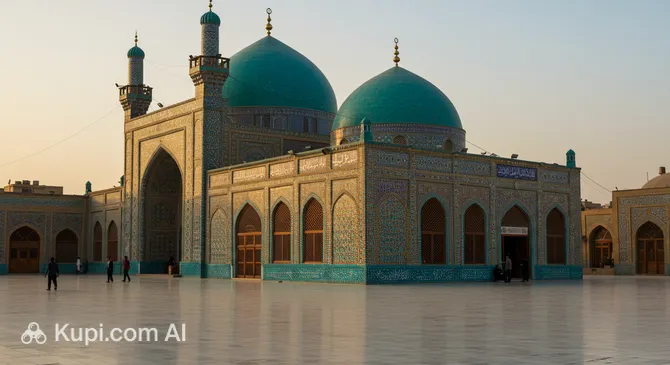
This outstanding architectural monument, rising in the historic Al-Rusafa district, is one of the most beautiful spiritual symbols Baghdad has to offer. Built in 1826 under the patronage of the last Mamluk governor, Dawood Pasha, the Haydar-Khana Mosque is a magnificent example of Ottoman-era Islamic architecture, harmoniously woven into the fabric of the ancient city.
Traveler photos:
The main structure of the mosque is built of traditional brick. Its heart is a spacious inner courtyard, surrounded on three sides by thick walls, while the fourth side, facing Mecca, opens directly onto the city street. The main entrance to the shrine is framed by massive gates and a majestic iwan, which immediately sets a solemn tone for visitors. Arab and Turkish traditions are subtly intertwined in the complex's architecture, making the site unique for the entire country of Iraq.
Inside the temple complex, the prayer hall and the portico, topped with five elegant domes and supported by powerful columns, draw attention. Special mention goes to the masterful Hazarbaf style brickwork and the alabaster details resembling frozen stalactites. In addition to its religious role, the mosque has served for centuries as an important cultural and educational center: it still houses a madrasah and a library containing the works of great Islamic scholars.