Support

Amna Suraka, Red Museum

About

In the heart of Sulaymaniyah lies a unique site known as the Amna Suraka Museum (Red Prison Museum). This is a place where history comes to life through photographs, personal belongings, and the very walls of the complex. Today, the former prison building has been transformed into a space for education and the preservation of the cultural heritage of Iraq.
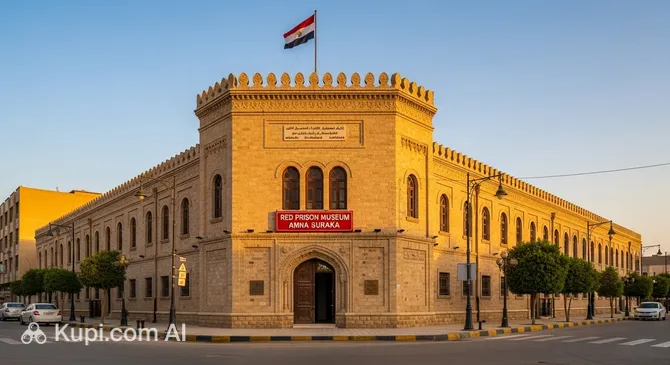
Red Prison Museum
Red Prison Museum. Иллюстрация. Источник: Kupi.com AI

The complex owes its name Amna Suraka, which translates to "Red Security" or "Red Prison," to the bright color of its facade. The museum has become a true sanctuary of knowledge and a symbol of resilience, offering guests a deep dive into the past through authentic artifacts and preserved interiors.

One of the most impressive parts of the museum is the "Hall of Mirrors," where thousands of light bulbs create an incredible atmosphere, symbolizing the memory of people and events of the past. Admission to the museum is free, emphasizing its mission as an open center for everyone who wants to better understand the history and culture of the region.

Contacts

To plan your visit, it is helpful to check the contact details and exact location in advance. Below is the up-to-date information to help you easily find this iconic site and contact its representatives if needed.

How to contactContact
AddressSaeed Kaban St, Sulaymaniyah, Sulaymaniyah Governorate, 46001, Ирак
Phone+964 53 320 5373
Websitewww.facebook.com

What to Do

A visit to the museum offers a deep and emotionally resonant experience. You can walk through the historical halls, which feature rare photographs and personal stories illustrating important milestones in local history. Be sure to visit the "Hall of Mirrors" — a unique installation of 182,000 light bulbs and mirror fragments that leaves a lasting impression with its visual impact.

Culture enthusiasts will find it interesting to explore the preserved prison cells and exhibitions dedicated to applied arts. There are plans to open a Kurdish Carpet Museum on-site, which will feature over a thousand unique handmade items, adding even more aesthetic pleasure to the visit.

There is also a café on the museum grounds where you can relax with a cup of coffee and discuss what you have seen. The staff members are always ready to answer questions and share additional facts, making the visit as informative and memorable as possible.

Getting There

Finding your way to the museum is quite simple, as it is located on Saeed Kaban St in the central Goizha district. If you are staying in the city center, a walk is a great way to experience the local architecture and the atmosphere of the streets leading to the complex.

For those who prefer comfort or are traveling from more distant areas, a taxi is the most convenient option. Local drivers know "Amna Suraka" well, so you can simply give them the name of the museum. You can also use a private or rental car — there are parking spaces available near the site.

Public transport in the city is also well-developed, with many routes passing through the center. Follow the main road signs and head toward the central quarters to arrive at the gates of the "Red Prison" quickly and without any hassle.

Ближайший город: Sulaymaniyah

History & Facts

The history of this site began in 1985, when construction was completed on the building that became the first facility of its kind in the province. Notably, the project was initially disguised as an ordinary agricultural department to hide its true purpose from the public.

The building earned its unofficial nickname, the "Red Prison," due to the distinctive color of its facade. However, in 1991, during significant local events, the site's fate changed forever when it was reclaimed by residents and local forces, becoming an important symbol of transition to a new era for the region.

In 2003, thanks to the initiative and support of Hero Ibrahim Ahmed, a veteran of the local movement, the complex officially opened its doors as a museum. Since then, it has become more than just a place of remembrance; it is an important educational center visited annually by thousands of students, researchers, and international tourists from all over the world.

Time Needed

To thoughtfully explore all the halls and exhibitions of the museum without rushing, visitors usually need between 1.5 to 2.5 hours. This is enough time to walk through the grounds, carefully examine the artifacts, and spend time in the famous "Hall of Mirrors."

If you also plan to visit the local café or study every information plaque in detail, it is worth setting aside a bit more time — about three hours. A relaxed pace will allow you to dive deeper into the atmosphere and feel the significance of each exhibit.

Working Hours

The museum welcomes visitors from 09:00 to 16:00. The operating schedule covers Tuesday through Thursday, as well as Saturday and Sunday. The complex is also open on Mondays from 09:00 to 16:00, while it is closed on Fridays.

As official hours may change during holidays, tourists are recommended to double-check the information on the museum's official website or social media page. A pleasant bonus for all guests is that entry is free.

DayWorking hours
понедельник09:00–16:00
вторник09:00–16:00
среда09:00–16:00
четверг09:00–16:00
пятницаЗакрыто
суббота09:00–16:00
воскресенье09:00–16:00

Nearby

Exploring the museum's surroundings can greatly enrich your trip, as various parks and cultural sites are located within walking distance or a short taxi ride. This is an excellent chance to combine historical education with outdoor relaxation or family entertainment.

Below is a list of interesting places located nearby:

NameDistance
City Star Mall0.5 km
Azadi Park0.6 km
Azadi Amusement Park0.8 km
Grand Mosque of Sulaymaniyah1.4 km
Sara Square1.7 km
Mam Rash Breakfast2.2 km
Family Mall2.4 km

Reached the end of the page?

That means the route is fully explored