Support

Ecbatana Museum

About

Imagine a place where legends of the first Median capital come to life. The Ecbatana Museum is a treasure trove of ancient history located in the city of Hamadan. Iran is rightly proud of this site, as it is situated directly on the archaeological excavations of Hegmataneh Hill, which are over three thousand years old.
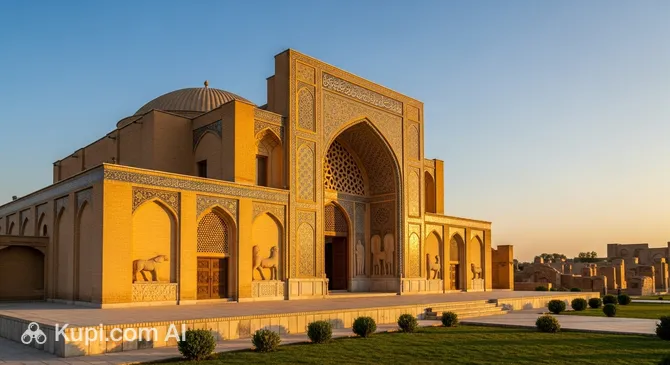
Ecbatana Museum
Ecbatana Museum. Иллюстрация. Источник: Kupi.com AI

The museum building itself is a long, multi-story pavilion housing priceless artifacts in soft, specially adjusted lighting. Here, you can see everything from ancient petroglyphs of the Achaemenid era to fragments of water systems used thousands of years ago. The museum is considered one of the province's most important cultural centers and is currently a candidate for UNESCO World Heritage status.

One of the museum's most impressive exhibits is the remains of a Parthian couple found in a stone coffin. These skeletons, estimated to be 1,800–2,000 years old, lie under glass, allowing visitors to see ancient jewelry and everyday items exactly as they were discovered by archaeologists. This proximity of monumental architecture and deeply personal stories of antiquity makes a visit to the museum truly memorable.

Contacts

For the latest information or if you have questions while planning your trip, you can use the official contact details. While the museum does not have its own website, staff members are available by phone during working hours.

Below is the main contact information and the exact address of the site:

How to contactContact
AddressRG39+V22 Дистрикт 3, Хамадан, Иран
Phone+98 81 3252 4005

What to Do

The main reason to visit this place is the chance to see with your own eyes objects used by kings and commoners thousands of years ago. As you walk through the halls, be sure to notice how skillfully the ancient clay vessels and painted tableware were crafted. Epigraphy enthusiasts will be interested in studying the stone slabs with inscriptions left by Darius the Great and other rulers of Persia.

The Parthian burials leave a special impression on guests. Seeing how the bronze bracelets have been preserved on the arm of a woman who lived two millennia ago evokes an incredible sense of connection to history. After exploring the indoor halls, be sure to head out to the open area of Hegmataneh Hill, where you can see the ruins of ancient walls and imagine the scale of the city once described by Herodotus.

For engineering enthusiasts, fragments of ancient water pipes and construction sun-dried bricks will be an interesting discovery. These finds clearly demonstrate the high level of technological development in Ecbatana. You can finish your walk at the souvenir shop or simply by enjoying the view of Hamadan's modern neighborhoods sprawling at the foot of the ancient hills.

Getting There

Finding the landmark is quite easy as it is located in the heart of the historic center, in District 3. The museum is situated on the famous Hegmataneh Hill, at the eastern slopes of the majestic Zagros Mountains. If you are traveling from Tehran, the journey by car or intercity bus will take about 4–5 hours (the distance is approximately 320 km).

Within Hamadan itself, it is most convenient to use the city's main square or the traditional bazaar as a landmark. A taxi ride from the airport or the central bus station will take between 15 and 30 minutes, depending on traffic. Public transport also runs in this direction; however, a licensed taxi remains the most comfortable and quickest option for tourists.

Thanks to its central location, a visit to the museum can easily be combined with a walk to other iconic sites, such as the Avicenna Mausoleum. If you are using a GPS, use the coordinates 34.8046, 48.5175 to set a route directly to the gates of the archaeological zone.

Ближайший город: Hamadan

History & Facts

The history of this place dates back more than 3,000 years. Ecbatana (ancient Persian name — Hegmataneh) was founded around 708 BC and became the first capital of the Median Empire under the rule of King Deioces. Later, the city served as a luxurious summer residence for the great rulers of the Achaemenid dynasty, as well as an important center during the Parthian and Sassanid periods.

The ancient historian Herodotus described the city as something incredible: he claimed that Ecbatana was surrounded by seven concentric walls, each painted in a different color corresponding to one of the planets known at the time. The central part — the Royal Fort — supposedly glittered with gold and silver, representing the pinnacle of ancient Persian power.

The modern museum and the archaeological hill are the results of over a century of research. Over 14 excavation seasons, archaeologists have discovered traces of the oldest water supply system, the remains of Darius's palaces, and unique petroglyphs. Today, Hamadan, along with Kermanshah and Khorramabad, forms the so-called "Golden Triangle" of the country's oldest cities, serving as the cradle of Iranian civilization.

Time Needed

To explore the museum's indoor exhibition at a leisurely pace, study the ancient inscriptions, and see the famous Parthian skeletons, most visitors need about 1.5–2 hours. The museum halls are organized quite compactly, but the abundance of small artifacts and information boards may hold the attention of history buffs for a long time.

However, a visit to the museum would be incomplete without exploring the adjacent archaeological zone on Hegmataneh Hill. You should allow at least another 1–2 hours to walk through the ruins of ancient neighborhoods and inspect the defensive structures. Thus, it is best to plan half a day for a full immersion into the heritage of ancient Ecbatana.

Working Hours

The Ecbatana Museum is welcoming to visitors daily. According to current data, the complex opens early in the morning and closes late in the evening, allowing you to plan your visit as part of a morning excursion or during the quieter pre-sunset hours.

The site is open daily from 06:00 to 23:30, including weekends and holidays. However, tourists are advised to check the schedule in advance during Iran's national or religious holidays, as visiting hours may be subject to change.

06:00–23:30

Nearby

Since the museum is located in the historical center, travelers can easily explore many other significant sites within walking distance. A short walk will take you from antiquity to the Islamic Middle Ages or allow you to learn about the ethnographic features of the region.

Exploring the surroundings will help you form a more complete picture of Hamadan's rich history. Below is a list of nearby points of interest:

NameDistance
Hegmataneh Cultural Heritage and Tourism Complex0.1 km
Imam Khomeini Square0.7 km
Shandiz Haji Restaurant0.8 km
Tomb of Baba Taher0.9 km
Tomb of Avicenna1.5 km
Stone Lion of Hamadan2.1 km

Reached the end of the page?

That means the route is fully explored