Support

Aminiha Historical House

About

Aminiha Historic House is a magnificent architectural ensemble located in the city of Qazvin. Built in 1858 by the wealthy merchant Haj Mohammad Reza Amini, this complex is one of the most striking examples of Qajar-era residential architecture in Iran. The building combines residential quarters with a religious space known as a hosseiniyeh, creating a unique atmosphere of solemnity and comfort.

The mansion impresses with its exquisite decor: here you can see filigree stucco work, dazzling mirror halls, and traditional "orsi" stained-glass windows, which fill the rooms with a kaleidoscope of colors on a sunny day.
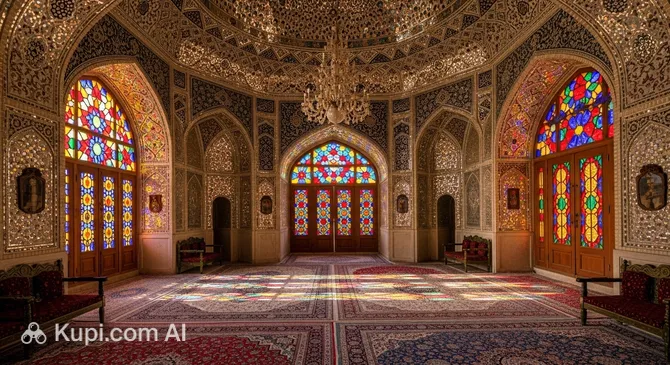
Aminiha Historical House
Aminiha Historical House. Иллюстрация. Источник: Kupi.com AI
The internal structure of the house includes three parallel halls connected by arched passages and several courtyards that served as oases of coolness during the hot season.

Today, this site functions as a museum and cultural center, allowing tourists to see the authentic lifestyle and luxury of the 19th-century Iranian aristocracy. Aminiha House is often called a "poem in stone and mirrors," as every detail—from the carved doors to the painted ceilings—tells a story of the craftsmanship and aesthetics of the past.

Contacts

To clarify details before your visit or to organize a group tour, you can use the contact information provided below. Please note that the museum does not have an official website, so telephone communication remains the most reliable way to obtain up-to-date information.

How to contactContact
AddressQazvin Province, Qazvin, District 1, Molavi, 7X6W+782 Hoseynie Aminiha, Иран
Phone+98 28 3355 2086

What to Do

Visiting this house is, above all, a visual delight. Be sure to linger in the main mirror halls to watch how sunlight, passing through the multi-colored stained glass, creates whimsical patterns on the walls. This is an ideal place for atmospheric photos, where every corner of the building feels like a ready-made set for a historical film.

Don't forget to head down to the underground floor. There you will find cool summer rooms, cellars, and an old kitchen. This helps in understanding how the residents of Qazvin adapted to the climate, creating comfortable living conditions even in the strongest heat. A stroll through the four inner courtyards with their stone reliefs will provide a sense of silence and solitude in the very heart of the bustling city.

Although there are no permanent guides in the house, the space itself is intuitively clear. You can independently explore the passages between the halls and admire the wood carvings and stucco details. Aminiha Historic House invites contemplation: it’s worth just sitting for a moment to feel the spirit of the time and the fragile beauty of a bygone era.

Getting There

Aminiha Historic House is located in the old Molavi (Akhund) neighborhood, which is part of the city's first district. Finding this place is quite easy if you head toward the historical center or use navigation maps. If you are already in the central part of Qazvin, the trip by foot or taxi will take no more than 5–10 minutes.

For those who prefer public transport, buses heading to the Molavi area are a good option. Travelers from Tehran, located about 150 kilometers away, will find it most convenient to reach by intercity bus or car, which takes about two hours. Within the city, for ease of movement, we recommend using the Snapp app—it is the local equivalent of popular ride-sharing services, allowing you to see the trip cost in advance.

The building is located near Molavi Street, where the Dezj River used to flow. For those arriving by private or rental car, there are parking options near the attraction, although during peak hours, the streets can be quite narrow and congested.

Ближайший город: Qazvin

History & Facts

The history of this magnificent building began in 1858, when Haj Mohammad Reza Amini, one of the city's most respected and wealthy merchants, decided to build a mansion worthy of his status. Approximately 4,000 dollars—a colossal sum for the mid-19th century—was spent on the construction of the complex, which consists of 16 interconnected structures. The house's architecture became the quintessence of the Qajar style, reflecting the era's taste for luxury and elegance.

One of the main features of the house is its purpose. Part of the premises was designated as a hosseiniyeh—a special place for conducting religious rites and mourning ceremonies in memory of Imam Hussein. This allowed the building to maintain its special status and authentic spirit for over a century and a half, becoming not just a residential space but an important cultural center for the local residents.

During the Qajar era, the mansion served as a venue for receiving high-ranking guests, impressing them with the complexity of its decor. Master craftsmen of the time used the finest stucco and mirror techniques to turn walls and ceilings into true works of art. Today, Aminiha Historic House is recognized as one of the best-preserved examples of civil architecture in the region, allowing tourists to touch the grandeur of the past without the feel of modern reconstruction.

Time Needed

To leisurely inspect all the main halls, study the details of the mirror mosaics, and take beautiful photos, a typical visitor will need 1 to 2 hours. This time is quite sufficient to peek into the underground rooms and appreciate the coziness of the inner courtyards.

If you are an architecture enthusiast or a professional photographer, plan to spend up to 2.5 hours here. A careful study of the carved patterns and the play of light in the stained-glass windows can completely and unnoticed absorb your attention, turning an ordinary walk into a deep immersion into history.

Working Hours

The museum is open to visitors daily. The standard working schedule is divided into two blocks: from 09:00 to 13:00 in the morning and from 16:00 to 18:00 in the afternoon. Such a break allows for avoiding the midday heat and maintaining the traditional rhythm of life in the region.

Since the schedule may change depending on holidays or religious events, we recommend checking for current information immediately before your visit or clarifying the working hours with the staff at your hotel in Qazvin.

09:00–13:00, 16:00–18:00

Nearby

Exploring the surroundings of this area can significantly enrich your experience of the trip. Qazvin is famous for its architectural monuments and cozy old streets, where a piece of history is hidden around every corner. After visiting the Aminiha House, it is worth walking to nearby cultural sites to better feel the atmosphere of one of the country's oldest cities.

Many interesting places are within walking distance or a few minutes' drive by taxi. Here you can find both ancient gates and traditional caravanserais that now serve as centers for crafts and trade. Below are some of the attractions that are convenient to visit on the same day.

NameDistance
Shahzadeh Hossein Shrine0.6 km
Sa'd al-Saltaneh Caravanserai1 km
Chehel Sotun Palace1.1 km
Armani Restaurant2.7 km
Nemooneh Restaurant3 km

Reached the end of the page?

That means the route is fully explored