Support

Tomb of Baba Taher

About

In the heart of the ancient city of Hamadan stands an elegant structure that has become one of the symbols of the spiritual culture carefully preserved by Iran. The Baba Taher Mausoleum is a majestic monument dedicated to the famous Persian mystic poet and philosopher whose verses still resonate in the hearts of millions.
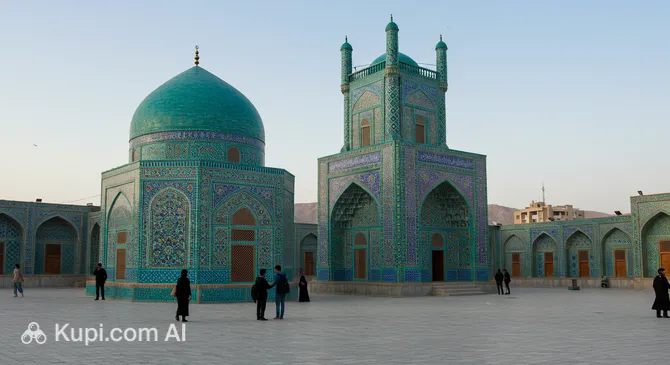
Tomb of Baba Taher
Tomb of Baba Taher. Иллюстрация. Источник: Kupi.com AI

The architecture of the mausoleum is an octagonal building over 20 meters high, designed in the austere yet solemn style of the Pahlavi era. Built of granite and brick using traditional tiling, the complex harmoniously combines modern construction techniques with classic Persian motifs. The building is crowned with a turquoise dome that stands out strikingly against the city skyline.

The mausoleum is surrounded by a picturesque green park laid out on the square bearing the poet's name. This site is not just a tourist attraction but also an important national treasure, included in the country's cultural heritage list. Here, the silence of the park alleys meets the majesty of history, creating a unique atmosphere for every guest.

Contacts

To clarify current visitor information or to arrange group tours, you can use the contact details of the complex administration.

How to contactContact
AddressHamadan Province, Hamedan, Baba Taher Square, RG55+JFG, Iran
Phone+98 81 3422 3343

What to Do

The main reason people come to the mausoleum is the opportunity to connect with the world of Eastern poetry. Inside the building, you can see a massive tombstone decorated with exquisite carvings. Visitors spend time admiring the calligraphic inscriptions on the walls, where lines from the immortal works of Baba Taher are immortalized.

Of particular interest is a local belief that has turned a visit to the poet's grave into a real ritual. It is believed that if you place your palm on the slab, make a heartfelt wish about love, and recite a few dubeyti (quatrains) by heart, the poetic magic will surely help in matters of the heart. This tradition is especially popular among local youth.

After exploring the interior, it is worth taking a walk through the adjacent park. It is an excellent place for photoshoots: the octagonal tower of the mausoleum looks different from various angles, and the neat lawns and paths allow for beautiful photos to remember your journey.

Getting There

Finding this iconic architectural monument is easy: the Baba Taher Mausoleum is located on the square of the same name in the central part of the city. Thanks to its elevated position and recognizable silhouette, it serves as an excellent landmark for travelers.

You can reach the square from anywhere in the city by taxi—the simplest and most affordable way to get around in this part of the country. Routes for city public transport also pass nearby, connecting the center with the outskirts. If you are planning a trip from the capital, keep in mind that the city is located approximately 360 kilometers southwest of Tehran.

For those who prefer walking, the route from the main historical quarters to the mausoleum is a pleasant addition to a sightseeing program, allowing for a closer look at the streets of the ancient city.

Ближайший город: Hamadan

History & Facts

The mystic poet Baba Taher Oryan, who lived at the turn of the 10th and 11th centuries, holds a special place in Persian culture. He became famous for his sincere and profound quatrains—dubeyti—written in the Luri dialect. Despite the fact that the poet spent most of his life in poverty, his spiritual legacy and theological treatises in Arabic have survived the centuries.

Interestingly, the current appearance of the shrine is the result of modern reconstruction. The original mausoleum, which was an octagonal brick tower from the 12th century, was an outstanding example of Seljuk architecture. Unfortunately, by the beginning of the 20th century, the ancient building was almost completely destroyed. The modern structure we see today was erected in 1938 according to the design of the architect Mohsen Forughi.

The city itself, which became the poet's final resting place, possesses incredible historical depth. Founded by the Medes more than 3,000 years BC, it once served as the capital of the powerful Median Empire. Today, this site is recognized as a national monument and is part of the cultural fund protected by the state under number 1870.

Time Needed

For a leisurely tour of the architectural complex and a visit to the interior of the mausoleum, most tourists need between 1 and 1.5 hours. This is quite enough time to study the ornaments, read the calligraphic inscriptions on the walls, and feel the special atmosphere of serenity.

If you decide to linger in the green park surrounding the mausoleum to rest from the city bustle or observe local traditions, it is worth allowing a bit more time. A visit here is often combined with exploring nearby attractions, making this site an ideal spot for a short but fulfilling stop on a city itinerary.

Working Hours

The mausoleum doors are open to visitors daily, offering a convenient schedule for both morning and evening visits. On weekdays and Saturdays, the complex is open from 08:35 to 18:00.

A special schedule applies on Fridays: on this day, visits are possible until 21:00, allowing you to see the building under the evening lighting, when it looks especially mysterious and solemn.

DayWorking hours
Понедельник8:35 – 18:00
Вторник8:35 – 18:00
Среда8:35 – 18:00
Четверг8:35 – 18:00
Пятница8:35 – 21:00
Суббота8:35 – 18:00
Воскресенье8:35 – 18:00

Nearby

Visiting the mausoleum is just one aspect of discovering the rich heritage of this region. Many sites are concentrated around the square, allowing for a deeper immersion into the history of ancient Persian civilization.

NameDistance
Ecbatana Museum0.9 km
Hegmataneh Cultural Heritage and Tourism Complex1 km
Imam Khomeini Square1.3 km
Shandiz Haji Restaurant1.6 km
Tomb of Avicenna2 km
Stone Lion of Hamadan2.9 km

Reached the end of the page?

That means the route is fully explored