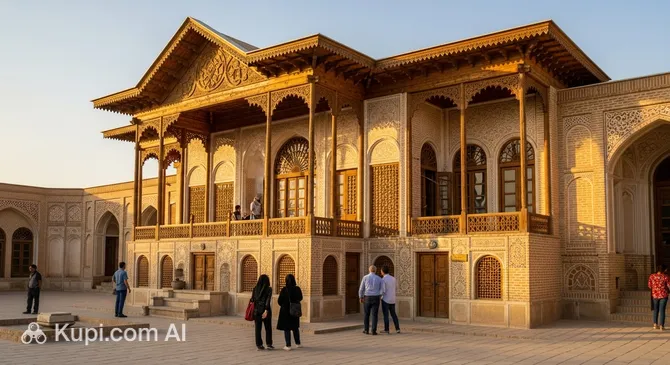
Strolling through the historic center of Rasht, it's impossible to pass by the unique architectural monument — the Mirza Kuchik Khan House. This historic two-story mansion, over 200 years old, is not only a magnificent example of the traditional architecture of the northern region of Iran, but also an important memorial museum.
Mirza Kuchak Khan House. Illustration.
Source: Kupi.com AI
Traveler photos:
The building was the ancestral home of the legendary national hero and leader of the "Jangal" revolutionary movement. Today, the heritage of that era is carefully preserved here. Thanks to public efforts, the mansion was saved from destruction and completely restored, retaining its original charm and the traditional wooden structure characteristic of Gilan province.
Visitors are attracted not only by the historical significance of the site but also by its aesthetics: elegant verandas, carved staircases, and a cozy courtyard create a sense of immersion in the past. This place is rightfully considered the cultural heart of the city, where history comes alive in every interior detail.
Contacts
For those planning a visit to the Mirza Kuchik Khan House, it is useful to have up-to-date contact information to clarify visiting details.
Inside the museum, guests can enjoy a fascinating journey through time. The first floor features a rich collection of archival documents, yellowed newspapers of the era, photographs, and personal letters. Of particular interest are the samples of weapons and uniforms of the Jangal movement members, which provide a vivid picture of the daily life and military routine of the revolutionaries.
Climbing the old wooden staircase to the second floor, you will enter rooms filled with household items. Displayed here are belongings donated by local residents and descendants of Kuchik Khan's comrades. Every detail — from kitchen utensils to interior elements — tells its own unique story about life in northern Iran a century ago.
Be sure to take some time to study the architecture of the building itself. Note how harmoniously the rooms are interconnected and how the wide terrace (veranda) protects the house from Gilan's humid climate. End your tour in the courtyard, where a majestic statue of Mirza Kuchik Khan stands surrounded by flowers — an ideal spot for quiet reflection.
Getting There
Finding this historical treasure in the city center is quite easy. The Mirza Kuchik Khan House is located on Ostad Sara Street, right on the northern side of the famous Municipality Square. Thanks to its central location, the museum is within walking distance of other iconic sites: for example, a walk to the city museum takes only about 3 minutes.
To get around Rasht, tourists most often use taxis or local buses, which regularly run through the center. If you are traveling by private or rental car, head for the northern part of the municipal square, but keep in mind that parking in the historic center can be difficult.
Travelers arriving from other regions of Iran can conveniently reach the museum from the city's main bus station by taxi, which takes no more than 15–20 minutes depending on traffic.
Nearest city: Rasht
History & Facts
The personality of Mirza Kuchik Khan holds a special place in the hearts of Iranians. Born in 1880 into the family of a famous calligrapher, he became the founder of the Jangal movement (The Forest Movement), which originated in the dense forests of Gilan province. He is often called the "Iranian Robin Hood" for his unwavering defense of the rights of the oppressed and his struggle for the sovereignty of his homeland.
The mansion itself has a history of more than 200 years and is a rare example of traditional residential architecture from the north of the country. After the movement leader's death in 1921, the house changed owners several times and was even threatened with demolition. Only thanks to active public protests and the efforts of local residents did the city authorities buy the building, turning it into a memorial museum.
Today, this house is not just a building, but a symbol of the resilience of the region's people. Within its walls, pages of early 20th-century history come to life, telling of a time when the ideals of independence and dignity were held above all else. Careful restoration has preserved the authentic atmosphere, allowing guests to literally touch the past.
Time Needed
To see the entire exhibition without rushing, visitors usually need 1 to 2 hours. This is quite enough time to carefully study the documents on the first floor, examine the hero's personal belongings on the second, and take commemorative photos in the courtyard.
If you are interested in early 20th-century history or architecture, you might want to stay longer to soak in the atmosphere of the historic mansion and examine the details of the woodwork. In any case, a visit to the museum easily fits into a walking plan around the central part of the city.
Working Hours
The museum's doors are open to visitors daily. The museum follows a traditional regional schedule with a midday break: from 09:00 to 13:00 and from 15:00 to 20:30. This schedule is maintained throughout the week, including weekends.
As the schedule may change during holidays, tourists are advised to check the information in advance or plan their visit for the morning hours. An evening visit also has its own charm thanks to the soft lighting of the building.
09:00–13:00, 15:00–20:30
Nearby
Exploring the surroundings of the Mirza Kuchik Khan House allows you to dive deeper into the city's atmosphere and complement your historical excursion with pleasant leisure activities. The area around Municipality Square is rich not only in architectural monuments but also in zones for family recreation.