Support

Cork Airport

About the Airport

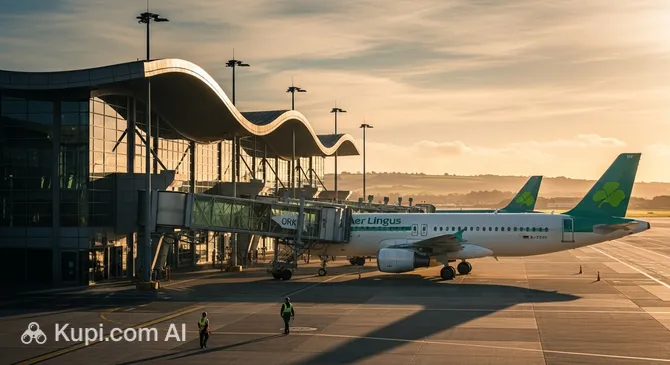
Cork Airport. Source: Kupi.com Binoculars

Cork Airport is more than just a transport hub; it is the true southern gateway to Ireland, where your journey begins with a warm welcome and a hassle-free experience. Located just a few minutes' drive from the vibrant city centre, it serves as the ideal starting point for exploring the picturesque Wild Atlantic Way. Thanks to its compact terminal and friendly atmosphere, you can complete all formalities surprisingly quickly here and immediately immerse yourself in the Irish charm.

IATA Code ORK
ICAO Code EICK
City Cork
Distance to Centre approx. 8 km
Status International
Annual Passengers ~2.8 million (2023)
Schedule Online Flight Board

Airport Features and Benefits

Cork consistently receives high ratings from travellers for its efficiency and comfort. Unlike massive capital city hubs, everything here is within walking distance: you can get from the check-in desk to the boarding gate in a matter of minutes. Statistics show that the vast majority of passengers pass through security screening in less than 20 minutes.

Particular attention should be paid to The Loop area. This is not just a Duty Free shop, but a place where you can purchase authentic Irish souvenirs, including renowned local products, as well as wool and crystal items. For those who value privacy before their flight, a comfortable business lounge is available.

Transport accessibility is another strong advantage of this air harbour. Regular bus routes (such as lines 225 and 226) connect the terminal with the railway station and bus station in the city centre, making the trip simple and budget-friendly. The airport is also known for its punctuality and is frequently recognised as one of the most on-time airports in the region.

Contact Information

  • Official Website: www.corkairport.com
  • Information Desk Phone: +353 21 431 3131
  • Address: Kinsale Rd, Cork, Ireland
  • Email: info@corkairport.com
  • Social Media: You can follow airport news on the official pages on Facebook, X (formerly Twitter) and Instagram.
  • Lost Luggage Information: If your luggage was lost during a flight, you should first contact your airline's representative. For items left within the airport terminal, you can contact the Lost Property service, the details of which are listed on the official website.
  • Passenger Support Service: For general queries and passenger support, you can use the main airport telephone number or the feedback form on the website.

How to Get to the Airport

Getting to Cork Airport, located just 8 km south of the centre of the eponymous city, is quite simple. Depending on your budget, time, and preferences, you can choose one of several convenient methods. A trip from the city centre of Cork usually takes from 15 to 30 minutes.

Public Transport is the most economical option. The main carrier is Bus Éireann. Routes No. 226 (Cork – Kinsale) and No. 225 (Cork – Ballincollig) run regularly between the Parnell Place Bus Station in the city centre and the airport. Buses run frequently, approximately every 30-60 minutes throughout the day. The ticket cost is just a few euros, making this the most affordable method. It is an excellent choice for travellers without a large amount of luggage.

Taxis and Private Transfers offer maximum comfort and speed. This is an ideal option if you are travelling with family, heavy suitcases, or simply want to reach the terminal without transfers. A taxi ride from the centre of Cork will cost approximately €20–€30 and take about 15-20 minutes depending on traffic conditions. Cars can be found at designated ranks in the city, booked by phone, or via ride-hailing apps popular in Ireland.

If you plan to travel around the picturesque surroundings, car rental might be the best solution. Offices of all major international and local rental companies are present at Cork Airport. For those arriving in their own vehicle, convenient parking is provided. There are both short-term and long-term car parks. It is recommended to book a space in the long-term car park online in advance to secure a more favourable rate.

For travellers arriving from other regions of the country, it is worth considering nearby airports. Although Kerry Airport is the closest, larger hubs such as Shannon Airport or the main international Dublin Airport offer a greater number of flights. From these cities, Cork can be easily reached by intercity buses or trains.

Terminals and Map

Cork Airport (ORK) is distinguished by a well-thought-out and passenger-friendly structure. It consists of one modern passenger terminal that serves all domestic and international flights. Thanks to its compact size and logical layout, navigating the building causes no difficulties even for those visiting for the first time.

The airport layout is intuitive. Departure and Arrival zones are clearly separated. On the ground floor, you will find airline check-in counters and the arrivals area with baggage reclaim belts. After completing check-in, passengers proceed to the first floor, where the security checkpoint leading to the spacious departures lounge is located. Here you will find shops, cafes, and boarding gates.

Since there is only one terminal, passengers do not need to worry about transferring between buildings or long transits. All services — from check-in to boarding — are located within a single building, which significantly saves time and effort. Check-in and security screening procedures at Cork Airport usually proceed faster than in major European hubs. Nevertheless, it is recommended to arrive at the airport well in advance, 1.5-2 hours before departure, especially during peak morning hours or the holiday season.

For comfortable navigation throughout the terminal, clear signs in English and Irish are installed. Airport staff are always ready to help and answer questions. The main tip is to simply follow the "Departures" or "Arrivals" signs, and you will easily find the sector you need.

Airport History

The history of Cork Airport (ORK) began long before its official opening. After a lengthy search for a suitable site, which had been ongoing since the 1950s, a plateau in the Ballygarvan area was chosen. Construction began in 1959, and on 16 October 1961, the airport ceremoniously welcomed its first flights. In its very first year of operation, it served about 10,000 passengers, which was an excellent start for the future development of the aviation hub in the south of Ireland.

The first airlines to commence flights from Cork were Aer Lingus and Cambrian Airways, connecting the city with destinations in the UK. A significant event was the landing of the first jet aircraft — a BOAC Comet — in 1964. As passenger traffic grew, the airport was constantly modernised. In 1989, the runway was significantly extended, allowing for larger aircraft and expanding the flight network.

The most massive reconstruction in the airport's history occurred in the early 2000s. In 2006, a new modern terminal was opened, designed with future needs in mind. This event radically changed the appearance of the airport and improved the quality of service. Thanks to infrastructure modernisation, by the mid-2000s, passenger traffic exceeded the mark of 2 million people per year.

Among the interesting facts in the airport's history is the launch of the first scheduled transatlantic flights in 2017, which connected Cork with the USA. Although these routes were changed over time, the very fact of their existence became an important milestone confirming the airport's status as a significant international hub. Today, Cork Airport continues to play a key role in the region's transport system, being the second busiest airport in the country and an important centre for business and leisure travel.

Services and Amenities

Cork Airport (ORK) offers passengers a wide range of services and amenities to make waiting for a flight as comfortable as possible. Regardless of the purpose of your trip, you will find everything you need right inside the terminal building.

Dining and Shopping: The airport features a good selection of places where you can have a snack or a full meal. From cosy cafes offering fresh pastries and coffee to restaurants with local and international cuisine. For shopping enthusiasts, The Loop store is open, where you can purchase perfumes, cosmetics, confectionery, and souvenirs duty-free, as well as other shops with newspapers, books, and travel essentials.

Lounges and Wi-Fi: For those who value enhanced comfort, the Aspire Lounge business lounge is available. Here you can relax in a quiet atmosphere, use the free Wi-Fi, and enjoy snacks and beverages. Free Wi-Fi is available throughout the terminal, and numerous charging stations for gadgets will help you stay connected.

Financial and Other Services: The airport has ATMs and currency exchange points. For passengers with special needs, special assistance (PRM service) is provided — it is recommended to notify the airline in advance, at least 48 hours before departure. Families with small children can use baby changing rooms. Medical assistance can be requested if necessary.

Business Services and Hotels: For business travellers, conference rooms and meeting rooms are available and can be booked in advance. If you need rest before or after your flight, hotels such as the Cork Airport Hotel and Cork International Hotel are located in the immediate vicinity of the terminal, offering comfortable accommodation and convenient access to the airport.

Where to Eat

At Cork Airport, passengers will find several cosy places to have a snack before departure or enjoy a full meal. Dining options are concentrated in the main terminal building and are available both in the public area and after passing security control.

Before Security (Landside)

In the arrivals and check-in area, there are several establishments ideal for those meeting passengers or those with plenty of time before their flight. Here you can find cafes offering fresh pastries, sandwiches, and excellent coffee. It is a wonderful place to quietly drink a cup of tea without rushing to board.

After Security (Airside)

The majority of restaurants and cafes are located in the departures area. Here, travellers can relax while waiting for their flight.

  • For a full meal: The main restaurant-bar, such as The Kinsale Cafe Bar, offers a menu with hot dishes. This is a great opportunity to try a classic Irish breakfast, a hearty burger, or traditional fish and chips.
  • For a quick snack: Various coffee shops, for example AMT Coffee, offer a wide selection of coffee, tea, smoothies, as well as sandwiches, salads, and desserts. This is an ideal option if time is limited.

Most establishments offer options for passengers with special dietary needs, including vegetarian, vegan, gluten-free, and Halal dishes — simply ask the staff. Prices at the airport are generally higher than in the city but remain at an acceptable level for this type of location. Major cafes and restaurants operate from early morning until the last flight departs, adjusting to the flight schedule.

Travel Tips

Travelling through Cork Airport can be simple and pleasant if you prepare in advance. Here are a few tips that will help you navigate one of Ireland's key transport hubs and make your trip as comfortable as possible.

Arrival Time at the Airport. Cork Airport is quite compact, but it can get busy during peak hours. It is recommended to arrive 2–2.5 hours before international flights (outside the EU) and at least 1.5 hours before flights within Europe and to the UK. If you are travelling with luggage or during the holidays, it is better to add another 30 minutes as a buffer.

Check-in and Security Control. To save time, complete online check-in and save your boarding pass on your phone. Screening points here work efficiently, but be prepared in advance: pack all liquids up to 100ml in one transparent bag, and take laptops and large electronic devices out of your bag. This is a standard procedure that will speed up your passage.

Hand Luggage. Besides the restriction on liquids, ensure there are no prohibited items in your hand luggage: sharp objects or flammable substances. Always check the weight and size limits for hand luggage on your airline's website, as they can vary significantly.

Transfer Passengers. Thanks to its size, Cork Airport is convenient for transit passengers. Transfers between gates do not take much time. Clarify at check-in whether you will need to collect and re-check your luggage. If your transfer takes place between flights within the Schengen area or the Common Travel Area (with the UK), additional passport control will not be required.

Customs Control. When arriving from countries outside the EU, you will need to pass through customs control. Use the "Green Channel" if you have nothing to declare, and the "Red Channel" if you are carrying goods exceeding the established limits. For travellers from the EU, the procedure is usually formal.

Saving Time and Money. Book parking on the official airport website in advance — this is often cheaper. Bring an empty reusable water bottle to fill after passing security. Bus Éireann public buses are a more budget-friendly way to get to the city centre than a taxi.

If the Flight is Delayed. In case of a flight delay, follow updates on information screens and in your airline's app. The airport has free Wi-Fi, several cafes, and shops. Remember your rights: for long delays of flights departing from the EU, airlines are obliged to provide drinks, meals, and, if necessary, hotel accommodation in accordance with EU261 regulations.

Reached the end of the page?

That means the route is fully explored