Support

Parma

About

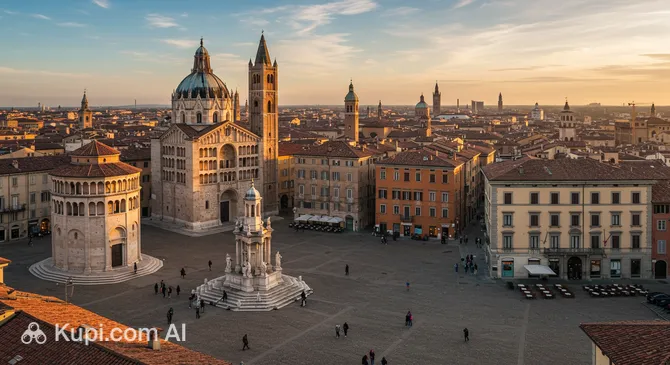
Parma is a true Italian masterpiece, nestled in the fertile plains of the Emilia-Romagna region. This elegant city, located between Milan and Bologna, embodies the finest traditions for which Italy is so famous. Here, amidst well-kept parks and ancient streets, reigns an atmosphere of tranquility, prosperity, and high art.

Parma. Illustration.
Source: Kupi.com AI

With a population of about 195,000, Parma is not only an administrative center but also the cultural heart of the region. The city has a special charm: locals prefer to get around on bicycles, and the cobblestone streets remember many eras. The rich history of Parma has turned it into a thriving crossroads of trade routes, giving the city a unique architectural look that can be admired endlessly.

Impressive sights await travelers here. Be sure to see the majestic Cathedral and the famous Baptistery, made of pink marble, and relax in the shade of the Ducal Park alleys. The city is also known for its ancient university and theaters, and gastronomic traditions here are elevated to a real cult.

It is worth visiting Parma for its unique charm and harmony between past and present. It is a welcoming, cozy, and very photogenic city that leaves a bright aftertaste and a desire to return again.

Weather Overview

The climate of Parma, located in the Po Valley, is characterized by distinct seasonality, offering tourists a variety of weather conditions. Expect hot summers with temperatures often reaching 30°C and fairly cool winters, when the thermometer stays around 4-5°C. The shoulder seasons are mild, but can bring surprises in the form of precipitation.

The warmest months are July and August, with averages around 25°C. This is a great time for sun-lovers, although you should be prepared for the summer heat. Spring arrives gradually: in March, the air warms up to 9°C, and by May, it reaches 17°C. However, May is considered the rainiest month of the year, with up to 16 days of precipitation. Before your trip, it is recommended to check the current weather in Parma to bring suitable clothing and an umbrella if necessary.

Autumn in the region is very picturesque and comfortable for walking, especially in September when the temperature stays around 20°C. By November, it becomes cooler (around 9°C), and in winter, despite the low temperatures, the number of rainy days decreases compared to spring. January is the coldest month, with night temperatures potentially dropping almost to zero.

Average monthly temperature

Average monthly precipitation

Interesting Facts

Beyond its main attractions and gastronomic delights, Parma holds many fascinating secrets and legends that are revealed only to inquisitive travelers.
  • Martial Name: The city's name dates back to the Latin word "parma," which means a round shield used by Roman legionaries. This serves as a reminder that the city was officially founded in 183 BC as a strategically important Roman colony.

  • Musical Capital: Parma is the birthplace of the great conductor Arturo Toscanini and a place where a cult of Giuseppe Verdi reigns. The local Teatro Reggio is famous for its discerning audience, and the annual opera festival attracts music lovers from all over the world.

  • Ancient Alchemy: One of the oldest pharmacies in Europe, the San Giovanni Pharmacy, opened in the 16th century, still operates in the city. It is located in the historical complex that houses the Church of San Giovanni Evangelista and resembles a museum with unique frescoes and ancient vessels for potions.

  • The Genius of Correggio: The city's vaults are adorned with works by the prominent Renaissance painter Correggio. His masterpiece, the "Assumption of the Virgin," painted on the dome that Parma Cathedral is so proud of, is considered the pinnacle of perspective mastery.

  • Cheese Legend: There is a legend that it was in the vicinity of Parma that Benedictine monks first created the recipe for a hard cheese that could be stored for a long time. Thus was born the famous Parmesan, which has become a symbol of Italian cuisine.

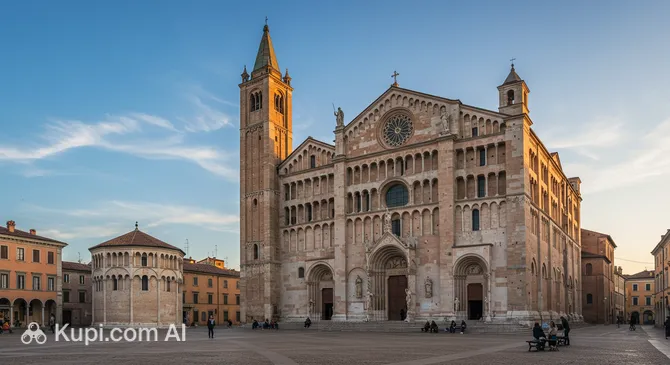
Parma Cathedral. Illustration.
Source: Kupi.com AI

Traveler photos:

How to Get There

Parma is conveniently located in the northern part of the country, making it easily accessible for travelers using various modes of transport. Although there is no major international air hub in the city itself, the region's excellent transport network allows you to quickly reach it from neighboring metropolises. You can find out more details on how to get to Parma to plan the optimal route.

Most often, tourists choose to fly to one of the nearest airports followed by a transfer. One of the most convenient options is Verona Villafranca Airport (IATA: VRN). It is located in the city of Verona, about 79 km from Parma. The journey by taxi or rental car will take about 1 hour and 20 minutes. This is an excellent choice for those who want to combine the trip with a visit to the Veneto region.

Another popular and close option is Guglielmo Marconi Airport (IATA: BLQ), located in Bologna, 81.7 km away. This is a major international hub receiving many flights. The travel time to Parma by car will be approximately 1 hour and 30 minutes. You can also consider arriving at Orio al Serio Airport (IATA: BGY) near Milan (108 km), which is often used by low-cost airlines.

For clarity, here is a summary of the main airports:

AirportPassenger trafficDistance
Verona Villafranca Airport3.7 mln79 km
Guglielmo Marconi Airport10.8 mln82 km
Orio al Serio International Airport17.4 mln109 km
Milano Linate Airport10.6 mln110 km
Pisa International Airport5.5 mln124 km

Rail connections in this part of Italy are excellent. If you are traveling by high-speed trains, look for the Reggio Emilia AV Mediopadana station. It is located in the city of Reggio Emilia, just 27 km from Parma. This is a modern station designed specifically for high-speed lines. You can get from there to the center of Parma by taxi or bus in just 30–40 minutes.

The Bologna Centrale station in Bologna (about 87 km from Parma) is also an important transport hub. It is one of the largest stations in the country with huge passenger traffic, from where it is easy to transfer to a regional train going directly to the station in the center of Parma. The regional train journey takes about an hour.

Below is a table with the nearest major railway stations:

StationPassenger trafficDistance
Reggio Emilia AV Mediopadana Station1.7 mln27 km
Verona Porta Nuova Station25 mln87 km
La Spezia Centrale Station7 mln87 km
Bologna Centrale Station58 mln87 km
Rogoredo Railway Station7.5 mln111 km

Main Attractions

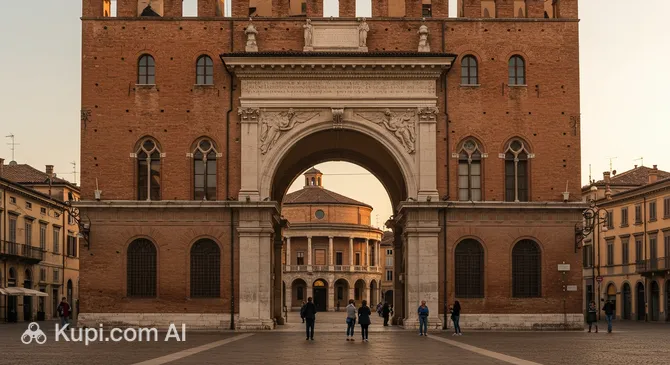
Parma is a city where history comes to life in stone and color. Its compact historical center allows you to explore the main treasures on foot, enjoying the harmony of the architecture. A good place to start your journey is the grandiose Palazzo della Pilotta complex. This monumental brick palace, built for the Farnese family, is striking in its scale. Real gems are hidden inside: the unique wooden Farnese Theater, the National Gallery with canvases by great masters, and the Archaeological Museum. This is a place where you can spend several hours immersing yourself in the art and history of the duchy.

Palazzo della Pilotta. Illustration.
Source: Kupi.com AI

Traveler photos:

The heart of the city's spiritual life is the Parma Cathedral. From the outside, it looks like a strict example of the Lombard Romanesque style, but the interior is overwhelming in its richness. The cathedral's main treasure is the dome painted by Correggio, depicting the "Assumption of the Virgin." This fresco is considered revolutionary for its time due to the incredible play of perspective and light, creating the illusion of an infinite sky right above the heads of the parishioners.

Next to the cathedral stands the Parma Baptistery—one of Italy's most important medieval buildings. The octagonal tower, clad in pink Veronese marble, symbolizes the transition from Romanesque to Gothic style. Inside the baptistery, magnificent 13th-century sculptures and frescoes are preserved, representing allegories of the months and signs of the zodiac. The play of light on the marble walls creates a wonderful, almost mystical atmosphere inside.

Music and theater enthusiasts should not miss the Teatro Reggio. This neoclassical opera house is famous not only for its elegant architecture with a colonnade but also for having one of the most demanding audiences in the world. Built at the behest of Duchess Marie Louise, it still preserves the spirit of great opera premieres. Even if you don't attend a performance, the building itself deserves attention as an important cultural symbol of the city.

For a peaceful stroll, the Parma Ducal Palace and its surrounding park are ideal. This is a green oasis within the city where locals love to relax. Here you can admire ancient statues, wide alleys, and the elegant facade of the residence that once served as home to the rulers of Parma. A walk here will be a perfect conclusion to a busy day of sightseeing.

Local Cuisine

Parma rightfully holds the title of one of the gastronomic capitals of Italy. The local cuisine is not just food, but a matter of national pride and centuries-old culture based on products of the highest quality. A trip here is unthinkable without tasting the two main symbols of the region: the famous Parma ham (Prosciutto di Parma), sliced into transparent slivers, and the "king of cheeses," Parmigiano-Reggiano. Their taste, perfected by generations of masters, is best revealed in its pure form as an appetizer.

The basis of a hearty lunch is fresh homemade pasta. On the menus of trattorias, you will certainly find tortellini and agnolotti with delicate fillings of ricotta, spinach, pumpkin, or meat. A special place in the culinary scene is held by dishes using truffles and game, as well as various salamis, such as Culatello di Zibello. For dessert, gourmets should order the exquisite "Duchessa" cake with rich custard and chocolate—a sweet reminder of the city's ducal past.

Meals in Parma are usually accompanied by local wines that perfectly complement the flavor of fatty cheeses and meat delicacies. The most popular choice is the sparkling red Lambrusco, which is often drunk chilled from ceramic bowls here, as well as the fragrant white Malvasia. For your morning coffee or a daytime snack, the Pasticceria Bombe Farini is an excellent place to appreciate local confectionery traditions.

The dining culture here is democratic: locals love both long family dinners and quick snacks on the go. Street food is represented by aromatic focaccia and hearty paninis. A legendary spot for such a snack is Da Pepèn—a historic establishment where queues often form for their famous roasted pork sandwiches. Tourists are also recommended to visit gastronomic festivals and farmers' markets to buy olive oil and homemade products directly from the producers.

Travel Tips

Welcome to Parma, the gastronomic and cultural gem of Emilia-Romagna! To make your acquaintance with the city as comfortable as possible and leave you with only pleasant memories, we have prepared a list of important practical recommendations that will help you feel at home here.

  1. Clothing and Dress Code: The climate in Parma is quite humid: summers are hot and muggy, so choose light natural fabrics, while in winter a warm coat and waterproof shoes will be useful due to frequent fogs. Since the historical center is paved with old cobblestones, be sure to bring comfortable flat shoes. Remember that visiting active churches, such as the Cathedral, requires modest clothing that covers shoulders and knees.

  2. Transport and Getting Around: Parma's historical center is compact, and it is best to explore it on foot or, as the locals do, by bicycle—the city is very friendly to cycling enthusiasts. Public transport consists of buses and trolleybuses; tickets can be bought at tobacco shops (Tabaccheria). If you rent a car, be extremely careful: the city center is a limited traffic zone (ZTL), entering which without a special permit risks a large fine. Leave your car in park-and-ride lots outside the historical core.

  3. Finances and Payment: The currency is the Euro (€). Bank cards are accepted almost everywhere, from restaurants to museums, but for paying for small purchases, coffee, or souvenirs at the market, it is better to have cash. ATMs are easy to find. Tipping in Italy is not a strict obligation, as a "coperto" service charge (1–2 euros per person) is often already included in the bill, but rounding up the amount or leaving a few coins as a thank you to the waiter is always appreciated.

  4. Health and Safety: Parma is one of the calmest and safest cities in the country, but standard precautions (keeping an eye on your bag in crowded places) are still wise. Pharmacies are easily recognized by a sign with a flashing green cross; on-call pharmacies are open 24/7. The single emergency number is 112.

  5. Language and Connectivity: The main language is Italian. In tourist areas and hotels, staff speak English, but it may not be as common in smaller shops. Learn a few phrases: "Buongiorno" (Good day) and "Grazie" (Thank you)—they will open many doors. A SIM card can be bought at mobile shops with a passport. Free Wi-Fi is available in many cafes and on main squares, but it often requires registration.

  6. Local Etiquette: When entering any shop, cafe, or elevator, it is customary to say hello and goodbye when leaving. Italians highly value politeness. At markets and vegetable stalls, never touch products with bare hands—use the disposable gloves that are usually nearby, or ask the seller for help.

  7. What to Avoid: Do not order a cappuccino after 11 am or during a heavy lunch—for locals, this is exclusively a morning drink, and such an order may cause genuine bewilderment. Also, avoid noisy behavior in churches and museums; Parma is a city of understated elegance.

  8. Shop Opening Hours: Take into account the traditional afternoon break (siesta). Many shops, especially small boutiques and stalls, close for lunch from approximately 1:00 PM to 3:30 PM. Plan your shopping for the morning or late afternoon, and dedicate lunch time to a leisurely meal in a trattoria.

Parma is a city that does not tolerate haste. By following these simple tips, you can easily blend into the leisurely rhythm of local life and enjoy every moment of your trip, from your morning espresso to an evening stroll through the softly lit squares.

Entertainment & Nightlife

Life in Parma does not stop when the sun sets or the museums close. This city knows how to enjoy the moment, offering guests a rich cultural program, excellent shopping, and cozy evenings in the best Italian traditions. From opera premieres to lively parties, everyone will find a way to have a good time here.

For connoisseurs of fine art, an evening in Parma is unthinkable without attending the opera. The city lives with the music of Giuseppe Verdi, and the main stage for this is the famous Teatro Reggio. Getting a ticket for a performance here is considered a stroke of good luck and a sign of good taste. In October, the large-scale Verdi Festival takes place here, turning the entire city into one big theatrical venue with open-air concerts and performances.

Sports fans should know that Parma is not just about football; it is also one of the centers of Italian rugby. Home matches of the professional team "Zebre Parma," which competes in prestigious international tournaments, are held at the Sergio Lanfranchi Stadium. Attending a game is a great chance to immerse yourself in the atmosphere of sporting excitement surrounded by passionate local fans.

Shopping in Parma will delight those who value quality and style. The historical center is filled with elegant boutiques and antique shops where you can find unique items. For larger-scale shopping, modern shopping centers are suitable. Located in close proximity to the center is La Galleria—a stylish space with clothing stores, cosmetics, and cafes. If you are interested in a wider selection of mass-market brands and electronics, you should head to the Euro Torri shopping complex, located in the northern part of the city.

Parma's nightlife begins with the traditional aperitivo ritual. Towards evening, locals and tourists fill Via Luigi Carlo Farini, hopping from bar to bar. If you are looking for a place with a relaxed atmosphere and a large selection of drinks, check out the Highlander Pub. This is a popular Scottish-style establishment where large groups often gather. For those who want to continue the night on the dance floor to modern rhythms, BANG Club Parma—one of the city's main attractions for young people—opens its doors.

Parks & Museums

Parma is a city where cultural enrichment is easily combined with outdoor relaxation. After getting acquainted with architectural masterpieces, tourists can take a breath in picturesque green areas or delve into exploring rich art collections, which are rightfully considered some of the best in the region.

One of the favorite recreation areas for citizens is the Parco della Cittadella. This is a unique place located on the territory of a former pentagonal military fortress built in the 16th century. Today, the austere bastions of the Citadel of Parma have been transformed into a cozy public park with jogging tracks, playgrounds, and shady alleys. It is an ideal space for a morning run or a peaceful picnic away from the city bustle, where history literally surrounds you.

Another green oasis in the heart of the historic center is the Piazza della Pace. This spacious square with well-kept lawns stretches in front of the monumental Pilotta complex. Students and tourists can often be seen here relaxing on the grass in the shade of trees or by the fountain. This place symbolizes peace and rebirth, creating a harmonious contrast with the majestic ancient architecture around and providing an excellent view of the city's main monuments.

The main treasure trove of art in the city is the National Gallery of Parma. Located within the walls of the Pilotta Palace, it houses an impressive collection of Renaissance and Baroque works. Visitors come here to see masterpieces by Correggio, Parmigianino, and Leonardo da Vinci's famous painting "La Scapigliata" (The Lady with Disheveled Hair). The gallery allows you to trace the development of the unique Parma school of painting and its influence on European art.

An interesting place for history and architecture buffs is the Palazzo Tarasconi. This 16th-century building was recently restored and now serves as a prestigious venue for temporary art exhibitions and cultural events. Descending into its basements, you can find an unexpected surprise—a modern space where ancient brick vaults sit alongside contemporary art, creating a unique atmosphere.

For full immersion into the city's atmosphere, we suggest not limiting yourself only to well-known museums. Pay attention to posters for temporary exhibitions: they often take place in historical palazzos that are usually closed to the public. This is a great chance not only to see art but also to peek into the hidden interiors of private residences.

Getting Around

The public transport system in Parma is organized simply and efficiently, allowing tourists to easily move between the historic center, the station, and the outskirts. Since the city is quite compact, there is no metro or tram. The main burden falls on an extensive network of buses and trolleybuses, managed by the local company TEP. Routes cover all key areas, and daytime intervals are usually 10–15 minutes.

A single city ticket (biglietto urbano) is used to pay for travel. It is valid for 80 minutes from the moment of validation and allows an unlimited number of transfers within this time. If you plan to move around a lot during the day, it is more profitable to purchase a day pass (biglietto giornaliero), which is valid until midnight on the day it was validated. The approximate cost of a single trip is about 1.60 euros; if purchased from the driver, the price will be higher.

Tickets can be purchased at newsstands and tobacco shops (look for the sign with the letter "T"), at vending machines at the railway station, or at TEP offices. For those who prefer modern technology, mobile apps such as Roger or DropTicket are available, allowing you to buy tickets online. This eliminates the need to look for an open kiosk, especially in the evenings or on weekends.

An important point for all tourists: the ticket must be validated immediately upon entering the bus. Use the special yellow or green machines for this. If you bought an electronic ticket through the app, it must also be activated before boarding. Ticket inspectors in Parma work frequently and strictly, and fines for unpaid or unvalidated travel are quite substantial.

Buses run from approximately 6:00 AM to 8:00–9:00 PM. At night, the "Prontobus" service operates—these are on-call buses that run on certain routes, but they must be booked in advance via the app or by phone. This is a specific service, so for late returns to the hotel, it is more reliable to count on a taxi.

An alternative to buses is the bicycle. Parma is a city with flat terrain and wide streets, so locals move en masse on two wheels. Tourists can use the bike-sharing system or rent a bike at the "La Cicletteria" rental point, located right at the railway station. This is perhaps the most authentic way to feel the rhythm of the city.

If you need a taxi, remember that in Italy it is not customary to "hail" one on the street. You should look for a car at special stands (for example, at the station or on Piazza Garibaldi) or call by phone or through an app. For those traveling by rental car, be careful: the historic center is a limited traffic zone (ZTL), where entry is allowed only by special permit. To avoid fines, leave your car in park-and-ride lots outside the old city.

Accommodation

Where to stay:

Accommodation options in Parma are as diverse as its gastronomic offerings. The city offers a wide choice of housing: from elegant boutique hotels located in old palazzos to cozy family pensions (B&Bs) and modern apartments. Here you can find both luxurious rooms with antique furniture and budget hostels for young people, although the high-quality mid-range segment predominates.

For most travelers, the historic center is the best choice. Staying here allows you to be within walking distance of the main attractions and enjoy the city's evening atmosphere. The heart of this area is the square where the Monument to Giuseppe Garibaldi is located. Hotels in the vicinity of this square and the neighboring Strada della Repubblica are ideal for those who want to be in the thick of things, near the best cafes and shops.

If you plan to travel outside the city frequently or are looking for more economical options, consider the area around the railway station. It is only a 10–15 minute walk from the center, but prices here are often lower. Another interesting area is Oltretorrente ("Across the River"), located on the other bank of the Parma River, near the green zone of the Parma Ducal Palace. This is a colorful neighborhood with a bohemian atmosphere, popular among students and creative youth.

The price range varies depending on the season. On average, a night in a good 3-4 star hotel will cost 80–150 euros. Budget options and guest houses can start from 50 euros. It is recommended to book accommodation through popular online platforms or directly on hotel websites, which sometimes allows you to get extra bonuses, such as free breakfast.

Booking Tip: Parma is a popular destination, especially during major events. If your trip coincides with the famous Verdi Festival (usually in October) or major gastronomic exhibitions, you should book your room several months in advance. On these dates, demand for housing rises sharply, and prices can increase 1.5 to 2 times.

Nearby Cities

For those who want to explore the surrounding areas, Parma serves as an excellent starting point for day trips to several interesting nearby locations. Just next door is Reggio Emilia, known as the city where the Italian tricolor was born and famous for its gastronomy and architecture. For lovers of relaxation and Art Nouveau aesthetics, Salsomaggiore Terme—a famous resort with healing waters and luxurious thermal complexes—is a must-visit. Meanwhile, Fidenza attracts travelers with its magnificent historic cathedral and a popular outlet mall for great shopping deals.

CityPopulationDistance
Collecchio14 63410 km
Sant'Ilario d'Enza11 26311 km
Sorbolo9 56311 km
Noceto12 91912 km
Felino8 87314 km

These nearby destinations provide insight into the diverse culture and landscapes of the region, perfectly complementing the experience of visiting Parma.

Shopping & Souvenirs

Overview: Shopping in Parma is a sophisticated pleasure that perfectly complements the cultural program. The city, known for its high standard of living and elegance, offers tourists a harmonious combination of luxury boutiques, old craft shops, and modern stores. There is less hustle and bustle here than in Milan, allowing for shopping at a calm and relaxed pace while enjoying the quality of Italian goods.

Main Shopping Areas: The main artery for shopping enthusiasts is Via Cavour and its continuation, Strada della Repubblica. In this pedestrian zone of the historic center, boutiques of famous fashion houses, jewelry salons, and accessory stores are concentrated. If you are interested in more affordable fashion and popular chain brands, you should turn onto Via Mazzini or stroll along Via Garibaldi. The narrow alleys around these streets hide many small shops with unique clothing and interior items.

Shopping Centers: For those who prefer comfort and variety in one place, Parma offers several excellent options. Located in close proximity to the historic center is La Galleria (formerly known as the Barilla Center). This is a stylish open-air shopping and entertainment complex located in restored industrial buildings, where shopping can be combined with a visit to a cafe or cinema. Another popular spot is Euro Torri, located in the northern part of the city. This is a large mall with a huge selection of clothing stores, electronics, household goods, and a large hypermarket.

Markets: To feel the true spirit of the city, be sure to visit the local markets. The city's main market on Piazza Ghiaia is a historic trading site. On Wednesdays and Saturdays, stalls with clothes, shoes, textiles, and household goods at very attractive prices are set up here. Additionally, antique and vintage fairs are regularly held in Parma, where collectors can find rare books, old dishes, and jewelry.

Souvenirs: It is impossible to leave Parma without gastronomic treasures. The main gift is, of course, the famous Parmigiano-Reggiano cheese and the delicate Parma ham (Prosciutto di Parma), which are best bought in specialized delicatessens where they will be vacuum-packed for transport. Also, look for the "Violetta di Parma" perfume—a legendary floral scent that became a symbol of the city thanks to Duchess Marie Louise. Local ceramics or leather goods also make for good souvenirs.

Opening Hours and Payment: Most shops in the city center are open from 09:30 to 13:00 and from 15:30 to 19:30, closing for the traditional lunch break (siesta). On Sunday and Monday mornings, many small shops may be closed. Large shopping centers usually operate without breaks and days off. Bank cards (Visa, Mastercard) are widely accepted, but for purchases at markets or small souvenirs, it is better to have some cash on hand.

Tax Free: Tourists residing permanently outside the European Union can take advantage of the tax refund system (Tax Free) when purchasing goods for an amount exceeding the set limit (usually around 70 euros, but rules may change). Look for "Global Blue" or "Tax Refund" stickers in shop windows and don't forget to ask the seller for a special receipt (Tax Free Form) when paying for your purchase to get a partial refund when departing from the airport.
Reached the end of the page?

That means the route is fully explored