Support

Ponza

Interesting places

About

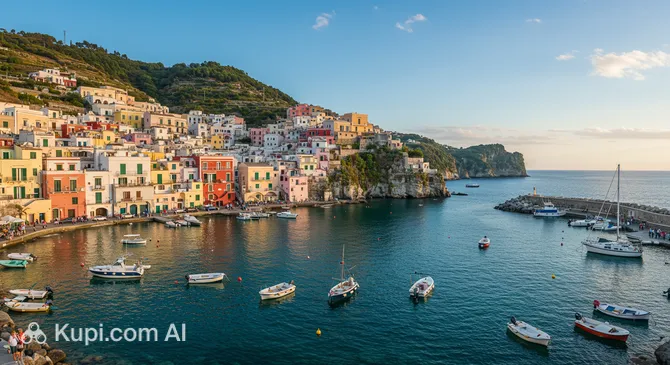
Ponza is a charming island and a port city of the same name, which is the main jewel of the Pontine Islands. This picturesque piece of land of volcanic origin, gifted to the world by Italy, is located in the Tyrrhenian Sea, about 18 miles from the mainland coast, south of Rome.

Ponza. Illustration.
Source: Kupi.com AI

The island's administrative center is nested in a large natural bay on the eastern shore, welcoming travelers with an amphitheater of colorful pastel-toned houses. With a permanent population of about 3,300 people, a cozy, almost home-like atmosphere reigns here, ideal for a leisurely vacation. The unique landscape with its mountainous terrain, rocky beaches, and crystal-clear waters creates the unforgettable scenery for which this region is so famous.

The city's special charm is enhanced by narrow streets, a lively promenade, and a rich past steeped in myths. The ancient history of Ponza comes to life when visiting archaeological sites such as Roman cisterns and villa ruins, as well as while exploring mysterious grottoes and caves. In addition to cultural discoveries, the resort offers excellent opportunities for boat trips and diving.

Ponza is a perfect destination for those seeking solitude and beauty away from bustling tourist centers. It is a corner where you can enjoy the harmony of nature, explore hidden coves, and taste exquisite local cuisine in one of the restaurants overlooking the sea.

Weather Overview

The climate on the island is typical for the Mediterranean — mild and favorable for travel most of the year. To choose the perfect time for your trip and pack your suitcase correctly, we recommend checking in advance what the weather in Ponza will be during your visit.

Summer here is a season of sun and warmth. From June to August, the average air temperature is 23–26°C, creating ideal conditions for a beach holiday. Precipitation at this time is very rare: for example, in July and August, there are practically no rainy days.

Winters on Ponza are not harsh but are characterized by increased humidity. In January and February, the thermometer usually stays in the range of 11–13°C. In autumn and early winter, the weather becomes more fickle: November is considered one of the rainiest months, when precipitation can occur up to 18 days a month.

Expect a warm and dry summer with temperatures above 25°C and mild winters with frequent rain but without severe cold.

Interesting Facts

In addition to its main attractions, Ponza hides many fascinating secrets that reveal the island from an unexpected side. Here are a few facts that will help you get to know this amazing place better:

  • The Legend of Lucia Rosa Rock. One of the island's most picturesque spots is shrouded in sad romance. According to legend, the rock is named after a young girl who fell in love with a poor peasant. Having not received her parents' blessing for the marriage, she threw herself into the sea in despair. Today, this place is considered a symbol of eternal love and devotion.

  • Undergrounds of the Roman Empire. The island is literally permeated with history: here you will find the famous Pilate's Grottoes — a complex system of caves at sea level. In ancient times, these man-made grottoes were used by Romans not only as shelters for boats but also as water reservoirs and fish farming ponds. You can still explore them today by sailing through the intricate corridors on a boat.

  • Island of Contrasts. For centuries, Ponza has played a dual role. On one hand, it was an elite resort where Roman emperors built luxurious villas for relaxation. On the other, the island's isolation made it an ideal place for the exile of political prisoners, creating a unique blend of luxury and isolation.

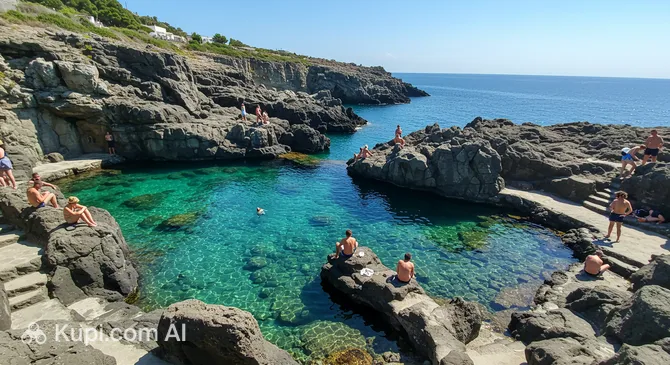
  • Unique Bathing Areas. The island's volcanic origin has gifted it with amazing landscapes. The famous Natural Pools are natural sea basins formed in the rocks, where the water always remains calm and transparent, creating the effect of a giant open-air jacuzzi.

  • Festivals of the Sea. Local culture is inextricably linked with the water element. Every year, colorful sea festivals are held here, accompanied by solemn processions of boats, live music, and, of course, large-scale tastings of the freshest seafood delicacies, uniting locals and tourists in a single celebration of life.

Natural Pools. Illustration.
Source: Kupi.com AI

Traveler photos:

How to Get There

Ponza is an island, so traveling here always involves a sea crossing. The route usually consists of two stages: a flight or train ride to mainland Italy (typically to Rome or Naples) and a subsequent transfer to a ferry or hydrofoil. You can find out more about how to get to Ponza to choose the most convenient departure port and coordinate transport schedules.

There is no airport on the island itself. The nearest major air hub is Leonardo da Vinci — Fiumicino Airport (IATA: FCO) in Rome, located about 116 km from Ponza in a straight line. Flights from all over the world arrive here. Upon arrival, you will need a transfer to one of the ports in the Lazio region (Anzio, Terracina, or Formia), from where ferries depart regularly. Travel time to the pier will depend on the chosen mode of transport and the traffic situation.

Another popular option is Naples Capodichino Airport (IATA: NAP), located 112 km from the island. From Naples, ferries to Ponza depart directly from the city's Mergellina port, which can be convenient for transit passengers. It is also worth considering Ciampino–G. B. Pastine International Airport (IATA: CIA) in Rome, often chosen for low-cost flights.

Below is information on the nearest airports:
AirportPassenger trafficDistance
Ciampino–G. B. Pastine International Airport3.9 mln105 km
Naples International Airport12.7 mln112 km
Leonardo da Vinci-Fiumicino Airport40.5 mln116 km
Pontecagnano400 000168 km
Abruzzo Airport872 701199 km

Traveling by rail also implies a transfer to sea transport. There is no railway service in Ponza city, but you can reach Roma Termini Station in Rome. This is the capital's main station, from where it is convenient to take a regional train or bus to the port cities of Anzio or Formia to board a ferry.

An alternative in the south is the Napoli Centrale station in Naples. From here, you can quickly reach the Port of Naples by taxi or public transport to continue your journey to the island by sea. The choice of station depends on which port you plan to depart from.

List of the nearest railway hubs:
StationPassenger trafficDistance
Latina railway station872 km
Napoli Campi Flegrei railway station11104 km
Napoli Mergellina railway halt11106 km
Napoli Centrale railway station18111 km
Naples Centrale Station50 mln111 km

Main Attractions

The main wealth of Ponza is its incredible nature and coastline, indented with cliffs, grottoes, and cozy coves. The island offers an amazing variety of locations: from popular beaches with developed infrastructure to wild spots accessible only by sea. Here is a list of places that should definitely be included in your travel itinerary.

One of the island's most recognizable landmarks is Chiaia di Luna beach. Its name, which translates as "Moon Beach," is due to the unusual crescent shape of the coastline and the majestic sheer cliffs of light tufa surrounding it. Although access to the beach itself is often restricted due to the risk of rockfalls, the view of this bay from the sea or from the observation deck at sunset leaves an indelible impression and is considered the most romantic landscape of Ponza.

For lovers of unusual swimming spots, the Natural Pools (Piscine Naturali) will be a real discovery. Located in the Le Forna area, they are two volcanic basins protected from the open sea by rocks. The water here is always calm and crystal clear, making it an ideal place for snorkeling and relaxed swimming. You can get here on foot along a scenic path or by boat, enjoying the views along the way.

Natural Pools. Illustration.
Source: Kupi.com AI

Traveler photos:

If you are looking for a comfortable place to relax with the whole family near the center, pay attention to Santa Maria Beach. This is a long pebble strip located just a few minutes' walk from the port. It features a lively atmosphere with restaurants and bars, and the gentle entrance to the water is convenient for children. It is also a convenient starting point for boat excursions to other parts of the island.

History and mystery enthusiasts should visit Pilate's Grottoes (Grotte di Pilato). This complex system of man-made caves, carved into the rocks back in the days of the Roman Empire, was used for farming moray eels. It is best to explore these ancient tunnels on a small boat: the sun's rays penetrating the caves paint the water in incredible shades of turquoise and blue, creating a magical atmosphere.

Local Cuisine

Ponza's cuisine is the quintessence of Mediterranean traditions, where the main roles are played by the freshest seafood and seasonal vegetables. The island's gastronomic scene is characterized by simplicity and sincerity: there is no striving for complex culinary experiments, preferring instead to highlight the natural taste of high-quality products. Local olive oil is considered one of the best in the region and serves as the basis for almost all treats.

Among the main dishes that are a must-try, the queen of the table is pasta with seafood. It harmoniously combines shrimp, mussels, squid, and aromatic herbs, creating a rich taste of the sea. Equally popular is local grilled fish. It is served with lemon and olive oil — this minimalistic approach allows you to fully enjoy the freshness of the catch. Also, look for side dishes made from local vegetables and appetizers with olives grown on the island's slopes.

As for drinks, it is customary to accompany the meal with a glass of cold white wine. Vineyards of the Lazio region and the archipelago itself produce wines with light mineral notes that perfectly complement the taste of the fish. As a digestif, you will surely be offered limoncello or herbal liqueurs. Among non-alcoholic drinks, freshly squeezed citrus juices and strong Italian coffee are popular.

The food culture on Ponza is diverse: from cozy family trattorias to lively street trade. Local markets are a true point of attraction for gourmets, where you can buy homemade cheeses and even try raw seafood right from the counter. If you are looking for a place to combine a beach holiday with a delicious lunch, head to Santa Maria Beach. Many establishments offering excellent cuisine with a sea view are concentrated in this area.

In the warm season, the island transforms into a venue for gastronomic festivals. These celebrations include tastings, culinary masterclasses, and musical evenings, allowing tourists not just to eat, but to feel the soul of the island through its flavors and traditions.

Travel Tips

Ponza is an island with a unique landscape and a relaxed atmosphere, requiring a bit of preparation from the traveler. To ensure your vacation is as comfortable as possible and free of surprises, we have compiled a list of important practical recommendations to help you plan the perfect trip.

  1. Clothing and Footwear. The main rule on Ponza is comfort. The island is mountainous, with many steps and steep descents to the sea, so forget about heels: you will need flat-soled sandals or non-slip sneakers. During the day, beachwear is relevant, but for evenings, be sure to bring a light jacket or windbreaker, as a fresh breeze often blows from the sea.
  2. Transport. During the summer season, non-residents are prohibited from entering the island with a private car. The best way to get around by land is the local buses (they run regularly) or renting a scooter. However, the right way to see Ponza is to rent a small boat (gozzo) in the port, as the most beautiful bays can only be reached by water.
  3. Finance. The official currency is the Euro. Although cards are accepted in most hotels and restaurants, cash is vital for paying small expenses: buying water, paying for a water taxi, or snacks at stalls. ATMs are available in the port area, but during peak season, they may run out of cash, so it's better to have a reserve of cash with you.
  4. Health and Safety. Ponza is a safe place, but the sun is very active here. A high SPF cream and a hat are mandatory, especially during boat trips. Pharmacies operate mainly in the port area according to a standard schedule with a siesta break. Also, be careful when swimming: sometimes jellyfish come to the shores.
  5. Communication. The main language of communication is Italian. In the tourism sector, staff often speak English, but knowing basic phrases (greeting, thank you) in the local language always endears you to the residents. Wi-Fi is available in almost all cafes and hotels, and mobile internet works stably throughout the island.
  6. Local Etiquette. In Italy, politeness is highly valued: always say hello when entering a shop or cafe (Buongiorno or Buonasera). It is important to remember the dress code: walking around the city center or entering shops in swimsuits or shirtless is considered bad form and may result in a remark from locals or even a fine.
  7. What to Avoid. It is strictly recommended not to ignore warning signs and fences. Many parts of the coast are subject to erosion and rockfalls (for example, the descent to Chiaia di Luna beach is closed precisely for this reason). Do not try to bypass restrictions for the sake of a beautiful photo — it is life-threatening.
  8. Time Planning. Ponza is a favorite vacation spot for Romans, so it is very crowded on weekends and in August. If you plan to travel during this period, book ferry tickets and restaurant tables several weeks in advance.

By following these simple tips, you can avoid minor troubles and fully immerse yourself in enjoying the incredible scenery and hospitality of this sunny corner of the Mediterranean. We wish you an unforgettable journey!

Entertainment & Nightlife

Nightlife in Ponza is not about loud metropolitan raves, but about elegant "dolce far niente" (sweet idleness) to the sound of the sea and the clinking of glasses. The island falls asleep late, but instead of deafening bass, an atmosphere of sophisticated parties, live music, and long dinners prevails here. The epicenter of evening activity is invariably the port area and the promenade, which at sunset turns into one large runway for showcasing summer outfits and enjoying life.

A traditional evening on the island begins with the ritual of the aperitif. From around 7:00 PM, tourists and locals fill bars overlooking the sunset to see the sun off with a glass of Spritz or Prosecco. The most popular venues are concentrated around the harbor. There is no strict division between "clubs" and "bars" here: often the same place works as a cafe during the day and transforms into a lounge with a DJ at night. The crowd here is respectable, so the dress code implies "relaxed chic": linen shirts, light dresses, and stylish accessories will be very appropriate.

If you are looking for a place where life buzzes until dawn, head to the area where Santa Maria Beach is located. While it's a swimming area during the day, the surroundings of the beach and the village of the same name come alive in the evening. There are cozy restaurants and bars where you can sit with a large group. This is an excellent location for those who want to combine the sound of the surf with a cocktail menu without straying too far from civilization.

For dance lovers, several disco bars and open-air clubs operate on the island, opening closer to midnight. Prices in Ponza's establishments are higher than the Italian average, which is explained by the resort's exclusivity: a cocktail can cost from 10 to 20 euros. Safety on the island is at the highest level — you can walk around peacefully at any time of the day. Taxis operate 24/7, but within the port area, everything is within walking distance.

During the day, entertainment is more nature-oriented and exploratory. The cultural program may include visiting small ethnographic museums, but the main show here is staged by nature itself. A mandatory item of the daytime program is the Natural Pools in the Le Forna area. This place attracts young people and photography enthusiasts: during the day, people swim and sunbathe on the rocks here, and towards evening, they often organize impromptu picnics overlooking the sea before heading to the center for dinner.

Parks & Museums

Ponza's cultural and natural landscape is a harmonious intertwining of wild Mediterranean vegetation and ancient heritage. While you won't find huge urban parks in the traditional sense here, the entire island resembles an open-air museum, where every cliff and path tells a story of millennia.

The main green oasis of the island is rightfully considered the Ponza Botanical Garden (Giardino Botanico Ponziano). Located on Belvedere Hill, it features a unique collection of flora characteristic of the Pontine Islands. Here you can see rare species of orchids, wild herbs, and shrubs saved from extinction. A walk through the garden is not only an introduction to botany but also an opportunity to enjoy breathtaking panoramic views of the port and sea from the height of the villa where the park is situated.

For those seeking communion with untouched nature, a visit to the neighboring uninhabited island of Zannone, which is part of the Circeo National Park, will be a true discovery. It is the only place in the archipelago that has preserved a dense oak forest and a pristine ecosystem. Also, the famous Natural Pools belong to the unique natural zones. These volcanic basins filled with seawater are a geological monument and a popular swimming spot surrounded by rocks.

Ponza's museum life focuses on preserving the memory of the islanders' daily life. Be sure to stop by the Ethnographic Museum (Museo Etnografico Ponzese), located in one of the caves near Cala Feola beach. The exposition here is free of formality: a small grotto contains ancient fishing gear, household items, letters, and photographs donated by local residents. This place allows you to feel the soul of the island and understand how people lived here before the arrival of mass tourism.

Another important site serving as a historical museum is the Roman Cisterns of Dragonara. This is a grand underground structure created by ancient engineers to collect rainwater. Walking through its echoing vaulted corridors with torches or lighting leaves a strong impression and demonstrates the scale of the Roman presence on the island.

From an architectural point of view, the city of Ponza itself is an attraction. Its famous semi-circular port, designed during the Bourbon era, is considered a masterpiece of 18th-century urban planning. Pastel houses built in an amphitheater shape and the Church of Saints Silverio and Domitilla form the recognizable and incredibly photogenic face of the island's capital.

Insider tip: If you want to see a "different" Ponza, take a walk to the ruins of the old semaphore at the top of Monte Guardia — the island's highest point. The trail passes through thickets of gorse and wild rosemary, and the view from the top is breathtaking: on a clear day, you can see the outlines of the mainland and neighboring islands.

Getting Around

The public transport system in Ponza is simple, clear, and fully adapted to the features of the island's terrain. Due to its compact size, there is no metro, tram, or railway service here. The main and only type of land public transport is the buses of a local company, which run along the single main road crossing the island for almost its entire length.

Bus routes connect the port of Ponza (Porto) with the northern part of the island, the Le Forna district. Transport runs quite frequently, especially in the summer season, when trips depart every 15–20 minutes from early morning until late at night. The buses themselves are small and maneuverable, allowing them to easily pass each other on narrow winding streets and serpentines.

The fare payment system is standard for the region. It is highly recommended to purchase tickets in advance. This can be done at the port, in newsstands, tobacco shops (Tabaccheria), or in some bars marked with a special sign. The cost of a single trip is about 1.50–2.00 euros. A ticket can also be bought from the driver when boarding, but in this case, the price will be higher. Be sure to validate your ticket immediately after entering the vehicle to avoid a fine.

Important alternatives to land transport are water taxis and regular boats delivering tourists to the beaches. For example, to the popular Frontone beach, which is difficult to reach by land, boats constantly run from the port. This is a kind of "water bus," for which the fare is charged for a round trip. You can also hire a private water taxi in the port for a trip to any bay.

For those who prefer independence, a popular option is renting a scooter. This is the most convenient way to get around, allowing you to reach hidden corners and observation decks. You can also rent small open cars on the island (often vintage models), which are ideal for the local climate. Regular taxis are also available: local drivers use comfortable minivans, but trip prices can be quite high, especially in the evening.

Tourists should remember that in the high season (July-August), buses can be overcrowded, especially during peak hours when vacationers return from the beaches. Schedules at stops are often approximate, so it's better to arrive with a bit of time to spare. There are fewer night trips, but they allow you to comfortably reach your hotel after dinner at the port.

Accommodation

Accommodation options on Ponza are as picturesque and varied as the island itself. You won't find huge skyscraper chain hotels here; instead, guests are offered cozy boutique hotels, family-run pensions (B&Bs), and numerous apartments or villas for rent. Housing ranges from budget rooms with no frills to luxurious residences with terraces hanging over the sea.

The choice of area for your stay largely determines the character of your vacation. The most popular and lively place is the Port (Porto) area. By staying here, you will be at the epicenter of evening life, close to restaurants, shops, and ferry piers. This is an ideal choice for those who do not want to depend on transport and love to be in the thick of things.

If you are looking for a quieter atmosphere, consider the Le Forna area in the northern part of the island. This place is famous for its sunsets and proximity to the most beautiful swimming spots, such as the famous Natural Pools. Here, life flows at a measured pace, housing prices are often slightly lower than in the port, and you can reach the center by a regular bus.

Natural Pools. Illustration.
Source: Kupi.com AI

Traveler photos:

The Santa Maria area can be a golden mean. It is located near the port, but it is significantly quieter. Staying here is convenient for families with children, as Santa Maria Beach is within walking distance, and there is necessary infrastructure in the form of grocery stalls and trattorias.

Booking tip: Ponza is an extremely popular destination among Italians, especially in August (the Ferragosto holiday period). At this time, the island is overcrowded, and prices reach their peak. To guarantee a good option at a reasonable price, it is highly recommended to book accommodation 3–5 months before the trip. In the low season (May, June, September), finding a free room is much easier, and the cost of living becomes more affordable.

The price range on the island is above the Italian average. Budget options are available mainly in the format of room rentals or modest apartments away from the sea. Middle and high-class hotels offer excellent service, often with breakfast and port transfer included. You can book through popular international online platforms or by contacting villa and pension owners directly, which sometimes allows for a small discount.

Nearby Cities

For those who want to explore the surroundings, Ponza serves as an excellent starting point for day trips to several interesting nearby locations on the mainland coast of the Lazio region. Since Ponza is an island, a journey to its neighbors implies a pleasant sea voyage by ferry or hydrofoil, which is an adventure in itself.

One of the most picturesque destinations is Terracina. This city, located on the Ulysses Coast, is famous for its unique combination of magnificent beaches and rich historical heritage. The main point of attraction here is the majestic Temple of Jupiter Anxur, towering on Mount Sant'Angelo. Its ruins offer a breathtaking panorama of the Tyrrhenian Sea and, on clear days, of the Pontine Islands themselves.

Another popular route leads to the city of Anzio. Known for its fishing history and port atmosphere, it attracts gourmets with its fish restaurants serving the freshest catch. History buffs will appreciate the ruins of Nero's imperial villa, located right at the water's edge, allowing for a cultural program to be combined with beach relaxation.

Very close to Anzio is Nettuno, often called the "twin city." Its jewel is the beautifully preserved medieval quarter (Borgo Medievale) with a labyrinth of narrow streets, ancient churches, and the Sangallo fortress standing guard over the sea borders.

CityPopulationDistance
San Felice Circeo10 05440 km
Sabaudia20 53646 km
Terracina46 32350 km
Pontinia14 91558 km
Gaeta20 54562 km

These nearby destinations provide insight into the diverse culture and landscapes of the region, offering a contrast between island serenity and the dynamic life of the mainland coast.

Shopping & Souvenirs

Shopping in Ponza is radically different from what the major metropolises for which Italy is famous offer. You won't find huge malls or outlets with global brands here. Trade on the island is a cozy, intimate process steeped in local color. The main focus is on small boutiques, craft shops, and stores with locally produced goods, where every item has its own story and unique character.

The heart of the city's commercial life is the port area and the promenade. The main shopping street is Corso Carlo Pisacane. Strolling along this picturesque artery overlooking moored yachts, you will find many clothing stores offering "moda mare" (beach fashion) style: linen dresses, light tunics, high-quality swimwear, and the famous handmade sandals that craftsmen can fit to your foot right on the spot. Interesting shops are also hidden in the narrow streets climbing up from the port to the residential quarters.

There are no large shopping centers in Ponza, due to the island's modest size and architectural features. All shopping is concentrated in a street-retail format. Instead of supermarkets, small grocery shops (alimentari) are popular here, where you can buy everything you need.

Markets on the island are more of a gastronomic adventure than a place to buy clothes. In the morning hours, you can find an impromptu fish market in the port, where fishermen sell their freshest catch directly from their boats. This is a great place to feel the true atmosphere of island life. Souvenir stalls are most commonly found along the promenade in the evening.

If you are wondering what to bring back from your trip, pay attention to local delicacies. Ponza is famous for its capers, considered some of the best in the Mediterranean, and its lentils. An excellent gift would be a bottle of local Fieno di Ponza wine — an ancient variety revived on the island. Lovers of aesthetics will appreciate handmade ceramics painted in the colors of the sea and lemons, as well as coral jewelry. By the way, if you forgot beach accessories for your holiday at Santa Maria Beach, you will find a huge selection of designer towels and bags in the local boutiques.

When planning a shopping trip, remember the "siesta," which is sacred to Italians. Most shops open around 9:30–10:00 AM but close for a lunch break from 1:00 PM to 4:30 PM or even 5:00 PM. However, in the evening, trade revives and continues until late at night, often until midnight, especially during the high tourist season (July-August).

Regarding payment, most boutiques and souvenir shops accept credit cards without issues. However, for small purchases (e.g., magnets, water, or fruit at stalls), it is recommended to carry cash euros. The Tax Free system (VAT refund) is available in some expensive clothing and jewelry boutiques for purchases over a set minimum (usually around 155 euros), so don't forget to look for the "Tax Free" sticker in the window and ask for a special receipt.
Nearby cities

Have you reached the end of the page?

So the route has been studied inside and out