Support

Kushima Castle

About

Kushima Castle is a majestic historical fortress located in the picturesque city of Ōmura in modern-day Japan. Built in 1599, this hirayama-jiro (flatland-mountain) type castle is unique for its location on a small peninsula, which allowed the waters of the bay to serve as a natural defense.
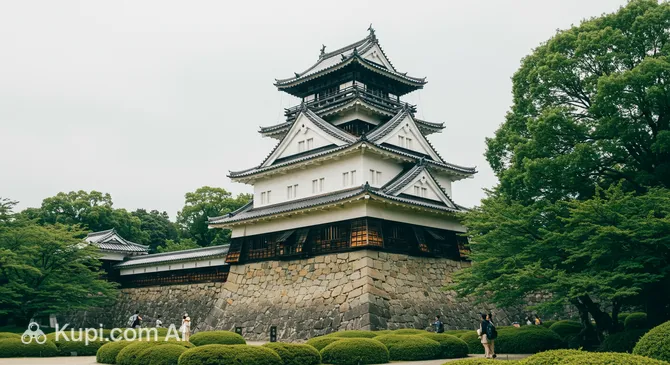
Kushima Castle
Kushima Castle. Иллюстрация. Источник: Kupi.com AI

One of the key architectural features of the monument is the complete absence of a central keep (donjon), which was compensated for by a complex system of ramparts, gates, and massive ishigaki stone walls. In the past, the castle was closely linked to maritime trade and even had its own three stone piers, highlighting the status of the Ōmura clan as influential maritime rulers.

Today, the territory of the former castle has been transformed into a quiet historical park, with the Ōmura Shrine located on the site of the main bailey. Visitors are drawn here by the beautifully preserved fortification fragments, the deep karabori dry moat, and the opportunity to touch the authentic spirit of the samurai era away from noisy metropolises.

Contacts

For those planning a visit to this historical site, it is helpful to know its exact location in advance. Although the castle consists of historical ruins, it has an official address to help you find your way around the city.

Below is the basic contact information currently available for tourists:

How to contactContact
Address1 Тёме Кусима, Омура, Нагасаки 856-0834, Япония
Websitewww.fukushige.info

What to Do

When visiting Kushima Castle, your attention will first be drawn to the monumental ishigaki stone walls and the reconstructed dobei clay-plastered walls. Walking along the defensive lines, you can examine the masonry in detail and appreciate the scale of the karabori dry moat, which once made the citadel virtually impregnable.

Be sure to visit the Ōmura Shrine, located in the main bailey (honmaru). This place is filled with a peaceful atmosphere, and the higher ground offers a panoramic view of the vast bay. History buffs will find it interesting to locate the remains of the three stone piers, which serve as a reminder of the times when the castle was a thriving trading port.

The grounds are perfect for quiet walks and picnics under the shade of the trees. There are no huge crowds of tourists here, allowing you to take excellent photos of the ruins against the sea in silence. If you are interested in Japanese fortification, this place will be a real find for studying classic defensive techniques of the Sengoku period.

Getting There

Reaching this historical monument is quite easy, as it is located at: 1 Chome Kushima, Ōmura, Nagasaki. If you are already in the center of Ōmura, a walk to the castle will take about 15–20 minutes, allowing you to take a closer look at the local streets.

For those who prefer public transport, the most convenient option is to travel to JR Omura Station. From the station, you can reach the castle entrance by local bus or taxi in just 10–15 minutes.

If your journey starts from Nagasaki, take the JR Omura Line to Omura Station — the trip takes about an hour. For travelers by car, it is approximately a 40–50 minute drive from Nagasaki Airport; you can park your car in the designated parking lot near the shrine.

Ближайший город: Omura

History & Facts

The foundation of the castle is inextricably linked with the name of Ōmura Yoshiaki, who built this fortress in 1599. As a vassal of Toyotomi Hideyoshi, Yoshiaki decided to move the family residence to a more protected location, choosing a peninsula in the bay. Interestingly, during construction, he consulted with the legendary fortification master Kato Kiyomasa, which largely determined the strength of the defensive walls.

The Ōmura clan has a fascinating history: the ancestor of the castle's founder was Japan's first Christian daimyo, who opened the port of Nagasaki for trade with the Portuguese. Although Yoshiaki himself later converted to Buddhism, European influence was felt in the region for a long time, turning the castle into an important hub for maritime trade.

During the Edo period, the castle served as the administrative center of the domain, but after the Meiji Restoration in 1871, most of its buildings were dismantled. However, in 1884, the Ōmura Shrine was established on the site of the main bailey, preserving the area's status as a spiritual and cultural center of the region to this day.

Time Needed

A thoughtful exploration of the ruins, preserved stone walls, and the shrine grounds usually takes about 1 to 2 hours. This is quite enough time to leisurely walk along the dry moat and study the layout of the ancient fortress.

If you plan to have a small photo session against the backdrop of Ōmura Bay or want to relax in the park area by the water, we recommend adding another 30–60 minutes to your visit. The overall atmosphere of tranquility invites you to stay longer and enjoy the sea breeze.

Working Hours

The grounds of the historical complex and park are open to visitors daily from 09:00 to 17:00. This schedule applies throughout the week, including Saturdays and Sundays, making it easy to plan a visit at any time.

As access to the ruins and shrine may depend on local ceremonies or weather conditions, it is recommended to check the official website or verify current information at a local tourist center before your trip.

09:00–17:00

Nearby

Exploring the surroundings of Kushima Castle can significantly enrich your travel experience. The city of Ōmura and its coastal area hide many small but atmospheric locations that complete the historical picture of this maritime region.

Near the castle, you will find both secluded natural sites on the water and places associated with the samurai heritage and Christian history of the region. Below is a list of nearby attractions worth including in your itinerary:

NameDistance
Omura Park0.3 km
Omura Kakuzushi Yamato0.9 km
Soba Masa2 km

Reached the end of the page?

That means the route is fully explored