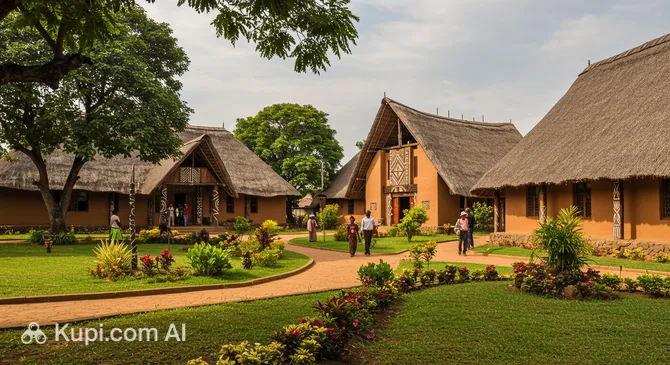
In the west of sunny Kenya, in the dynamic city of Kisumu, lies a unique cultural space — the Kisumu Museum. Opened in 1980, it has become much more than just a repository for antiquities; it is a living monument to the heritage of the Luo people and other ethnic groups in this rich region.
Kisumu Museum. Illustration.
Source: Kupi.com AI
Traveler photos:
This site wonderfully combines the features of an ethnographic park and a zoological center. Here, you will not only see ancient artifacts but also encounter representatives of the local fauna, from the exotic fish of Lake Victoria to rare reptiles. The museum is rightfully considered one of the major cultural landmarks of the country's third-largest city.
Special attention is given to the traditional way of life. Visitors can see authentic residential buildings and household items that literally transport you back a century, allowing you to feel the spirit of genuine Western Kenya without the usual tourist filters.
Contacts
For more information about current exhibitions or to arrange group tours, you can use the museum's official contact details:
An exciting journey into the world of nature and tradition awaits you at the Kisumu Museum. Be sure to visit the traditional Luo homestead — "Ber-gi-dala." This is a detailed reconstruction of a residential complex where you can see how the homes of elders, wives, and sons were organized, and learn about the strict rules of family hierarchy observed for centuries.
Nature enthusiasts will be interested in the terrarium, home to some of Africa's most beautiful and dangerous snakes, including black mambas and cobras. Equally impressive are the aquatic exhibits showcasing the diverse fish species of Lake Victoria. Observing rare fish and giant tortoises is a wonderful addition to the cultural program.
Beyond the live exhibits, take some time to explore the ethnographic and zoological halls. These house unique collections of weapons, jewelry, and tools, as well as taxidermy displays of animals native to Western Kenya. It is a perfect place for quiet strolls and thoughtful learning about the region's history.
Getting There
Reaching this cultural center is straightforward, as it is located in the Railways area, in close proximity to the train tracks and the Kisumu–Kericho highway. This location serves as a major transportation hub for the city, making it easily accessible for tourists.
If you are in the city center, the simplest way is to take a local taxi or a matatu (traditional minibus). For those looking for local flavor, boda-bodas (motorcycle taxis) are a great choice to get you quickly to the museum gates. The distance from Kisumu International Airport is approximately 10–15 kilometers, which takes about 20–30 minutes depending on traffic.
For those who prefer walking, the museum is within walking distance of many central points in the city. The railway station, which serves as the center of activity for this district, is an easy landmark to follow.
Nearest city: Kisumu
History & Facts
Founded in 1980, the Kisumu Museum serves as a guardian of the region's memory, with a history inextricably linked to Lake Victoria and the construction of the Uganda Railway. The city itself was once known as Port Florence, and the museum's exhibits vividly illustrate how a small settlement evolved into the country's third-largest metropolis.
The establishment of the museum was a vital step in preserving the authentic culture of the Luo people. In an era of rapid change, it was crucial to document the traditions, architectural styles, and daily life of the indigenous inhabitants of these lands. The museum has become a place where the pre-colonial past meets the industrial history of the region.
Today, the institution is managed by the National Museums of Kenya (NMK). It is more than just a collection of artifacts; it is a living testament to how trade routes and cultural exchanges between locals and migrant workers shaped the unique identity of western Kenya.
Time Needed
To fully enjoy all the exhibits, it is recommended to set aside 1.5 to 2.5 hours for your visit. This is sufficient time to leisurely explore the ethnographic buildings, visit the terrarium, and study the rich collection of freshwater life.
If you plan to read the information boards in detail or take many photos at the traditional Luo homestead, you might want to allow a bit more time. The museum has a calm atmosphere conducive to contemplation, so there is no need to rush.
Working Hours
The Kisumu Museum is open to visitors throughout the week, making it easy to plan your visit for any day that suits you:
Monday — Friday: 08:00 – 17:00
Saturday: 08:00 – 17:00 (it is recommended to confirm on-site as the schedule may occasionally vary)
Sunday: 08:00 – 17:00
Day
Opening hours
Monday
8:00 – 17:00
Tuesday
8:00 – 17:00
Wednesday
8:00 – 17:00
Thursday
8:00 – 17:00
Friday
8:00 – 17:00
Saturday
8:00 – 5:00
Sunday
8:00 – 17:00
Nearby
After your visit to the museum, be sure to take a walk around the neighborhood. The area is full of interesting locations that help provide a deeper understanding of the city's infrastructure and social history.
Exploring the nearby attractions will allow you to see Kisumu from different perspectives, from historic workers' quarters to modern commemorative markers.