Support

Maasai Mara National Reserve

About

Imagine an endless golden ocean of grass dotted with occasional acacia trees under a vast African sky—this is exactly what the legendary Masai Mara National Reserve looks like. Located in the southwest of Kenya, this park is the northern extension of Tanzania's famous Serengeti. Its name comes from the indigenous Maasai people and the word "Mara," which translates to "spotted," perfectly describing a landscape where cloud shadows and tree canopies create a whimsical pattern on the plain.
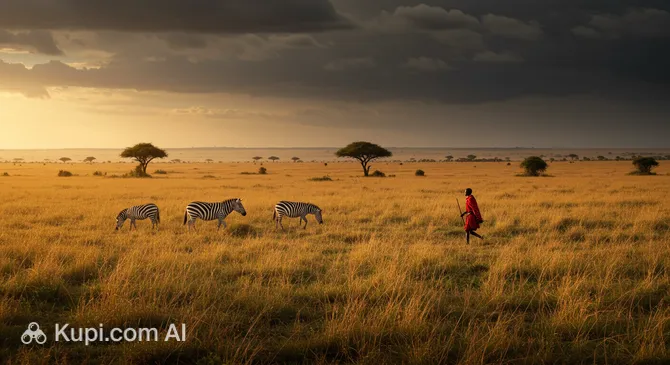
Maasai Mara National Reserve
Maasai Mara National Reserve. Иллюстрация. Источник: Kupi.com AI

The reserve in the Masai Mara region covers an area of over 1,500 square kilometers and is rightfully considered one of the most wildlife-rich places on the planet. Africa's "Big Five" reside here: majestic lions, elusive leopards, massive elephants, hardy buffaloes, and rare rhinoceroses. The deep waters of the Mara and Talek Rivers serve as the main arteries of this ecosystem, supporting hundreds of species of birds and mammals.

This is not just a park, but a living stage where thrilling wildlife dramas unfold daily. The high-altitude plateau on which the reserve is spread provides a comfortable climate, making it an ideal destination for those who dream of seeing Africa in all its pristine beauty and grandeur.

Contacts

When planning your trip, it is helpful to know the key coordinates for the Masai Mara National Reserve. While it is a natural area with several entry points, central management stations are always ready to assist travelers.

Please note that mobile connectivity can be unstable within the reserve, so it is recommended to download maps in advance and save the contact details for your lodge or safari operator.

How to contactContact
AddressKenya

What to Do

The main event that draws travelers from all over the world to these parts is the Great Migration. From July to October, millions of wildebeest, zebras, and gazelles cross the crocodile-infested Mara River in search of fresh pastures. This dramatic spectacle is considered one of the New Seven Wonders of the World. If you visit between December and February, you will experience the "calving season," when the savanna is filled with new life and tender greenery following the rains.

A classic jeep safari is an essential part of the itinerary. Accompanied by experienced guides, you can get remarkably close to lion prides watching their prey or witness a leopard on the hunt. For those seeking truly exhilarating sensations, hot air balloon flights at dawn are available. The view of the waking savanna and herds of animals from a bird's-eye perspective leaves a lifelong impression.

Beyond wildlife watching, it is definitely worth dedicating time to cultural enrichment. A visit to a Maasai village will allow you to get acquainted with the unique way of life of these proud people. You will see their traditional dances, learn secrets of survival in the wild, and can purchase authentic handcrafted beadwork jewelry made by the Maasai.

Getting There

The journey to these vast plains typically begins in the capital. The Masai Mara National Reserve is located in the southwestern part of the country, and the main route here lies through Nairobi. The fastest and most comfortable way to arrive is to use local airlines that operate scheduled flights from Wilson Airport directly to the airstrips inside the park.

For those who prefer ground transportation, the drive from Nairobi by jeep or minibus takes about 5–6 hours. Most tourists visit the park as part of organized tours where the transfer is already included in the program. The Ololaimutiek Gate is considered the main entrance to the reserve and serves as a starting point for many routes.

While there is no public transport in the traditional sense going directly to the park, you can reach the nearest town of Narok by intercity bus or "matatu," and from there take a taxi or a pre-booked private transfer. Visiting this location is rightly considered a must-do for any wildlife enthusiast.

Ближайший город: Masai Mara

History & Facts

The history of this unique place is rooted deep in the past and is closely intertwined with the fate of the Maasai people. It is believed that Maasai tribes arrived in these lands from the Nile Basin in the 17th and 18th centuries. For them, these expanses have always been more than just pastures—they are a sacred home. Interestingly, it was the cultural traditions of the Maasai that helped preserve the wildlife: they practically never hunted wild animals, as they considered livestock to be the only true measure of wealth.

The official record of conservation began in 1948 when the Mara Wildlife Sanctuary was established. Initially, it covered only a small area of 520 square kilometers. Over time, the borders expanded and its status changed, and in 1961, the territory became a full-fledged game reserve, which later came under the management of the Narok County local authorities.

The specialty of Masai Mara lies in the harmonious coexistence of man and nature. Even today, while the reserve is under the protection of the state and international organizations, the Maasai people retain the right to live on its outskirts, build traditional dwellings, and practice animal husbandry. This approach allows for the preservation of a unique ecosystem and the passing down of ancient knowledge about the savanna to future generations.

Time Needed

To truly feel the atmosphere of the African savanna, you should set aside at least 1–2 days for visiting the reserve. During this time, you will have the chance to go on several game drives—at dawn and at sunset, when the animals are most active.

If your goal is to witness the famous Great Migration or to leisurely explore remote corners of the park and visit a traditional Maasai village, it is better to plan a trip for 3–4 days. The vast territory and diversity of landscapes require time for thoughtful nature observation.

Working Hours

The reserve welcomes guests year-round and is open for visits throughout daylight hours. Typically, the park gates operate from sunrise to sunset, allowing tourists to catch the most magical hours for photography and predator observation.

Although the park is always accessible, seasonality should be considered: the peak of activity occurs during the migration months. To clarify current entry rules and permit costs, visitors are recommended to check the information on the official website or consult with a tour operator before their trip.

Nearby

The surroundings of the reserve offer equally interesting opportunities for exploration. Immersing yourself in the local flavor and traditions of the region will help make your African adventure truly profound and memorable.

Name Type Distance (km)
Villaggio Masai Cultural site 1.9
Mnara Landmark 2.7

Reached the end of the page?

That means the route is fully explored