Support

Lake Manyara National Park

About

Nestled at the foot of the majestic Great Rift Valley, Lake Manyara National Park is an extraordinary natural oasis. This protected area in Tanzania is famous for its incredible landscape diversity: from dense groundwater-fed evergreen forests to the vast alkaline expanses of the lake, which can cover up to two-thirds of the park's total area during the rainy season.
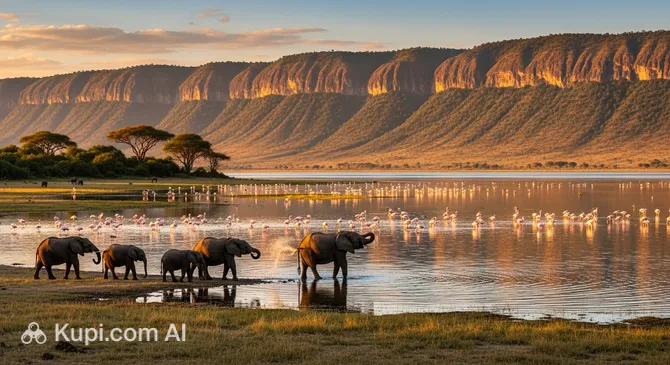
Lake Manyara National Park. Illustration.
Source: Kupi.com AI

Traveler photos:

The park's crown jewel is Lake Manyara itself — an alkaline body of water that attracts thousands of pink flamingos, painting the horizon in delicate pastel tones. But it's not just the birds that make this place special. The park is home to a massive population of baboons, elephants, and giraffes, while its unique microclimate supports hundreds of plant and animal species, earning its status as a UNESCO Biosphere Reserve.

Despite its compact size compared to giants like the Serengeti, the park is full of contrasts. Here, you'll find steep mountainsides, marshy floodplains, and open savannas. The location owes its name to a local plant, the euphorbia, which the Maasai call "manyara". It’s the perfect spot for those who want to see the full power of African nature in a concentrated form.

Contacts

To check current visiting conditions and entrance fees for Lake Manyara National Park, you can use the official contact details of the park management service.

How to contactContact
AddressТанзания
Phone+255 27 297 0404
Websitewww.tanzaniaparks.go.tz

What to Do

The main draw for travelers in this park is the classic 4x4 safari. This is where you can witness a rare phenomenon: lions resting on the branches of acacia trees. Scientists still debate the reasons for this behavior, but for tourists, it’s a unique chance to capture incredible shots of predators gracefully perched several meters above the ground.

Nature enthusiasts should arm themselves with binoculars for birdwatching. Over 400 species of birds live on the lake shores. Vast flocks of pink flamingos, pelicans, and storks create a living carpet on the water that you can watch for hours. Additionally, in the forested part of the park, you’ll definitely encounter noisy families of blue monkeys and huge baboon colonies that aren't shy around people.

In addition to wildlife watching, be sure to make time for a cultural experience. You can visit a traditional Maasai village near the park. This isn't just an excursion, but an opportunity to learn about the centuries-old lifestyle of the nomadic people, see their famous jumping dances, and discover the secrets of survival in the wild savanna. The park's compactness makes it easy to combine all these activities into one eventful day.

Getting There

The most convenient way to reach this natural gem is from the city of Arusha, which is located about 125 kilometers from the park. A car journey on a well-maintained paved highway takes about 2–2.5 hours. Most tourists prefer to book organized safari tours, where the transfer in a specially equipped 4x4 is already included in the program.

For those who value time and comfort, there is the option of domestic flights. Small planes land at the Manyara Airstrip, located at the top of the escarpment. From there, the trip to the main park gate takes just a few minutes. If you are traveling from Dar es Salaam or Zanzibar, air travel is the most optimal choice.

Public transportation (buses or dala-dala minibuses) will take you to the nearby village of Mto wa Mbu, from where you can take a taxi to the park entrance. However, it is important to remember that a 4x4 vehicle and, preferably, an experienced guide are mandatory for traveling within the reserve itself.

Nearest city: Lake Manyara National Park

History & Facts

The history of this region's formation dates back three million years. It was then, during massive tectonic shifts, that the Great Rift Valley was formed. The depressions resulting from these processes gradually filled with alkaline waters from underground springs, leading to the emergence of Lake Manyara.

The park owes its name to local traditions. The word "manyara" comes from the Maasai name for the plant Euphorbia tirucallii (pencil cactus or milk bush). Local residents have long used this thorny shrub to create living hedges to protect their livestock from wild predators.

The area did not receive protected status immediately: until 1957, it was a hunting reserve. In 1960, the national park was officially established, and in 1981, UNESCO included it in the global network of biosphere reserves. Today, the park is under strict state protection, maintaining a unique balance between wild nature and the region's cultural heritage.

Time Needed

To get a full sense of the park's biodiversity and see the famous tree-climbing lions, a typical visitor is recommended to set aside one full day. A standard safari lasts about 6–8 hours, allowing you to leisurely drive through dense forests, reach the lake shore, and visit the rift valley viewpoints.

If you plan to combine wildlife watching with cultural visits, such as a Maasai village, or want to spend more time birdwatching, consider staying for 1.5–2 days with an overnight stay in one of the nearby lodges. This will allow you to see the park at different times — at dawn and dusk, when the savanna's inhabitants are most active.

Working Hours

The national park welcomes visitors daily, operating during daylight hours. The gates usually open at dawn, around 06:30, and close by 18:00 (in winter, by 17:30). Entry to the territory is only permitted with a certified guide and in appropriate vehicles.

Since operating hours may change slightly depending on the season and weather conditions, it is recommended to check information in advance on the official Tanzania National Parks website or with your tour operator before starting your safari.

Nearby

Exploring the surroundings of the lake allows for a deeper immersion into the atmosphere of African nature and an introduction to the unique geological features of the region. Interesting locations are situated near the main safari routes, perfect for a short rest or a brief walk.

Many of the park's infrastructure facilities are designed to minimize interference with the ecosystem while offering magnificent panoramas. Below are the closest points of interest to the park:

Reached the end of the page?

That means the route is fully explored