Support

Mount Kilimanjaro National Park

Nearby attractions

About

The majestic Kilimanjaro National Park is one of the most famous natural attractions that Tanzania is rightfully proud of. The park encompasses the area surrounding the legendary Mount Kilimanjaro—the tallest free-standing mountain in the world and the highest point on the African continent.

Located near the city of Kilimanjaro, this park was officially established in 1973. It has been a UNESCO World Heritage site since 1987. The main feature of this place is its incredible biodiversity: during the ascent, you pass through several climatic zones—from humid tropical rainforests to the icy arctic desert at the summit.
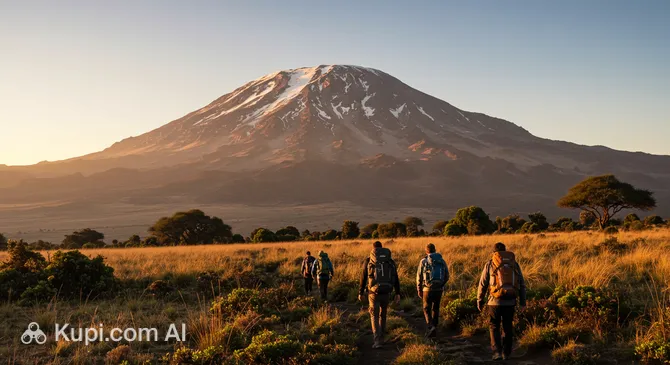
Mount Kilimanjaro National Park
Mount Kilimanjaro National Park. Иллюстрация. Источник: Kupi.com AI

At the heart of the park is a dormant volcano with three cones: Shira, Mawenzi, and Kibo. The highest peak, Uhuru, reaches an elevation of 5,895 meters. Thousands of travelers head here every year to see Kilimanjaro's famous "snow cap," which has crowned the mountain for thousands of years despite its proximity to the equator.

Contacts

To organize your visit or clarify route details, it is recommended to contact the park administration or licensed tour operators. The main contact information is provided below:

How to contactContact
AddressGilman's Point, Tanzania
Phone+255 713 524 020
Websitemountkilimanjaro.guide

What to Do

The main highlight for most visitors is climbing to the summit. Routes vary in difficulty and duration, allowing you to test yourself while witnessing changing natural zones: from dense jungles inhabited by monkeys and exotic birds to rocky moorlands and glaciers. Every climb is accompanied by experienced guides from the Chaga people, who not only ensure safety but also share stories about the region's traditions.

Nature lovers should visit Lake Chala, located on the eastern slope. This is a deep crater lake with remarkably clear water, surrounded by steep cliffs. It's a great spot for hiking or simply enjoying the tranquility away from the popular climbing trails.

If you aren't ready for extreme physical exertion, the park offers walks through the lower reaches of the forest belt. This is an excellent opportunity for wildlife photography and studying unique flora. Short excursions allow you to see waterfalls and learn about the daily lives of local communities who grow coffee in the fertile volcanic soil.

Getting There

Kilimanjaro National Park is conveniently located in the northern part of the country. The nearest transport hub is Kilimanjaro International Airport (JRO), which serves major international airlines. The park boundaries are about 50 kilometers from the airport, a journey that typically takes 1 to 2 hours by taxi or pre-booked transfer.

For those who prefer public transport, "dala-dala" minibuses run from nearby towns like Moshi. However, tourists with heavy gear find it more convenient to use licensed guides who arrange transportation directly to the park gates. The primary entry point is Marangu Village, located on the southeastern slope.

If you plan to drive a rental car, follow the signs toward Gilman's Point. Keep in mind that roads in the foothills can be challenging, so a 4WD vehicle is recommended. The best time to visit, when roads are most accessible, is during the dry seasons from June to October and December to February.

Ближайший город: Kilimanjaro

History & Facts

The history of Kilimanjaro is steeped in legend. The first mentions of a "great snow-capped mountain" deep within Africa appeared as early as the works of the Greek scholar Ptolemy in the 1st century AD. However, for Europeans, the mountain remained a mystery until the mid-19th century. In 1848, German missionary Johannes Rebmann reported a snow-covered peak on the equator, but his reports were initially met with great skepticism in Europe.

Geologically, the massif began forming about 2 million years ago. Tectonic shifts resulted in three volcanic cones: Shira, Mawenzi, and the highest, Kibo. The first documented ascent of Uhuru Peak was achieved by German geographer Hans Meyer and Austrian climber Ludwig Purtscheller in 1889, a remarkable feat for that era.

For centuries, the mountain slopes have been home to the Chaga people. They developed a unique irrigation and agricultural system here. Thanks to them and the influence of Catholic missionaries in the late 19th century, the region became a hub for high-altitude coffee cultivation. In 1973, the government established the national park to protect this unique ecosystem, and in 1987, it was designated a UNESCO World Heritage site.

Time Needed

The time required to experience the park depends entirely on your goals. If you dream of reaching Uhuru Peak, you should plan for 5 to 8 days. This duration is necessary for gradual altitude acclimatization, which is critical for safety and the success of the expedition.

For travelers not planning a summit attempt, 1-2 days is sufficient. This provides enough time for a hike through the park's lower levels, seeing picturesque waterfalls, spotting wildlife in the tropical rainforest, and enjoying majestic views of the mountain from afar.

Working Hours

The park is open to visitors daily, including weekends and holidays. Official operating hours for the administrative gates and route entrances are:

Monday — Sunday: 8:00 AM to 6:00 PM.

It is important to note that groups planning multi-day climbs usually complete their paperwork and start moving in the early morning hours to maximize daylight and reach the first camp before dark.

8:00 – 18:00

Nearby

Beyond conquering Africa’s highest peak, the area surrounding the park offers many other points of interest. Exploring the neighboring territories allows you to better understand the local way of life and discover the region's hidden natural treasures.

NameDistance
Uhuru Peak3 km

Reached the end of the page?

That means the route is fully explored