Support

Uhuru Peak

About

Imagine a place where you literally stand higher than anyone else in Africa. Uhuru Peak is the grand summit of the Kibo volcano and the highest point of the legendary Mount Kilimanjaro, rising 5,895 meters above sea level. Located in the Kilimanjaro area, this landmark attracts thousands of adventurers every year who dream of conquering the "Roof of Africa".
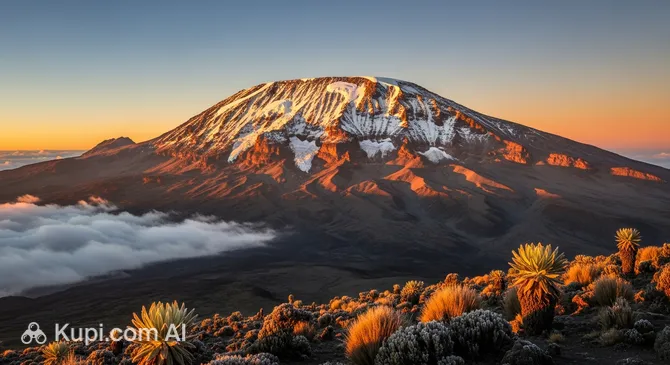
Uhuru Peak
Uhuru Peak. Иллюстрация. Источник: Kupi.com AI

This unique natural wonder is located in the heart of Tanzania within the national park of the same name, which is recognized as a UNESCO World Heritage site. The name "Uhuru" translates from Swahili as "Freedom"—a name given to the peak in honor of the country's independence. The mountain is a complex volcanic massif, where Uhuru Peak is the crown of the youngest and highest of the three volcanoes—Kibo.

The journey to the summit is a true kaleidoscope of climate zones: from dense tropical forests at the base to harsh alpine deserts and ancient glaciers at the very edge of the crater. Although the ice cap is gradually melting, the sight of ice shining under the equatorial sun remains one of the most impressive spectacles on the planet, ensuring the landmark consistently high ratings among travelers.

Contacts

To organize a climb and get up-to-date information, travelers can use the following contact details:

How to contactContact
AddressMweka Trail, 00100, Танзания
Phone+255 747 541 280
Websitewww.uhurupoint.com

What to Do

The main goal for any visitor to this region is, of course, the final summit push. Traditionally, the ascent begins around midnight from Barafu Camp. For several hours, you will move through the darkness, guided only by the light of headlamps, to reach the edge of the crater just as the first rays of the sun illuminate the African savannah far below. This sunrise at an altitude of nearly 6,000 meters will be one of the most vivid impressions of your life.

Once at the very peak, be sure to take a commemorative photo next to the famous wooden signpost and admire the remains of ancient glaciers that look like giant ice walls amidst the volcanic landscape. After the solemn moment and receiving your hard-earned triumph, a long descent follows through various natural zones: from rocky desert to scenic moorland.

The route also offers the opportunity to see unique flora, such as giant senecios and lobelias, which are found nowhere else in the world. Even if you don't plan to summit, walking through the foothills allows you to visit coffee plantations and enjoy the atmosphere of this majestic place. Remember that while the climb does not require specialized mountaineering equipment, it does require excellent endurance and a strong mindset for success.

Getting There

The journey to the legendary summit begins long before reaching the foot of the mountain. The nearest transport hub is Kilimanjaro International Airport (JRO), from where tourists usually head to the towns of Moshi or Arusha. From there, you need to take a taxi or an organized transfer to one of the national park gates, such as Mweka Gate (1680 m), to officially register and begin the ascent.

It is important to remember that independent climbing of the peak is strictly prohibited by Tanzanian law. You can only reach the goal as part of an organized group with a licensed guide, a cook, and porters. There is no direct transport or lifts to the summit—the only way to reach the "Roof of Africa" is through multi-day trekking along one of the approved routes.

The popular Mweka route is often used for the descent, but the logistics of the trip imply that after the final push and return to the base, a transfer will be waiting to take tired but happy climbers back to their hotel for a well-deserved rest.

Ближайший город: Kilimanjaro

History & Facts

The geological record of this place is impressive: the formation of the mountain range began with the Shira volcano more than 250,000 years ago. Later, the majestic Mawenzi emerged, and only then the youngest volcano, Kibo, crowned by the current Uhuru Peak. Each subsequent eruption changed the face of the mountain, creating the unique landscape we see today.

While local peoples have known about the mountain for centuries, it was discovered for European science by German missionaries Johannes Rebmann and Johann Ludwig Krapf in the mid-19th century. Their accounts of "snow on the equator" were long perceived in Europe as fantasy. The first documented ascent to the highest point was made by German Hans Meyer and Austrian Ludwig Purtscheller in 1889. At that time, the peak was named after Kaiser Wilhelm.

The modern name "Uhuru", which means "Freedom" in Swahili, was given to the peak in 1962. This event coincided with the independence of Tanganyika (modern-day Tanzania). A symbolic gesture was the placement of the Uhuru Torch on the summit by Lieutenant Alex Nyirenda, marking the beginning of a new era in the country's history and turning the mountain into a national symbol of pride.

Time Needed

Conquering Africa's highest point is not a weekend stroll but a serious expedition. For a safe and successful ascent via the Mweka route, most travelers need 6 to 9 days. This time is necessary for the body to gradually acclimate to high-altitude conditions, which significantly increases the chances of reaching the finish line without signs of altitude sickness.

Directly on the day of the summit push, tourists will spend 12 to 15 hours on their feet. This stage starts in the middle of the night and includes an exhausting climb to the peak and a subsequent long descent to the lower camps. Experienced guides recommend choosing 7-8 day programs to be able to move at a comfortable pace and fully enjoy the beauty of the wilderness.

Working Hours

Since Uhuru Peak is a natural site, it is technically accessible 24/7. Climbing schedules are planned by guides to maximize daylight and ensure the safety of expedition participants, so the summit push often happens at night.

Nevertheless, the entrances to Kilimanjaro National Park have regulated operating hours for registering new groups. Before planning your trip, it is recommended to check for up-to-date information on the park's official website or with your tour operator, as weather conditions may lead to adjustments in the trail access schedule.

Круглосуточно

Nearby

Climbing to the highest point is just part of the adventure awaiting explorers in this region. The surroundings of the peak and the national park itself offer many unique natural sites, each worthy of separate attention.

NameDistance
Mount Kilimanjaro National Park3 km

Reached the end of the page?

That means the route is fully explored