Support

Thean Hou Temple

About

Thean Hou Temple is one of the largest and most beautiful Chinese temples not only in Kuala Lumpur but in all of Malaysia. This six-tier complex rises majestically on a hill, offering breathtaking panoramic views of the city. The temple is dedicated to the goddess Mazu (Thean Hou), who is revered as the patroness of sailors and travelers, and serves as an important spiritual and cultural center for the capital's Chinese community.

The temple's architecture is a magnificent blend of traditional and modern styles. The curved pagoda-style roofs, richly decorated carvings, and bright red columns symbolizing prosperity create an unforgettable impression. The temple looks especially picturesque thanks to the hundreds of red lanterns that adorn its grounds and create a magical atmosphere, particularly during holidays.
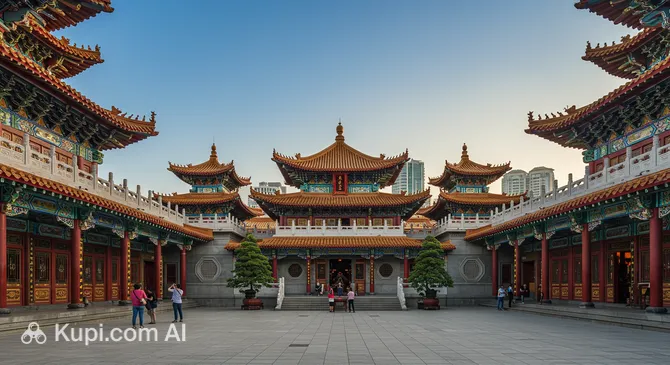
Thean Hou Temple. Illustration.
Source: Kupi.com AI

Traveler photos:

Inside the temple, visitors can see the main altar of the goddess Mazu, as well as statues of other revered deities, such as Guanyin, the Goddess of Mercy. In addition to the prayer halls, the complex features a picturesque medicinal herb garden, a turtle pond, and a wishing well. Thean Hou Temple is not just a tourist attraction, but an active place of worship where you can learn about the traditions of Buddhism, Taoism, and Confucianism.

Contacts

To check the current opening hours, event schedules, or ask other questions, it is recommended to contact the temple administration directly. Although an official website and email are not always listed in public sources, you can call for accurate information.

How to contactContact
Address65, Persiaran Endah, Taman Persiaran Desa, 50460 Kuala Lumpur, Wilayah Persekutuan Kuala Lumpur, Malaysia
Phone number+60 3-2274 7088
Websitehainannet.com.my

What to Do

Visiting Thean Hou Temple is an opportunity to immerse yourself in the vibrant and multifaceted Chinese culture. You can leisurely stroll through its six levels, admiring the architectural details, take memorable photos against the backdrop of colorful lanterns and decorative sculptures, or simply enjoy the panoramic city view from the upper terraces. This place is perfect for taking a break from the city bustle and finding inspiration.

Beyond contemplation, the temple offers more interactive activities. Here you can participate in traditional rituals: for example, ask for guidance from fate using fortune-telling sticks or make a heartfelt wish at a special well. The complex also features sculptures of the twelve animals of the Chinese zodiac — find your sign and take a photo for good luck. These small activities allow you to feel the spiritual atmosphere of this amazing place more deeply.

A visit to the temple becomes especially unforgettable during Chinese holidays, such as the New Year. At this time, it is decorated with thousands of red lanterns, and large-scale cultural events are held on the grounds, creating a truly magical setting. An important advantage is that entry to the temple is free, making it a popular spot for both tourists and locals seeking peace or wanting to touch the rich cultural heritage of Malaysia.

Getting There

Thean Hou Temple is conveniently located on a hill near the center of Kuala Lumpur, providing good access. The most comfortable and fastest way to get to the temple is by taxi or ride-hailing services, such as Grab. This option avoids the uphill walk and is especially convenient if you are traveling with family or simply value your time.

If you prefer to use public transport, you can take the metro to KL Sentral or Bangsar stations. However, keep in mind that from either station, you will have to walk for about 15–20 minutes, and the route is uphill, which can be tiring in hot weather. You can also use city buses that stop nearby or join one of the sightseeing tours that often include a visit to this landmark.

Nearest city: Kuala Lumpur

History & Facts

Despite its grand and ancient appearance, Thean Hou Temple is a relatively modern structure, which makes its history particularly interesting. The construction of the temple was initiated by the Hainanese community of Kuala Lumpur and completed in 1987, with its official opening to the public taking place on September 3, 1989. The temple was built as a spiritual and cultural center for the large Chinese diaspora in Malaysia, becoming a symbol of its unity and devotion to tradition.

The main patroness of the temple is the sea goddess Mazu (or Thean Hou), who is invoked for protection by sailors and travelers. However, the uniqueness of this place lies in the harmonious fusion of three great teachings: Buddhism, Taoism, and Confucianism. This synthesis of beliefs is characteristic of the religious life of Chinese people in Southeast Asia. In the main prayer hall, in addition to the statue of Thean Hou, you can see altars to other important deities, such as Guanyin, the Goddess of Mercy.

Since its opening, the temple has quickly outgrown its purely religious function and has become one of the capital's most visited and recognizable landmarks. Today, it is not only a place for prayer and pilgrimage but also an important cultural site where colorful festivals, such as Chinese New Year celebrations, and even official marriage registration ceremonies are held. Thus, Thean Hou Temple serves as a living example of how a modern building can become the heart of ancient traditions and a point of attraction for people from all over the world.

Time Needed

For a full experience at Thean Hou Temple, most visitors will find it sufficient to set aside 1 to 2 hours. This is enough time to explore the main prayer halls without rushing, admire the intricate architecture, enjoy panoramic views of Kuala Lumpur from the upper tiers, and take beautiful photos against the backdrop of the famous red lanterns.

If you are short on time, a one-hour stroll will be enough for a quick look at the main altars and observation decks. However, to truly feel the atmosphere of this place, it is recommended to plan for about two hours. During this time, you can leisurely walk through all six levels of the temple, look into the medicinal herb garden, find your sign among the Chinese zodiac sculptures, and relax by the turtle pond.

It is worth considering that the duration of your visit may change depending on your interests and the time of your visit. For example, photographers and fans of Asian culture might spend even more time here studying details and ornaments. On the days of major festivals, such as Chinese New Year, the visit may take longer due to the large number of people, but in return, you will gain unforgettable impressions of the festive atmosphere.

Working Hours

You can visit Thean Hou Temple on any day, as it is open year-round to all visitors. Convenient opening hours are established: daily from 8:00 AM to 10:00 PM. Since entry to the temple is completely free, you do not need to book tickets or sign up for a visit in advance.

Thanks to such a long schedule, you can easily fit a visit to the temple into your plans, whether it's a morning meditative walk or an evening visit when hundreds of the famous red lanterns are lit. Although the temple operates consistently, during major festivals like Chinese New Year, the schedule may change and the number of visitors may increase significantly.

8:00 – 20:00

Nearby

Visiting Thean Hou Temple is a bright and memorable event, but your acquaintance with Kuala Lumpur will be incomplete without exploring its surroundings. The city is an amazing blend of cultures, and just a few kilometers from the temple, you can find places with completely different atmospheres — from modern Islamic mosques to green oases in the heart of the metropolis.

When planning your visit to the temple, it is worth setting aside time for other nearby attractions. This will allow you to get a more complete picture of the multi-faceted capital of Malaysia and enrich your journey with new impressions. Many interesting sites are located very close by, making them convenient to visit without requiring much travel time.

NameDistance
Central Market2.7 km
Merdeka Square3.1 km
National Monument Park3.1 km
St. Mary's Cathedral3.2 km
UR-MU Museum3.7 km
Grand Hyatt Kuala Lumpur4.4 km
Aquaria KLCC4.5 km

Have you reached the end of the page?

So the route has been studied inside and out