Support

Muzium Marin Labuan

About

Imagine a building shaped like a giant seashell or a majestic ship ready to set sail. This is the Labuan Marine Museum (Muzium Marin Labuan) — a key center for exploring the underwater world in the city of Labuan. This modern complex is located within the International Water Sports Complex and invites every guest on a fascinating journey into the deep waters of Borneo.
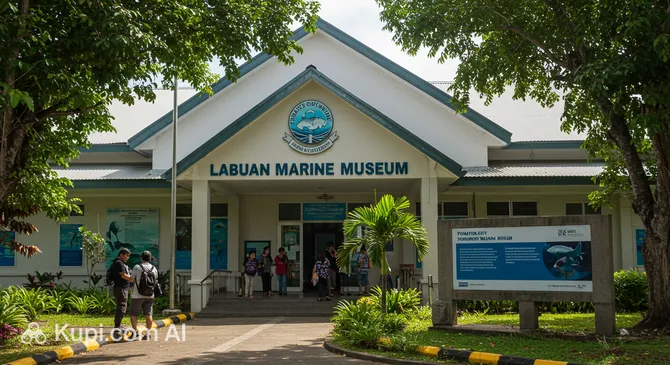
Labuan Marine Museum
Labuan Marine Museum. Иллюстрация. Источник: Kupi.com AI

Inside this two-story space are 16 thematic galleries dedicated to the region's biodiversity. Malaysia is famous for its natural riches, and this museum is an excellent place to see exotic tropical fish, ornate corals, and rare invertebrates without having to go scuba diving.

The museum serves not only as entertainment but also has an important educational mission, teaching about ecosystems and the need for marine conservation. Unique architecture and a rich collection make it a must-visit on the itinerary of any traveler interested in nature and maritime history.

Contacts

To check current information before your visit, you can use the museum's official contact details. The staff are always ready to help tourists with questions about current exhibitions or special events.

How to contactContact
AddressKompleks Sukan Air Antarabangsa Labuan, Jalan Tanjung Purun, 87008 Labuan, Bandar Labuan, 87000 Victoria, Labuan Federal Territory, Malaysia
Phone+60 87-425 927
Websitewww.facebook.com

What to Do

Visitors to the museum can immerse themselves in the ocean atmosphere: there are 14 aquariums housing vibrant representatives of the local fauna, including graceful sharks. One of the most popular areas is the touch pool — a rare chance for children and adults to gently touch starfish or mysterious sea cucumbers under the supervision of specialists.

On the ground floor, history buffs can explore an exhibition dedicated to shipwrecks that occurred in the surrounding waters. Authentic artifacts recovered from the seabed are displayed alongside collections of rare corals and plants. This creates a striking contrast between human handiwork and nature's creations.

Heading up to the second floor, you will discover the world of reef biodiversity and learn how fishing tools have changed over time — from traditional nets to modern high-tech devices. The museum's main treasures are a massive 12-meter fin whale calf skeleton and a rare exhibit — a preserved dugong, which never fails to amaze visitors.

Getting There

Reaching this interesting site is easy, as it is conveniently located near major transport hubs. Since Labuan is a relatively small island, a trip from the local airport or ferry terminal by taxi or via the Grab app takes only about 10–15 minutes.

If you prefer walking and are staying in the central part of the city, the walk to the complex will take about 20–30 minutes. The route passes through scenic areas, allowing you to get a better feel for the region's atmosphere even before entering the museum.

For those renting a car, parking is provided at the International Water Sports Complex. Drivers can use the Ramsey Point area, located in the immediate vicinity of the site, as a landmark.

Ближайший город: Labuan

History & Facts

The idea of creating a specialized center to preserve the region's marine heritage was born back in the 1990s. However, the active construction phase only began in August 2001. The project was carried out on land provided by the Labuan Corporation and was completed in less than a year — in July 2002.

The grand opening of the Labuan Marine Museum took place on January 26, 2003. The ceremony was led by the country's Minister of Tourism, Arts, and Culture, highlighting the importance of the new facility for educating residents and attracting foreign guests. Since then, the museum has become an important educational hub, showcasing the richness of Borneo’s underwater world.

One of the museum's most valuable historical components is the collection of artifacts recovered from famous shipwreck sites. These exhibits serve as silent reminders of the maritime trade routes and the dangers the coastal waters held in centuries past.

A unique historical exhibit that always catches visitors' attention is the fin whale skeleton. This giant was found on the shore in the late 19th century, and its preservation for the museum was a true feat by taxidermists and scientists striving to pass on nature's majesty to future generations.

Time Needed

To leisurely explore all 16 thematic galleries and meet the aquarium inhabitants, most travelers need about 1.5–2 hours. This is plenty of time to read the information boards, watch the fish, and take commemorative photos by the whale skeleton.

If you plan to visit the museum with children, the length of your stay may increase slightly. Little ones usually linger at the touch pool, where they can get a tactile introduction to starfish, so it's better to have an extra half hour to spare.

Working Hours

The museum is hospitably open to visitors every day, including weekends. Standard operating hours are from 9:00 AM to 5:00 PM, Monday through Sunday. A major advantage is that admission to the museum is free, making it accessible to any traveler.

Please note that the museum may be closed on major religious holidays: during the first two days of Eid al-Fitr and the first day of Eid al-Adha. At all other times, the doors of the complex are always open to marine adventure lovers.

9:00 – 17:00

Nearby

The museum's surroundings offer many opportunities to continue your stroll. Exploring nearby attractions will allow you to dive deeper into the island's history and enjoy its evening life.

Below are interesting locations located within a two-kilometer radius of the museum:

NameDistance
Ujana Kewangan Complex0.7 km
Financial Park Complex0.7 km
Grand Labuan Restaurant0.8 km
Labuan Point Hotel1.1 km
Labuan Museum1.1 km
Blue Wave Lounge & Restaurant1.2 km
Labuan Square1.2 km

Reached the end of the page?

That means the route is fully explored