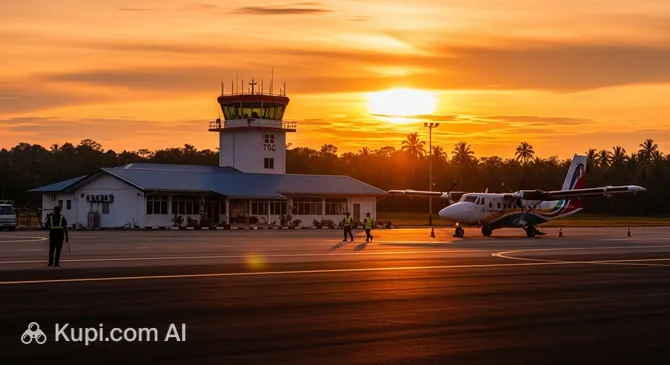
Tanjung Manis Airport is not merely a transit point, but a unique aerial gateway into the heart of Sarawak's developing economic zone, hidden amidst dense mangrove forests and winding rivers. This intimate aviation hub offers a sense of tranquillity and privacy rare for modern travellers, where time flows to the rhythm of unhurried tropical life. Arriving here resembles a scene from an adventure movie rather than a standard business trip: a small aircraft descends over the Rajang River delta, revealing breathtaking views of Borneo's pristine nature.
| Characteristic | Value |
|---|---|
| IATA code | TGC |
| ICAO code | WBTM |
| City | Sarikei |
| Country | Malaysia |
| Time zone | Asia/Kuching |
| Popular airlines | Malaysia Airline |
| Schedule | Online timetable |
Airport Features and Advantages
Despite its modest size, Tanjung Manis Airport possesses several unique advantages that make travelling through it a pleasant experience. Its infrastructure is specifically adapted for the rapid handling of a small flow of passengers, eliminating the hustle and bustle typical of major hubs.
Instant Formalities. One of the main virtues of this airport is the absence of queues. The journey from the terminal entrance to boarding the plane takes mere minutes. Here, you can forget about long waits at the check-in counter or tedious passport control, enjoying the efficiency of the local service.
Scenic Approach. Since the airport mainly accepts small turboprop aircraft (such as the DHC-6 Twin Otter), the flight takes place at a relatively low altitude. This turns an ordinary flight into a genuine aerial excursion, allowing you to examine the green carpets of the jungle and the water arteries of the state of Sarawak in detail.
Strategic Importance. The airport is a key link for access to the Tanjung Manis Halal Hub — one of the region's most important industrial zones. For business tourists and investors, this is the fastest and most convenient way to reach production sites and the port, bypassing long overland routes.