Support

Mosta

About

Mosta is a vibrant and colorful town located in the heart of Malta. Despite its relatively small size, it is one of the country's most important residential areas, with a population exceeding 20,000. Thanks to its strategic location in the Central Region, the town serves as an ideal base for exploring the island: a trip to the neighboring historic towns of Mdina and Rabat takes very little time.

Mosta's centuries-old history dates back to prehistoric times, as evidenced by the mysterious dolmens preserved within the town limits. The name of the settlement has Arabic origins, reflecting the region's rich cultural heritage, where traditions from different eras and civilizations have harmoniously intertwined.
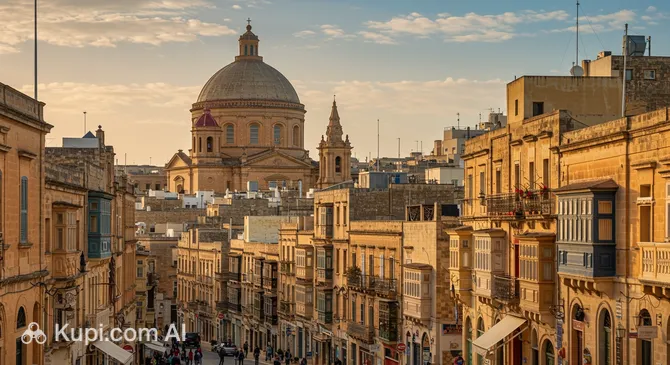
Mosta. Illustration.
Source: Kupi.com AI

The main magnet for travelers is the famous Mosta Rotunda — the Basilica of the Assumption of Our Lady. This monumental temple impresses with its massive dome, considered one of the largest unsupported domes in the world. The architectural grandeur of the basilica makes it a recognizable symbol not only of the town but of the entire archipelago.

Today, Mosta combines the charm of a provincial town with the dynamics of a popular tourist center. A stroll through the local streets will give you a sense of authentic Maltese life, making this town definitely worth including in your travel itinerary.

Weather Overview

The climate in this Maltese town is typically Mediterranean, making it an attractive place to visit almost year-round. If you are interested in detailed weather in Mosta for trip planning, it's worth considering the distinct seasonality of temperatures and rainfall.

Summers here are hot and sunny. The highest figures are recorded in August, when the average temperature is around 27.1°C, with maximums often exceeding 28°C. During this period, rain is very rare: for example, in July, there are statistically no rainy days at all, ensuring clear skies for travelers.

Winters in the region are mild and fairly warm, with no frosts. In January and February, the air warms up to an average of 14°C, and night temperatures rarely drop below 13°C. Expect a hot, dry summer and a mild winter, during which the probability of rain increases, especially in November and December.

Average monthly temperature

Average monthly precipitation

Interesting Facts

Mosta holds many surprising stories hidden behind building facades and in the depths of centuries. Beyond its famous sights, the town boasts unique engineering solutions and a rich past that reveals itself to curious travelers.

  • A temple within a temple. The construction history of the famous Rotunda sounds like a movie plot. The massive new basilica was built literally around the old existing church. Most amazingly, services in the old building did not stop for a single day throughout the construction. Only when the walls and dome of the new giant were ready was the old church inside carefully dismantled.

  • A people's project. The construction of the town's main symbol lasted 30 years, starting in 1833. This grandiose project was realized by the simple residents themselves: parishioners built the temple with their own hands in their spare time, demonstrating incredible unity and dedication.

  • Dome debates. The Rotunda's dome is considered the third-largest unsupported dome in the world, surpassed only by St. Paul's in London and St. Peter's in Rome. However, its grandeur initially caused doubts: the Archbishop of Malta refused to consecrate the church, believing its architecture too closely resembled the pagan Pantheon. Today, the church holds the prestigious status of a Basilica, granted by the Pope.

  • Traces of antiquity. The settlement's history goes much deeper than it seems at first glance. The town is home to the Ta' Bistra Catacombs, an important archaeological site. These ancient burials serve as proof that people lived in this area as far back as prehistoric times.

How to Get There

When planning a trip to this central town, keep in mind that it is located on the island of Malta, so the primary way to arrive is by air. You can find out more details about how to get to Mosta by exploring various routes and types of transport available to tourists.

The main air gateway for travelers is Malta International Airport (MLA). It is located very close to the capital, Valletta, just 7.4 km from the center of Mosta. This is the only airport in the archipelago that receives regular international flights. A trip from the terminal to the town by taxi or rental car takes about 30–35 minutes, depending on traffic. There is also a well-developed network of public buses connecting the airport to the island's main residential areas.

As an alternative, you can consider Catania-Fontanarossa Airport (CTA), located in the Italian city of Catania on the island of Sicily (about 182 km away in a straight line). This route is often chosen by tourists wanting to combine a visit to Italy and Malta. High-speed ferries regularly run from Sicily to Maltese shores, with a travel time of about one and a half to two hours.

For convenience, here is a summary of the main airports:

AirportPassenger trafficDistance
Malta International Airport9.0 mln7 km
Comiso Airport260 642122 km
Lampedusa Airport349 449170 km
Catania-Fontanarossa Airport12.3 mln182 km
Pantelleria Airport200 000242 km

There is no railway service on the island itself, so it is impossible to get to Mosta directly by train. The nearest major railway station—Reggio di Calabria Centrale Station—is located in the city of Reggio di Calabria (Italy), at a distance of about 266 km. Travelers can use trains to move around Italy to reach Sicilian ports, where ferries depart for Malta.

Below is information about the nearest railway hub:

StationPassenger trafficDistance
Reggio di Calabria Centrale Station266 km

Main Attractions

Despite being a busy residential town, Mosta offers several unique locations that immerse visitors in the culture and history of Malta. Exploring the local sights won't take long, but it will leave a lasting impression thanks to the combination of architectural grandeur and touching historical details.

The absolute center of attraction remains the Mosta Rotunda (Basilica of the Assumption of Our Lady). While its dome is visible from afar, the most interesting parts await travelers inside. The interior of the temple is striking for its spaciousness and solemn decoration in blue and gold tones. Be sure to visit the sacristy, which displays a replica of the famous 1942 bomb. It pierced the church ceiling during a service and fell to the floor but miraculously failed to explode—an event local residents attribute to divine intervention.

Right beneath the church square is the entrance to the World War II Shelters. This underground complex was hand-cut into the soft limestone by the townspeople themselves to protect against constant air raids. Descending into these narrow corridors is an emotional journey into the past: there are small "rooms" for families, niches for lamps, and period tools, allowing you to feel the atmosphere in which the islanders lived during the blockade.

On the outskirts of town, towards Rabat, lie the Ta' Bistra Catacombs. This is an extensive network of early Christian burials dating back to the 4th century AD. The complex long remained in the shadow of the more famous Mdina catacombs, but after recent restoration, it has become accessible to the general public. This site will interest archaeology buffs wishing to see ancient tombs and learn about Roman-period funerary rituals without the large crowds of tourists.

Nature and legend enthusiasts should take a walk through the picturesque Wied il-Għasel (Valley of Honey). Here, nestled among rocky landscapes, is the small Speranza Chapel (Chapel of Hope). A local legend tells of a young girl who hid from corsairs in a cave under the chapel: as the story goes, a spider quickly spun a web across the entrance, leading her pursuers to believe no one was inside. The valley's scenic views make it an excellent spot for peaceful hiking.

Local Cuisine

Mosta's gastronomic scene is a vivid reflection of the entire archipelago's culinary traditions, blending Italian, Arabic, British, and Mediterranean influences. A trip here is incomplete without tasting Malta's national dish — rabbit (Fenek). It's prepared here in various ways: stewed in wine with garlic and herbs (Stuffat tal-Fenek) or fried until golden brown. You should also definitely try bragioli (stuffed meat rolls) and fresh fish delivered from the coast.

For a quick snack, the famous Maltese pastizzi—flaky pastries filled with ricotta or pea puree—are perfect. This isn't just food; it's part of the local culture: residents often buy them from small kiosks and eat them on the go with a cup of tea or coffee. Street food and BBQ lovers should look out for the popular EAT food truck, which specializes in smoked meats and quick but hearty meals.

As for drinks, meals are typically accompanied by a glass of local wine or Cisk beer, which is considered a national pride. If you prefer non-alcoholic drinks, be sure to try Kinnie—a soda made from bitter oranges and aromatic herbs with a unique taste unlike anything else in the world.

The food culture in town is diverse, ranging from cozy family cafes to restaurants with history. To get to know authentic cuisine and folklore, tourists often choose Ta' Marija restaurant, where dinner is accompanied by a cultural program. A more casual atmosphere is offered by places like Xufi Cafe' & Bistro and Mellows Cafe, where locals love to gather. And those with a sweet tooth should visit The Cake Box Mosta to enjoy excellent desserts after a walk around town.

Travel Tips

Welcome to Mosta! To make your trip to the heart of Malta as comfortable as possible and leave only pleasant memories, we have prepared a list of useful recommendations. This town is characterized by its relaxed pace of life, so knowing local quirks will help you feel at home here.

  1. Clothing and Dress Code. It gets very hot on the island in summer, so choose light natural fabrics and don't forget a hat and sunglasses. In winter, the weather is changeable, so a windbreaker and an umbrella will come in handy. Special attention: a strict dress code is observed when visiting the Rotunda and other churches—shoulders and knees must be covered. Always carry a scarf or sarong for this purpose.
  2. Transport Nuances. Mosta is a major transport hub with many bus routes passing through it. For convenience, download the official Tallinja app to track schedules in real time. If you decide to rent a car, remember to drive on the left and be aware of the shortage of parking spaces in the center near the basilica. Taxis (via Bolt or eCabs apps) work perfectly here and cost reasonable money.
  3. Finances and Shopping. The local currency is the Euro. Bank cards are accepted in supermarkets and restaurants, but cash is essential for small expenses. It will come in handy for buying the famous pastizzi pastries from street kiosks or souvenirs at the market. ATMs are easy to find on the main Constitution Street.
  4. Health and Safety. Mosta is a safe town where you can walk peacefully even in the evening; however, basic precautions with personal belongings are always a good idea. Pharmacies are marked with a green cross; note that on Sundays and public holidays, they work on a roster basis (a list of duty pharmacies is usually posted on any pharmacy door). Drinking tap water is not recommended; it's better to buy bottled water.
  5. Communication and Language. English is the second official language and is spoken fluently by almost the entire population, so you won't experience a language barrier. Free Wi-Fi is often available in cafes and on main squares. For constant internet access, you can buy a tourist SIM card from local operators (GO, Epic, Melita) at any mobile shop by presenting your passport.
  6. Local Etiquette and Siesta. The Maltese are very friendly and value politeness. A simple greeting like "Bonġu" (Good morning) will endear you to the locals. Take the siesta tradition into account: many small shops and family-run stores close for a break between 13:00 and 16:00, so plan your shopping for the morning or evening.
  7. What to Avoid. Do not enter churches during Mass (services) just for sightseeing or photography—it is considered bad manners. Also, you should not walk around town in swimwear or shirtless, even if it's very hot—such behavior is only appropriate on beaches, not in a residential town with conservative values.
  8. Local Advice. If you want to see the real life of the town, come to the square by the Rotunda in the early evening. This is when locals come out for a promenade, chat on benches, and drink coffee. And if you happen to be in Mosta on a Monday morning, visit the open-air market—you can buy the freshest local produce and inexpensive clothing there.

We hope these tips help you navigate the town easily and avoid minor troubles. Mosta reveals its secrets to those ready to respect its traditions and enjoy the unique atmosphere of Maltese hospitality!

Entertainment & Nightlife

If you are looking for wild parties until dawn, Mosta might seem a bit too quiet, as it is a town with a traditional way of life. The nightlife here isn't about loud clubs with DJs, but rather cozy evenings spent with friends, good food, and an authentic atmosphere. The main activity is centered around the main square by the Rotunda and on Constitution Street, where locals love to spend time after sunset.

A unique feature of Maltese leisure that you should definitely experience in Mosta is the "każini" (Band Clubs). These are social clubs associated with local brass bands that are open to everyone. Drop by the Nicolo Isouard Band Club or the Santa Marija Band Club, located right on the main square. A simple, friendly atmosphere prevails here, drink prices are very affordable, and the interiors are often decorated with historical photos and trophies. It's the best place to mingle with locals and feel the true spirit of the town.

For a more refined evening, the Ta' Marija restaurant is a great choice. This establishment is a legend on Malta's gastronomic map. In the evenings, especially on Fridays, they host vibrant folklore shows with traditional dancing and live mandolin music. It's not just a dinner, but a full immersion into the island's culture that will leave plenty of impressions.

For those who prefer a more modern setting, Cin Cin Bar is worth a visit. This stylish spot attracts young people and tourists with its good selection of cocktails and wines. Here you can relax on the terrace, enjoying the warm Maltese evening and the view of the busy street. The dress code in most town establishments is casual, though smart casual is better for an evening out at a restaurant.

If you do feel like dancing and club music, Mosta serves as a convenient starting point. In just 15–20 minutes by taxi (we recommend using the Bolt or eCabs apps), you can reach the island's nightlife center—Paceville in St. Julian's or the tourist town of Bugibba. A taxi ride at night will cost around 15–20 euros. Public night buses run less frequently, so a taxi is more reliable and faster.

In terms of safety, Mosta is one of the quietest towns. Night walks here are comfortable and safe; however, as anywhere else, you should keep an eye on your personal belongings in crowded places. Lighting on the central streets is good, and locals are always ready to give directions.

Regarding daytime entertainment, the town offers more than just historical monuments. Very close by is the Ta' Qali National Park—a huge green zone on the site of a former military airfield. It's an ideal place for picnics, and it also houses a crafts village where you can watch glassblowers at work, as well as an interesting Aviation Museum. For a family holiday, it's a great alternative to city walks.

Parks & Museums

Mosta and its surroundings offer travelers a wonderful combination of cultural leisure and outdoor relaxation. While the town itself is a bustling center, quiet green oases and unique museum exhibits telling of Malta's heroic past can be found just a few minutes' drive or walk away.

One of the most picturesque places for a stroll is the Bride's Garden (Gnien l-Gharusa tal-Mosta). This public garden is situated on a hill, offering a breathtaking panoramic view of the northern part of the island and the famous Rotunda dome. The park is named after a local legend about a girl and her tragic love. It's a perfect spot for a peaceful break, featuring comfortable benches, shady trees, and a food truck where you can buy coffee and enjoy the sunset.

Very close to town lies the Ta' Qali National Park. This is the main green zone of the central part of the country, created on the site of a former WWII military airfield. Large open spaces, picnic areas, running tracks, and playgrounds make it a favorite holiday spot for local families. The park comes alive on weekends, with people hosting barbecues, flying kites, and visiting the farmers' market.

When it comes to museums, it's impossible not to mention the Malta Aviation Museum, located in Ta' Qali. It is a true treasure trove for technology and history buffs. Three hangars house an impressive collection of aircraft, including the legendary Spitfire and Hurricane fighters that defended Malta's skies in the 1940s. The exhibition allows for a detailed study of the island's aviation heritage and a look at machines restored to flying condition.

Right in the town center, inside the famous church, there is a small but significant museum at the Mosta Rotunda. Visitors can go up to the gallery to see the interior decoration of the dome from an unusual perspective, as well as view a collection of church vestments and historical documents. The main exhibit here is a replica of the very bomb that pierced the dome but failed to explode, which is considered the main miracle in the town's history.

Fortification enthusiasts will find it interesting to see a section of the Victoria Lines, which passes through the outskirts of Mosta. This defensive structure, often called the "Great Wall of Malta," was built by the British in the 19th century. A walk along these walls and forts (such as Fort Mosta) allows you not only to touch military history but also to enjoy some of the best views of the countryside.

Insider Tip: If you want to see something truly authentic and hidden from most tourists, take a walk to the medieval Chapel of San Pawl er-Remita (St. Paul the Hermit). It is literally built into the rock in the picturesque Wied il-Għasel valley. You can get there on foot, and this route will reward you with silence, the beauty of wild nature, and a sense of touching ancient legends.

Getting Around

The public transport system in Mosta, as on the rest of Malta, consists exclusively of buses. There is no metro, tram, or railway service, but the bus network is quite well-developed. Thanks to the town's central location, many routes pass through it, connecting Mosta with the capital Valletta, ancient Mdina, the popular resorts of St. Paul's Bay, and other parts of the island. Buses are modern and air-conditioned, which is particularly important during the hot summer months.

Payment is conveniently organized for tourists. The easiest way is to buy a single ticket (valid for 2 hours) directly from the driver upon boarding. You can pay with cash (it's best to have small coins or notes) or a contactless bank card. The ticket price depends on the season: prices are slightly higher in summer than in winter, and night services cost more than day ones. For those planning to travel a lot, it's better to buy a Tallinja Card. The Explore Card, which gives unlimited travel for 7 days, or the 12-journey card, which can be used by multiple people at once, are excellent for tourists.

Transport cards can be purchased at authorized points of sale, bookshops, or at machines found at the airport and the main Valletta bus terminal. In Mosta itself, sales points can be found in some newsagents and stationery shops. To plan your routes, it is highly recommended to download the official Tallinja App. it shows real-time schedules and helps you find out when the next bus will arrive, which is very useful as delays due to heavy traffic are not uncommon.

An important feature of local bus etiquette: transport does not stop automatically at every stop. If you are standing at a stop and see your bus approaching, you must raise your hand (like hailing a taxi), otherwise the driver will drive past. To get off, you need to press the "STOP" button on the handrail inside the cabin in advance. Stops in Mosta are conveniently located, with the main ones near the Rotunda, allowing easy access to the town center.

As an alternative to public transport, taxi services operating through mobile apps such as Bolt, eCabs, and Uber are very popular. Cars arrive quickly, and prices are fixed in the app before the trip begins, eliminating the risk of overpaying. Electric scooter rental services are also becoming more popular, but be careful on narrow streets. Classic car-sharing (e.g., GoTo) is also available, but finding a parking spot in the center of Mosta can be difficult, so a taxi is often a more convenient option.

Accommodation

The choice of accommodation in Mosta differs significantly from the usual tourist zones on the coast of Malta. Here you won't find huge resort complexes with "all-inclusive" pools or high-rise chain hotels. Instead, the town offers travelers the chance to immerse themselves in an authentic atmosphere: the main accommodation options are cozy boutique hotels, bed and breakfasts (B&Bs), and apartments, often set in traditional Maltese townhouses with their characteristic closed balconies and courtyards.

In terms of location, the most convenient and popular area to stay is the historic center around the Rotunda. Staying here puts you within walking distance of the main sights, cafes, and shops. Additionally, the town center serves as an important transport hub: from here, you can easily catch a bus to any part of the country, whether it's the beaches in the north or ancient Mdina. The streets adjacent to the main square are usually quiet at night, ensuring a peaceful rest after a busy day.

The price range for accommodation in Mosta can be described as mid-range. Staying here is generally cheaper than in the capital Valletta or the popular resorts of Sliema and St. Julian's, while the quality of service and interiors in local boutique hotels remains very high. This makes the town an excellent choice for budget travelers and those looking for the best value for money.

When planning your trip, consider the seasonality. While you can almost always find a vacant room, it is strongly recommended to book accommodation in advance if your trip falls in August. In the middle of this month (August 15th), the town celebrates the grand feast of the Assumption of the Virgin Mary (Santa Marija), which draws guests from across the archipelago, and the demand for apartments rises sharply. For booking, it's best to use major international online platforms, where a wide selection of verified options with guest reviews is available.

Nearby Cities

For those looking to explore the surroundings, Mosta serves as an excellent starting point for day trips to several interesting nearby locations:

Just next door is Naxxar. This town, located only a couple of kilometers away, is famous for the magnificent Palazzo Parisio, often called a "miniature Versailles" for its lavish gardens and interiors, as well as its picturesque narrow streets that preserve the spirit of the past.

If you're looking for seascapes, it's worth visiting St. Paul's Bay. This is a popular coastal area with a long promenade, many restaurants, and the National Aquarium, offering a great contrast to the architectural austerity of the island's central towns.

Also noteworthy is Birkirkara—one of the largest and oldest towns in the country. Here, travelers can see the majestic Basilica of St. Helen, known for its bells, and immerse themselves in the atmosphere of authentic Maltese life in the historical quarters.

CityPopulationDistance
Lija3 0702 km
Naxxar13 4432 km
Iklin3 1302 km
Attard10 9302 km
Gharghur2 7683 km

These nearby destinations provide an insight into the region's diverse culture and landscapes, and thanks to the short distances, visiting them fits easily into the schedule of even a short trip.

Shopping & Souvenirs

Mosta is an important commercial center for the country's Central Region. Unlike the tourist zones of Sliema or Valletta, there are fewer luxury boutiques, but there is a wide range of shops selling quality clothing, footwear, and home goods. A characteristic feature of the town is its high concentration of bridal salons, attracting shoppers from all over Malta.

Main shopping activity is concentrated on the main Constitution Street (Triq il-Kostituzzjoni) and the adjacent Eucharistic Congress Road. Family-run shops, jewelry stores, bookstalls, and small boutiques line these streets. Here, you can find both local crafts and products from well-known European brands.

For large-scale shopping, the PAMA Shopping Village on the outskirts of town is the place to go. This is a vast area combining an indoor mall and open-air shopping rows. The complex features a large supermarket, electronics, cosmetics, children's goods, and mass-market clothing stores. Large parking areas and food courts are provided for visitors' convenience.

To experience the atmosphere of traditional trading, visit the weekly Monti market, which takes place in the town center on Monday mornings. Here, locals buy fresh seasonal vegetables and fruit, as well as inexpensive clothing and household items. The market is known for its liveliness and affordable prices.

In Mosta's souvenir shops, look for honey and bee products, as the town is historically linked to the nearby "Valley of Honey." Gastronomic souvenirs like capers, sun-dried tomatoes, carob syrup, and prickly pear liqueur are also popular. Jewelry lovers will appreciate the silver filigree pieces sold in jewelry shops on the central streets.

Shops usually open from 09:00 to 19:00, but you should take the traditional siesta into account: many private shops close for a break between 13:00 and 16:00. Large shopping centers like PAMA and chain supermarkets work without a break and are open until 20:00 or 21:00. Credit card payments are accepted in most established shops, but for the market and small kiosks, it's recommended to have cash.

Travelers residing outside the European Union can use the Tax-Free system. When making purchases over 75 euros in one shop (look for the corresponding logo in the window), you can request a tax refund form. The completed form, along with your passport and receipt, must be presented at the airport customs office before departure.

Reached the end of the page?

That means the route is fully explored