Support

Lampedusa Airport

About the Airport

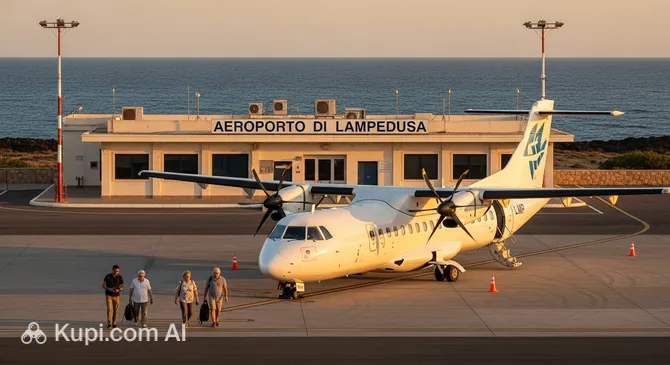
Lampedusa Airport. Source: Kupi.com Binoculars

Lampedusa Airport (LMP) serves as the aerial gateway to one of the southernmost and most picturesque islands of Italy. Located just a few hundred metres from the city centre of Lampedusa, it acts as the main transport hub for tourists eager to enjoy the crystal-clear waters and famous beaches, such as Spiaggia dei Conigli (Rabbit Beach). Its activity peaks during the summer months when numerous airlines launch seasonal flights, bringing travellers to this Mediterranean paradise. The unique architecture of the new terminal, opened in 2012, resembles the shape of a ship, which is symbolic for an island with such a rich maritime history.

Despite its modest size, the airport plays a key role in the life of the island, ensuring connectivity with the mainland and other regions.

IATA Code LMP
ICAO Code LICD
City Lampedusa
Distance to Centre approx. 1 km
Status Domestic
Annual Passenger Traffic approx. 349,449 (2023)
Popular Airlines Volotea, easyJet, ITA Airways
Schedule Online Board "Lampedusa Airport"

The main advantage of Lampedusa Airport is its exceptional proximity to the city — the centre can be reached on foot in just 15-20 minutes. This makes it incredibly convenient for travellers who do not wish to spend time and money on long transfers. The airport primarily handles seasonal and charter flights, connecting the island with major Italian cities such as Rome, Milan, Naples, and Venice. The modern terminal is capable of accommodating popular aircraft types like the Airbus A320 and Boeing 737, ensuring comfortable flights for the large influx of tourists during the high season.

Contact Information

  • Official Website: www.aeroportodilampedusa.com
  • Help Desk Phone: +39 0922 971510
  • Address: Contrada Aeroporto, 92010 Lampedusa AG, Italy
  • Email: info@aeroportodilampedusa.com
  • Social Media: It is recommended to check the official airport website for the most up-to-date information.
  • Lost & Found Information: To resolve issues related to lost or damaged luggage, you should primarily contact your airline's representative office. Additionally, you can contact the airport service via email: ufficiolostfound@aeroportodilampedusa.com.
  • Passenger Support Contacts: For general enquiries, you can contact the airport via the main phone number or email address.

How to Get to the Airport

Getting to the airport on the island of Lampedusa (LMP) is a simple and quick task, as it is located just a couple of kilometres from the main town of the same name. Thanks to the compact size of the island, the journey will not take much time, regardless of the method you choose.

Taxi and Transfer. The most convenient and popular option is to take a taxi. The trip from the city centre to the terminal will take no more than 5-10 minutes. The fare is usually fixed and costs around 15-20 Euros. Many hotels also offer a transfer service for their guests, which can be booked in advance. This is particularly convenient if you are travelling with a large amount of luggage.

Public Transport. A local bus circulates around the island, connecting the airport with the port and the city centre. This is the most economical way to reach the terminal. Buses run according to a schedule that may vary depending on the season, so it is recommended to check it in advance. The stop is located right outside the arrivals area exit.

Car or Scooter Rental. Renting transport is an excellent way to explore all the beauty of Lampedusa. Most rental agencies allow you to return the car or scooter directly at the airport before departure. This eliminates the need to look for a taxi or adjust to the bus schedule. The drive from any point in the city will take mere minutes.

Airport Parking. If you have arrived in your own or a rented vehicle, there is a small car park at the airport. It is suitable for both short stops to drop off passengers and longer-term parking while you are away from the island.

Terminals and Map

Lampedusa Airport (LMP) is a small and compact aviation hub, which is not surprising for such a secluded island. It consists of one passenger terminal, which handles both domestic flights from various cities in Italy and seasonal international charters during the summer months.

The terminal is a simple single-storey building that is very easy to navigate. The airport layout is intuitive: the arrival and departure areas are in the same building but are logically separated. All important points — from check-in counters to boarding gates — are located just a few steps away from each other. Signs in Italian and English will help you find your way, although it is practically impossible to get lost here.

The arrivals area is in one part of the terminal, and the departures area is in the other. Since there is only one terminal, there is no need to transfer between buildings. After collecting luggage, passengers immediately enter the main hall, where car rental desks and the exit to taxis can be found. The departure hall houses several check-in counters, a single security checkpoint, and the boarding gates.

Thanks to the airport's compactness, all pre-flight formalities usually take a minimum amount of time. Outside of peak season, check-in and security checks take no more than 30 minutes. However, at the height of summer, especially in July and August, queues may form due to the influx of tourists. During this period, it is better to arrive at the airport with time to spare — at least 1.5-2 hours before departure — to go through all procedures without haste.

The main advice for navigation is simple: follow the signs. The terminal infrastructure is basic but sufficient for a small airport: there is a small café bar where you can have coffee, a souvenir shop, and rental agency offices. Lampedusa Airport is primarily a functional transport hub designed for a quick and convenient start or end to your holiday on the island.

Airport History

The history of the airport on the island of Lampedusa, part of Italy, began in the late 1960s. The official opening took place in 1968. Initially, it was a small military airfield with a dirt runway, created to break the island's isolation and provide a vital link to the mainland, especially for emergency medical assistance. In its early years, the airport handled only a small number of flights, playing primarily a strategic and social role.

With the development of tourism on the island in the 1980s and 1990s, an urgent need arose to modernise the air gateway. The old infrastructure could no longer cope with the growing flow of travellers dreaming of seeing Lampedusa's unique beaches. A key stage in the airport's history was the construction of a new, modern passenger terminal, which was inaugurated in the summer of 2012. This large-scale reconstruction significantly increased capacity, improved passenger comfort, and allowed for the reception of larger aircraft.

In addition to its tourism function, Lampedusa Airport has repeatedly played an important humanitarian role due to its strategic location in the centre of the Mediterranean Sea, providing logistical support in various situations. An interesting fact: the airport is located in immediate proximity to the island's main town, making it incredibly convenient for arriving tourists — many hotels can be reached in literally a few minutes. Today, Lampedusa Airport (LMP) is a modern transport hub that has transformed from a simple airstrip into a key element connecting this paradisiacal corner with the rest of the world.

Services and Amenities

Lampedusa Airport (LMP) is a small and compact air terminal that provides passengers with the most essential services for a comfortable start or end to their journey on the island. Here you will find all the basics you might need before departure.

Dining and Shopping. Inside the terminal building, there is a café bar where you can order coffee, soft drinks, fresh pastries, and light snacks. There is also a small shop offering souvenirs, locally produced goods, and travel essentials. The selection here is not as extensive as in major hubs, but it is quite sufficient for a small airport.

Comfort and Connectivity. Passengers can enjoy access to Wi-Fi within the terminal area. Power outlets are available in the waiting lounge for charging gadgets. It is important to note that there are no business lounges or VIP lounges at Lampedusa Airport; the waiting area is shared by all categories of passengers.

Financial and Medical Services. An ATM is installed in the terminal for cash withdrawals. Full-service bank branches and currency exchange points are absent, so it is better to ensure you have Euros in advance. In case of need, there is a first aid point at the airport.

Services for Special Categories of Passengers. For passengers with small children, changing tables are available in the restrooms. Passengers with reduced mobility are provided with assistance when moving around the airport, boarding, and disembarking. To arrange this, you must notify your airline in advance of the need for assistance.

Accommodation and Business Services. There are no hotels within the airport grounds itself. However, due to its close proximity to the town of Lampedusa, many hotels and apartments are just a few minutes away by taxi or car. Specialised conference rooms or business centres are not available at the airport.

Where to Eat

Lampedusa Airport (LMP) is a small regional airport, so the choice of dining establishments here is quite modest, yet sufficient for a snack before departure. All infrastructure is concentrated in one compact terminal.

The main place to eat is the café-bar, located in the public zone (landside), accessible to all visitors before security control. Here you will be offered a classic Italian selection for a quick bite: aromatic espresso or cappuccino, fresh pastries such as croissants (cornetti), and, of course, a variety of panini — sandwiches with cured meats, cheese, or vegetables. This is an ideal option for those who want a quick coffee and something light to eat.

There are no full-service restaurants with hot meals at the airport. regarding local cuisine, you are unlikely to find complex Sicilian dishes in the café, but you can try sandwiches with local ingredients, such as fresh tomatoes and mozzarella. The choice for passengers with special dietary needs (vegan, gluten-free dishes) is extremely limited, although a vegetarian panini can usually be found. Prices here are average for airports in Italy — higher than in the city, but not excessive.

The café's opening hours are usually tied to the flight schedule: it opens before the first departures and closes after the last aircraft leaves. If you are counting on a full lunch or dinner, it is strongly recommended to do so in advance at one of the numerous restaurants in the town of Lampedusa, which is famous for its excellent fresh seafood dishes.

Tips for Travellers

To ensure your journey through Lampedusa Airport is as comfortable as possible and leaves only pleasant impressions, make use of our tips. Despite its modest size, this small airport can get quite busy during the high season.

Arrival Time: We recommend arriving at the airport approximately 1.5-2 hours before your flight departure. This time will be quite sufficient to check in, drop off luggage, and pass through security control without haste, even if small queues form.

Check-in and Security: If possible, use online check-in for your flight. This will save you a significant amount of time. The security checkpoint here is standard, and procedures usually go quite quickly. Simply follow the general rules and staff instructions.

Seat Selection: Lampedusa is famous for its stunning seascapes. To enjoy breathtaking views of the island and the turquoise water during take-off or landing, try to book a window seat. This is a wonderful opportunity to take the first or last photos of your trip.

Hand Luggage: Rules for carrying hand luggage in airports in Italy comply with EU standards. Liquids can be carried in containers up to 100 ml, packed in a single transparent bag. Important local nuance: do not attempt to take sand from the beaches, shells, or stones with you as a souvenir. This is strictly prohibited by law to preserve the island's fragile ecosystem and can result in heavy fines.

Connecting Passengers: Lampedusa Airport is typically a final destination rather than a transit hub. If you have a connection planned, it will likely take place at a larger airport in Sicily or on the mainland (Palermo, Catania, Rome). Ensure you have allowed enough time for the connection at the next airport.

Customs Control: Since the vast majority of flights arrive from cities in Italy and other Schengen zone countries, regular customs and passport control is not present for passengers on such flights. Procedures apply only to rare charters from outside the Schengen area.

Saving Time and Money: Book flight tickets and accommodation well in advance, especially for the peak summer season (July-August), to avoid inflated prices. Airport transfers should also be organised beforehand. Bring a reusable water bottle to fill after security, and a light snack — the choice of food and drinks at the airport is limited and costs more than in the city.

Flight Delays: The weather on the island can be unpredictable, and strong winds sometimes lead to flight delays or cancellations. There is limited entertainment in the small Lampedusa terminal, so in case of a long wait, keep a book, a charged power bank, and headphones with you. Save your airline's contact details and familiarise yourself with your rights as a passenger (EU Regulation 261/2004).

Reached the end of the page?

That means the route is fully explored