Support

St Julians

About

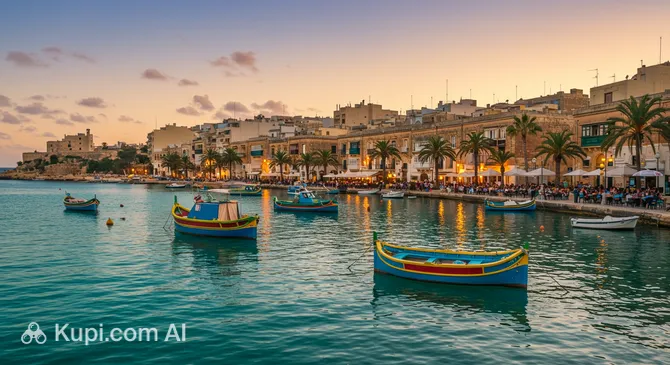
St. Julian's is a charming resort that feels like something out of a Mediterranean fairy tale. It is nestled on the northeast coast of Malta, washed by the azure waters of the Mediterranean Sea and surrounded by picturesque bays. The heart of the city is Spinola Bay, where colorful fishing boats sway lazily by the shore, and the embankments are lush with greenery and flowers, creating a unique atmosphere.
St Julians. Illustration.
Source: Kupi.com AI

With a population of about 7,752 people, St. Julian's remains intimate and welcoming, preserving the charm of the small fishing village it once was. Today, it is one of the country's most famous resorts, renowned for its developed tourist infrastructure. Here, ancient palaces and churches harmoniously blend with ultra-modern hotels, offering guests a wealth of restaurants, cafes, and clubs.

The Paceville district is particularly popular, known for its vibrant nightlife and attracting young people from all over Europe. During the day, St. Julian's enjoys a leisurely resort pace, perfect for strolls and relaxation by the sea, but as evening falls, the city lights up and fills with music, offering entertainment for every taste.

St. Julian's is the ideal destination for those seeking a combination of relaxing beach holidays, interesting cultural discoveries, and exciting nightlife. Come and experience its unique atmosphere of freedom, hospitality, and eternal celebration!

You can find more interesting facts on the history of St. Julian's page.
Weather Overview

The weather in St. Julian's usually delights with a Mediterranean climate that is perfect for a holiday. Summer, especially from June to August, is hot and very dry. The average air temperature during these months ranges from 23°C to 27°C, and rainfall is minimal, often reaching zero, which ensures plenty of sunny days.

Winters in St. Julian's are mild, with an average temperature of about 14-16°C from December to February. The autumn-winter period accounts for the main, albeit small, part of the annual precipitation. For example, in November and December, there may be about 10-12 rainy days, but the total amount of precipitation remains moderate. Overall, expect a hot and sunny summer and a mild winter with a small amount of rain. For a more detailed study of weather conditions by month, including minimum and maximum temperatures, we recommend visiting the St. Julian's Climate page.

Average monthly temperature

Average monthly precipitation

Interesting Facts

Beyond its sun-drenched promenades and buzzing nightlife, St. Julian's holds many surprising secrets and curious stories. Here are just a few that will help you see this popular resort from a new perspective:

St. Publius Square. Illustration.
Source: Kupi.com AI

Traveler photos:

  • St. Julian's was once a humble fishing village. A century ago, its landscape was defined only by boats and a few houses. Today, it is one of Malta's busiest resorts, but in the old quarters, you can still see traditional Maltese "luzzu" boats with eyes painted on them – symbols of good luck and protection.

  • It is in St. Julian's, specifically in the Paceville district, that the main nightlife of all Malta is concentrated. It is home to one of Europe's largest discos, Axis, as well as numerous bars, lounges, and clubs, making the city a magnet for youth and students, especially those who come to Malta to study English.

  • Despite its reputation as an entertainment hub, St. Julian's carefully preserves its history. Here you can find the St. George's Tower, dating back to the 17th century, ancient coastal fortifications, and the Madliena Tower. A walk along the promenade turns into a real journey through time: from the eras of the knights to the present day.

  • Spinola Bay is known not only for its picturesque views but also for its permanent residents – wild ducks and numerous cats. Locals and tourists often come here to feed these feathered and furry creatures, which has long since become a kind tradition.

How to Get There

When planning a trip to this picturesque corner of Malta, it is important to think about your route in advance. Since St. Julian's is located on an island, the main way for most tourists to arrive is by air, although there are options for combined routes through neighboring Sicily. You can study all the ways to get to the city in more detail on the specialized page.

St. Julian's itself does not have its own airport, so travelers arrive at the country's main air gateway. The primary destination is Malta International Airport (IATA: MLA), located near the city of Valletta. It is only 7.2 km from St. Julian's, making the transfer quick and convenient. It is a major international hub receiving flights from all over Europe and other parts of the world. A trip from the airport to the hotel by taxi or rental car will take about 15–20 minutes, while a public bus takes a bit longer.

As an alternative, especially if you are traveling through Italy, you can consider flying into Catania–Fontanarossa Airport (IATA: CTA). It is located in the city of Catania on the island of Sicily, approximately 179 km from St. Julian's. This is a large airport from which you can reach Malta by high-speed ferry. This route is suitable for those who want to combine a visit to two islands in one trip.

For clarity, here is summary information on the main airports in the region:

AirportPassenger trafficDistance
Malta International Airport9.0 mln7 km
Comiso Airport260 642120 km
Lampedusa Airport349 449176 km
Catania-Fontanarossa Airport12.3 mln179 km
Pantelleria Airport200 000247 km

It is important to remember that there is no rail service on Malta itself. There is no railway station in St. Julian's, and trains do not run on the island. However, if you prefer overland travel through Europe, the nearest significant point on the mainland is the Reggio di Calabria Centrale Station (IATA: RCC), located in the city of Reggio Calabria, Italy. It is about 262.8 km from St. Julian's. From here, you will need to cross to Sicily, travel to a port (for example, in Pozzallo or Catania), and then take a ferry to Malta. This is a complex but picturesque route for adventure lovers.

Below is information about the nearest railway station on the mainland:

StationPassenger trafficDistance
Reggio di Calabria Centrale Station263 km

Main Attractions

St. Julian's, once a quiet fishing village, has transformed into Malta's bustling resort center, attracting tourists with its energetic atmosphere and variety of entertainment. While the city is famous for its nightlife, it also offers interesting spots for daytime leisure and cultural enrichment, including attractions located in the immediate vicinity.

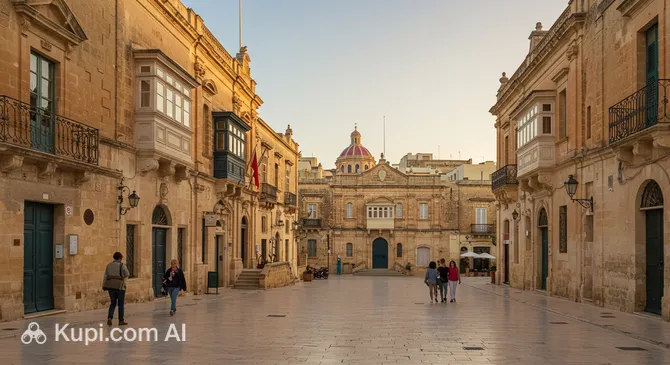
One of the iconic landmarks drawing attention in the St. Julian's area is St. Publius Square. This is a place rich in history where you can feel the atmosphere of traditional Malta. The square is interesting for its architecture and often serves as a venue for various events, allowing tourists to immerse themselves in the local culture and see important historical monuments.

St. Publius Square. Illustration.
Source: Kupi.com AI

Traveler photos:

For gourmets and connoisseurs of authentic Maltese cuisine, a visit to Nenu The Artisan Baker is a must. This is not just a bakery, but a true gastronomic journey where you can try traditional Maltese ftira bread, prepared according to old recipes, as well as other local delicacies. The atmosphere of the establishment and the delicious pastries make it popular among both locals and tourists wishing to experience the true taste of Malta.

Nenu The Artisan Baker. Illustration.
Source: Kupi.com AI

Traveler photos:

Shopping enthusiasts should check out the PAMA Shopping Mall. This is one of the large shopping complexes offering a wide selection of stores, from well-known international brands to local goods. Here you can not only update your wardrobe but also purchase souvenirs and relax in one of the cafes or restaurants after a successful shopping trip. It is a convenient place for those who want to combine relaxation with practical purchases.

PAMA Shopping Mall. Illustration.
Source: Kupi.com AI

Traveler photos:

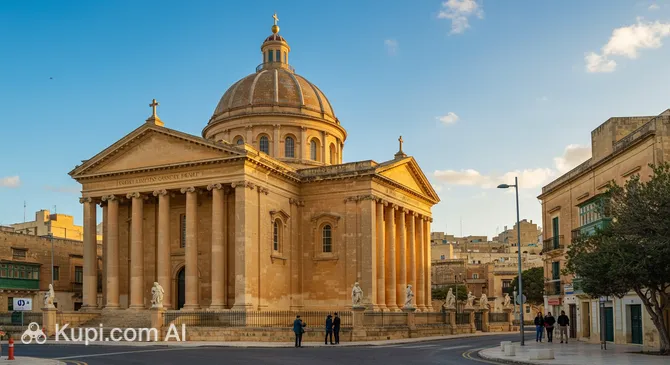
Not far from St. Julian's is one of Malta's most impressive churches – the Mosta Dome, also known as the Rotunda of the Assumption. This architectural wonder is famous for having one of the largest unsupported domes in the world. The church is also known for its amazing history from World War II, when a bomb pierced the dome during a service but failed to explode. This site attracts pilgrims and tourists with its majestic architecture, unique history, and spiritual atmosphere.

Mosta Dome. Illustration.
Source: Kupi.com AI

Traveler photos:

Local Cuisine

The gastronomic scene of St. Julian's is a true delight for foodies, offering a kaleidoscope of flavors from traditional Maltese cuisine to exquisite dishes from around the world. The city abounds with restaurants, cafes, and bistros for every taste and budget, making it an attractive destination for culinary discoveries.

Be sure to try Malta's iconic dishes, which are widely represented in St. Julian's restaurants. "Fenkata" – a tender rabbit stew with herbs and wine – is considered a national gastronomic symbol. No less popular are "bragioli" – appetizing beef olives with various fillings. Thanks to its coastal location, you can always enjoy the freshest fish and seafood in St. Julian's, delivered by local fishermen directly to the restaurants.

For a lighter snack or to get to know local specialties, look out for street food and products from small bakeries. "Pastizzi" – flaky pastries filled with ricotta or pea puree – are popular. It is also worth trying the traditional Maltese bread "hobz biz-zejt," often served with olive oil, tomatoes, and other toppings, and the local goat cheese "gbejniet." If you want to immerse yourself in the atmosphere of traditional baking, stop by places like Nenu The Artisan Baker, where you can try authentic Maltese products.

Nenu The Artisan Baker. Illustration.
Source: Kupi.com AI

Traveler photos:

Regarding drinks, it is worth noting the local beer, which perfectly quenches thirst on a hot day. Malta is also famous for its liqueurs infused with herbs and citrus fruits – they make an excellent digestif or cocktail ingredient. Don't forget to try the non-alcoholic drink Kinnie, a bittersweet carbonated drink with an orange aroma that is very popular on the islands.

The dining culture in St. Julian's is very diverse. Locals and tourists alike love to dine at numerous restaurants, from fashionable venues overlooking the sea to cozy family trattorias in the backstreets. In the summer, the city comes alive with food festivals, street food fairs, and wine tastings, turning the promenades and squares into a true celebration of taste.

Travel Tips

Planning a trip to vibrant St. Julian's? Excellent! To ensure your journey through this popular part of Malta goes smoothly and leaves only pleasant impressions, we have prepared some practical tips to help you find your way around.

  1. Clothing and Essentials:

    The climate in Malta is Mediterranean. In summer (June-September), you will need light clothing made of natural fabrics, swimwear, a hat, sunglasses, and sunscreen with high SPF. For spring and autumn, pack a couple of warm items and a light jacket or windbreaker, as evenings can be cool. Be sure to bring comfortable shoes for walking along the promenade and exploring the surroundings. Don't forget an adapter for electrical appliances (Malta uses Type G sockets, same as in the UK). When visiting churches, even in tourist areas, it is customary to cover your shoulders and knees.

  2. Transport in and Around the City:

    St. Julian's is a compact city, and many of its areas, including the waterfront and the popular Paceville district, are easily explored on foot. Public transport in Malta is represented by buses – this is the main and quite extensive way to move around the island. Tickets can be bought from the driver or you can purchase a travel card. Taxis and ride-hailing apps (e.g., Bolt, eCabs) are widely available. Car rental is possible, but keep in mind that traffic in Malta is left-hand drive, and parking in St. Julian's can be difficult, especially in high season.

  3. Finances: Currency, Cards, Tipping:

    The official currency of Malta is the Euro (EUR). Credit and debit cards (Visa, Mastercard) are accepted in most hotels, restaurants, and shops. ATMs are easy to find all over St. Julian's. International cards usually work without problems, but just in case, notify your bank about your trip. You can exchange currency at banks or licensed exchange offices. Tipping in restaurants is welcomed (usually 5-10% of the bill if service is not included).

  4. Health and Safety:

    Pharmacies (marked with a green cross) are available in St. Julian's, but not all are open 24/7; check the schedule for on-duty pharmacies. EU citizens are recommended to carry a European Health Insurance Card (EHIC). St. Julian's is considered safe for tourists, however, as elsewhere, basic precautions should be taken: keep an eye on your belongings, especially in crowded places and near Paceville's nightclubs. Avoid walking alone in poorly lit and deserted areas late at night.

  5. Connectivity and Communication:

    The official languages in Malta are Maltese and English. English is widely spoken, and you will easily be able to communicate with locals and tourism staff. You can buy a local SIM card for mobile internet at the airport or in communication stores. Free Wi-Fi is available in many hotels, cafes, and restaurants. Learning a few phrases in Maltese, such as "Bonġu" (Bon-ju – Good morning) or "Grazzi" (Grat-zi – Thank you), will be a nice gesture.

  6. Local Etiquette and Communication:

    Maltese people are hospitable and friendly. It is customary to say hello and goodbye. Politeness is valued in communication. When visiting churches and religious sites, behave respectfully, maintain silence, and follow the dress code. In general, norms of behavior are similar to general European ones.

  7. What to Avoid:

    You should not appear in swimwear outside of the beach or hotel pool. Although St. Julian's is known for its nightlife, try not to make noise or disturb public order late in the evening in residential areas to avoid upsetting local residents. Also, as everywhere, do not leave valuables unattended.

  8. St. Julian's Special Feature:

    St. Julian's is not just the nightlife hub of Paceville. Take a walk along the picturesque Spinola and Balluta bays, admire the traditional "luzzu" boats, and enjoy dinner at one of the many restaurants with a sea view. The city is also a popular place for studying English, so there are always many young people from all over the world here, which creates a special cosmopolitan atmosphere.

We hope these tips help you better prepare for your trip and fully enjoy every moment of your stay in sunny and dynamic St. Julian's. We wish you an unforgettable holiday in Malta!

Entertainment & Nightlife

St. Julian's is undoubtedly the epicenter of nightlife in Malta, and if you are looking for entertainment after sunset, this is exactly where you need to be. The main concentration of clubs, bars, and casinos is found in the famous Paceville district. This is where the music never stops and life hums until the early hours of the morning.

The atmosphere in Paceville is very dynamic and international. You can meet young people as well as an older crowd, tourists from all over the world, and locals. The styles of the venues range from noisy pubs with live music and sports bars to trendy nightclubs with famous DJs and elegant lounge bars. Most establishments are open until 3:00 or 4:00 AM, and some even later, especially on weekends. The dress code is mostly casual or smart-casual, though some more exclusive clubs may require a dressier look.

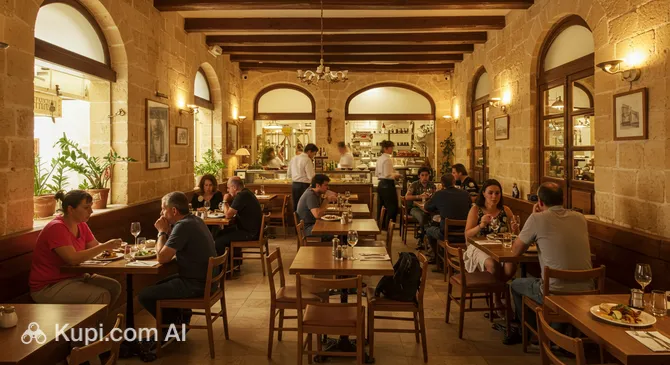
The evening usually begins with dinner at one of the many restaurants. For example, if you want to try traditional Maltese cuisine in an authentic setting before hitting the dance floor, consider Nenu The Artisan Baker. After dinner, you can move to one of the bars for a couple of cocktails, and towards midnight, head to a club. The best time to visit Paceville is after 10:00-11:00 PM, when most places are already filling up with people.

As for prices, they can vary greatly: from quite affordable in small bars to relatively high in prestigious clubs. You can get to Paceville at night by taxi (it is recommended to use official services or apps) or by night buses that run along the main routes. The Paceville area is considered relatively safe due to the large crowds and patrolling; however, as in any busy tourist spot, it is worth taking basic precautions: keep an eye on your belongings and avoid poorly lit or deserted streets.

While St. Julian's is famous for its nightlife, there is plenty to do during the day as well. You can walk along the picturesque promenade, relax on one of the small beaches, enjoy water sports, or go shopping, for example, at the PAMA Shopping Mall. History buffs can visit places like St. Publius Square. The city offers a pleasant mix of daytime relaxation and vibrant nighttime activity.

Parks & Museums

St. Julian's, known for its lively atmosphere and picturesque bays, offers guests not only entertainment but also the opportunity to enjoy coastal walks and encounter elements of Malta's cultural and historical heritage, even if traditional parks and major museums are not its primary feature.

While St. Julian's does not have extensive classical parks, its charm lies in its scenic coastal areas, which serve as wonderful places for relaxation and strolling. Spinola Bay is the heart of the old fishing village, where you can still see bright traditional luzzu boats and enjoy the views while walking along the promenade lined with numerous cafes. It is an ideal spot for leisurely rest and observing local life. Equally attractive is Balluta Bay, known for its small sandy beach, the impressive Art Nouveau buildings known as the Balluta Buildings, and the beautiful Neo-Gothic Church of Our Lady of Mount Carmel, which dominates the square.

In St. Julian's itself, there are not as many classical museums as in the capital, Valletta; however, the city and its surroundings offer interesting cultural and historical sites. One of the most significant historical buildings in the city is Palazzo Spinola. This 17th-century Baroque palace, once the summer residence of Knight Fra Giovanni Battista Spinola, is an important architectural monument and a reminder of the island's rich history. Although full access inside may be limited, its exterior and history are impressive. Another architectural landmark is the aforementioned Balluta Buildings, a magnificent example of the Art Nouveau style. For those interested in larger-scale historical and religious sites, it is convenient to travel from St. Julian's to iconic Maltese locations such as the impressive Mosta Dome, famous for its enormous rotunda, or visit the significant historical St. Publius Square in Floriana, which is a major public space with monumental architecture.

Mosta Dome. Illustration.
Source: Kupi.com AI

Traveler photos:

St. Publius Square. Illustration.
Source: Kupi.com AI

Traveler photos:

For a more authentic experience and to get a feel for the local atmosphere, turn off the busy tourist streets into the quieter alleys of the Spinola area. We also recommend a leisurely promenade along the waterfront connecting St. Julian's to Sliema – it is an excellent opportunity to enjoy the seascapes and a more peaceful setting, away from the noise of the central districts.

Getting Around

Getting around St. Julian's and its surroundings is quite convenient thanks to a developed public transport system. The main and practically only mode of transport here is the bus, which connects the city with all key points on the island.

The bus network is managed by Malta Public Transport and covers most areas of St. Julian's, as well as providing connections to Valletta, the airport, and other popular tourist destinations. The routes are well-planned, though during peak hours and in the height of the tourist season, buses can be overcrowded and road traffic can be congested. Frequencies depend on the route and time of day, but generally, buses run quite often.

The fare payment system offers several options. You can purchase a ticket with cash directly from the driver when boarding the bus; such a ticket is usually valid for two hours and allows for transfers. This is a convenient option for one-off trips. A single trip when paying cash to the driver can cost around 2-3 euros, depending on the season and time of day. For more frequent use, it is more profitable to purchase a Tallinja Card. There are different types of these cards: personalized (for residents), the Explore card (unlimited travel for 7 days), a 12-journey card, or a "pay-as-you-go" card, which offers lower rates per trip compared to buying a ticket from the driver. The fare using a Tallinja Card is significantly lower. For example, a weekly unlimited Explore Card will cost around 21-25 euros.

Tallinja Cards can be purchased at special kiosks, ticket vending machines (including at the airport and major bus stations), or in some retail stores. It is important to remember that the ticket or card must be validated every time you enter the bus by tapping it against a special reader. Buses start running early in the morning (around 5:30-6:00 AM) and finish late in the evening (around 11:00 PM). There are also night routes, especially during the summer season and on weekends, but their schedules should be checked in advance. For route planning, it is convenient to use the official Malta Public Transport website or mobile apps.

In addition to buses, other ways to get around are available in St. Julian's. Taxis can be found at special stands or called by phone. Ride-hailing services via mobile apps (such as Bolt, Uber, or local equivalents) are also popular and often offer more competitive prices. For short distances, especially along the promenade, walking is very pleasant. Renting bicycles or scooters is also possible, but one should consider the hilly terrain and rather heavy traffic.

It is worth noting that modes of transport such as the metro, trams, or trolleybuses do not exist in St. Julian's or Malta as a whole. The entire public transport system is oriented around bus services.

Accommodation

St. Julian's offers tourists a wide range of accommodation options for every taste and budget. Here you will find everything from affordable hostels and guesthouses to mid-range hotels, stylish boutique hotels, luxury resorts, and comfortable self-catering apartments. This variety allows every traveler to find the perfect place to stay.

When choosing a place to stay in St. Julian's, it's worth paying attention to several popular areas. Paceville is the center of nightlife, ideal for those seeking entertainment and proximity to clubs and bars. The Spinola Bay area enchants with its views, and it is home to many restaurants and hotels with excellent locations. For a quieter and more luxurious holiday, consider the Portomaso area, known for its elite hotels and apartments. The Balluta Bay area, bordering Sliema, is also popular, offering picturesque views and easy access to the promenade.

While specific hotels may vary, St. Julian's features both well-known international hotel chains and charming local boutique hotels offering a unique experience. Many hotels boast swimming pools, restaurants, and beautiful sea views, ensuring a comfortable stay.

When planning your trip, especially during the peak tourist season (usually the summer months), it is recommended to book accommodation in advance. This will help ensure the best choice and more favorable prices. The price range in St. Julian's varies from budget options to luxury offers. Most hotels and apartments can be easily booked through popular online platforms or directly on the hotels' own websites.

Nearby Cities

For those looking to explore the surroundings, St. Julian's serves as an excellent starting point for day trips to several interesting nearby locations:

CityPopulationDistance
Sliema16 8541 km
Swieqi10 0641 km
Pembroke3 6451 km
San Gwann12 5232 km
Gzira8 0292 km

Each of these cities offers something unique for the traveler:

Valletta: The capital of Malta, Valletta, impresses with its rich history, majestic Baroque architecture, and numerous museums. This fortress city, a UNESCO World Heritage site, is a must-visit to experience the country's cultural heritage.

Sliema: Located very close by, Sliema attracts tourists with its lively promenade, excellent shopping opportunities, and restaurants with sea views. It is a wonderful place for leisurely walks and enjoying the atmosphere of a modern resort.

Birkirkara: As one of Malta's oldest and largest cities, Birkirkara offers a glimpse into the daily life of the Maltese. Here you can see the Old Parish Church and other examples of local architecture.

These nearby destinations provide an insight into the diverse culture and landscapes of Malta. Each trip promises new discoveries and experiences, complementing your stay in St. Julian's.

Shopping & Souvenirs

St. Julian's, known for its entertainment and vibrant nightlife, also offers interesting shopping opportunities, although it is not the main commercial center of Malta. Here you can find shops of famous brands as well as small boutiques with local goods. The city is not famous for any specific crafts, but it is easy to find fashionable clothes, accessories, and, of course, souvenirs.

The main area for shopping in St. Julian's is the Paceville district and its adjacent streets, especially Bay Street. Many clothing, shoe, jewelry, and perfume stores are concentrated here. Walking through these busy streets, you will find both international brands and local labels. It is also a popular place to buy beach gear and everyday items.

There are several shopping centers in St. Julian's that make shopping more comfortable. The most famous is the Bay Street Shopping Complex, which offers a variety of shops, cafes, and entertainment under one roof. It is also worth paying attention to the PAMA Shopping Mall, which, although it may not be in the very heart of St. Julian's, is a large retail facility offering a wide range of goods, from food to clothing and electronics.

PAMA Shopping Mall. Illustration.
Source: Kupi.com AI

Traveler photos:

As for markets, St. Julian's is not known for large traditional markets like some other cities in Malta. You are more likely to find small souvenir shops and stores than extensive food or flea markets. For an authentic market experience, it's better to head to other parts of the island, such as the Sunday market in Marsaxlokk.

As souvenirs from St. Julian's and Malta in general, it is worth bringing back items made of the famous Mdina glass, traditional Maltese lace, and silver filigree jewelry. Local delicacies are also popular: nougat (qubbajt), honey rings (qagħaq tal-għasel), Maltese wine, and liqueurs, such as those made from prickly pear cactus.

Shops in St. Julian's are usually open from 9:00-10:00 AM to 7:00-8:00 PM. Some smaller shops may close for a siesta in the middle of the day, especially in the summer months. Large shopping centers and stores in tourist zones often work without a break and may be open on Sundays, although with reduced hours. Credit cards (Visa, MasterCard) are accepted everywhere, but cash will also come in handy, especially in small shops or for minor purchases.

For tourists from non-EU countries, a Tax Free system operates in Malta. This means that when making purchases of a certain amount in participating stores, you can apply for a VAT refund. Be sure to check the details with the seller and keep all receipts and forms to present at customs when leaving the country.

Reached the end of the page?

That means the route is fully explored