Support

Martinique Aimé Césaire International Airport

About the Airport

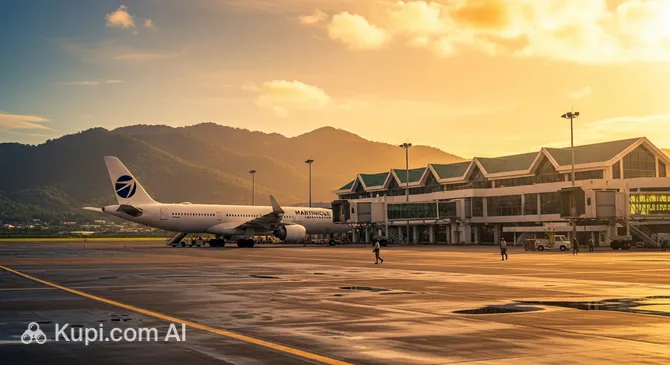
Martinique Aimé Césaire International Airport. Source: Kupi.com Binoculars

Martinique Aimé Césaire International Airport (FDF) is the main aerial gateway to the "Island of Flowers," as Martinique is poetically known. Located in the suburb of Le Lamentin, it serves as the starting point for exploring the island's capital and its surroundings. The airport opened in 1950, and in 2007, it was named after the prominent Martinican poet and politician Aimé Césaire, highlighting its cultural significance to the region. Today, it is a modern and bustling transport hub that hospitably welcomes travellers from all over the world arriving to enjoy the Caribbean sun and tropical nature.

IATA Code FDF
ICAO Code TFFF
City Fort-de-France
Distance to Centre approx. 12 km
Status International
Annual Passengers over 1.8 million (2023)
Popular Airlines Air France, Air Caraïbes, Corsair
Schedule online board "Martinique Aimé Césaire International Airport"

Aimé Césaire Airport plays a key role in the island's transport system, connecting it with cities in Europe, North and South America, as well as other Caribbean islands. The single runway is capable of handling large long-haul aircraft, including the Boeing 747 and Airbus A350, ensuring a steady flow of tourists from France and other countries. In the single but spacious terminal covering 24,000 m², travellers have access to all necessary services: duty-free shops, souvenir stalls, restaurants, cafés, currency exchange points, and car rental offices. Developed infrastructure and a convenient location make the airport a comfortable starting point for an unforgettable journey across Martinique.

Contact Information

Below is the essential contact information for Martinique Aimé Césaire International Airport (FDF), which will help you plan your trip and resolve any questions that may arise.

  • Official Website: You can find the most up-to-date information on flights, services, and regulations on the airport's official website: www.martinique.aeroport.fr
  • Information Desk Phone: For immediate information, you can call: +596 596 42 16 00.
  • Airport Address: Aéroport International Martinique Aimé Césaire, 97232 Le Lamentin, Martinique.
  • Email: A direct email address for general inquiries is not published. It is recommended to use the contact form on the official website for communication.
  • Social Media: Follow news and updates on the airport's official Facebook page.
  • Lost Luggage Information: For all issues related to lost or damaged luggage, please contact your airline's Lost & Found service directly. Airline representative contacts are usually located at their counters in the arrivals hall.
  • Passenger Support Contacts: For general support and enquiries, please contact the information desk within the airport terminal or use the information service phone number.

How to Get to the Airport

Martinique Aimé Césaire International Airport (FDF) is located in the commune of Le Lamentin, approximately 12 kilometres south of the capital city, Fort-de-France. You can get from the city centre to the airport in several ways, suitable for different budgets and travel plans across Martinique.

Taxi and Private Transfer — the most popular and convenient option. The journey from the centre of Fort-de-France to the airport will take approximately 15-25 minutes depending on traffic conditions. The cost of a taxi ride during the day is about 25–35 Euros; however, tariffs increase at night, on weekends, and public holidays. For greater convenience and a fixed price, you can book a transfer in advance, which will take you directly to the terminal.

Public Transport on the island is mainly represented by collective taxis (taxi collectif or "taxi-co"). These are minibuses that run on specific routes and depart as they fill up. This is the most budget-friendly method, but it is not always convenient for tourists with large luggage and does not have a strict schedule, which can be critical when travelling for a flight. There is no direct bus service between the city centre and the airport.

Car Rental — an ideal choice for those who wish to move freely around the island. Most major car rental companies have offices right at the airport. You can easily return the car before departure. The road from the capital is well signposted, so getting to the airport is straightforward. This offers maximum flexibility and allows you not to depend on transport schedules.

For those arriving in their own or a rented vehicle, parking is available within the airport grounds. Both short-term parking for quick drop-offs and pick-ups, and long-term car parks where you can leave your car for the duration of your trip, are available. The cost varies depending on the parking duration.

Terminals and Map

Martinique Aimé Césaire International Airport (FDF) is a modern and compact aviation hub characterised by a simple and clear structure for passengers. All flights are handled in one passenger terminal, which completely eliminates confusion and the need to move between different buildings. This is the main aerial port opening the way to picturesque Martinique.

The terminal layout is logical and intuitive. The building has two main levels:

  • Ground Floor — this is the arrivals area. Here you will find passport control counters for arriving passengers, baggage reclaim belts, and the customs zone. After completing all formalities, you enter the general hall, where car rental offices, taxi counters, and tourist information are located.
  • First Floor — the departures area. Escalators and lifts lead here from the main hall. On this level, there are airline check-in counters, security checkpoints, and passport control. After screening, passengers enter the "airside" zone with boarding gates, Duty Free shops, souvenir stalls, and cafés.

Since all operations are concentrated in one building, navigation is straightforward. Signs in French and English will help you orient yourself easily. For check-in and security screening, it is recommended to arrive at the airport in advance — at least 2-3 hours before international flights. During the peak tourist season, waiting times may increase, so it is better to allow extra time.

Overall, thanks to its compact size and thoughtful layout, the airport of Fort-de-France leaves a pleasant impression and allows travellers to start or end their trip without unnecessary stress.

Airport History

The history of Martinique Aimé Césaire International Airport is a chronicle of the development of air travel and tourism on the island. Officially, the airport was opened in 1950 and originally bore the name "Le Lamentin Airport" (Aéroport du Lamentin), as it is geographically located in the commune of the same name, adjacent to the capital — the city of Fort-de-France.

From the very beginning of its existence, the air harbour played a key role in the life of the island. In the 1960s, the runway was extended to accommodate the first jet aircraft, such as the Boeing 707, which opened the era of mass tourism. Further expansion followed in the 1990s when a modern and spacious terminal was built, capable of serving the constantly growing passenger flow.

One of the most iconic and significant events in the airport's history was the arrival of the supersonic passenger airliner Concorde by Air France in January 1976. These flights connected Martinique with Paris, reducing travel time to just a few hours, and for many years became a symbol of prestige and technological breakthrough. Le Lamentin Airport was one of the few in the Caribbean capable of receiving this legendary aircraft.

A major milestone in recent history was the renaming of the airport in 2007. It was given the name Aimé Césaire — a prominent Martinican poet, playwright, essayist, and political figure, and one of the founders of the Négritude movement. This gesture was a tribute to the island's cultural heritage and its greatest son. Today, Aimé Césaire Airport represents a modern aerial gateway that continues to develop while preserving its rich history and unique character.

Services and Facilities

Martinique Aimé Césaire International Airport (FDF) in Martinique offers passengers a wide range of services and amenities to make waiting for a flight as comfortable as possible. Whether you are arriving on the island or departing, you will find everything you need right in the terminal.

For those feeling hungry, there are several restaurants and cafés operating in the airport, where you can taste both Creole cuisine and familiar European snacks. Shops offer a large selection of souvenirs, local rum, French perfumery, and clothing. Naturally, there is also a spacious Duty Free area where you can make purchases before departure.

Free Wi-Fi is available throughout the airport, and numerous stations with power outlets and USB ports are provided for charging gadgets. Passengers wishing to relax in a quieter environment can use the services of the VIP Lounge. Here, snacks, beverages, fresh press, and comfortable places for work or waiting are offered.

To resolve financial matters, ATMs are installed in the terminal, and currency exchange points are in operation. Information desks are also at the service of travellers, where advice can be obtained on any questions related to the airport's operation.

The airport is well-equipped for passengers with special needs. Assistance for people with reduced mobility is provided, which is recommended to be booked in advance through the airline. For travellers with small children, there are specially equipped mother and child rooms with changing tables.

In case of necessity, passengers can contact the medical point for first aid. Although there are no hotels directly within the airport building, many hotels of varying comfort levels are located a few minutes' drive away. For business travellers, basic business services, such as work zones and the ability to hold a meeting, are available in the VIP Lounge.

Where to Eat

At Martinique Aimé Césaire International Airport (FDF) in Martinique, travellers will find several options for a snack or a full meal, catering to different tastes and budgets. There are establishments with local flair as well as fast-food outlets serving familiar international dishes.

The majority of establishments are located in the general area (landside), accessible to all visitors before passing security control. Here you will find the main airport restaurant, offering both à la carte dishes and set meals. This is an excellent place for those who want a leisurely lunch before departure or are meeting arrivals. There are also several cafés in this zone where you can have coffee with fresh pastries.

In the departure zone (airside), after passport control, the choice is somewhat more modest and oriented towards quick snacks. Passengers have access to bars and cafés where they can order sandwiches, salads, snacks, and beverages. This is a convenient option to refresh yourself immediately before boarding your flight.

Be sure to take the opportunity to try Creole cuisine. The menu of the restaurant and some cafés features local specialities such as accras (cod fritters), bokit sandwiches, or refreshing juices made from exotic fruits. For a quick bite, croissants or paninis are perfect, and for a full meal — grilled fish or chicken with rice and red beans.

Prices at FDF airport are consistent with the standard level for such facilities — they are higher than the average on the island but quite comparable to other international airports. Most establishments open early in the morning and work until the last evening flight. Regarding dietary requirements, vegetarian sandwiches and salads can always be found in the cafés. To clarify information about gluten-free or vegan options, it is best to ask the staff directly.

Travel Tips

Travelling through Martinique Aimé Césaire International Airport, the gateway to the tropical paradise of Martinique, can be easy and pleasant if you know a few tricks. Follow these tips to ensure your arrival in Fort-de-France or departure from it goes as smoothly as possible.

Arrival Time and Check-in. It is recommended to arrive at the airport at least 2-3 hours before international flights and 1.5-2 hours before domestic ones. During the peak tourist season, it can be quite busy here. To save time, use online check-in, which is offered by most airlines. This will allow you to go straight to the baggage drop-off counter or, if you are travelling light, directly to the security screening area.

Security Control and Hand Luggage. The security screening area at the airport complies with international standards. Prepare liquids in advance (in containers no larger than 100 ml, packed in a transparent bag), and also remove laptops and other large electronics from your bag. Be sure to pack all valuables, documents, necessary medication, and a portable charger in your hand luggage. A light snack wouldn't go amiss either, as choices in the departure lounge may be limited.

Seat Selection and Transfers. When flying in the Caribbean region, a window seat will grant you unforgettable views of the turquoise sea and neighbouring islands. If comfort and the ability to stand up freely are more important to you, choose an aisle seat. Passengers with transfers should clarify in advance whether they need to leave the transit zone and if a visa is required for this. The airport has cafés and shops to pass the time while waiting for the next flight.

Customs Control and Savings. Upon arriving in Martinique, be prepared to pass customs control. Keep your passport and boarding pass handy. If you are flying from a country outside the EU, you may need to fill out a declaration. To save money, bring an empty reusable water bottle with you — it can be filled after passing security screening. Also, research airport transfer options in advance: public transport or shuttles can be significantly cheaper than taxis.

In Case of Flight Delay. If your flight is delayed, first contact your airline representative for information on the new departure time and your rights. Depending on the length of the delay, you may be provided with vouchers for meals or even hotel accommodation. Keep all receipts and boarding passes — they may be needed to claim compensation.

Reached the end of the page?

That means the route is fully explored