Support

V.C. Bird International Airport

About the Airport

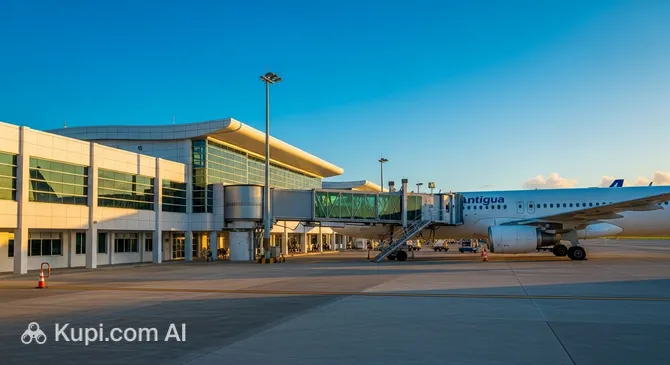
V.C. Bird International Airport. Source: Kupi.com Binoculars

Welcome to V.C. Bird International Airport — your gateway to the paradise nation of Antigua and Barbuda! This airport is the first sight that greets travellers arriving on these sun-drenched Caribbean islands. Modern and welcoming, it immediately sets the tone for your entire holiday, offering comfort and a high level of service. As one of the major aviation hubs in the region, V.C. Bird Airport serves as a starting point for exploring not only Antigua but also the neighbouring islands.

IATA Code ANU
ICAO Code TAPA
City St. John's
Distance to Centre 8 km
Status International
Annual Passengers Around 1 million
Popular Airlines American Airlines, British Airways, Virgin Atlantic
Schedule online board "V.C. Bird International Airport"

Airport Features and Advantages

V.C. Bird International Airport is rightfully considered one of the most modern in the Caribbean basin. In 2015, a new spacious terminal was opened here, which significantly enhanced passenger comfort. The terminal building, covering an area of 23,000 square metres, is equipped with everything necessary: from self-check-in kiosks and modern baggage handling systems to four jet bridges. The airport plays a key role as a regional hub, especially for flights to the Lesser Antilles.

Passengers have access to VIP lounges, numerous shops where souvenirs and duty-free goods can be purchased, as well as cafés and restaurants offering local and international cuisine. The airport services flights around the clock from over 17 international and regional airlines, connecting Antigua and Barbuda with North America, Europe, and other Caribbean islands. Furthermore, it is one of the few airports in the region utilising solar energy for its operations, highlighting the country's commitment to sustainable development.

Contact Information

Below you will find contact information for V.C. Bird International Airport (ANU), which will help you plan your trip and resolve any potential queries.

  • Official Website: For the most up-to-date information on flights, services, and regulations, please visit the airport's official website.
  • Information Desk Phone: +1 (268) 484-2300
  • Airport Address: V.C. Bird International Airport, St. John's, Antigua and Barbuda
  • Email: info@vcbia.com
  • Social Media: Follow news and updates on the airport's official social media pages, such as Facebook.
  • Lost Baggage Information: If your items were lost on board the aircraft, you must contact your airline directly. If you lost something within the terminal building, please contact airport security via the main phone number.
  • Passenger Support Contacts: For general enquiries and assistance, you can use the airport's main telephone number or the feedback form on their official website.

How to Get to the Airport

Getting to V.C. Bird International Airport (ANU), the main air gateway of Antigua and Barbuda, is quite simple, as it is located just 8 km northeast of the capital, the city of St. John's. The journey from the city centre typically takes about 15-20 minutes depending on traffic conditions. Travellers have several transport options available, each with its own features.

Taxis and Private Transfers are the most popular and convenient way to reach the airport. Official taxis with fixed rates to major tourist zones and the airport operate on the island. The cost of a trip from St. John's is usually around 15-20 USD. It is recommended to always confirm the price with the driver before starting the journey. Many hotels also offer transfer services, which can be booked in advance for maximum comfort.

Public Transport in the form of shuttle buses represents the most budget-friendly option. It is a great way to immerse yourself in the local atmosphere, although it may not be the most convenient for tourists with large luggage. Buses do not always run on a strict schedule, and their routes are primarily oriented towards local residents. If you are travelling light and are not in a rush, this can be an interesting adventure.

Car Rental is an excellent choice for independent travellers planning to explore the island on their own. Most major international and local rental companies have counters both at the airport and in St. John's. You can easily drive to the airport in a rental car and return it right before your flight. Please note that to drive in Antigua, tourists need to purchase a temporary local driving permit.

For those travelling to the airport in their own or a rented vehicle, parking is provided within the territory of V.C. Bird International Airport. There are zones for both short-term and long-term parking, which is convenient if you are seeing someone off or leaving your car for a short trip.

Terminals and Map

V.C. Bird International Airport (ANU) is a modern and well-organised gateway to Antigua and Barbuda. The airport consists of one main passenger terminal, which handles all international and most regional flights. The old terminal is used mainly for private aviation and cargo, so tourists arriving on scheduled flights will only need to navigate one building.

The terminal layout is simple and intuitive. It has a two-level structure, which simplifies navigation. The Departures Zone is located on the upper floor. Here you will find airline check-in counters, security checkpoints, passport control, and boarding gates. The Arrivals Zone is located on the ground floor and includes immigration control halls, baggage claim belts, and customs inspection.

Since all major operations are concentrated in one building, transfers between zones are not required. Passengers do not need to go outside or use shuttles to transfer — everything is within walking distance. Signage in English is clear and highly visible, making it easy to find the necessary gate, information desk, or exit.

Despite its relatively small size, the airport can be busy, especially during the peak tourist season. It is recommended to arrive at the airport at least 2-3 hours before an international flight departure. This time is usually sufficient for a calm check-in process, baggage drop, and pre-flight security screening. The main navigation tip is to follow the signs and remember a simple rule: departures — upstairs, arrivals — downstairs. The airport staff are friendly and always ready to help with any questions.

Airport History

The history of V.C. Bird International Airport (ANU) is closely intertwined with key events of the 20th century. Its story began not as a civilian facility, but as a military base. The airport was built by the United States during World War II and was originally named Coolidge Airfield. Opened in 1941, it served as an important strategic point for the US Air Force in the Caribbean basin, ensuring the protection of maritime routes and the Panama Canal.

After the war ended, the military base was deactivated, and the airfield was handed over to local authorities for civilian use. This moment became a turning point in the history of Antigua and Barbuda, as the airport marked the beginning of mass tourism, which today is the foundation of the country's economy. The initially modest terminal was gradually expanded to cope with the growing flow of travellers eager to discover the island's paradise beaches.

A significant event was the renaming of the airport in 1985. It was named after Sir Vere Cornwall Bird Sr., the first Prime Minister and "Father of the Nation", who led the country to independence. This decision immortalised the memory of a prominent political figure and highlighted the national significance of the country's main air gateway, located near the capital, St. John's.

The most extensive modernisation in the airport's history took place in the 21st century. In August 2015, a completely new, modern passenger terminal was opened. This project transformed ANU into one of the most advanced airports in the Caribbean region. The new terminal is equipped with jet bridges, spacious waiting lounges, and modern check-in and baggage handling systems, which significantly increased passenger comfort and airport capacity.

Throughout its history, V.C. Bird Airport has played a key role not only in peacetime but also during emergencies. For example, following the devastating Hurricane Irma in 2017, which practically destroyed the island of Barbuda, the airport became the main centre for evacuating residents and delivering humanitarian aid. Today, it remains a vital transport hub for all the Leeward Islands, connecting Antigua and Barbuda with the world and supporting its status as a leading tourist destination.

Services and Amenities

V.C. Bird International Airport (ANU) offers passengers all necessary services for a comfortable wait before their flight. In the modern terminal, you will find various amenities that will make your stay here pleasant and productive.

Restaurants, cafés and shops: The airport features several establishments where you can have a snack before departure — from cafés with light bites and beverages to restaurants offering local and international cuisine. For shopping enthusiasts, Duty-Free shops are open, where you can purchase alcohol, tobacco products, perfumes, and cosmetics. There are also souvenir stalls with Caribbean crafts, rum, and other local specialities.

Lounges and VIP Service: For those who value enhanced comfort, the airport offers business lounges. Passengers are offered comfortable seating, complimentary snacks and drinks, the latest newspapers, and typically a quieter atmosphere. This is an ideal place to relax or work in silence.

Connectivity and Device Charging: Free Wi-Fi is available throughout the terminal, allowing you to stay in touch with loved ones or handle work matters. Special stations and power outlets are provided for charging phones, tablets, and laptops, located in waiting areas and near boarding gates.

Financial Services: The airport operates ATMs and currency exchange bureaus where you can withdraw cash or exchange money for Eastern Caribbean Dollars (XCD) or other currencies. This is convenient for those arriving in the country or departing from it.

Additional Amenities:

  • Medical Station: In case of feeling unwell, there is a first aid station at the airport.
  • For passengers with children: Mother and child rooms are equipped, where you can take care of your baby in a calm environment.
  • For passengers with reduced mobility: The airport is fully adapted to the needs of passengers with limited mobility. Wheelchairs are provided, and there are ramps, elevators, and specially equipped restrooms. It is recommended to notify the airline in advance if assistance is required.
  • Hotels and Business Centres: There are no hotels directly within the airport building, however, several hotels are located a few minutes' drive away. There are also no specialised conference rooms in the terminal, but basic business services, such as printing or document copying, may be available in the VIP lounges.

Where to Eat

At V.C. Bird International Airport (ANU), passengers will find several decent options for a snack or a full meal to wait for their flight in comfort. Although the selection is not as vast as in mega-hubs, it is difficult to go hungry here — establishments with local flair as well as fast-food outlets are represented.

The majority of restaurants and cafés are located in the Departures Zone (airside), after passing passport control and security screening. Here, travellers can relax and enjoy their meal without rushing. One of the most popular establishments is a branch of the well-known local chain Big Banana, where you can order pizza, sandwiches, and other hearty dishes. This is an excellent choice for a substantial lunch. There is also usually a bar in the departure area offering refreshing beverages, beer, and, of course, the famous Caribbean rum — a great opportunity to enjoy a farewell glass of rum punch.

For those looking for a quick bite, the airport has coffee shops and small kiosks. Here you can grab coffee, pastries, sandwiches, or salads to go. These spots are perfect if there is little time left before departure. In the public access zone (landside), before flight check-in, the selection is usually more modest and may be limited to a small café where it is convenient to have a cup of coffee while seeing off or meeting loved ones.

Regarding special dietary needs, finding vegetarian dishes, such as salads or vegetable sandwiches, is quite possible. However, choices for vegans or people on a gluten-free diet may be limited. It is strongly recommended to check the ingredients of dishes directly with the staff. Prices in the airport correspond to international standards — they are higher than in the city but remain at an acceptable level. Most dining establishments operate in accordance with the flight schedule, especially international ones, opening a few hours before departure and closing after the last aircraft leaves.

Travel Tips

Travelling through V.C. Bird International Airport can be easy and pleasant if you know a few useful tips. To ensure your experience is as comfortable as possible, make use of our recommendations.

Arrival time at the airport. For international flights, it is recommended to arrive at the airport at least 2-3 hours before departure. During peak tourist seasons (for example, in winter and during major festivals), it is better to allow extra time, as queues for check-in and security control may be longer than usual.

Check-in and Security. To save time, complete online check-in if your airline offers this option. Have your passport, visa (if required), and boarding pass ready. During screening, be prepared to remove electronics and liquid containers from your hand luggage. The rules are standard: liquids in containers up to 100 ml must be packed in a transparent bag.

Seat selection on the plane. If you have the opportunity to select a seat, consider your preferences. A window seat will offer you unforgettable views of the Caribbean Sea and islands during takeoff and landing. An aisle seat provides greater convenience if you need to stand up during the flight.

Hand Luggage. Carefully study your airline's hand luggage regulations. Sharp objects, weapons, and flammable substances are standardly prohibited. Always pack valuable items, documents, medication, and electronics in your hand luggage, not in checked baggage.

For passengers with transfers. If you have a connecting flight, follow the signs for "Connecting Flights" or "Transfers". Depending on the route, you may need to go through security control again. Ensure you have enough time between flights, especially if you need to collect and re-check your luggage.

Customs Control. Upon arrival in Antigua and Barbuda, you will need to complete a customs declaration. Declare honestly all goods you are bringing in. Pay special attention to food items, plants, and alcohol, as limitations may apply to their import.

Saving time and money. Book a transfer from the airport in advance to avoid inflated taxi prices upon arrival. Prices for food and drinks in the airport are typically higher, so you can bring an empty water bottle and fill it after passing through security.

In case of flight delay. Remain calm and contact your airline representative for information on the flight status and possible options (such as provision of meals or accommodation). Clarify your rights as a passenger. The airport has Wi-Fi, cafés, and shops to help pass the waiting time.

Reached the end of the page?

That means the route is fully explored