Support

Atlixco

About

Atlixco is a charming city and a true Mexican oasis, picturesquely situated at the foot of the majestic Popocatépetl volcano. It is located about an hour and a half's drive from Mexico City and southwest of the state capital, Puebla, in the heart of Mexico. Thanks to its unique location among hills and blooming gardens, Atlixco is famous for its mild and pleasant year-round climate, which has even earned it the unofficial title of "the city with the best weather in the world." The city's population is about 89,000, creating the atmosphere of a cozy and welcoming place.

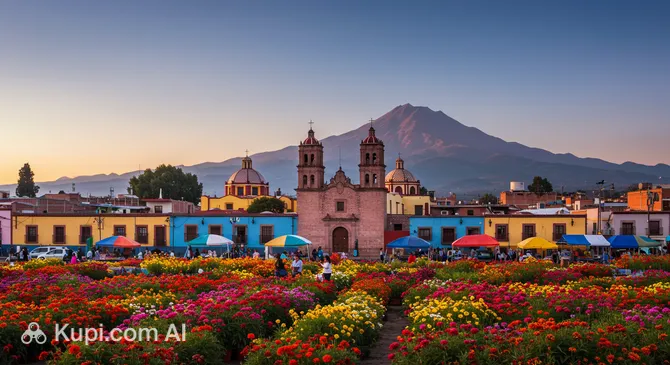
Atlixco has a special, unique atmosphere. Its narrow streets, generously decorated with fresh flowers, colonial architecture, cozy squares, and colorful markets create a sense of non-stop celebration and homey comfort. The city proudly holds the official status of "Pueblo Mágico" (Magical Town), which highlights its cultural and tourism significance for the country. It is an ideal place for those who want to get to know the real Mexican province — leisurely, hospitable, and full of surprises.

Atlixco. Illustration.
Source: Kupi.com AI

Among the key features that attract tourists to Atlixco are its incredible views of the Popocatépetl volcano, the abundance of flowers grown here that decorate the town (it's no wonder Atlixco is often called the "City of Flowers"), and numerous festivals and fairs. The city especially comes alive during holidays, when travelers from all over the world gather here to enjoy delicious food and unique experiences.

If you are looking for a combination of picturesque nature, rich history, local hospitality, and authentic Mexican identity, then Atlixco is undoubtedly worth your attention. It is a place you want to return to again and again to feel the taste of a life filled with colors, aromas, and smiles.

You can find more interesting facts on the Atlixco city history page.

Weather Overview

The weather in Atlixco is characterized by a warm climate throughout the year, with noticeable seasonal fluctuations in precipitation. Average annual temperatures are comfortable, but it's worth considering the difference between the dry and wet seasons when planning a trip.

The warmest months are April and May, with an average temperature of around 19.6-20.0°C and maximum values reaching 26.4°C. The coolest months are December and January, when the average temperature is around 15.0-15.2°C, and the minimum can drop to 8.3°C. Expect a warm summer with frequent rain, especially from June to September, and cooler, drier winters from December to February. The highest amount of precipitation and rainy days occur from June to September, while from December to March, there is practically no rainfall. For more detailed information, you can check the Atlixco climate.

Average monthly temperature

Average monthly precipitation

Interesting Facts

Beyond its picturesque streets and well-known landmarks, Atlixco hides many surprising stories and features that make it a truly unique place. Here are just a few little-known facts about this charming city:

  • Atlixco rightfully holds the proud title of "City of Flowers." Dozens of nurseries are located here, growing not only decorative plants but also fruit trees. Because of this, Atlixco is considered one of the main centers of flower production in all of Mexico, and annual exhibitions and fairs turn the city into a truly fragrant paradise for flora lovers.

  • Every year on the last Sunday of September, Atlixco comes alive with the grand Fiesta Grande (Huey Atlixcayotl) festival. This is not just a holiday, but an important cultural event recognized as part of the heritage of the state of Puebla, which brings together traditional dances, costumed processions, music, and folk festivities, attracting thousands of guests.

  • Although Atlixco was officially founded by Spanish conquistadors in 1579, its history dates back to pre-Hispanic times. There is evidence that peoples connected to the ancient Aztec capital of Tenochtitlan lived in this area. Local legends still preserve the memory of ancient rituals and unusual natural phenomena associated with its proximity to the majestic Popocatépetl volcano.

  • One of the city's iconic spots is the chapel on San Miguel Hill. This location offers not only a breathtaking panoramic view of Atlixco and the Popocatépetl volcano, but local residents are also deeply convinced that this is where you can watch the most beautiful and impressive sunsets in the entire region.

How to Get There

When planning a trip to this colorful Mexican city, it's important to think through your route in advance, as there is no direct air service. You can explore all ways to get to the city on a separate page with detailed instructions. The main flow of tourists arrives through major transport hubs in neighboring metropolises and then transfers to ground transportation.

Atlixco itself does not have its own airport, but travelers can use the air gates of nearby cities. The closest and most convenient option is Huejotzingo Airport (IATA: PBC), located in the city of Puebla. It is just 28 km from Atlixco, and the journey by taxi or rental car will take about 40–60 minutes. This is an excellent choice for those flying on domestic flights or from some US cities.

For most international travelers, the main gateway is Benito Juárez International Airport (IATA: MEX), located in the country's capital, Mexico City. The distance to Atlixco is about 89 km; however, due to heavy traffic and mountainous terrain, travel time can take about 2.5–3 hours. From Mexico City airport, you can reach Atlixco via direct buses from the TAPO bus station or by booking a transfer.

Alternatively, you can consider Felipe Ángeles International Airport (IATA: NLU), which also serves the capital region. It is located in Mexico City, approximately 112 km from the destination. The trip from here will take more than 3 hours, so this option is worth choosing if a flight convenient for you arrives there.

For clarity, here is a summary of the main airports:

AirportPassenger trafficDistance
Huejotzingo Airport790 93128 km
Benito Juarez International Airport45.4 mln89 km
Felipe Angeles International Airport6.3 mln112 km
Toluca International Airport1.7 mln128 km
Veracruz International Airport1.7 mln237 km

Regarding rail transport, there is currently no regular passenger service to Atlixco. There are no active railway stations accepting tourist trains in the city or its surroundings. The primary way to move between cities in this region remains comfortable intercity buses and cars. We recommend using the bus lines connecting Puebla and Mexico City with Atlixco — it's a reliable and budget-friendly travel option.

Main Attractions

Atlixco, known as the "City of Flowers," offers its guests many charming places to visit. This cozy city in the state of Puebla is rich in history, culture, and natural beauty that will leave no traveler indifferent.

One of the main attractions of Atlixco is San Miguel Hill (Cerro de San Miguel). Climbing to its summit, you will be rewarded with breathtaking panoramic views of the city and the surrounding volcanoes, including the majestic Popocatépetl and Iztaccíhuatl. On the hill, there is also a small chapel dedicated to Saint Michael the Archangel, adding a special atmosphere to this place. It is an ideal spot for walking, photography, and enjoying the fresh air.

The heart of the city is undoubtedly its Zócalo, or main square. This lively place is framed by beautiful colonial buildings, including the Municipal Palace (Palacio Municipal) with its characteristic arcades. The square is often decorated with flowers, confirming Atlixco's reputation as a floral capital. It is a pleasant place to spend time watching local life, relaxing on benches, or enjoying a drink at one of the surrounding cafes.

For those interested in history and architecture, a visit to the Former Carmen Monastery (Ex Convento del Carmen) is a must. This impressive 16th-century structure today often functions as a cultural center, hosting exhibitions and various events. The monastery impresses with its well-preserved architecture and allows you to touch the city's colonial past.

One cannot overlook the numerous flower nurseries (Viveros), which gave Atlixco its nickname. Visiting these nurseries is a true immersion into a world of colors and scents. Here you can see a huge variety of flowers and plants, and also buy something as a souvenir. The nurseries are especially impressive during preparations for major festivals, such as the Flower Festival or Villa Iluminada.

Local Cuisine

Atlixco is a true paradise for gourmands, where culinary traditions are carefully preserved and passed down from generation to generation. The city's gastronomic scene will delight you with authentic flavors and the freshest local products. A journey here is an opportunity to dive into the world of Mexico's vibrant tastes.

Be sure to try the famous mole poblano – a complex, rich sauce based on chili, spices, nuts, and sometimes chocolate, traditionally served with chicken or turkey. This dish is the signature of the Puebla region, and in Atlixco, it is prepared in a special way. No less attention should be paid to dishes made from the freshest fruits and vegetables grown in the city's fertile surroundings. In local markets, you will find juicy mangoes, papayas, and avocados, and you can also try unique delicacies such as fried squash blossoms (flor de calabaza).

Street food in Atlixco is a gastronomic adventure in itself. Don't pass by the stalls with fragrant tacos with various fillings, hearty tamales – corn dough with meat or vegetables wrapped in corn husks and steamed, as well as fresh tortillas and various sweets made from cane sugar. To feel the auténtico (authentic) spirit of local cuisine, stop by the central Benito Juárez Market. It is always noisy, colorful, and incredibly delicious – a great place to try local specialties and chat with the residents.

Regarding drinks, it's worth paying attention to traditional Mexican options. Among non-alcoholic ones, the refreshing aguas frescas – natural drinks based on fresh fruits, flowers, seeds, or grains – are very popular. As for alcohol, besides the world-famous tequila and mezcal, you can look for local liqueurs or craft beer offered by small producers.

The food culture in Atlixco is closely linked to markets and street vendors, where you can have a quick and inexpensive bite. Of course, the city also has restaurants offering both traditional and more modern dishes. Throughout the year, various gastronomic festivals also take place in Atlixco, especially during the harvest festival and flower fairs, where local chefs and farmers present their best products and culinary masterpieces.

Travel Tips

Welcome to Atlixco, the charming city of flowers and eternal spring! To make your journey through this picturesque corner of Mexico as comfortable and memorable as possible, we have prepared some practical tips.

  1. Clothing and Essentials by Season: Atlixco enjoys a pleasant moderate climate and is often called the "city of eternal spring." During the day, you will need light, breathable clothing: t-shirts, shorts, light trousers. Evenings can be cool, so bring a light jacket or sweater. Comfortable shoes are a must for walking on cobblestone streets and the surrounding areas. Don't forget sunscreen, a hat, and sunglasses. Mexico uses Type A and B sockets, so take an adapter if necessary. When visiting churches, modest clothing is recommended (shoulders and knees should be covered).
  2. City Transport: Atlixco's historical center is compact enough for walking. For longer trips, you can use local buses (colectivos) – a budget-friendly option. Taxis are also available; it is recommended to agree on the price in advance or ensure the meter is on (if there is one). Ride-hailing apps may have limited coverage, so check their availability. Renting a car can be useful if you plan to actively explore the Puebla region, but keep in mind that parking in the city center can be difficult.
  3. Finances and Tipping: The local currency is the Mexican Peso (MXN). It's best to exchange some money upon arrival or withdraw cash from ATMs, which are quite common. Credit and debit cards are accepted in many hotels, restaurants, and large stores, but it's always useful to have cash for small establishments and markets. International cards usually work, but don't forget to notify your bank about your trip. An approximate daily budget can be 800-1500 MXN, depending on your habits. Tipping (propina) is a common practice: 10-15% in restaurants, and small amounts for hotel staff and other service providers.
  4. Health and Safety: Pharmacies (farmacias) are frequent, some are open 24/7 or have a doctor for minor consultations. For serious health issues, there are large hospitals in the neighboring city of Puebla. Atlixco is generally considered a safe city, especially in tourist zones during the day. Nevertheless, always be aware of your surroundings, avoid poorly lit areas at night, and keep your valuables secure. It is recommended to drink bottled water.
  5. Language and Connectivity: The official language is Spanish. While some in the tourism sector may speak English, knowing basic Spanish phrases will significantly improve your interaction experience. Consider buying a local SIM card (e.g., Telcel, AT&T Mexico) for mobile internet and local calls; these can be purchased at OXXO stores or mobile shops. Wi-Fi is common in hotels and many cafes. Useful apps: Google Maps, Spanish translator.
  6. Local Etiquette: A friendly greeting like "Buenos días" (good morning), "Buenas tardes" (good afternoon/evening), or just "Hola" (hi) will be appreciated. Mexicans are generally polite and friendly. When entering a shop, it's customary to greet the staff. Eye contact during conversation is considered the norm.
  7. What to Avoid: It is categorically not recommended to drink tap water. Also, try not to display overly expensive jewelry or electronics, especially in crowded places, to avoid attracting unnecessary attention.
  8. Extra Tip: Atlixco is famous for its floriculture and numerous nurseries (viveros). Be sure to plan a visit to one of the flower farms, especially if your trip coincides with the "Villa Iluminada" festival (November-January) or the "Huey Atlixcayotl" cultural festival (late September). And of course, don't miss the chance to try local cecina (cured salted meat) – it's a regional delicacy.

We hope these tips help you enjoy every moment in Atlixco, discovering its colorful streets, hospitable residents, and unique atmosphere. ¡Buen viaje!

Entertainment & Nightlife

When the sun sets over picturesque Atlixco, the city doesn't go to sleep but transforms, offering guests and residents various opportunities for evening relaxation. While Atlixco is primarily famous for its daytime beauty, flower carpets, and the famous Villa Iluminada festival, its nightlife possesses a special, cozy, and authentic Mexican charm.

The main center of evening entertainment is traditionally the central square, the Zócalo, and its surrounding colorful streets. At dusk, the atmosphere here livens up: locals and tourists come out for a stroll, and appetizing aromas waft from numerous restaurants. Many establishments offer tables on outdoor terraces, where it is so pleasant to spend the evening enjoying the cool air and the city's slow pace. These restaurants often stay open late, allowing you to enjoy dinner without rushing.

Regarding bars and clubs, Atlixco offers intimate and soulful venues rather than large and noisy night discos. Here you will find traditional cantinas – classic Mexican bars, such as "Cantina El Recreo" or "La Vaquita Negra", where you can try tequila, mezcal, local beer, and various snacks (botanas) in a relaxed, often very colorful setting. Small bars are also popular, for example, "Bar Don Roque", where you can hear live music on weekends – from mariachi to modern Latin American rhythms. Some restaurants also transform late at night, offering a bar menu and musical accompaniment. For craft beer connoisseurs, look for places called "cervecería artesanal," where you can taste local varieties. While there are no large-scale concert venues in the city, some cultural centers or bars may organize performances by local musical groups, creating a cozy atmosphere for evening leisure. Night markets are not a typical daily occurrence in Atlixco, but during major festivals like Villa Iluminada, temporary stalls with food, drinks, and souvenirs may appear, operating into the evening.

The atmosphere in most of Atlixco's evening venues is friendly and relaxed. The crowd is usually mixed – both locals of all ages and tourists wanting to experience the local flavor. The dress code is generally casual, though a neater style of dress might be appropriate for some more elegant restaurants or bars with a touch of sophistication.

Practical tips for a night out in Atlixco: Evening life usually picks up speed a bit later; the buzz starts closer to 9:00 PM - 10:00 PM, especially on Fridays and Saturdays. Prices in Atlixco's bars and restaurants are generally quite moderate compared to large tourist centers in Mexico. Getting around the city center at night, especially around the Zócalo, is quite comfortable on foot. If you plan to visit venues on the outskirts or return late, it is recommended to use taxi services. Try to use official taxis or call a car through well-known apps if they are available in the city.

Safety: Central areas of Atlixco, especially around the Zócalo and well-lit streets, are considered quite safe for evening walks. Nevertheless, you should always observe standard precautions: keep a close eye on your personal belongings and avoid poorly lit and deserted alleys, especially if traveling alone.

During the day, Atlixco offers just as much charm. The city is famous for its flower nurseries and incredible flower carpets, which are particularly impressive during festivals. Be sure to visit the historical churches with their unique architecture, stroll through well-kept parks like the central park by the Zócalo, which is a popular relaxation spot. Stop by the local market to buy authentic souvenirs, fresh fruit, and local delicacies. Although there aren't many large museums in Atlixco, its rich cultural heritage is felt in every corner, in its architecture and traditions. As for theaters, cultural events and plays periodically take place in local community centers or at open-air venues during festivals, though there may not be a permanent large theatrical repertoire. For family holidays with children, the city has well-equipped park areas with playgrounds; specialized amusement parks are more typical of larger cities, but during holidays, temporary attractions may appear in Atlixco.
Parks & Museums

Atlixco, known as the "city of flowers," invites its guests to enjoy not only picturesque green spots but also to get acquainted with its rich cultural heritage through local museums and historical monuments.

One of the city's main green jewels is Cerro de San Miguel. This hill not only offers breathtaking panoramic views of the city and surrounding volcanoes, including Popocatépetl, but is also the venue for the famous Huey Atlixcayotl festival. Well-kept relaxation zones are often located at its foot or on its slopes. A walk through the central Zócalo (Plaza de Armas) is a must; like many Mexican cities, it is lush with greenery and flowers, offering a pleasant place to rest and observe city life. Another noteworthy spot is Ahuehuete Park (Parque Ahuehuete), famous for its ancient and mighty ahuehuete tree, creating a special atmosphere for walks and solitude.

To immerse yourself in the region's history and culture, it's worth visiting the Atlixco Museum (Museo de Atlixco), which is often located in the historical building of a former monastery, such as the Ex Convento del Carmen. Here you can learn about the city's past and its significance. Art lovers might be interested in the Municipal Pinacotheca (Pinacoteca Municipal), which exhibits works by local artists. Given the city's floral fame, it's no surprise that you can find something unique here, such as the John Yoshio Naka Bonsai Museum (Museo del Bonsái John Yoshio Naka), which reflects the refined art of growing miniature trees and is one of the city's iconic attractions.

In addition to museums, the historical center of Atlixco itself is a true open-air museum. Stroll along its cobblestone streets, admiring the colonial architecture and bright building facades. Special attention should be paid to the numerous churches, such as the La Merced Church (Templo de la Merced) with its impressive Baroque facade, or the Parish Church of Santa María de la Natividad (Parroquia de Santa María de la Natividad) on the main square. These structures are not only active religious centers but also important architectural monuments.

For a truly authentic experience, stop by one of the numerous viveros (flower nurseries) that Atlixco is so famous for, especially on the outskirts of the city. There you can not only purchase unique plants at attractive prices but also simply enjoy the riot of colors and aromas. Also, look out for local markets where you can try regional delicacies and dive into the daily life of the townspeople.

Getting Around

Getting around Atlixco and its surroundings is possible via public transport, which consists mainly of buses and shuttle taxis, known here as "combis" or "colectivos." These small minibuses run on set routes, connecting the city center with various neighborhoods and nearby settlements. Buses usually serve longer routes and can be convenient for trips to neighboring towns.

The fare payment system in Atlixco is quite simple. As a rule, payment is made in cash directly to the driver upon boarding. Fares are usually low but can vary depending on the distance. There are generally no specialized travel cards or mobile apps for paying for local public transport. It is recommended to have small change for convenience.

To use a bus or "combi," just go to a stop (though they often stop with a wave of a hand along the route) and check the direction with the driver. Public transport usually starts operating early in the morning and ends in the evening, though the exact schedule may vary by route. During peak hours, transport can be crowded. For route and stop clarification, it's best to orient yourself on the spot or ask local residents.

Taxis serve as an alternative to public transport. They can be found at designated stands or called by phone. The cost of a taxi ride is naturally higher, but it is a more comfortable and faster way to reach your destination, especially if you are traveling with luggage or in a group. In the central part of Atlixco, many attractions are within walking distance, making strolling a pleasant way to get to know the city.

Accommodation

Staying in Atlixco is an opportunity to extend your encounter with the magic of this "City of Flowers" and enjoy its unique colonial atmosphere. Accommodation options here are varied and can satisfy travelers with different preferences and budgets. Unlike large metropolises with characterless high-rises, the local hotel stock is predominantly represented by atmospheric places with character.

The core of the offerings consists of boutique hotels and traditional Mexican posadas (small family-run inns). Many of them are located in restored old mansions with courtyards, fountains, and lush gardens, allowing you to feel the spirit of old Mexico. For those seeking maximum comfort and privacy, luxurious hacienda hotels are available on the outskirts, offering spa services and large pools, which is particularly relevant thanks to the region's warm climate. Budget travelers will easily find neat hostels or inexpensive guesthouses.

When choosing an area to stay, you should be guided by your travel goals:

  • Historical Center (Centro Histórico): The most popular choice. By staying here, you will be within walking distance of the main Zócalo square, restaurants, and major attractions. This is an ideal option for those who want to be in the heart of the action and enjoy evening walks through illuminated streets.
  • City Outskirts: If you are traveling by car or looking for relaxation, look at hotels located slightly further from the center. Here you will often find more spacious complexes with large gardens and views of the Popocatépetl volcano.

Booking tip: Atlixco is a popular holiday destination for residents of neighboring large cities, so demand for accommodation rises sharply on weekends. Special attention should be paid to planning a trip during the famous Villa Iluminada festival, which takes place from mid-November to early January. At this time, the city transforms into a light-filled fairy tale, and hotel rooms are booked several months in advance. We strongly recommend taking care of accommodation early if you plan to visit during this period.

The price range in Atlixco can be characterized as moderate. You can find decent lodging at very affordable prices, though the cost of staying in exclusive boutique hotels will match the high level of service. You can book accommodation through popular international online platforms, but many small authentic hotels also take bookings directly through their websites or social media, sometimes offering better terms.

Nearby Cities

For those who want to explore the surrounding area, Atlixco serves as an excellent starting point for day trips to several interesting nearby locations:

CityPopulationDistance
San Gregorio Atzompa9 67115 km
San Nicolas de los Ranchos11 73418 km
Huaquechula26 11420 km
Cholula129 03221 km
Huejotzingo25 68427 km

These nearby destinations provide insight into the region's diverse culture and landscapes, offering interesting options for short trips and expanding your travel experience in Mexico.

Shopping & Souvenirs

Atlixco, known as the "City of Flowers," offers unique shopping opportunities, especially if you are looking for authentic Mexican goods and souvenirs. You won't find huge modern malls here as you would in major metropolises, but the charm of the local shops and markets more than makes up for it. The city is famous for its flowers, handmade crafts, and regional products.

The main shopping spots are concentrated around the central square, or Zócalo, and on its adjacent streets. Strolling through the historical center, you will discover many small shops and stores offering ceramics, textiles, jewelry, and, of course, everything related to flowers. This is where you can feel the slow pace of local trade and find something truly special.

Large shopping centers in the European sense are not as common in Atlixco. Shopping here is more like an immersion into local culture through visits to traditional stores and markets. However, you can find supermarkets and some chain stores for daily needs on the outskirts of the city or along main transport arteries.

Special attention should be given to local markets. The Municipal Market (Mercado Municipal) is the heart of the city, where you can buy fresh fruits, vegetables, spices, local cheeses, and sweets, as well as inexpensive household items. Often, markets also have sections with artisanal crafts and souvenirs. Visiting the market is an excellent way to get to know local gastronomy and the daily life of the residents.

Souvenirs reflecting Atlixco's uniqueness are worth bringing home. Look out for:

  • Flower-themed items: embroidery, ceramics, paintings, and jewelry inspired by the region's rich flora.
  • Talavera: traditional painted ceramics from the Puebla region, which includes Atlixco. These can be plates, vases, or tiles.
  • Textiles: bright shawls (rebozos), tablecloths, and clothing with traditional embroidery.
  • Local sweets (dulces): for example, preserved fruits, jams, or candies based on local ingredients.
  • Flower seeds or saplings: if export rules allow, these will be a living reminder of the "City of Flowers."

Shops in Atlixco are usually open from 9:00-10:00 AM to 7:00-8:00 PM, and many may close for a lunch break (siesta) from approximately 2:00 PM to 4:00 PM. Markets start operating early in the morning. In tourist areas and large stores, credit cards are often accepted, but in markets and small shops, it's better to carry cash in Mexican Pesos (MXN). ATMs are available in the city center.

In Mexico, there is a VAT refund system (called IVA here) for foreign tourists on certain goods purchased in shops participating in the Tax Free program. Usually, this requires a minimum purchase amount and completing special documents in the shop. The tax refund is processed at the airport when departing the country. Check details with the sellers and keep your receipts.

Nearby cities

Reached the end of the page?

That means the route is fully explored