Support

Chalma

About

Chalma is a charming town nestled in the picturesque mountains of the State of Mexico, in the heart of Mexico. Located approximately 90 kilometers southwest of Mexico City, the town lies in a valley surrounded by dense forests and steep slopes, creating a unique atmosphere of seclusion and peace. The air here seems permeated with the spirit of ancient traditions and Mexican hospitality.

With a population of about 13,500, Chalma retains the charm of a small provincial town where life flows at a measured and leisurely pace. Thanks to its mountain location, the town is famous for its mild climate and breathtaking views, which are especially impressive at sunrise and sunset.
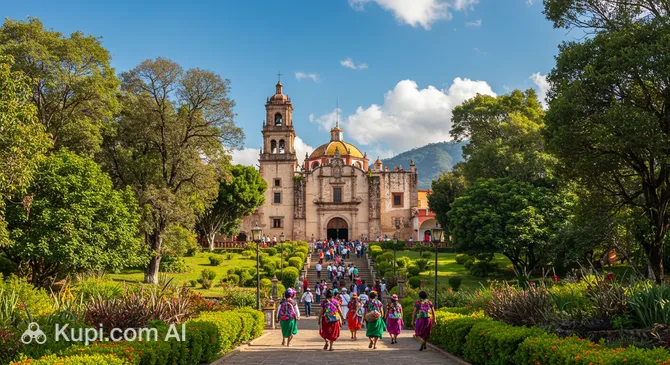
Chalma. Illustration.
Source: Kupi.com AI

Despite its modest size, Chalma is of immense importance as one of the country's most significant religious centers. The main point of attraction for pilgrims and tourists is the famous Santuario del Señor de Chalma (Sanctuary of the Lord of Chalma), known for its stories of miracles. Beyond its spiritual component, the town attracts nature lovers with its scenic surroundings, offering opportunities for walks and enjoying the beauty of the Mexican mountains.

Chalma is an ideal destination for those seeking an authentic experience, wishing to delve deeper into the country's rich culture, and enjoying natural beauty away from the urban hustle and bustle. A visit to Chalma will give you unforgettable impressions and a sense of touching the true spirit of this amazing corner of the world.

You can find more interesting facts on the history of Chalma page.

Weather Overview

When planning a trip to Chalma, expect a warm climate throughout the year. Summer (June-September) here is warm, with average temperatures around 19-20°C, and quite humid with frequent rains. Winters (November-February) are mild and significantly drier, with average temperatures in the 15-17°C range and minimal precipitation. The hottest months are April and May, when the thermometer can rise to 28°C, and the average temperature reaches 21°C. To learn more about the weather in Chalma by month, visit the Chalma Climate page.

Average monthly temperature

Average monthly precipitation

Interesting Facts

Besides its fame as a major religious center, Chalma hides many amazing stories and traditions that make this town truly unique. Here are just a few of them:

  • At the site of the famous Sanctuary of the Holy Lord of Chalma (Señor de Chalma), there was once a shrine of ancient peoples. According to legend, a miracle occurred here in the 16th century: a pagan idol disappeared, and in its place, the image of the crucified Christ miraculously appeared, which began the veneration of this site and symbolized the fusion of pre-Hispanic beliefs with Catholicism.

  • One of the most vivid and unique traditions associated with the pilgrimage to Chalma is the ritual bathing in the local river or spring before visiting the shrine. This water is believed to have purifying power, and the custom itself has roots in pre-colonial times.

  • The annual pilgrimages to Chalma are striking in their scale and the dedication of the faithful. Many cover dozens or even hundreds of kilometers on foot, often barefoot, to express their faith and gratitude at the shrine. These colorful processions are an integral part of the city's cultural life.

  • Ancient legends still swirl around Chalma. It is said that the spirits of ancestors dwell in the surrounding caves, and local shamans to this day may perform special rituals in which the beliefs of ancient civilizations and Christian rites are curiously intertwined.

How to Get There

The most convenient way to reach the town of Chalma is by air, although the town itself does not have its own airport. The nearest air harbors are located in Mexico City and its surroundings, from where you can continue your journey by land transport.

One of the main options for international and domestic flights is Benito Juárez International Airport (MEX), located in Mexico City. This is the largest airport in the country, situated about 67.7 km from Chalma. A taxi or bus ride from here to Chalma usually takes between 1 hour 50 minutes and 2 hours 20 minutes, depending on traffic conditions.

Closest to Chalma is Toluca International Airport (TLC), which also serves the capital region and is located about 46.9 km away. Although it is smaller than MEX, it can be a convenient alternative, especially for some domestic flights. The journey to Chalma from here will take about 1 hour 15 minutes to 1 hour 40 minutes.

Another major airport in the capital region is Felipe Ángeles International Airport (NLU). It is located at a distance of about 101.4 km from Chalma, and travel time by car is approximately 2 hours 30 minutes to 3 hours.

For convenience, here is a summary of the main airports through which you can reach Chalma:

AirportPassenger trafficDistance
Toluca International Airport1.7 mln47 km
Benito Juarez International Airport45.4 mln68 km
Felipe Angeles International Airport6.3 mln101 km
Huejotzingo Airport790 931115 km
Morelia Airport1.4 mln195 km

After arriving at one of the airports, the further journey to Chalma usually continues by road. You can use taxi services, book a transfer, or rent a car. Buses also run regularly from Mexico City and other nearby cities to Chalma, which is a more economical option.

There is no direct rail connection to Chalma. Travelers planning to use trains for part of their route through Mexico will need to reach the nearest major rail hubs, such as Mexico City, and from there transfer to a bus or taxi to Chalma.

Main Attractions

Chalma, located in the picturesque foothills of Mexico, is one of the country's most significant and visited pilgrimage centers. This small town draws believers and curious travelers alike with its unique atmosphere and shrines whose history stretches back centuries.

The crown jewel of the town is undoubtedly the Sanctuary of Chalma (Santuario de Chalma). This majestic temple is dedicated to the image of the Lord of Chalma (Señor de Chalma), a miraculous crucifix that, according to legend, appeared in a cave where a pre-Hispanic deity was previously worshiped. Every year, millions of pilgrims come here to offer prayers, ask for mercy, or give thanks for answered requests. The architecture of the complex, which has evolved over centuries, impresses with its decoration and scale, creating a special space for spiritual experiences.

An integral part of a pilgrimage to Chalma is visiting El Ahuehuete — a sacred tree and spring located near the sanctuary. It is believed that the waters of this spring possess healing properties, and many pilgrims perform a ritual cleansing here before entering the temple. The ancient cypress tree, which gives the place its name, is itself an object of veneration and creates a peaceful atmosphere.

In addition to religious shrines, Chalma is interesting for its authentic atmosphere as a pilgrimage town. The streets are filled with vendors offering religious items, souvenirs, local sweets, and traditional dishes. Here, you can feel the deep devotion of the faithful, see colorful processions (especially during major religious holidays), and touch a living culture that has formed around this holy place for centuries. A stroll through the town allows for a deeper understanding of Chalma's significance in Mexico's spiritual life.

Local Cuisine

The cuisine of Chalma is a true immersion into the authentic gastronomic traditions of Mexico. Every gourmet will find dishes to their liking here, prepared according to ancient recipes using the freshest local products. The town's gastronomic scene will delight you with a variety of flavors and aromas, from hearty main courses to refreshing drinks and sweet treats.

Be sure to try dishes based on corn — the queen of Mexican cuisine. Fresh tortillas, fragrant tamales with various fillings (from meat to vegetable), and different variations of enchiladas under savory sauces will not leave you indifferent. Special attention should be paid to mole — a complex and rich sauce made from cocoa, chili peppers, and many spices, traditionally served with chicken or turkey. This dish is a hallmark of the region and reflects the full depth of the local culinary culture.

Street food in Chalma is an attraction in its own right. Strolling through the town, you will encounter many stalls offering mouth-watering snacks. Don't deny yourself the pleasure of trying grilled corn on a stick sprinkled with cheese and spices, or crispy sweet churros, which pair perfectly with hot chocolate. Among drinks, atole is worth noting — a traditional hot drink made from corn flour, often with the addition of cinnamon, vanilla, or chocolate, especially popular in the mornings. On a hot day, agua fresca — a light drink based on fresh fruits, flowers, or seeds — is perfectly refreshing.

Locals and tourists enjoy food in a variety of places: from bustling street stalls and morning markets, where you can taste the freshest produce and traditional breakfasts, to cozy family cafes and small restaurants offering home-cooked meals. It is in such establishments that you can fully feel the hospitality of Chalma and try dishes prepared with love. In spring and summer, gastronomic festivals take place in Chalma, filling the town with the aromas of fresh tortillas, grilled meat, and sweet treats. These festivals of taste are a great opportunity not only to enjoy local delicacies but also to see traditional dances and folk celebrations. All year round, you can also enjoy an abundance of fresh fruits such as mango, papaya, and guava.

Travel Tips

Welcome to Chalma! This town is a special place in Mexico, known for its ancient sanctuary and spiritual atmosphere. To ensure your trip goes smoothly and leaves only pleasant impressions, we have prepared some practical tips.

  1. Clothing and Essentials: Chalma is an important pilgrimage site, so when visiting churches and holy places, especially the Santuario del Señor de Chalma, choose modest clothing that covers your shoulders and knees. Be sure to bring comfortable walking shoes, as the terrain can be hilly and you will be walking a lot. The climate in the region is usually warm, so light clothing is suitable, but don't forget a sweater or light jacket for the evening. You may also need sunscreen, a hat, and a power adapter (types A and B outlets are used in Mexico).
  2. Getting Around Town: In Chalma itself, especially around the shrines, it is most convenient to move around on foot. For longer trips or if you are staying on the outskirts, you can use local taxis or shared taxis (colectivos). Renting a car might be unnecessary for getting around the town itself due to narrow streets and large numbers of pilgrims on certain days, but it can be useful if you plan to explore the surroundings.
  3. Finances and Currency: The official currency in Mexico is the Mexican Peso (MXN). We recommend carrying enough cash, especially for small purchases at markets, paying for street food, and in small shops where cards may not be accepted. ATMs (cajeros automáticos) are available in Chalma, but it is better to withdraw money beforehand in a larger city or be prepared for potential queues. Credit and debit cards are accepted in some hotels and restaurants, but do not rely on them entirely. Tipping (propina) of 10-15% of the bill in restaurants is common practice.
  4. Health and Safety: There are pharmacies (farmacias) in Chalma, but their selection and hours may be limited. Bring a first-aid kit with basic medications. It is recommended to drink only bottled water. Chalma is generally considered a safe place for tourists, especially during the day and in pilgrimage zones. However, as with anywhere, observe basic precautions: keep an eye on your belongings, do not leave valuables unattended, and avoid walking in poorly lit areas after dark.
  5. Language and Communication: The primary language is Spanish. English proficiency among the local population may be low, especially outside the tourist infrastructure. Learn a few basic phrases in Spanish (e.g., "Hola" – hello, "Gracias" – thank you, "¿Cuánto cuesta?" – how much does it cost?); this will significantly facilitate your communication. Mobile service and internet are available; a local SIM card can be purchased in larger cities. Wi-Fi is usually available in hotels and some cafes.
  6. Local Etiquette and Traditions: Show respect for the religious feelings of pilgrims and local traditions, especially when visiting holy sites. It is customary to greet people ("Buenos días" – good morning, "Buenas tardes" – good afternoon/evening). If you want to photograph locals, it is best to ask permission. Mexicans are usually very friendly and helpful; don't hesitate to ask for help if needed.
  7. What to Avoid: Refrain from loud conversations and boisterous behavior in churches and on the sanctuary grounds. Do not drink tap water. It is also not advisable to openly display expensive jewelry or large sums of money to avoid attracting unnecessary attention.

We hope these tips help you better prepare for your trip and enjoy every moment of your stay in amazing Chalma. We wish you an unforgettable and spiritually uplifting journey!

Entertainment & Nightlife

Chalma, known as a spiritual center of Mexico, offers its guests a very special atmosphere for evening pastimes, which differs dramatically from the bustling nightlife of large cities. Instead of noisy parties and trendy clubs, tranquility and peace reign here, perfect for reflection and quiet rest after a busy day of pilgrimage or exploration.

If you are looking for lively bars or nightclubs, Chalma is not quite the place. There are no specialized quarters or streets known for their vibrant nightlife. In keeping with its status as an important pilgrimage site, the town sinks into a calm, almost meditative atmosphere after sunset. It is worth noting that there is no information in available data regarding specific bars, nightclubs, or restaurants operating late into the night and specializing in nighttime entertainment. This further emphasizes the peaceful character of Chalma.

Evening entertainment in Chalma focuses on leisurely walks along the lit streets and dining in local small restaurants and cafes. Many of them offer traditional Mexican cuisine and are open until evening, allowing you to enjoy a meal in a cozy, often family-oriented and hospitable setting. Strict dress codes are not common here. Most evening activity is concentrated around the central square and the approaches to the shrines, where you can meet both locals and visitors.

When planning an evening in Chalma, it is best to aim for an early dinner and quiet walks. The town is generally safe, especially in the central areas, but as with any trip, standard precautions should be observed. Getting around in the evening is comfortable on foot, as Chalma is small. If you need a taxi, it is recommended to arrange a trip in advance or ask your hotel staff for help, as finding a car late at night on the street can be difficult.

Thus, Chalma is not a place to seek out trendy nightclubs or noisy bars with loud music. Such establishments practically do not exist here. Instead, evening leisure is focused on socializing, enjoying local cuisine, or simply contemplating the starry sky in the silence of this holy place. If you are looking for exactly this type of peaceful rest, Chalma will not disappoint you.

During the day, Chalma offers unique experiences. The main point of attraction is certainly the famous Sanctuary of the Lord of Chalma (Santuario del Señor de Chalma), where believers flock from all over the country. The town's surroundings are also picturesque and offer opportunities for nature walks, enjoying the beauty of the State of Mexico region. Although there are no large theaters, museums, or amusement parks in the traditional sense, the very atmosphere of the town, its history, and cultural significance are the main "entertainment" and source of impressions.

Parks & Museums

Chalma invites visitors to experience a unique blend of spiritual heritage and natural beauty, offering something more than just a place of pilgrimage. The town and its surroundings are rich in both peaceful green zones and sites that preserve centuries of history and culture.

While Chalma may not have large official city parks, its natural surroundings provide many green corners for rest and contemplation. One of the iconic spots is the area around the sacred Ahuehuete tree, from whose roots a spring flows. This revered site, closely linked to the town's origins and spiritual life, offers visitors a calm atmosphere for reflection. The Chalma River, flowing nearby, and its banks can also be a pleasant place for a peaceful walk, allowing you to connect with local nature. The lush green hills and mountains of the State of Mexico surrounding the town create a picturesque backdrop and are ideal for those who appreciate beautiful landscapes and a sense of seclusion.

The heart of Chalma's cultural and historical heritage is undoubtedly the Santuario del Señor de Chalma (Sanctuary of the Lord of Chalma). This major pilgrimage site is not just a church, but a kind of living museum, demonstrating centuries of faith through its architecture, religious art, rich decoration, and extensive collection of ex-votos (votive offerings) left by pilgrims, telling countless personal stories. A visit to the sanctuary provides deep insight into local traditions and beliefs. The historical Augustinian Monastery (Convento Agustino), adjoining or part of the main temple complex, testifies to early evangelization efforts in the region. Its architecture and historical significance make it a key site for those who want to better understand Chalma's history. While there may be few large independent museums in town, the very atmosphere of Chalma, with its lively pilgrim culture, craft shops selling religious iconography and local crafts, and its spirit of devotion, provides a rich, immersive cultural experience.

For a more authentic experience, try to visit Chalma on weekdays to avoid large crowds. Don't miss the chance to observe traditional dances that are sometimes performed in the sanctuary's atrium — this colorful spectacle allows you to touch the local culture. Also, a walk through the local market can introduce you to unique souvenirs and folk crafts.

Getting Around

Public transport in Chalma, given the size of the town and its status as an important pilgrimage center, is primarily represented by local buses and shared taxis, known as "colectivos." These modes of transport connect various parts of the town and provide communication with nearby settlements. There are no metros, trams, or trolleybuses in Chalma, which is typical for towns of this size.

The payment system in Chalma is quite simple. As a rule, payment is made in cash directly to the driver upon entering the bus or colectivo. It is recommended to carry small bills and coins of the local currency, as drivers may not always have change for large banknotes. Specialized transit cards or mobile apps for payment are not common here. The cost of a trip depends on the distance but generally remains affordable.

For tourists, it is important to know that tickets are usually not issued; the act of payment itself confirms your right to travel. Buses and colectivos run along specific routes, but stops are not always clearly marked — sometimes the transport stops on demand (simply signal the driver). Operating hours of public transport may be limited, especially in the evening and on days when there is no large influx of pilgrims. Therefore, it is always useful to check schedules and routes with locals or drivers.

In addition to public transport, taxi services are available in Chalma. This is a convenient option for trips on an individual route, with luggage, or late at night. It is better to agree on the cost of a taxi ride with the driver in advance, especially if there is no meter in the car or you are unsure of standard rates. Given the compactness of the central part of the town, many distances, especially around the shrines, can be easily covered on foot. Car-sharing services or developed bike rental systems are generally absent in Chalma.

A feature of Chalma's transport system is its focus on serving pilgrims arriving at the famous sanctuary. Public transport routes often pass by key religious sites and accommodation for visitors. If you plan to visit the sanctuary or other important locations, buses and colectivos can be a convenient and inexpensive way to get around. During major religious holidays, traffic intensity may increase, but the number of passengers also rises.

Accommodation

When planning a trip to Chalma, you will find accommodation options primarily geared toward pilgrims and tourists visiting the shrines. The town offers housing for various budgets, although luxury resorts are generally not found here. The main choice consists of small hotels, guest houses (posadas), and rooms for rent from local residents.

Most accommodation options are concentrated near the main shrine — the Sanctuary of the Lord of Chalma — which is very convenient for pilgrims. Housing can also be found along the main streets leading to the temple complex. When choosing a place to stay, note the proximity to the market and bus stop if you plan to move around actively.

Modest and functional hotels offering basic amenities predominate in Chalma. Expect an authentic local experience rather than standard hotel chains. The price range varies from very budget-friendly options to mid-range. Popular online platforms can be used for searching and booking, though some small family-run establishments may take bookings by phone or even offer rooms upon arrival, especially during the off-peak season.

Booking tip: Chalma is a major pilgrimage center, especially during religious holidays (e.g., Lent, Christmas, feast days of saints). During these periods, the number of visitors increases sharply, so it is highly recommended to book accommodation well in advance to ensure a comfortable stay and avoid inflated prices or a lack of available rooms.

Nearby Cities

For those who want to explore the surroundings, Chalma serves as an excellent starting point for day trips to several interesting nearby locations:

CityPopulationDistance
Ocuilan de Arteaga34 4855 km
Malinalco22 9706 km
Tenancingo90 94617 km
Joquicingo11 04217 km
Miacatlan26 71320 km

Here is why these cities might be interesting for a day trip:

Cuernavaca, the "City of Eternal Spring," beckons with its mild climate and rich historical heritage. Here you can visit the famous Palace of Cortés, stroll through the picturesque Borda Garden, and enjoy the atmosphere of colonial streets.

Jiutepec is an opportunity to dive into authentic Mexican culture, especially during its colorful carnivals. The city is also interesting for its local traditions, churches, and the chance to try regional cuisine.

Temixco offers a combination of history and relaxation. Here you can explore former haciendas, some of which have been converted into recreational areas, or simply enjoy the calm atmosphere of a small Mexican town.

Tenancingo is famous as a center for the production of traditional Mexican shawls — rebozos. Be sure to visit the local market, especially the flower market, and climb up to the Cristo Rey monument, which offers magnificent panoramic views.

Santiago Tianguistenco attracts travelers with its huge and lively weekly market (tianguis), one of the most traditional in the region. It is the perfect place to get to know local flavor, purchase handicrafts, and try street food.

These nearby destinations provide insight into the diverse culture and landscapes of the region. Each trip promises new discoveries and impressions, complementing your journey to Chalma.

Shopping & Souvenirs

Shopping in Chalma is closely tied to its status as an important pilgrimage center of Mexico. Here you won't find large shopping complexes or boutiques of famous brands. Instead, the town offers a unique assortment of goods primarily oriented toward pilgrims and tourists interested in religious paraphernalia and local crafts. Most trade is concentrated around the shrines and on the streets leading to them.

The main shopping arteries of Chalma are the streets adjacent to the sanctuary of Señor de Chalma, as well as the squares and passages around it. This is where most shops, stalls, and street vendors are located. The atmosphere here is lively, especially during major religious holidays and on weekends when the town hosts thousands of pilgrims.

Chalma lacks large modern shopping centers in the conventional sense. Shopping here is more traditional, with an emphasis on small family shops and market rows.

While Chalma may not have a single designated central market, the entire area around the main sanctuary often resembles one large, bustling market. Here you can find many kiosks and stalls offering a wide range of goods: from religious items and candles to local sweets, drinks, and prepared food. It is a great place to immerse yourself in the local atmosphere and find authentic products.

The main souvenirs from Chalma are certainly religious items: icons, statues of saints (especially Señor de Chalma), crosses, rosaries, and blessed candles. Various amulets and charms are also popular. Besides this, you can look for works by local artisans, such as small ceramic items or textiles, if available. Don't forget to try and bring back local sweets and traditional treats, which are often sold at street stalls.

Shops and stalls in Chalma, especially those near the shrines, generally open early in the morning and work until late in the evening to serve pilgrims. Operating hours may be longer on weekends and holidays. The primary method of payment, especially in markets and small shops, is cash (Mexican pesos). The ability to pay by bank card may be limited, so it is recommended to have a sufficient amount of cash with you.

The Tax-Free system in Chalma is likely not prevalent, as it is usually applied in large stores targeting international tourists who purchase goods over a certain amount. Trade in Chalma is mainly represented by small private stalls and market vendors who typically do not participate in this program.

Reached the end of the page?

That means the route is fully explored