Support

Puente de Ovando

About

The Ovando Bridge (Puente de Ovando) is a picturesque historic stone bridge located in the city of Puebla, one of the cultural centers of Mexico. This small but significant bridge spans a river in the historic Barrio de Analco and is a fine example of colonial architecture.
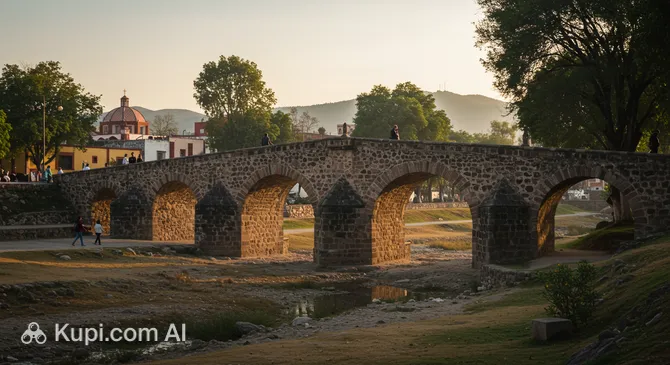
Puente de Ovando. Illustration.
Source: Kupi.com AI

Traveler photos:

As one of Puebla's recognizable symbols, the Ovando Bridge holds the status of an important historical monument. It doesn't just connect the banks; it holds many city stories and legends, reflecting the rich cultural heritage of this wonderful Mexican city. Walking across or near it allows you to feel the spirit of the past.

The bridge was named after counselor Agustín de Ovando y Villavicencio, whose house was located nearby. Today, the Ovando Bridge attracts those interested in history and architecture, offering a glimpse into the past and a chance to enjoy the atmosphere of old Puebla. This is a place that is definitely worth including in your itinerary when visiting the city.

Contacts

Since the Ovando Bridge is a historical site and a public space, it does not have specific contact details. For more information about visiting the bridge and other attractions in Puebla, we recommend contacting the city's tourist information center or visiting the official Puebla tourism website. There, you can find up-to-date information to plan your visit.

How to contactContact
Addressesq. Boulevard Héroes del 5 de Mayo, Calle 3 Ote. 801, De Analco, 72500 Heroica Puebla de Zaragoza, Pue., Mexico

What to Do

The Ovando Bridge attracts travelers interested in the history and architecture of Mexico's colonial period. The main activity here is, of course, a leisurely walk across the bridge and its surroundings. Crossing the bridge, you can fully enjoy the atmosphere of the old Barrio de Analco, feel its historical spirit, and take wonderful souvenir photos. It's a great opportunity to take a break from the city bustle and immerse yourself in the past.

Seeing the Ovando Bridge is easy to combine with exploring other treasures of Puebla. Very nearby is the city's historic center, which is rightfully included on the UNESCO World Heritage list. Here, numerous colonial buildings with their unique architecture, majestic churches, and other architectural monuments await you, telling the story of this amazing Mexican city's rich past.

Not far from the bridge is the famous Avenida 3 Oriente—one of the most important historical streets in Puebla. A stroll along it will give you the chance to dive into the city's daily life, browse local shops and craft workshops, and perhaps buy authentic souvenirs or handmade items by local artisans as a memento of your trip.

Getting There

Getting to the city of Puebla, where the Ovando Bridge is located, is relatively easy, especially if you are starting your journey from Mexico's capital, Mexico City. Puebla is situated about 130 kilometers southeast of Mexico City, and this distance can be comfortably covered by bus or car. Bus services between these cities are well-developed, offering frequent and convenient trips for travelers.

Once in Puebla, reaching the Ovando Bridge is straightforward. It is located in the historic Barrio de Analco, which is near the heart of the city. If you are staying in Puebla's historic center or simply walking through it, the bridge is a pleasant stroll away, allowing you to enjoy the colorful streets and architecture. This is a great way to include the bridge in your walking tour of the city.

For those who prefer a faster way to travel or are further from the historic center, other options are always available. You can take a taxi directly to the Ovando Bridge. Additionally, Puebla has a public transportation system; it is worth checking bus routes that pass through the Analco district or stop near this landmark.

Nearest city: Puebla

History & Facts

The Ovando Bridge, which appeared in Puebla around 1775, was not the first one at this site. It was built to replace the dilapidated Analco Bridge, providing a reliable connection between Spanish settlements and the central part of the rapidly growing city. The bridge's name is linked to the influential counselor Agustín de Ovando y Villavicencio, whose house was located nearby, highlighting the importance of this structure for the city's elite at the time.

To better understand the significance of the Ovando Bridge, it's worth recalling the history of Puebla itself. The city was founded by Spanish colonists on April 16, 1531, and held a strategically important position on the route between the port of Veracruz and Mexico City. This factor turned Puebla into a key hub for trade and communication during the colonial era. The city's thoughtful grid layout, designed by Spanish architect Francisco de Montejo, facilitated its rapid growth and organized development, requiring appropriate infrastructure like bridges.

During the colonial period, Puebla flourished, becoming one of the most important cities in New Spain. This was aided by fertile lands, a favorable climate, and the development of crafts, especially textile production and the world-famous Talavera pottery. Thus, the Ovando Bridge is not just an engineering feat but an important testament to that era, a vibrant symbol of Puebla's economic and cultural development and its significant role in the history of Mexico.

Time Needed

To see the Ovando Bridge itself—to appreciate its architecture, take a few photos, and soak in the atmosphere of this historical site—you will likely need 30 minutes to 1 hour. This will be enough time for a leisurely stroll across the bridge and its immediate surroundings.

However, keep in mind that the Ovando Bridge is part of a larger historical ensemble. It is located in the charming Barrio de Analco and is in close proximity to the historic center of Puebla, which deserves close attention on its own. If you plan to not only see the bridge but also explore the surrounding streets, churches, and other attractions, it's better to set aside half a day.

For a full immersion into the colonial atmosphere of Puebla and to see the main sights, including the Ovando Bridge and the historic center, some travelers prefer to dedicate an entire day. This will allow you to enjoy all the beauties of this amazing Mexican city without rushing.

Working Hours

The Ovando Bridge is an open historical monument located in a public space, so it has no set operating hours. Presumably, access to the bridge is open 24/7, year-round, allowing you to visit at any time convenient for you. No special ticket reservations or advance bookings are required to see the bridge.

For the best experience, as well as for safety reasons, it is recommended to visit the Ovando Bridge during daylight hours. This will allow you to see the architectural features of the structure in detail and take high-quality photos. Although specific information on opening hours is unavailable due to the nature of the attraction, you can always check general recommendations for visiting historical sites at the Puebla tourist information centers.

Open 24 hours

Nearby

Visiting the Ovando Bridge is just the starting point for exploring the rich history and culture of Puebla. Exploring the surrounding area will allow you to dive deeper into the atmosphere of this wonderful Mexican city, discover new interesting spots, and gain a more complete impression of its many facets.

Right next to the bridge are other attractions, each unique and worthy of attention in its own way. From cozy restaurants to significant cultural sites, a walk around the Ovando Bridge can turn into an exciting mini-journey, enriching your experience and giving you vivid memories of Mexico.

NameDistance
Living Museum Puebla0.3 km
Casareyna Restaurant0.3 km
La Casa del Mendrugo0.4 km
Amparo Museum0.6 km
Palafoxian Library0.6 km
Regional Museum of the Mexican Revolution – House of the Serdán Brothers0.6 km
Arena Puebla0.6 km

Have you reached the end of the page?

So the route has been studied inside and out