Support

Templo Mayor Museum

About

In the heart of Mexico City, just steps away from the bustling Zócalo square, lies a unique place where the modern world meets deep antiquity—the Templo Mayor Museum. This is not just a museum, but an entire open-air archaeological complex located on the ruins of the main Aztec temple—ancient Tenochtitlan, which was the center of their powerful civilization in what is now Mexico. This site was the heart of the Aztec Empire's religious and political life.
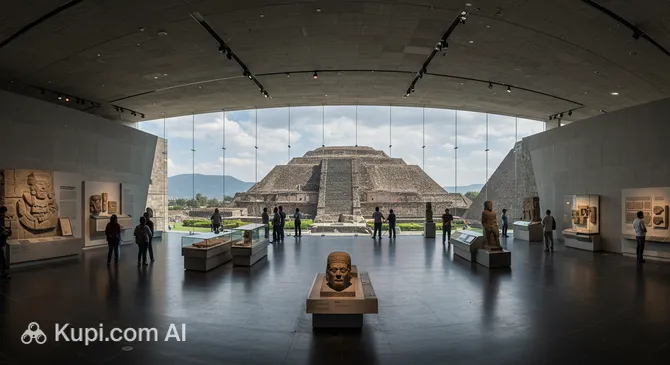
Templo Mayor Museum. Illustration.
Source: Kupi.com AI

Traveler photos:

A visit to the complex consists of two exciting parts. First, you enter the excavation area, where you can literally walk along the ancient steps and platforms of Templo Mayor itself. This double temple-pyramid was dedicated to two primary deities—Huitzilopochtli, the god of war and the sun, and Tlaloc, the god of rain and fertility. Walking through the ruins allows you to feel the grandeur of the ancient capital and imagine the important ceremonies that took place here.

After exploring the open-air archaeological zone, the route leads to a modern museum building that houses thousands of artifacts found by archaeologists right on this site. The exhibition tells a detailed story of Aztec culture, beliefs, and daily life. Here you will see the famous monolith depicting the goddess Coyolxauhqui, whose accidental discovery in 1978 sparked the large-scale excavations, as well as monumental sculptures, ritual masks, everyday items, and much more. Visiting the museum offers an incredible immersion into pre-Columbian history.

Contacts

The Templo Mayor Museum is managed by the National Institute of Anthropology and History of Mexico (INAH). Since specific contact details such as phone numbers or email addresses are not publicly listed, it is recommended to consult official sources for the most up-to-date information. Before your visit, be sure to check the opening hours, admission fees, and details about temporary exhibitions on the official INAH website or reputable travel portals to plan your visit effectively.

How to contactContact
AddressSeminario 8, Centro Histórico de la Cdad. de México, Centro, Cuauhtémoc, 06060 Ciudad de México, CDMX, Mexico
Phone number+52 55 4040 5600
Websitewww.inah.gob.mx

What to Do

A visit to the Templo Mayor Museum is a true journey through time that begins with a walk through the open-air archaeological zone. Here, you can walk among the remains of ancient walls, platforms, and temple foundations, feeling the scale and grandeur of the Aztec capital. Visitors can get a close look at surviving reliefs and sculptures and learn about the complex architecture of the main temple. Of particular interest are the reconstructions of ritual platforms and the famous "tzompantli"—the skull rack, which vividly illustrates aspects of the ancient civilization's beliefs.

After exploring the ruins, the route leads to the museum building, which houses an impressive collection of thousands of artifacts found right at the excavation site. The exhibition includes cult objects, pottery, fine jewelry, sacrificial knives, mysterious masks, and monumental stone sculptures. Each hall is dedicated to a specific theme: you can see items related to rituals, trade, and tribute, as well as halls dedicated to the primary deities—Huitzilopochtli and Tlaloc. These finds colorfully illustrate both the daily and ritual life of the Aztecs, allowing for a deeper understanding of their world.

To make the immersion into history even more engaging, the museum uses modern technology. Multimedia installations and detailed reconstructions help visualize what the temple complex looked like during its peak and how complex ceremonies were performed. This approach makes visiting the museum educational and interesting for visitors of all ages, turning the study of an ancient culture into a captivating experience.

Getting There

The Templo Mayor Museum boasts an excellent location in the heart of the historic center of Mexico City. It is literally just a few steps away from the city's main square, the Zócalo, and right next to the Metropolitan Cathedral, making it one of the capital's most accessible landmarks. Thanks to this central location, finding the museum is easy, and a visit can be seamlessly integrated into a walking tour of the historic district.

There are several convenient ways to reach the museum. The fastest and most popular option is to use the metro. You will need the Zócalo station on Line 2 (the blue line), which opens directly onto the main square. Additionally, many city buses stop in the area, providing a handy alternative. If you prefer comfort, you can always use taxis or ridesharing services, which can easily take you to the main square from anywhere in the city.

For those traveling by car, it is worth noting that the museum does not have its own parking for visitors. However, there are several public paid parking lots located in the immediate vicinity. Nevertheless, due to high traffic in the central streets, public transport remains the most recommended and convenient way to reach Templo Mayor.

Nearest city: Mexico City

History & Facts

The history of the Templo Mayor Museum is inextricably linked with the history of Mexico City itself and is rooted in the distant past. The main temple of the Aztec capital, Tenochtitlan, was founded around 1325 and served as the heart of religious and social life for the entire empire for nearly two centuries. At the top of the majestic pyramid, which stood about 60 meters high, were two sanctuaries. One, painted red, was dedicated to Huitzilopochtli, the god of war and the sun, while the second, painted blue, was dedicated to Tlaloc, the god of rain and fertility. This double temple symbolized the key forces for the Aztecs—war, which granted greatness, and water, which granted life.

The grandeur of Templo Mayor came to an end in 1521, when the temple was almost completely destroyed by Spanish conquistadors. For centuries, its ruins were hidden beneath the buildings of colonial Mexico City, and it seemed that the great temple was lost to history forever. However, in 1978, a sensational accident occurred: while laying electrical cables, workers stumbled upon a massive stone monolith depicting the goddess Coyolxauhqui. This find became the starting point for large-scale archaeological excavations that continued until 1982 and revealed what remained of the main Aztec sanctuary to the world.

During the excavations, it was discovered that the temple had been rebuilt and expanded many times by each new ruler, so today visitors can see several layers of ancient structures. These ruins, along with the rich collection of artifacts found, formed the basis for the museum, which opened in 1987. Today, the Templo Mayor complex is not only one of the primary historical attractions in Mexico but is also a UNESCO World Heritage site, offering a unique opportunity to glimpse into the pre-Columbian past without leaving the center of a modern metropolis.

Time Needed

When planning a visit to the Templo Mayor Museum, you should expect a full and leisurely tour to take between 1.5 and 3 hours. This is enough time to carefully study both the open-air archaeological zone with the ruins of the ancient temple and the extensive collection of artifacts inside the museum building. The complex is designed so that visitors can progressively immerse themselves in history, so it's best not to rush to get the most out of the experience.

The recommended time can be roughly divided into two parts. A walk through the ruins themselves, where you will see the foundations of pyramids and ritual structures, takes about 45–60 minutes. The remaining time—one to two hours—should be dedicated to the museum. Its halls house a vast number of exhibits, and it takes time to examine key finds in detail, such as the monolith of the goddess Coyolxauhqui, and read the explanatory panels.

Thus, if you are limited on time and only want to get a general overview, an hour and a half may be enough. However, for those with a deep interest in pre-Columbian American history or archaeology, it is highly recommended to set aside the full three hours. This will allow you not only to view the main artifacts but also to thoughtfully explore the details of Aztec daily life, beliefs, and rituals, fully experiencing the unique atmosphere of this historical site in the heart of Mexico City.

Working Hours

The Templo Mayor Museum is open to visitors year-round from Tuesday to Sunday, from 9:00 AM to 5:00 PM. Monday is the official day off, so plan your visit for any other day of the week. These operating hours allow you to combine a visit to the museum with a tour of other attractions in Mexico City's historic center.

While advance booking is generally not required for individual visitors, it is worth noting that there may be queues at the ticket offices during peak tourist seasons and on weekends. To save time, tickets can be purchased online through the official website of the National Institute of Anthropology and History (INAH) or via authorized services. In any case, it is highly recommended to check for the latest information on opening hours and any potential changes on official resources before your visit to ensure it goes as smoothly as possible.

DayOpening hours
MondayClosed
Tuesday9:00 – 17:00
Wednesday9:00 – 17:00
Thursday9:00 – 17:00
Friday9:00 – 17:00
Saturday9:00 – 17:00
Sunday9:00 – 17:00

Nearby

A visit to the Templo Mayor Museum is a deep dive into Aztec history, but a trip to Mexico City would be incomplete without exploring its surroundings. Thanks to the museum's location in the heart of the historic center, many other iconic sites are within walking distance. Strolling through the neighboring streets will allow you to feel the contrast between ancient ruins and magnificent colonial architecture, enriching your overall travel experience.

Exploring nearby attractions won't take much time, but it will provide a holistic view of the cultural and historical wealth of Mexico's capital. Just a few minutes' walk away, you will find famous squares, majestic palaces, and other important cultural sites that will harmoniously complement the journey into the past that began at the base of the Great Temple of the Aztecs.

NameDistance
Constitution Plaza0.3 km
National Museum of Art0.8 km
Palace of Fine Arts1 km
Museum of Memory and Tolerance1.3 km
El Péndulo3.6 km
BeerGarden Roma3.8 km
Jazzatlán Capital4 km

Have you reached the end of the page?

So the route has been studied inside and out