Support

Dashchoilin Monastery

About

Dashchoilin Monastery is one of the most atmospheric and unusual places Ulaanbaatar has to offer a traveler. As the second-largest active Buddhist complex in the city, it serves as an important spiritual center for followers of the Gelug school. Its uniqueness lies in its architecture: the main temples are built in the shape of concrete yurts, highlighting the inextricable link between religion and the nomadic traditions for which Mongolia is so famous.
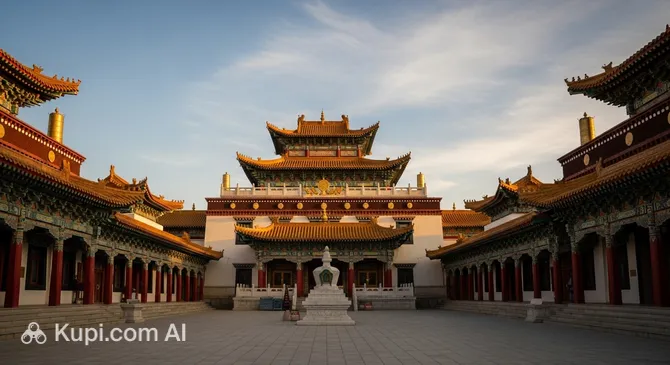
Dashchoilin Monastery
Dashchoilin Monastery. Иллюстрация. Источник: Kupi.com AI

Located near the central square, this monastery complex transports visitors from the noise of the metropolis into a world of tranquility and prayer. Its appearance might remind you of a fairytale town or a traveling circus camp, but inside lies deep sacred content. It houses a Buddhist college and a rich library containing the sacred canons of the Ganjur and Danjur.

Visitors to Dashchoilin are invariably impressed by the bright murals, gilded statues of deities, and the special, living energy of the place. Unlike many museums, this is an active monastery where you can see monks of all ages, hear the sounds of ritual instruments, and feel the authentic spirit of Tibetan Buddhism in the heart of the Mongolian capital.

Contacts

To clarify information about special ceremonies or group visits, you can use the monastery's official contact details.

How to contactContact
AddressН.Содномын гудамж, СБД - 8 хороо, Улаанбаатар 14193, Монголия
Phone+976 11 35 0047
Websitewww.dashichoiling.mn

What to Do

Start your discovery of the monastery by visiting its three main temples: Tsogchen, Sakhiusan, and Burkhan. Inside each, magnificent altars decorated with vibrant fabrics and gilded Buddha statues await you. Look out for unusual interior details, such as giant wooden plates suspended on ropes—a unique feature of local shrines rarely seen elsewhere.

If you are lucky, you may witness a Khural—a Buddhist service. The sounds of prayer drums, the chanting of sacred texts, and the deep throat singing of the monks create an incredible meditative atmosphere. It is also worth visiting the monastery library to see ancient volumes of sacred scriptures donated to the monastery by the 14th Dalai Lama himself.

Special attention should be paid to visiting Dashchoilin in late summer. During this time, the spectacular Khuree Tsam ceremony is held. This is an ancient ritual featuring masked dances and colorful costumes designed to drive away evil spirits. This event attracts many pilgrims and tourists wishing to see the living traditions of Mongolian Buddhism in all their glory.

Getting There

Finding Dashchoilin Monastery is quite easy, as it is located in the central Sukhbaatar district. If you are in the very heart of the city, a walk from Chinggis Khaan Square will take only 10–15 minutes. The route passes through busy streets, but the monastery grounds themselves remain a surprisingly quiet and secluded place.

For those who prefer transport, you can take a taxi or local buses and trolleybuses that stop within walking distance of the complex. A taxi ride from the center is inexpensive and saves time. Entry to the grounds for tourists is usually free, though visitors are asked to remain quiet and respect the traditions.

If you plan to visit by rental car, there are parking spaces available near the monastery grounds or directly inside. Look for Academician Sodnom Street—this will help you quickly find the correct turn to the monastery gates.

Ближайший город: Ulaanbaatar

History & Facts

The history of this site dates back to 1639, when Zuun Khuree Monastery—the predecessor of modern Dashchoilin—was founded. It originally served as the residence of the country's first head of the Buddhist community, Bogd Gegeen I. Over the years, the monastery moved along with the nomadic capital until it finally settled on the banks of the Tuul River in 1778, becoming a major spiritual and educational center.

During its peak, the complex was a true "city within a city." It housed not only temples and stupas but entire quarters where astrologers, physicians, and printers lived and worked. Unfortunately, the tragic events of the 1930s led to the closure of the monastery and the destruction of most of its unique buildings. Only a few temples, such as Vangai and Erkhem, managed to survive the passage of time.

A new chapter in the shrine's history began in the 1990s when the monastery resumed its activities. Interestingly, the revival started on the site of the former State Circus, which partly explains the unusual architecture of the modern buildings. Today, Dashchoilin Hiid is once again an important stronghold of the Gelug school, gathering thousands of believers annually for traditional rituals and festivities.

Time Needed

For a standard tour of the grounds and temple interiors, you will need approximately 1–2 hours. This is plenty of time to leisurely stroll between the yurt-shaped buildings, peek into the library, and observe the daily life of the monks.

If your visit coincides with major Buddhist holidays or the vibrant Khuree Tsam ceremony, we recommend setting aside at least half a day. The ritual dances and solemn processions are large-scale events that deserve thoughtful contemplation and immersion in the monastery's special energy.

Working Hours

The monastery doors are open to believers and tourists daily. You can visit the complex from 09:00 to 17:00 on both weekdays and weekends.

Since Dashchoilin Monastery is an active religious site, the schedule for services and festive events may change. Before your visit, we recommend checking the monastery's official website to confirm the current times for Khurals or special ceremonies.

09:00–17:00

Nearby

A stroll around the monastery's surroundings will allow you to dive deeper into the atmosphere of the capital and see how ancient traditions coexist with the modern rhythm of life. There are many iconic spots nearby that are worth visiting as part of a single route.

NameDistance
Chinggis Khaan National Museum0.7 km
Zanabazar Museum of Fine Arts1.2 km
Natural History Museum of Mongolia1.2 km
Veranda1.4 km
Fat Cat Jazz Club1.4 km
National Academic Drama Theatre of Mongolia1.5 km
Choijin Lama Temple Museum1.5 km

Reached the end of the page?

That means the route is fully explored