Support

Zanabazar Museum of Fine Arts

About

A journey into the soul of the Mongolian people is incomplete without a visit to this landmark. Located in the heart of Ulaanbaatar, the Zanabazar Museum of Fine Arts is the primary repository of the artistic treasures that Mongolia takes great pride in. Founded in 1966, it has become home to unique collections spanning a vast period of history — from ancient rock carvings to sophisticated works from the early 20th century.
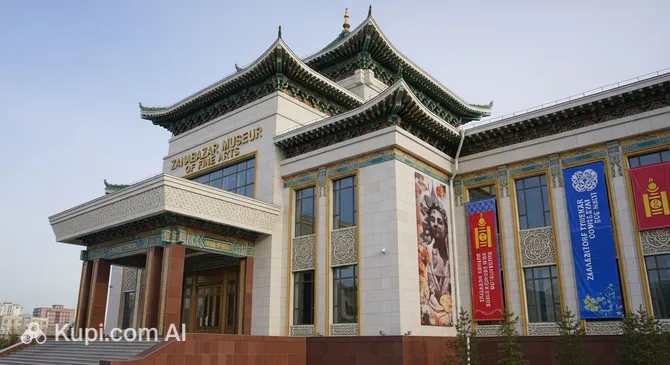
Zanabazar Museum of Fine Arts
Zanabazar Museum of Fine Arts. Иллюстрация. Источник: Kupi.com AI

The museum was named in honor of Gombodorjiin Zanabazar — an outstanding sculptor, spiritual leader, and the "Leonardo da Vinci of the East." It houses his famous Buddhist statues, recognized as world masterpieces of casting. The museum building itself, constructed in 1905, is considered a historical monument and stands out with its European-style architecture amidst the capital's modern buildings.

The museum's holdings include approximately 20,000 exhibits. Visitors can see rare petroglyphs, ritual masks for the Tsam dance, magnificent thangkas, and household items of nomads. It is not just an exhibition space, but a true cultural bridge connecting the ancient traditions of Central Asia with the modern world.

Contacts

To clarify visiting details or book a guided tour, you can use the following contact information:

How to contactContact
AddressSambuu St Art Museum, ЧД - 4 хороо, Улаанбаатар 15170, Монголия
Phone+976 11 32 6060
Websitewww.zanabazarmuseum.mn

What to Do

Your journey through the museum begins with an exploration of 12 exhibition halls, each dedicated to a specific era or art form. The main part of the exposition is concentrated on the second floor. Here, you can get a close look at ancient petroglyphs and deer stones from the Bronze Age, as well as admire the elegant ceramics from the Xiongnu Empire era.

Special attention should be paid to the hall displaying the works of Zanabazar himself. His statues of White Tara and the Five Dhyani Buddhas are striking for their intricate detail and inner harmony. Do not miss the unique ritual Tsam masks — their vibrant designs and fearsome appearance tell of the deep mystical traditions of Buddhism.

Art lovers should definitely look for the painting "One Day in Mongolia" by the artist B. Sharav. This canvas is a true encyclopedia of steppe life, depicting hundreds of everyday scenes in minute detail. Additionally, the first floor of the museum often hosts temporary exhibitions where you can get acquainted with the work of contemporary Mongolian masters.

Getting There

Finding this cultural hub is quite simple: it is located in the Chingeltei district, practically in the very heart of the Mongolian capital. Thanks to its central location, the museum is an easy walk from the main tourist streets and central squares.

If you are staying in a more distant area, it is most convenient to take a taxi — this is an affordable and popular way to get around the city. You can simply give the driver the address on Sambuu Street (Sambuu St) or just point to the Zanabazar Museum.

For those who prefer public transport, numerous buses stop nearby. The closest stops are just a few minutes' walk away, making a visit to the museum a convenient stop on any traveler's itinerary.

Ближайший город: Ulaanbaatar

History & Facts

The history of the building itself is just as fascinating as its exhibits. This architectural monument was erected in 1905 at the request of the Russian merchant M. Gudvintsal. Initially, it served as a trade center built in an elegant European style, but over the decades, the building's walls have housed a bank and even a military office during the revolutionary events of 1921.

The museum officially opened its doors to visitors in 1966. The initial collection was modest, with only about 300 items, but it grew rapidly. In 1995, in honor of the 360th anniversary of the birth of the great Mongolian enlightener and artist, the museum was officially named after Zanabazar.

Notably, in the 1990s, the museum's collection was enriched by unique artifacts that had been safely hidden in the Gobi Desert for decades. These religious relics and works of art were saved from destruction in the mid-20th century, and after the change in the political regime, they were once again made available to the public.

Today, the museum actively collaborates with UNESCO. Since 2004, an important project for the preservation of the cultural heritage of nomadic peoples has been implemented here, including the restoration of valuable exhibits and the training of world-class specialists.

Time Needed

To explore the extensive collection at a leisurely pace and appreciate the craftsmanship of ancient artists, visitors typically need between 1 and 2 hours. This is usually enough time to walk through all 12 halls and pay attention to the most significant masterpieces.

If you are a true connoisseur of Buddhist art or a student of the history of nomadic civilizations, we recommend setting aside a bit more time. The museum houses thousands of exhibits, and each hall reveals a new facet of Mongolian aesthetics.

Working Hours

The museum welcomes guests according to the following schedule: Monday to Friday, the doors are open from 09:00 to 18:00. On weekends — Saturday and Sunday — the working hours are slightly shorter: from 09:00 to 16:30.

Please note that the schedule may change on holidays, so it is recommended to check the official website of the museum before your visit for the most up-to-date information.

DayWorking hours
понедельник09:00–18:00
вторник09:00–18:00
среда09:00–18:00
четверг09:00–18:00
пятница09:00–18:00
суббота09:00–16:30
воскресенье09:00–16:30

Nearby

A stroll around the museum's neighborhood is an excellent opportunity to see the modern rhythm of the city alongside its historical layers. Key monuments, government buildings, and cozy city parks are concentrated nearby, rounding out your understanding of the region's culture.

NameDistance
Natural History Museum of Mongolia0.4 km
Chinggis Khaan National Museum0.5 km
UB Comedy Club0.7 km
National Academic Drama Theatre of Mongolia0.7 km
Veranda0.8 km
Fat Cat Jazz Club0.8 km
Great Mongol Restaurant & Pub0.8 km

Reached the end of the page?

That means the route is fully explored