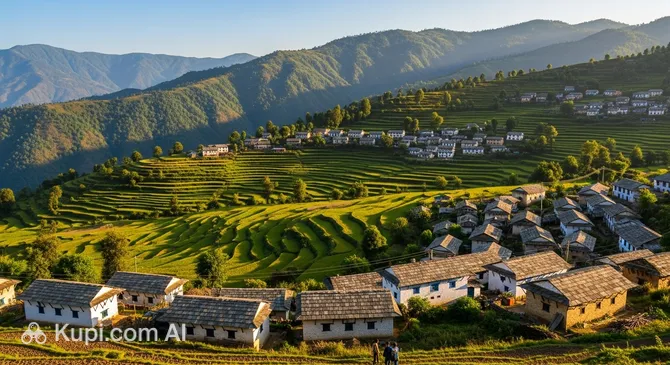
In the city of Baitadi and its surroundings, the lines between man-made attractions and wild nature are almost non-existent. You won't find classic city parks with paved paths or museum complexes with audio guides here. This entire region, located in the heart of the Sudurpashchim Province, is a vast natural reserve and an open-air ethnographic museum, where history lives in the streets and the best galleries are ancient temples and mountain landscapes.
The concept of a "green zone" in Baitadi covers almost the entire space around the city. One of the most picturesque natural spots is the forests around the Patal Bhumeshwar cave. Although this site is primarily known as a religious shrine, the surrounding area is a dense forest with rich flora. A walk here is a true eco-tour: trails pass through thickets of rhododendrons and pines, and the high points offer breathtaking views of the Himalayan peaks. It is an ideal place for those seeking silence and communion with nature away from the city bustle.
Another significant natural area is the banks of the Mahakali River. The descent to the river, which serves as a natural border with India, takes some time, but the journey is worth it. Wild, rocky beaches and a turbulent flow of water create a powerful energy. There are no equipped recreational areas, but it is this raw nature that attracts travelers. Locals often come here for ritual bathing or simply to sit by the water, watching the current that has shaped the landscape of this region for centuries.
Since there are no official state museums in the city, the role of the main guardian of history is played by the historical district of Shahilek. This is the oldest part of the city, which was once the administrative center of the district. Walking through its stone-paved streets, you feel as if you've entered a living museum of architecture. The buildings here have preserved the traditional style of the western highlands: slate roofs and intricately carved wooden windows and doors. Shahilek is a place where you can study culture not through glass display cases, but by touching the rough walls of century-old houses.
Temple treasuries successfully perform the function of art galleries in Baitadi. Specifically, the territory of the Tripura Sundari Temple is a true collection of religious art. An attentive tourist will notice the unique stone and wood carvings decorating the sanctuary. Statues of deities, ancient bells, and ritual objects used here for centuries tell the story of the region's spiritual culture better than any plaques. This is a "living exhibition" that is constantly updated with new offerings from the faithful.
For those wishing to see ruins of the past, the site where the old palace of local rulers (Durbar) was located is of interest. Although little remains of the majestic structures, these historical stones are reminders of the times when Baitadi was an important center of power. Visiting such places requires some imagination, but accompanied by stories from local elders, the ruins come to life, turning into a fascinating history lesson.
A real insider discovery is visiting the small workshops of local artisans in the market area. Watching masters create traditional copper vessels or weave fabrics replaces a trip to an ethnographic museum. If you show sincere interest, they will not only show you the process but also tell you about the meaning of patterns and forms passed down through families for generations. This is the best way to understand the soul of Nepal and take home not just a souvenir, but a story.