Support

Heerenveen

About

Heerenveen is a cozy and atmospheric town in the north, located in the picturesque province of Friesland. It is a place where travelers can discover the authentic Netherlands away from the bustling tourist metropolises. The town is surrounded by endless green meadows and a network of water canals, creating that recognizable Dutch landscape so valued by lovers of a peaceful vacation.

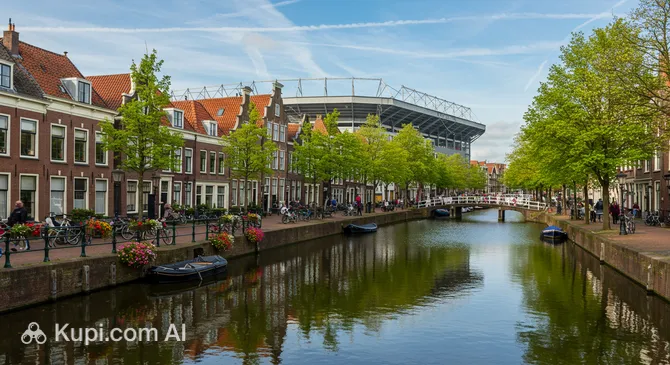
Heerenveen. Illustration.
Source: Kupi.com AI

Despite its relatively small size and a population of about 28,500 people, Heerenveen plays an important role as a regional center. It is conveniently located on the route between Amsterdam and Groningen, making it a handy stopover point while traveling through the northern part of the country. The rich history of Heerenveen has left its mark on its appearance, where traditional charm harmoniously combines with modern amenities.

The town is known for its vibrant sports life and excellent opportunities for outdoor walks. Picturesque hiking trails are laid out here, allowing you to explore the surroundings and enjoy the beauty of nature. Heerenveen is an ideal choice for those seeking tranquility, wanting to get acquainted with the unique Frisian culture, and feeling the steady pace of life in this hospitable region.

Weather Overview

The climate in Heerenveen is characterized by mildness and an absence of sharp temperature fluctuations, which is typical for this region of the Netherlands. Summer here is pleasant and not hot: in July and August, the average temperature is about 17–18°C, with maximum values reaching a comfortable 21.5°C, which is ideal for long walks.

The winter months bring coolness, but severe frosts are rare. The average temperature in January and February stays around 4–5°C, and night minimums rarely drop below 2.8°C. A characteristic feature of the local weather is frequent but usually light precipitation: the number of rainy days varies from 11 to 16 per month throughout the year. Expect moderately warm summers with occasional rain and cool, damp winters.

When planning your trip, be sure to check the current forecast so that the weather in Heerenveen does not catch you off guard. Regardless of the season, a light waterproof jacket or umbrella will not be out of place in your luggage.

Average monthly temperature

Average monthly precipitation

Interesting Facts

In addition to its famous landmarks, Heerenveen possesses a unique character and interesting features that often escape the attention of ordinary tourists. Here are a few facts that reveal this town from a new perspective:

  • The Country's "Ice Capital." Heerenveen is known worldwide for its sporting traditions. It is home to the famous Thialf stadium—one of the best speed skating arenas on the planet, where world championships are regularly held and new records are set.

  • Guardian of Frisian Culture. The town is an important center for the region's identity. The Frisian language, which is markedly different from standard Dutch, is actively supported and developed here, giving local communication a special flavor.

  • Historical Trade Hub. The town owes its development to its strategic location. Historically, it served as a key link on the route connecting Amsterdam with the northern lands and Germany, which turned it into a prosperous center of trade.

  • Scenic Routes. The surroundings of Heerenveen are permeated with a network of hiking and cycling trails. This is an ideal place for those who want to explore authentic Frisian landscapes on foot or by bike, enjoying views of traditional architecture away from noisy highways.

How to Get There

When planning a trip to this cozy town in the province of Friesland, it is worth thinking about logistics in advance. You can find out more about how to get to Heerenveen by studying the various transport options connecting the region with other parts of the country. Since the town is located in the north, the path to it often lies through major transport hubs in neighboring provinces.

Heerenveen itself does not have its own airport, so most tourists arrive via international air gateways. The most popular option is Schiphol (IATA: AMS)—the main aviation hub of the Netherlands, located in Amsterdam. It is about 107 km from Heerenveen. The journey from there by car or taxi on high-speed motorways will take about 1 hour and 20 minutes. This is the country's largest airport, receiving flights from all over the world.

An alternative and closer option could be Eelde Airport (IATA: GRQ), located in Groningen. This is the nearest airport to Heerenveen, located only 48 km away. The journey from here by car is significantly shorter and will take approximately 40–50 minutes. However, keep in mind that this is a regional airport with fewer international flights.

For convenience in planning, here is information on the main airports through which you can reach the region:

AirportPassenger trafficDistance
Eelde Airport112 83348 km
Amsterdam Airport Schiphol66.8 mln107 km
Rotterdam The Hague Airport2.1 mln151 km
Munster Osnabruck International Airport1.3 mln151 km
Weeze Airport2.0 mln152 km

The railway network in the Netherlands is excellently developed, and the train is often the most comfortable way to travel. Although Heerenveen has its own railway station, many routes from abroad pass through major transfer hubs. For example, you can arrive at Amsterdam Centraal (IATA: ZYA) in Amsterdam, which is 95 km away. From there, it is highly recommended to continue your journey by direct or connecting train to Heerenveen—it is convenient and fast. If you choose a car or transfer, the trip from Amsterdam will take about 1 hour and 15 minutes.

Another important hub is Nijmegen Station (IATA: QNQ), located 124 km away. The journey time by car from this station will be approximately 1.5–2 hours depending on traffic. The public transport system allows you to easily reach Heerenveen from almost anywhere in the country.

Below is data on major railway stations that can serve as a starting point for your route:

StationPassenger trafficDistance
Amsterdam Centraal Station70.1 mln95 km
Hilversum Railway Station8.5 mln97 km
Ede-Wageningen Station9.1 mln105 km
Nijmegen Station10.4 mln124 km
Emmerich Railway Station127 km

Main Attractions

Heerenveen is a town where history is closely intertwined with modernity, and sporting achievements sit alongside royal heritage. Although many know it as the world capital of speed skating, there are many places here that deserve the attention of travelers interested in culture and architecture.

It is worth starting your acquaintance with the town at the Heerenveen Museum. This place is a real treasure trove for those who want to understand the origins of the settlement. The exhibition tellingly recounts the "Lords" (Heeren) who founded the settlement on peat bogs and the region's close connection with the royal family of Orange-Nassau. A separate part of the museum is dedicated to the history of ice sports, making it unique of its kind and a must-visit for understanding the local mentality.

Lovers of outdoor walks and palace aesthetics should definitely head to Oranjewoud. This is a picturesque park area east of the town that once served as a summer residence for the royal family. Here you can stroll along ancient alleys, enjoy the view of majestic estates, and visit De Overtuin park. It is an ideal place to take a break from the city bustle, enjoying the silence of centuries-old trees and Baroque-style landscaping.

In the very center of Heerenveen, it is impossible not to notice the impressive Crackstate building. This mansion, built back in the 17th century, is a prime example of Dutch Classicism and served as the town hall for a long time. The building is surrounded by a moat, giving it the appearance of a small fortress. Today it is a popular venue for wedding ceremonies, but even an external inspection of its architectural details will bring pleasure to lovers of antiquity.

One cannot overlook the Abe Lenstra Stadium, named after the legendary Frisian football player. For local residents, this is not just a sports arena, but a true temple of football. Even if you don't attend a match, the scale of the structure itself and its significance for the town make a strong impression, highlighting Heerenveen's status as an important sports center in the Netherlands.

Local Cuisine

Heerenveen's gastronomic scene is inextricably linked to the culinary traditions of the entire province of Friesland. Simple, hearty, and natural products are valued here, and dairy products occupy a special place on the table. Local cheeses are known for their rich flavor, and many travelers specifically visit surrounding cheese farms to taste the best varieties and learn the secrets of their production.

For those with a sweet tooth, the town offers true gastronomic discoveries. Be sure to try suikerbrood—a traditional Frisian sweet bread with sugar nuggets and hints of cinnamon, which perfectly complements a morning cup of coffee. Another symbol of local hospitality is the dúmkes cookie. This crunchy treat with almonds and anise is often served during the winter period, but it can be found in bakeries year-round.

For a hearty lunch, locals often choose stamppot—a filling mash of potatoes and vegetables traditionally served with flavorful smoked sausage. Given the abundance of waterways, fresh fish is always present on Heerenveen's restaurant menus. Dishes made from tender eel and, of course, the famous herring, which is prepared here with special skill, are particularly loved.

Speaking of drinks, one cannot fail to mention beerenburg. This strong herbal liqueur, created according to ancient recipes, is considered the region's main alcoholic specialty. To immerse yourself in the town's atmosphere, it's worth checking out the farmers' markets, where you can buy homemade jams, fresh produce from local producers, and that very liqueur as a delicious souvenir.

Travel Tips

A trip to Heerenveen promises to be calm and cozy, but a little preparation will make your journey through Friesland even more comfortable. To make you feel at home in this "sporting heart" of the north and avoid typical tourist mistakes, we have gathered the most important practical recommendations.

  1. Clothing and Gear. The weather in this part of the country is changeable and often windy. The main principle of the wardrobe here is layering. Even in summer, be sure to bring a light windbreaker and a high-quality raincoat or umbrella. Since the historical center is paved with cobblestones and the surroundings are ideal for walking, opt for comfortable flat shoes and leave your heels for evening outings.

  2. Transport Nuances. Heerenveen is a compact town, and its center is best explored on foot. For trips to the surroundings, a bicycle is the ideal option, which can be rented at the station or in hotels. If you plan to use buses, it is most convenient to pay for the fare with a contactless bank card or phone through the OVpay system—just tap them against the validator at the entrance and exit.

  3. Finances and Payment. The currency is the Euro (€). The Netherlands is rapidly moving to cashless payments: many cafes and shops have "Pin only" signs (cards only). Note that credit cards are not accepted everywhere, especially in Albert Heijn supermarkets, so it is better to have a debit card with you. Tipping is not a strict obligation, but rounding up the bill or leaving 5–10% for excellent service is considered good manners.

  4. Health and Safety. Heerenveen is a very safe town with a low crime rate, but standard precautions (not leaving things unattended) are relevant here too. Pharmacies (Apotheek) usually operate from 8:30 AM to 5:30 PM on weekdays. In life-threatening emergencies, call the universal number 112. Tap water here is of excellent quality and can be drunk without boiling.

  5. Language Matters. Almost all local residents speak English fluently. However, it is worth remembering that Heerenveen is in Friesland, where Frisian is an official language alongside Dutch. Learning a simple local greeting like "Goeie" (pronounced roughly like "goo-ee-yuh") will instantly win the sympathy of the locals. For navigation, download the 9292 app for transport and Buienradar for tracking rain.

  6. Local Etiquette. Frisians value directness, modesty, and punctuality. Being late for a meeting is considered disrespectful. When entering small shops or cafes, it is customary to greet the staff and other visitors. On escalators, stand on the right, pass on the left.

  7. What to Avoid. The most common and dangerous tourist mistake is walking on cycle paths. They are usually marked with reddish asphalt and bicycle icons. Never stand or walk on them: cyclists ride fast and silently, and a collision can be serious. Also, try not to call the locals "Dutch"—they are proud Frisians, and for them, it is an important distinction.

  8. Shop Opening Hours. Note that most shops (except supermarkets) close quite early, around 5:30 PM–6:00 PM. However, once a week, usually on Thursdays or Fridays, there is a Koopavond (shopping evening) when stores stay open until 9:00 PM. Plan your shopping in advance to avoid arriving at closed doors.

Following these simple rules will help you easily blend into Heerenveen's steady pace of life. Be open, smile, and respect local traditions, and this hospitable town will reciprocate, giving you only the warmest memories of your trip.

Entertainment & Nightlife

Heerenveen's nightlife may be smaller in scale than that of the capital, but it certainly doesn't lose out in warmth and "gezelligheid" (coziness), which the Dutch value so much. There are no huge techno clubs operating until noon here, but the town is famous for its atmospheric pubs, "brown cafes," and venues with live music where it is easy to make new acquaintances. The main fun begins on Thursday (the traditional student night) and continues through Friday and Saturday.

The epicenter of evening entertainment is the Oude Koemarkt square (the Old Cattle Market). It is here, in the heart of the town, that most of the bars, restaurants, and dance floors are concentrated. In summer, the entire square turns into one huge open-air terrace where locals and tourists enjoy drinks until late at night. In winter, the fun moves inside the cozy establishments located in historical buildings around the perimeter of the square.

Among the popular places on Oude Koemarkt, Café De Swetser stands out. This establishment is a true hybrid of a cozy cafe and a nightclub. During the day, you can have a coffee here, and at night, DJs play popular hits, and the dance floor fills with young people. Another point of attraction is Bar 't Houtsje. This is a classic Dutch establishment with an excellent beer selection and a relaxed atmosphere, perfect for starting the evening or having long conversations in a boisterous group.

The crowd in Heerenveen's venues is very diverse: from students of local sports academies to older people. The dress code here is as democratic as possible—casual style will be appropriate everywhere. Security is present at the entrance to popular bars but behaves politely. The average price for a glass of beer or wine is about €3.50–€5, while cocktails will cost €8–€12. The best time to dive into the nightlife is after 10:00 PM, when the bars begin to fill up.

If you are looking for more cultural leisure, take note of the Posthuis Theater. This is the town's main theater stage, located in a beautiful historical building. Musical concerts, cabaret shows, and theatrical productions regularly take place here. There is also a modern cinema in town showing world premieres (in the Netherlands, films are often shown in their original language with subtitles).

In terms of safety, Heerenveen is one of the quietest towns. Walking through the center at night, including the Oude Koemarkt area, poses no threat. However, as elsewhere, you should keep an eye on your personal belongings. Public transport is rare at night, so if your hotel is far from the center, it is better to use a taxi. You can find a car at special stands near the square or call one by phone, as Uber is not as common here as in Amsterdam.

Parks & Museums

Heerenveen offers travelers a harmonious blend of natural beauty and cultural richness that goes far beyond its sporting fame. The town and its surroundings are permeated with the greenery of royal estates, and local museums house not only historical artifacts but also outstanding works of contemporary art.

The main natural gem of the region is the Oranjewoud park area. This is an extensive forest massif east of the town, which for centuries was shaped as a recreation spot for Dutch nobility and the royal family. Here you will find majestic alleys of centuries-old oaks and beeches, ideal for cycling and leisurely promenades. The surviving elements of Baroque landscaping and winding paths leading deep into the forest give the place a special charm.

For lovers of wilder nature and active recreation, the De Heide recreation area is perfect. This is a picturesque territory with heathlands, sandy patches, and the large Heidemeer lake. In summer, it is a popular spot for swimming and picnics on the beach, and in the cooler months, it is pleasant to watch birds and walk dogs here, enjoying the silence and space that contrasts with the neat town streets.

The cultural landscape of the town is impossible to imagine without the Museum Belvédère. This is the first museum of modern art in Friesland, located right within the Oranjewoud park. The museum building itself is an architectural masterpiece: a long structure that literally hovers over a canal. The collection focuses on the works of 20th-century and contemporary Frisian artists whose creativity is inspired by the local landscapes. Visiting this place is an aesthetic pleasure from the fusion of art, architecture, and nature.

To dive deeper into the past, it's worth visiting the Heerenveen Museum, located in the town center. Although it is known for its sports exhibition, its historical part is no less fascinating. Here you can see a unique model of the town as it was in 1830 and visit a room dedicated to Ferdinand Domela Nieuwenhuis—a famous Dutch socialist and politician. The museum's interiors recreate the atmosphere of life in past centuries, allowing you to imagine how the town's founders—the "peat lords"—lived.

Among the architectural monuments, the Molen Welgelegen windmill deserves special attention. This is the only surviving windmill in Heerenveen, built in 1849. Its snow-white upper part ("cap") makes it visible from afar. The mill is a functioning monument: volunteers regularly run the mechanisms, and on certain days (usually Saturdays), tourists can go inside to see the grain grinding process with their own eyes.

Insider Tip: If you find yourself in Oranjewoud, don't miss the small but charming De Overtuin park. Originally, it was a garden for a noble estate located across the road from the main house. It is an ideal place for private reading on a bench surrounded by ancient plants that were planted here as far back as the 19th century.

Getting Around

Heerenveen's transport system features the efficiency and comfort typical of Dutch cities, although scaled to the size of this small town. Since there are no subways, trams, or trolleybuses, buses and trains form the basis of public transport. Heerenveen Railway Station is the main transport hub connecting the town with the rest of the country, and the bus network covers both urban areas and surrounding villages in the province of Friesland.

For getting around the town and trips to the suburbs, Arriva buses are used. They are modern, clean, and run strictly on schedule. It is important to remember that drivers do not accept cash. Fares are paid exclusively by cashless means. The cost of a trip depends on the distance: you pay a base fare for boarding plus a price for each kilometer traveled.

The most convenient way for tourists to pay now is the OVpay system. You don't need to buy special transport cards: you can pay for your fare with your contactless bank card (debit or credit) or a smartphone with NFC. Just tap your card against the validator upon entry (Check-in) and be sure to do the same upon exit (Check-out), even if you are transferring to another bus or train. The system will automatically deduct the correct amount.

If you plan to move around the country a lot, you can purchase an anonymous OV-chipkaart transport card. The plastic card itself costs about €7.50 (this amount is non-refundable) and needs to be topped up at machines at stations. However, for a short-term visit, using a regular bank card via OVpay will be easier and more profitable, as the rates are the same. One-way tickets can be bought at machines at the station, but they usually include a €1 surcharge for printing the paper ticket.

The main tip for a tourist: always have a smartphone with the 9292 app or Google Maps. The 9292 app is the "bible" of local transport, planning routes to the minute, taking into account all transfers and delays. Trains run from early morning until midnight, but buses in the evenings and on weekends may run less frequently—once an hour—or finish service earlier, so always check the schedule before heading out.

Given Heerenveen's compactness, the most popular alternative to public transport is the bicycle. It is the true "king of the road" in this region. Rental points can be found at the railway station or in the city center. Renting a bike will allow you to feel like a local and easily reach the Thialf stadium or Oranjewoud park. Taxis are available in the town, but it is not customary to hail them on the street—you need to order a car by phone or through an app, and the trip will not be cheap.

Accommodation

Accommodation options in Heerenveen fully reflect the character of the town: there are no pretentious skyscrapers with five-star hotels, but there is a decent selection of cozy and high-quality housing. Tourists can stay in classic middle-class hotels, choose atmospheric bed & breakfasts in historical buildings, or prefer apartments for greater independence. Since the town often hosts major sporting events, the local hospitality industry is well-developed and focused on guest comfort.

When choosing an area, you should start from the purpose of your visit. If you want to be in the thick of things, enjoying evening walks and dinners, choose the city center, closer to Oude Koemarkt square. Here, all the attractions are within walking distance. For those seeking peace and union with nature, the surroundings of Oranjewoud park are ideal. This is the town's "green belt," where you can find more exclusive accommodation options surrounded by forest. Travelers by car or transit tourists will find it convenient to stay in hotels located near the exits of the A32 and A7 motorways.

An important booking tip: always check the calendar of sporting events at the Thialf ice arena and the Abe Lenstra Stadium. During world speed skating championships or important football matches, the town's population practically doubles, and finding a vacant room becomes almost impossible. In such periods, it is necessary to book accommodation several months in advance. In normal times, there are usually no problems with availability.

The price range in Heerenveen can be described as moderate, especially compared to Amsterdam. The cost of a standard double room in a mid-level hotel usually varies from €80 to €130 per night. Budget travelers can find options in small guesthouses a bit cheaper. Booking is best done through popular international online platforms, as this guarantees the relevance of the price, but many small family hotels also readily accept bookings directly through their websites.

Nearby Cities

For those who want to explore the surroundings, Heerenveen serves as an excellent starting point for day trips to several interesting nearby places. The region is compact, so the journey to neighboring towns takes very little time.

Just a 20-minute drive away is Sneek—a true mecca for water sports enthusiasts. This town is famous for its historical Waterpoort (Water Gate), built in the 17th century, and its picturesque canals. In summer, there is a lively atmosphere here thanks to numerous sailors and regattas. It is an ideal place to rent a boat or just sit in a cafe by the water.

A little further north is the provincial capital—Leeuwarden. This is the cultural heart of Friesland, where you can see the famous unfinished Oldehove tower, which leans more than the Leaning Tower of Pisa. The city is rich in museums, including the Ceramics Museum and the Fries Museum, and its historical center with canals and old mansions is perfect for long walks and shopping.

If you head south, you will find Meppel. This cozy town is often called "Amsterdam in miniature" due to its canal system and historical warehouses. Meppel is famous for its summer festivals and relaxed atmosphere. It is an excellent choice for those who want to see traditional Dutch architecture without the crowds of tourists.

CityPopulationDistance
Joure13 0908 km
Wolvega13 09011 km
Lemmer10 22519 km
Sneek33 85520 km
Drachten45 18620 km

These nearby destinations allow you to get a sense of the diverse culture and landscapes of the region, making your journey through the north of the country even more rewarding.

Shopping & Souvenirs

Shopping in Heerenveen is a pleasant and relaxed activity, devoid of the bustle of huge metropolises. The town is considered the trading center of Southeast Friesland, so it presents an excellent balance between well-known chain brands and unique local boutiques. The compactness of the center allows you to explore all the interesting places on foot while enjoying the views of historical facades and cozy canals. It is an ideal place for those looking for quality items and wanting to combine shopping with a stroll through a picturesque town.

The heart of Heerenveen's shopping life is Dracht street. This long pedestrian promenade, passing through the entire center, is literally dotted with shops for clothing, shoes, cosmetics, and home goods. Here you can find both popular European brands and small family shops with an exclusive range. It's also worth checking out the adjacent streets of Lindegracht and Sieversstraat, where interesting specialty stores and cozy cafes for resting between purchases are often hidden.

Unlike large cities, Heerenveen does not rely on giant indoor malls, preferring a street-retail format. Nevertheless, in the center, there are several shopping passages and large department stores where various departments are gathered under one roof. This allows for comfortable shopping even in the rainy weather characteristic of the climate in the Netherlands.

The special flavor of local trade can be felt at the weekly markets. Every Saturday (and partially on Wednesdays), lively trading unfolds in the area of the Wettertoer tower and Sieversstraat. Here, farmers sell the freshest cheeses, fish, vegetables, and flowers, and you can also find inexpensive clothing and fabrics. Visiting the market is a great way to feel the true rhythm of the town's life and try local delicacies right from the stall.

As souvenirs from Heerenveen, tourists most often take home the gastronomic symbols of the region. Be sure to buy Fryske Dúmkes—traditional cookies with anise and almonds, or the famous herbal liqueur Beerenburg, which is considered the pride of Friesland. For sports fans, the best gift would be sc Heerenveen football club merchandise or souvenirs related to the Thialf speed skating stadium, which can be found in specialized sports stores.

Shops in the town usually operate from 9:30 AM to 5:30 PM or 6:00 PM from Tuesday to Thursday. On Mondays, many open only after lunch, around 1:00 PM. The traditional shopping evening (Koopavond) takes place on Thursdays, when shop doors are open until 9:00 PM. Sunday is generally a day off, except for special "shopping Sundays" (Koopzondag), which usually fall on the last Sunday of the month.

As for payment, the Netherlands is a country of successful cashless transactions. In most places, preference is given to debit cards (Maestro, V-Pay), and credit cards (Visa, Mastercard) may not be accepted in some supermarkets or small shops. Cash is accepted but increasingly rare, and some cafes and shops have a "Pin only" rule (card only). Tourists from non-EU countries can claim a VAT refund (Tax Free) for purchases over €50 in shops supporting the Global Blue system or equivalents—don't forget to ask for the special form at the register.
Reached the end of the page?

That means the route is fully explored