Support

Kwintelooyen

About

Imagine a stunning landscape where steep hills meet mirror-like ponds, and dense forests give way to open valleys. This is Kwintelooijen—a unique 68-hectare nature reserve located in the town of Rhenen, Netherlands. Sand was once actively mined here, but today the former quarry has been transformed into one of the most impressive nature parks within the national-level Utrechtse Heuvelrug area.
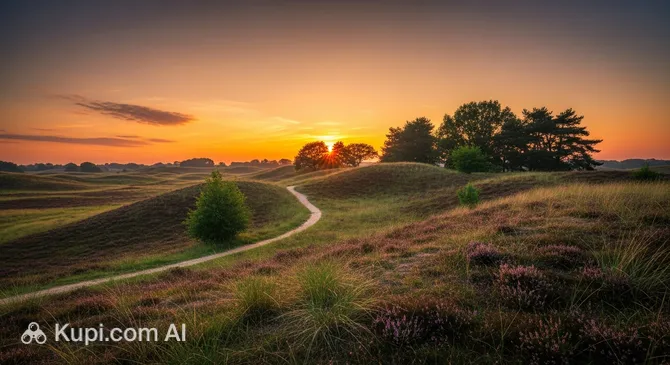
Kwintelooyen. Illustration.
Source: Kupi.com AI

Traveler photos:

The reserve is harmoniously divided into two parts: a strict nature zone and a recreation area. Thanks to its industrial past, Kwintelooijen boasts a relief atypical for the flat Netherlands, featuring deep ravines and eroded slopes. These sites hold traces of the Saalian glacial period, and archaeologists find flint tools here dating back 180,000 years.

Kwintelooijen is of particular value to wildlife enthusiasts. In 2015, over 1,500 species of flora and fauna were recorded here, many of which are listed in the Red Data Book. The jewel of the park is the Geological Monument—a man-made height that recreates the structure of the local soil, offering breathtaking panoramic views of the region's valleys from its summit.

Contacts

To confirm the latest information about events or visiting rules, you can use the official contact details. Below is the primary contact information:

How to contactContact
AddressOude Veensegrindweg, 3911 TA Rhenen, Нидерланды
Phone+31 318 589 555
Websitewww.ivn.nl

What to Do

At Kwintelooijen, everyone will find something to enjoy, whether it's active sports or quiet contemplation. The entire reserve is crisscrossed by a network of hiking trails of varying difficulty. You can choose a short walk for the whole family or a serious hike involving steep climbs and stairs leading to the best panoramic viewpoints.

For those seeking thrills and speed, there are special mountain biking trails, and the park's terrain is ideal for outdoor fitness training. Children will be delighted by the opportunity to climb the Geological Monument, which serves as both an educational site and a great playground in the wild.

If you prefer a more relaxed holiday, the recreation zone provides spots for day camping and barbecue areas. One of the park's most charming features is the Hereford cattle that graze on the slopes in summer, helping to maintain the ecosystem. Thanks to the peace and quiet away from the city bustle, this place has become a true paradise for birdwatchers and photographers hunting for shots of rare butterflies and mushrooms.

Getting There

Getting to the reserve is quite simple, as it is located at Oude Veensegrindweg, 3911 TA Rhenen, south of the city of Veenendaal. If you are traveling by car, your primary arrival point will be the free parking lot, Gratis Parkeerplaats Kwintelooijen, located directly at the entrance to the recreation area.

For those who prefer public transport, it is most convenient to take a train or bus to the stations in Rhenen or neighboring Veenendaal. From the stations, you can transfer to local bus routes, though it is worth noting that you will need to walk or cycle from the nearest stop to the park entrance itself.

A taxi ride from the city center or the nearest train station takes very little time. Since the area is part of a national park, many tourists choose to arrive by bicycle, enjoying the scenic paths that lead to Kwintelooijen through lush woodlands.

Nearest city: Rhenen

History & Facts

The name Kwintelooijen has family roots—it is derived from the surnames Kwint and Looijen, whose house was once located in this area. The history of the modern landscape began in 1950, when large-scale sand excavation was organized here to provide materials for the construction of highways and residential neighborhoods in the post-war Netherlands. Active work continued until the 1970s, literally reshaping the local terrain.

The geological past of this site is even more impressive. Beneath the topsoil lie ancient river deposits of sand and clay left by a predecessor of the Rhine. About 150,000 years ago, during the Saalian glaciation, the advancing glacier pushed these masses of earth, forming the famous Utrechtse Heuvelrug ridge.

In 1990, following public pressure and numerous protests, the Council of State ruled to stop sand excavation. A restoration process began: the territory was planted with pines to return it to a natural state. However, nature made its own adjustments: droughts followed by heavy rains caused erosion, which created the current picturesque ravines, steep slopes, and deep ponds filled with groundwater.

Archaeological research has confirmed the exceptional value of this zone. Flint artifacts estimated to be 180,000 years BC were found here, making Kwintelooijen one of the sites with the oldest finds in the country. Today, the Club Kwintelooijen association monitors the balance between history and nature, and in 2018, Hereford cows were reintroduced for natural vegetation control.

Time Needed

To explore Kwintelooijen at a leisurely pace, a typical visitor will need between 2 and 4 hours. This is usually enough time to walk one of the hiking trails, climb to the viewpoints, and admire the panoramas of the former quarry.

If you plan to have a picnic or are visiting with children to explore the Geological Monument in detail, it is better to set aside half a day. Nature lovers interested in birdwatching or spotting rare plant species can easily spend even more time here, enjoying the silence and diversity of the ecosystems.

Working Hours

The Kwintelooijen nature reserve is open to the public 24/7, including public holidays. You can enjoy a walk here at any time of year; however, for safety reasons and the best views of the landscapes, it is recommended to plan your visit during daylight hours—from dawn to dusk.

As entrance to the territory is free, there are no ticket offices, but it is worth checking the park's official website before your trip to learn about any temporary restrictions or special events, such as motocross competitions.

Open 24 hours

Nearby

The surroundings of Kwintelooijen are rich in interesting locations that allow you to dive deeper into the nature and history of the region. A walk through the adjacent forests can lead you to ancient ruins or unique geological sites.

For those who want to plan a full day's itinerary, we have prepared a list of nearby attractions:

NameDistance
't Kalkoentje2.8 km
Cunerakerk4.2 km
Ouwehands Zoo5.1 km
Het Wapen van Lienden5.6 km
Koningstafel on the Grebbeberg5.9 km
Restaurant ’t Ambtshuis6.6 km
Brasserie De IJsboetiek6.8 km

Reached the end of the page?

That means the route is fully explored