Support

Larco Museum

About

The Larco Museum is one of the most iconic and impressive cultural landmarks not only in Lima but in all of Peru. This world-renowned archaeological museum offers visitors a unique opportunity to immerse themselves in the mysterious world of ancient pre-Columbian civilizations. A visit to the museum is a true journey through 5,000 years of Peruvian history, from early cultures to the great Inca Empire.

Founded in 1926 by Rafael Larco Hoyle, the museum's collection boasts more than 45,000 exhibits, making it one of the largest and most significant in the world. It features unique examples of pottery, textiles, gold and silver jewelry, and other artifacts that tell the story of the lives, beliefs, and art of the Moche, Nazca, Chimu, and Inca peoples. Conveniently, all exhibits are included in an electronic catalog, allowing guests to explore items of interest in greater depth.

The museum building itself also deserves special attention. It is an elegant 18th-century vice-regal mansion surrounded by picturesque gardens. Interestingly, it was built directly on the site of an ancient 7th-century pyramid, giving the location a special historical aura. Visitors can not only enjoy the exhibition but also stroll through the beautiful grounds.
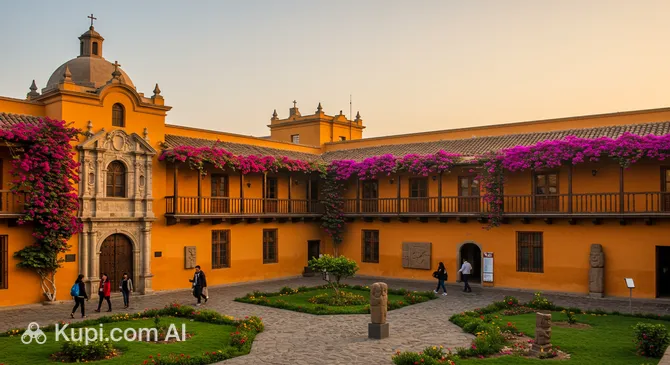
Larco Museum. Illustration.
Source: Kupi.com AI

Traveler photos:

A visit to the Larco Museum is a must for anyone wanting to understand Peru's rich cultural heritage. It is a place where history comes alive, allowing you to touch the mysteries of ancient civilizations and see authentic masterpieces of pre-Columbian art. The museum is also famous for its separate Erotic Pottery Gallery, which provides insight into unique aspects of the ancient Peruvians' worldview.

Contacts

To plan your visit, confirm opening hours, or ask questions, you can contact the Larco Museum administration in several ways. All up-to-date information is usually available on the museum's official website, which is the most reliable source of information for visitors.

How to contactContact
AddressAv. Simón Bolivar 1515 Ingreso por, frente al, Parque Larco, Navarra 169, Pueblo Libre 15084, Peru
Phone number+51 1 4611312
Websitewww.museolarco.org

What to Do

A visit to the Larco Museum offers guests a systematized and engaging tour of its vast collections, divided into several themed galleries. Among the highlights is the Gold and Silver Gallery, showcasing precious jewelry and ritual objects from ancient Peruvian civilizations. Equally fascinating is the famous Erotic Pottery Gallery, which provides a deeper understanding of ancient cultural beliefs and rituals related to fertility and reproduction.

Central to the exhibition is the Cultures Gallery, which presents thousands of years of pre-Columbian Peru. It is divided into four halls dedicated to different geographical regions: the North Coast (Cupisnique, Mochica, Chimu cultures), the Central Coast (Lima, Chancay), the South Coast (Paracas, Nazca), and the Highlands, featuring Chavín, Wari, and Inca artifacts. The world-class collection of Mochica pottery, which illustrates the life and mythology of this people in great detail, is particularly breathtaking.

A unique feature of the Larco Museum that sets it apart from most others in the world is its open storage area. Visitors have the rare opportunity to walk between high shelves displaying tens of thousands of meticulously cataloged ceramic pieces. This allows you not only to see the massive scale of the collection but also to feel like a true explorer peering into the treasury of Peruvian history.

Getting There

The Larco Museum is located in the Pueblo Libre district, slightly away from major tourist hubs like Miraflores or Barranco. The most convenient and popular way to get there is by taxi or using one of the ride-hailing apps, such as Uber or Cabify. A trip from Miraflores takes approximately 20-30 minutes, depending on traffic conditions in Lima. This is not only fast but also the safest option for tourists.

If you prefer a more budget-friendly alternative, you can use public transport. Many buses and minibuses (combis) run throughout Lima, some of which pass near the museum. However, please note that the public transport system can be quite chaotic and confusing for those unfamiliar with the city. There are no direct Metropolitano BRT or metro stations near the museum, so you would still need to take a taxi or walk after your ride.

Some Hop-On Hop-Off tour buses may include a stop in Pueblo Libre, which can also be a convenient way to combine a museum visit with other sightseeing. Additionally, many organized city tours include transfers to the Larco Museum. In any case, whichever method you choose, visiting this unique place will undoubtedly be one of the highlights of your trip.

Nearest city: Lima

History & Facts

The history of the Larco Museum is inextricably linked to the family of its founder, Rafael Larco Hoyle, who was one of the pioneers of Peruvian archaeology. It all began in 1925 when his father, Rafael Larco Herrera, acquired a collection of about 600 ancient ceramic pieces. Noticing his son's keen interest in these artifacts, he handed them over to him, encouraging his passion for history. Inspired by his father's patriotism and advice from his uncle—the founder of the first museum in Lima—young Rafael Larco Hoyle decided to create his own institution to preserve the priceless relics of Peru. The museum was officially inaugurated on July 28, 1926, a symbolic date coinciding with the country's Independence Day.

The museum's founder was more than just a collector—he was a true researcher. Rafael Larco Hoyle personally conducted archaeological excavations on the country's northern coast, making significant contributions to the study of ancient cultures. Thanks to his efforts, the initial collection began to grow rapidly. He acquired entire collections, such as 8,000 pieces from Roa and 6,000 from Carranza, and purchased artifacts found in the Chicama, Trujillo, and Virú valleys. This scientific approach led to the creation of one of the most comprehensive and systematized collections of pre-Columbian art in the world.

Initially, the museum's treasures were kept at the family estate in Chiclín, near the city of Trujillo. However, the collection grew so quickly that a new, more spacious, and publicly accessible location was soon required. In 1958, the museum moved to Lima, where it remains today. Remarkably, an elegant 18th-century vice-regal mansion, built on the foundations of an ancient 7th-century pyramid, was chosen for the site. Later, in 2003, some exhibits from the storage were transferred to the Museum of Pre-Columbian Art in Cusco, the former capital of the Inca Empire, further highlighting the Larco Museum's mission to spread knowledge about Peru's great past.

Time Needed

When planning a visit to the Larco Museum, it's worth setting aside about 2–3 hours. This is usually enough time to leisurely explore the main exhibits, including the famous Erotic Pottery Gallery and the impressive collection of gold and silver artifacts. You will be able to immerse yourself in the history of ancient Peru and gain a comprehensive understanding of the richness of its pre-Columbian cultures without feeling overwhelmed.

If you are deeply interested in archaeology or want to explore the museum's unique open storage area—where tens of thousands of artifacts are displayed—in more detail, feel free to plan for a half-day visit. Additionally, many visitors enjoy spending extra time strolling through the picturesque gardens surrounding the mansion or relaxing at the museum's excellent on-site restaurant, which is a destination in its own right in Lima.

Working Hours

The Larco Museum has a tourist-friendly schedule and is open to visitors year-round. The museum doors are open daily, including most holidays, typically from 10:00 AM to 7:00 PM. On certain special dates, such as December 24, 25, 31, and January 1, opening hours may be reduced (e.g., from 10:00 AM to 6:00 PM). Nevertheless, it is always highly recommended to check the official museum website for up-to-date information before planning your visit to avoid any surprises.

Tickets can be purchased on-site at the ticket office or online in advance, which often allows for a discount and ensures faster entry. Advance booking is not mandatory for individual visitors but is recommended for groups of 20 or more. Buying tickets online is a good way to save time, especially during peak tourist season, and make your immersion into the history of ancient Peru more comfortable.

9:00 – 19:00

Nearby

A visit to the Larco Museum is a deep dive into Peru's history, but no trip to Lima is complete without exploring its surroundings. The Pueblo Libre district, where the museum is located, is a historically significant site in its own right. Its name translates to "Free Town," highlighting its important role in the country's independence movement. Strolling through this neighborhood allows you to better experience the authentic atmosphere of the capital, away from the bustling tourist centers.

Exploring nearby attractions will enrich your experience and provide a more complete picture of the city's multifaceted culture. Just a few kilometers from the museum, you'll find parks, squares, and other points of interest, each telling the story of Lima in its own way. Below is a list of places conveniently located for a visit before or after the Larco Museum.

NameDistance
Salaverry Mall2.8 km
Park of the Heroes of Independence3.2 km
Lima Art Museum3.9 km
Rospigliosi Castle4.2 km
Plaza San Martín4.6 km
Place of Memory, Tolerance and Social Inclusion4.6 km
Osaka Pardo y Aliaga5.1 km

Have you reached the end of the page?

So the route has been studied inside and out