Support

Lima Main Square

About

Lima's Main Square, known as Plaza Mayor, is the historical and cultural heart of the capital of Peru. Located in the city center, which has been a UNESCO World Heritage site since 1988, this square is the starting point for exploring the country's rich history.

It was here in 1535 that Spanish conquistador Francisco Pizarro founded the city, establishing this site as the central point of the future capital. Since then, the square has witnessed key events in Peruvian history, maintaining its significance to this day.

Plaza Mayor is surrounded by magnificent colonial-era buildings that create a unique architectural ensemble. Iconic structures such as the majestic Lima Cathedral, the Archbishop's Palace with its famous carved balconies, and the Municipal Palace stand here. At the center of the square is an ancient bronze fountain, which serves as a traditional meeting place for locals and tourists alike.

Today, Lima's Main Square is not only a historical monument but also a vibrant public space. It is the perfect place for a leisurely stroll to admire the architecture, take striking photos, and feel the unique atmosphere of the city.
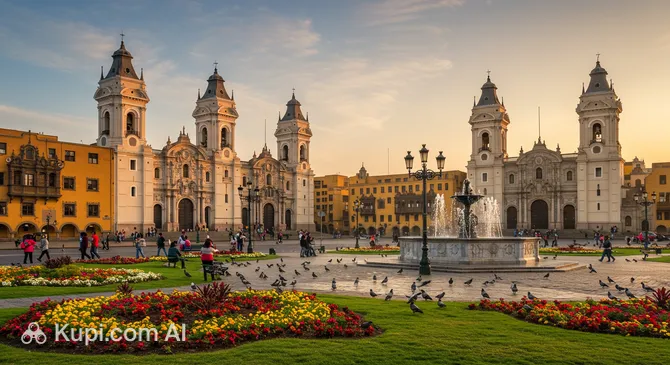
Lima Main Square. Illustration.
Source: Kupi.com AI

Traveler photos:

Contacts

Since Lima's Main Square is an open public space in the city's historic center, it does not have specific contact details like a phone number or email address. The square, also known as Plaza de Armas, is open to visitors at all times and can be reached on foot, by taxi, or by public transport from anywhere in central Lima. It is located at Plaza Mayor, Jirón de la Unión, Cercado de Lima, and serves as the starting point for exploring many of the key attractions in the capital of Peru.

How to contactContact
AddressJr. Junín cdra. 1, Lima 15001, Peru
Websitewww.facebook.com

What to Do

Lima's Main Square offers visitors a full immersion into the colonial era. Walking through it, you can admire the magnificent architecture of the 16th to 18th centuries. Particular attention is drawn to the massive carved wooden balconies in the neo-colonial style that decorate the facades of buildings such as the Archbishop's Palace and the Municipal Palace. These elements, characteristic of Lima, create a unique atmosphere and are a hallmark of the historic center.

The monumental Lima Cathedral holds a central place in the square's architectural ensemble. Its architecture is a blend of styles ranging from Gothic to Renaissance Baroque. Inside the cathedral, you can see richly decorated gilded altars, exquisite carved choir stalls, and, most importantly, the tomb of the city's founder—Spanish conquistador Francisco Pizarro. Also of interest is a painting where Inca rulers are depicted alongside Spanish viceroys, which is a unique testament to the fusion of two cultures.

Beyond exploring architectural masterpieces, the square is the center of the city's public life. City events, parades, and performances often take place here. Tourists and locals gather by the historic bronze fountain from 1651, which serves as a popular spot for meeting and relaxing. Additionally, at 12:00 PM, you can witness the spectacular Changing of the Guard ceremony at the Government Palace. This is a place where you can not only touch history but also feel the modern rhythm of the Peruvian capital.

Getting There

Lima's Main Square, or Plaza Mayor, is located in the very heart of the historic city center, making it easily accessible from most tourist areas. As the central landmark of the capital of Peru, many routes lead here, and reaching the square is quite simple. It is the starting point for exploring the city's colonial heritage, with all major attractions within walking distance.

One of the most convenient and fastest ways to reach the square by public transport is the Metropolitano rapid bus system. The closest station to Plaza Mayor is Jirón de la Unión, which is just a few minutes' walk from the square along a busy pedestrian street. Numerous city buses (known as "combis" or "colectivos") also run throughout the city; however, their routes can be difficult to navigate without knowing Spanish, and the vehicles are often overcrowded.

For greater comfort, you can always use a taxi or popular ride-sharing apps. A trip from tourist districts like Miraflores or Barranco will take about 30–40 minutes, depending on traffic conditions. If you are staying directly in the historic center of Lima, the best option is to walk, allowing you to fully enjoy the colonial architecture and the atmosphere of the old streets on your way to the main square.

Nearest city: Lima

History & Facts

The history of Lima's Main Square is inextricably linked to the founding of the city itself. It was here on January 18, 1535, that Spanish conquistador Francisco Pizarro founded the new capital, which was originally named the "City of Kings" (Ciudad de los Reyes). However, the name did not stick. The modern name, "Lima," has deeper roots. According to one version, it comes from the Aymara word "lima-limaq," meaning "yellow flower." According to another, more common theory, the name is a corruption of the Quechua word "rimaq," which translates as "speaker" or "talker." This same word gave its name to the Rímac River, which flows through the city.

Plaza Mayor and its surrounding historic center were shaped during the 16th to 18th centuries, during the era of Spanish colonial rule. The architecture of the square and the adjacent streets bears the hallmarks of the styles of that time, creating a unique ensemble. In recognition of the outstanding value of this heritage, the historic center of Lima was included in the UNESCO World Heritage list in 1988. This decision confirms the uniqueness and importance of preserving the colonial character of the heart of the Peruvian capital for world culture.

The square is surrounded by buildings that are living witnesses to history. One of the key structures is Lima Cathedral. Its construction began simultaneously with the city's founding in 1535, and Francisco Pizarro himself laid the first stone. Throughout its centuries-old history, the cathedral has suffered repeatedly from earthquakes and has been rebuilt; as a result, its current appearance is a blend of various architectural styles—from Baroque to Neoclassicism. Today's cathedral building is the third one built on this site and houses the tomb of the city's founder in its walls.

Time Needed

For a general introduction to Lima's Main Square and its architectural ensemble, 1–2 hours is usually sufficient. During this time, you can leisurely walk around the perimeter of Plaza Mayor, admire the facades of the Cathedral, the Government Palace, and the Archbishop's Palace, and take photos by the famous bronze fountain in the center. This is enough time to soak in the historical atmosphere of this iconic spot in Lima.

However, if you want to dive deeper into history and culture, your time at the square will increase significantly. For example, you should set aside at least an hour for a detailed tour of the majestic Cathedral with its museum of religious art and the tomb of Francisco Pizarro. Additionally, one of the square's main traditions is the spectacular Changing of the Guard ceremony at the Government Palace, which takes place daily around noon. To secure a good viewing spot, it is better to arrive early, which will add another 30–45 minutes to your visit.

Thus, a couple of hours is enough for a superficial tour, but to truly experience the atmosphere of the Main Square, visit the cathedral, and see the changing of the guard without rushing, it is better to set aside half a day. This will allow you not only to see the key sights but also to relax in one of the nearby cafes, watching the life of the heart of the capital of Peru.

Working Hours

Lima's Main Square, also known as Plaza Mayor, is an open public space, so it is accessible 24 hours a day, year-round. No tickets or reservations are required for a walk through the square itself—you can visit it at any time that is convenient for you, enjoying the atmosphere of the historic center of the capital of Peru.

However, please keep in mind that the buildings surrounding the square—such as the Cathedral, the Government Palace, and the Archbishop's Palace—have their own opening hours. For example, the Cathedral museum is typically open to visitors Monday through Friday from 9:00 AM to 5:00 PM and Saturday from 10:00 AM to 1:00 PM. If you plan to visit these attractions from the inside or see the spectacular Changing of the Guard ceremony at the Government Palace, which takes place around 12:00 PM, it is highly recommended to check the current schedules in advance on official websites or at tourist information centers.

6:00 – 23:00

Nearby

A visit to the Main Square is just the beginning of your acquaintance with Lima's rich heritage. The city's historic center, recognized as a UNESCO World Heritage site, is literally woven from unique architectural monuments, museums, and ancient churches. Most of them are within walking distance of Plaza Mayor, making it easy to create a packed walking itinerary.

A stroll around the square will allow you to dive deeper into the atmosphere of the colonial era, discover hidden courtyards, admire the famous carved balconies, and feel the centuries-old history of the capital of Peru. Every building here holds its own secrets, and nearby attractions complement the overall picture, making your journey truly unforgettable.

NameDistance
Lima Cathedral0.1 km
Casa de Aliaga0.2 km
House of Peruvian Literature0.3 km
Acuática Aquarium0.6 km
Plaza San Martín0.8 km
Lima Art Museum1.8 km
Rospigliosi Castle3.6 km

Have you reached the end of the page?

So the route has been studied inside and out