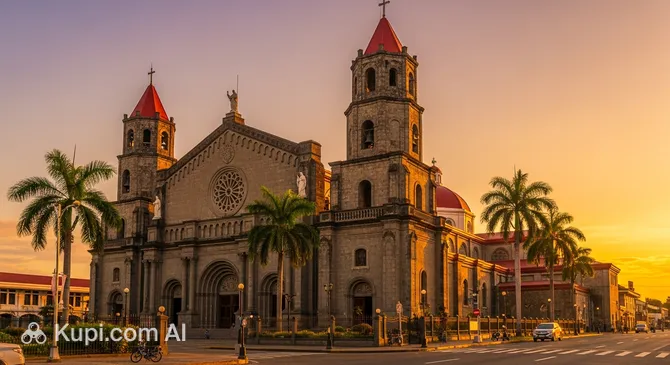
In the heart of the historic Albay district in the city of Legazpi stands the majestic St. Gregory the Great Cathedral. This monumental church, built of massive stone, is not only a spiritual center but also a major architectural landmark representing the colonial grandeur of the Philippines. Also known as Catedral de San Gregorio Magno, the cathedral attracts pilgrims and tourists with its austere beauty and rich past.
St. Gregory the Great Cathedral. Illustration.
Source: Kupi.com AI
Traveler photos:
The cathedral building is a harmonious blend of Spanish Baroque and 19th-century local construction techniques. Thanks to its sturdy stonework, the church has stood the test of time and the elements, remaining one of the most recognizable landmarks of the old city. Its high traveler rating confirms its status as a must-visit site in Albay province.
Today, this active Catholic church serves as a place of silence and prayer amidst the city's hustle and bustle. Located near the shores of Albay Gulf, it offers guests a chance to experience the region's living history and see how locals carefully preserve their traditions and faith.
Contacts
For those planning a visit to St. Gregory the Great Cathedral, it is useful to have the latest contact details on hand. The church is located in the historic center and is easy to find by its distinctive facade.
Visiting the cathedral offers a rare opportunity to enjoy a peaceful atmosphere and quiet reflection. Inside, it is worth noting the exquisite altars, ancient statues of saints, and colorful stained glass windows that fill the space with soft light. If you are lucky enough to attend a mass, you can hear inspiring choral singing, which adds a special solemnity to the visit.
For photography enthusiasts, the cathedral offers magnificent angles: its massive facade and tall bell tower look especially striking in clear weather. If you turn around, you can see the famous Mayon Volcano in the distance, creating a unique and majestic backdrop for your photos. A walk through the surrounding Old Albay district will allow you to see other colonial buildings that have preserved the spirit of the past.
The spiritual significance of the site is highlighted by the fact that Pope John Paul II celebrated mass here in 1981. The memory of this event is still carefully preserved within the church walls, and the cathedral remains an important stop on pilgrimage routes where visitors can reflect on the eternal and experience Filipino Catholic culture.
Getting There
Getting to the cathedral in Legazpi is quite simple as it is located in the bustling Old Albay District. If you are arriving in the city by plane, the trip from Legazpi Airport (LGP) by taxi or a colorful local tricycle (motorized rickshaw) will take only 10–15 minutes. For convenience, you can use the Grab app to book a car.
Within the city, jeepneys—the famous Filipino minibuses—run frequently. You will need those heading towards the Albay district. If you prefer walking, the route from the city port or the Embarcadero shopping and entertainment center will take about 20–30 minutes along the city's central streets.
Travel from other regions, such as Manila, most often involves a flight; however, there are also intercity buses arriving at the Legazpi Central Terminal. From there, the cathedral can be reached by public transport in just 5–10 minutes.
Nearest city: Legazpi
History & Facts
The history of St. Gregory the Great Cathedral is inextricably linked to natural disasters and the resilience of the local population. Construction of the stone church began in 1839 under the project of Governor Don José María de Peñaranda. This followed the devastating eruption of Mayon Volcano in 1814, which destroyed many surrounding settlements and forced residents to seek new, safer lands.
The cathedral became the heart of the new settlement known as Pueblo Viejo (Old Albay). Interestingly, Spanish missionaries initially tried to persuade people to settle on the slopes of Mount Bariw, but many preferred to return closer to the fertile lowlands and the gulf coast. Since then, this church has become a symbol of the city's rebirth and its spiritual foundation.
A major milestone in the cathedral's modern history was the visit of Pope John Paul II on February 21, 1981. The pontiff celebrated a solemn Apostolic Mass here, dedicated to agricultural workers and farmers. This event turned the cathedral into a site of global historical significance for all Catholics in the region.
Time Needed
Typically, travelers find that 30 to 60 minutes is enough to explore St. Gregory the Great Cathedral. This provides plenty of time to leisurely study the architectural details of the exterior, step inside to view the interiors, and take a few memorable photos against the ancient stone walls.
If you plan to combine your visit with a walk through the historic Albay district or wish to stay for a full service, you should budget about 1–2 hours. Such immersion will allow you to better feel the rhythm of the local community and the atmosphere of old Philippines.
Working Hours
As an active religious site, the cathedral is usually open to visitors daily from early morning until evening (approximately from 6:00 AM to 6:00 PM). Access to the interior may be limited or restricted during solemn masses, weddings, or other church rites.
To make your visit as comfortable as possible, it is recommended to check the current worship schedule on the massschedule.com website in advance. Remember to maintain silence inside the cathedral and be respectful of the feelings of worshippers.
Nearby
Exploring the surroundings of St. Gregory the Great Cathedral is a great way to get a deeper look at the culture and daily life of Albay province. Many interesting sites are concentrated around the cathedral, from historical monuments to modern parks, which will harmoniously complement your tour.
Below are some attractions located within walking distance or a short drive from the church: