Support

Casino - Centrul de Cultură Urbană

About

Imagine an elegant palace nestled in the greenery of the city's oldest park. The Casino – Urban Culture Center is not just an architectural monument, but the true heart of social life, a place Cluj-Napoca is rightfully proud of. Built at the end of the 19th century, the building embodies the spirit of old Europe and serves as the centerpiece of the Simion Bărnuțiu Central Park in the vibrant country of Romania.
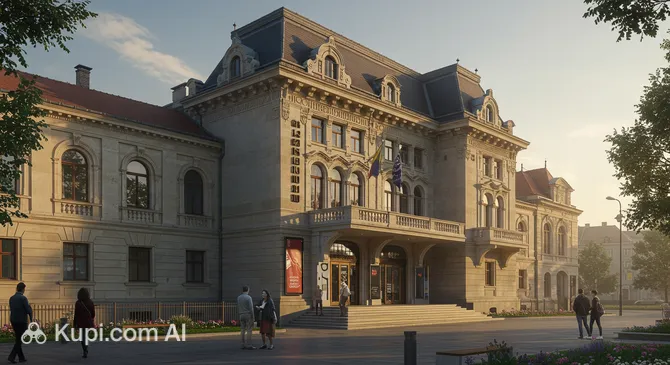
Casino Urban Culture Centre
Casino Urban Culture Centre. Иллюстрация. Источник: Kupi.com AI

The architectural style, created by the famous master Lajos Pákey, is striking in its eclecticism, showing a clear influence of the Vienna school. Many travelers notice a remarkable resemblance to Sanssouci Park in Potsdam, although the Romanian "twin" is significantly younger than its German inspiration. Despite its historical name, today it is a modern multifunctional hub where classic interiors harmoniously blend with contemporary art.

Following a major restoration in 2012, the site gained a second life as the Centrul de Cultură Urbană. It now hosts the most significant events of the "Treasure City," from art gallery openings and festivals to formal civic ceremonies. The spacious halls and well-kept garden with fountains make it an ideal spot for those wanting to experience the aristocratic atmosphere of the past within the rhythm of a modern metropolis.

Contacts

To check the current exhibition schedule or event details, you can contact the center's administration directly. The official website regularly publishes announcements of upcoming festivals and concerts to help you plan your visit. Below are the primary contact details for the venue.

How to contactContact
AddressParcul Central Clădirea Casino, Parcul Central, Cluj-Napoca 400027, Romania
Phone+40 371 376 646
Websiteculturaurbana.ro

What to Do

A visit here is first and foremost an immersion into the cultural dynamics of modern Cluj. The building regularly hosts contemporary art exhibitions, craft fairs, and international festivals. Even if you don't plan on attending a specific event, it's worth stepping inside to appreciate the scale and elegance of the restored halls, which can accommodate up to 500 guests at once.

A picturesque garden surrounds the building, where you can have a small photoshoot against the backdrop of graceful statues and classical fountains. During the warmer months, gala evenings and official receptions are often held on the terraces, which are fascinating to observe from a distance. A stroll along the park's adjacent alleys, combined with a view of the casino's eclectic facade, will give you the feeling of walking through Vienna or Paris a century ago.

For those who value comfort, the building provides all the necessary infrastructure, from catering areas to accessibility for people with disabilities. This is not a gambling establishment in the traditional sense, but an intellectual and creative hub where you can meet local artists, students, and public figures in the setting of a real palace.

Getting There

Finding the Casino – Urban Culture Center is easy, as it is located in the heart of the city within the Simion Bărnuțiu Central Park. If you are staying in the historic center, for example, near Unirii Square, the walk to the park will take only 10–15 minutes through picturesque city streets.

For those who prefer public transport, major tram and bus routes connecting different parts of the city stop near the park. If you are coming from Cluj-Napoca International Airport, a taxi or bus ride will take about 20–30 minutes, depending on traffic. For drivers, there are paid parking spaces around the park area, though they can be difficult to find on weekends.

Ближайший город: Cluj-Napoca

History & Facts

The history of this magnificent building began in 1897. It was designed by the prominent architect Lajos Pákey, who shaped the city's appearance at the time with iconic projects like the Hotel Continental. Pákey, who was educated in Budapest, Munich, and Vienna, infused the Casino project with a level of sophistication that made it a favorite Sunday retreat for the local elite.

Interestingly, the building has played many roles over the decades. In 1925, it housed the School of Fine Arts, and in 1938, an ethnographic museum was officially opened here in the presence of King Carol II. As for the name "Casino," it stuck because of the mezzanine level where roulette was indeed played during certain periods, although gambling was never the primary purpose of this cultural palace.

During the Soviet period and until the late 1990s, the building hosted a prestigious restaurant, but after the revolution, it gradually fell into disrepair. Its major revival came only in 2012, when a total restoration was carried out with the support of the British Council. Today, the property is municipally owned and serves as the main venue for the city's most significant events.

Time Needed

For a quick look at the architecture and a short stroll through the surrounding gardens, 30–40 minutes may be enough. However, if you plan to visit an art exhibition or participate in a cultural festival, you should allow at least 1–2 hours. This is plenty of time to leisurely explore the displays and enjoy the interiors.

If you decide to combine your visit to the center with a full day of relaxation in Central Park—perhaps boating on the lake or visiting nearby cafes—plan to spend half a day in this location. The park's atmosphere encourages slow walks, so there is no need to rush.

Working Hours

The Urban Culture Center is open to visitors daily, making it easy to include in your sightseeing itinerary. The doors are open from 10:00 to 20:00, Monday through Sunday. However, please keep in mind that access to the main halls may be restricted during private conferences or official receptions, so checking for announcements on the official website will help you avoid any scheduling conflicts.

10:00 – 20:00

Nearby

The cultural center's location in the city's main park makes it an ideal starting point for further exploration. Both historical monuments and modern entertainment venues are concentrated nearby, allowing for a rich walking itinerary.

NameDistance
Central Park Simion Bărnuțiu0.5 km
Zoological Museum of Cluj-Napoca0.6 km
Ethnographic Museum of Transylvania0.7 km
National Museum of Transylvanian History0.7 km
Muzeon Jewish History Museum0.7 km
Students' Cultural House0.7 km
Matthias Corvinus House0.8 km

Reached the end of the page?

That means the route is fully explored