Support

Belev

About

Belev is a small but surprisingly atmospheric town located on the high left bank of the Oka River in the Tula region. Here, the special tranquility and coziness of the Russian province prevail, and the ancient streets and picturesque landscapes seem to transport travelers back in time. This place is ideal for those seeking peace and wishing to experience authentic traditions.

Geographically, the town is located in the heart of the East European Plain, so the climate here is moderate continental: with warm summers and real snowy winters. The population is just over 13,000 people, which allows for a measured pace of life not found in major metropolises. If you are planning a trip to a destination like Russia, Belev will be an excellent example of an old district town that has preserved its historical appearance.
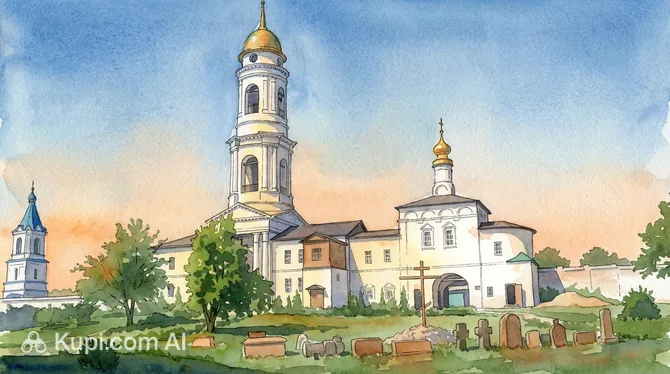
Belev. Illustration.
Source: Kupi.com AI

The town is the same age as Moscow, and the history of Belev is inextricably linked with the merchant class and the spiritual life of the region. The main architectural landmark is the majestic Spaso-Preobrazhensky Monastery, whose domes are visible from afar. A walk through the monastery grounds and nearby observation decks offers unforgettable views of the Oka River valley.

However, for many tourists, Belev is primarily known for its unique gastronomic brand. This is the birthplace of the famous Belev pastila — a healthy treat made from baked Antonovka apples, the recipe for which is carefully kept by local craftsmen. In addition, the town is famous for its exquisite bobbin lace, which is distinguished by its particular delicacy and complex patterns.

Come to Belev to enjoy the silence, admire the merchant architecture, and, of course, try the freshest pastila right at its place of production.

Weather Overview

The climate in Belev is moderate continental, which provides a clear change of seasons typical for central Russia. Summer here is usually mild and comfortable: in July, the warmest month, the average temperature is about +19°C, and during the daytime, the air often warms up to +23°C. This is a wonderful time for walks, although it is worth remembering that summer rains are not uncommon, especially in July.

Winter arrives with steady sub-zero temperatures and snowfalls. January is considered the coldest month, with an average minimum of about -8°C. December is distinguished by the highest number of days with precipitation (up to 16 days), so warm waterproof shoes will be necessary. To plan your wardrobe as accurately as possible, we recommend checking the forecast and finding out what the weather in Belev will be like just before departure.

Expect a warm summer with occasional rain and cold, snowy winters. The driest period is usually the beginning of autumn: in September, the number of days with precipitation drops to a minimum, which creates excellent conditions for an "Indian summer."

Average monthly temperature

Average monthly precipitation

Interesting Facts

In addition to the main attractions, Belev holds many fascinating secrets and historical details that reveal themselves only to the most curious travelers. This town is a true box of stories, where the destinies of emperors, poets, and inventive merchants are intertwined.

  • The same age as the capital. Belev is one of the oldest cities that Russia is proud of. It is first mentioned in the Ipatiev Chronicle under the year 1147 — exactly the same year as Moscow. This makes it not just a provincial town, but an ancient guardian standing at the origins of statehood.

  • An imperial tragedy. In 1826, the town became the site of a sad historical event. Empress Elizabeth Alexeievna, the wife of Alexander I, who was returning from Taganrog after the death of her husband, stayed at the house of the Dorofeev merchants and suddenly passed away. In her memory, the personal belongings of the imperial family were kept in the town for a long time.

  • Invention from abundance. The famous Belev pastila appeared thanks to the merchant ingenuity of Amvrosy Prokhorov. Initially, he was simply looking for a way to preserve a huge harvest of "Antonovka" apples, which spoiled quickly. The result of the experiment was so successful that soon the treat won medals at exhibitions in Paris and London.

  • Cradle of romanticism. The Belev district is the birthplace of Vasily Andreyevich Zhukovsky, a famous poet and mentor to Alexander II. He was born in the village of Mishenskoye, just a few kilometers from the town, and it was the local landscapes that inspired his first lyrical works.

  • Special lace. Although Vologda lace is considered the most famous in the country, Belev craftswomen created their own unique style of bobbin lace. Belev lace is distinguished by its special thinness, the use of closed contours, and the absence of a relief "skan" (thick thread), which gives the products incredible airiness.

How to Get There

When planning a trip to this cozy historical corner, it is worth thinking through the logistics in advance, as there is no direct air connection to the town. You can find out more about how to get to Belev in various ways, but most often tourists choose a combined route through neighboring regional centers or the capital.

There is no airport in the town of Belev itself, so the air gateways for travelers are located in neighboring regions. The nearest regional hub is Grabtsevo (KLF) in the city of Kaluga, located about 83 km from Belev. A trip from there by taxi or transfer will take about 1.5–2 hours. If you are flying from afar, it is more convenient to use the large Moscow airports. The most convenient airports in terms of their location toward the southern direction are Vnukovo (VKO) and Domodedovo (DME). They are located in the city of Moscow at a distance of just over 210 km from the destination. The journey by car from Moscow airports to Belev will take about 3–4 hours.

For clarity, here is summary information on the main airports through which you can build a route:

AirportPassenger trafficDistance
Grabtsevo100 00083 km
Bryansk Airport145 km
Vnukovo16 mln211 km
Domodedovo15.6 mln212 km
Vostochny230 km

Railway communication will also require a transfer, as major lines pass a little to the side. There is no major junction railway station for long-distance trains in the town of Belev itself, but you can arrive at the Sukhinichi-Glavnye station in the town of Sukhinichi, which is about 61 km from Belev. This is a major hub where many trains heading south stop. From there, you can reach the final destination by taxi or local bus in about an hour. Another option is the Mtsensk station in the town of Mtsensk (about 65 km away), which is convenient to reach by high-speed trains from Moscow.

Below are the nearest railway stations convenient for transfers:

StationPassenger trafficDistance
Cherepet Station38 km
Chern Railway Station50 00061 km
Sukhinichi-Glavnaya Station1.2 mln61 km
Sukhinichi-Uzlovye Station450 00062 km
Mtsensk Railway Station350 00065 km

Many tourists prefer to get to Belev by private car or scheduled buses. The town is connected by regular bus service with Tula, Moscow, and Oryol. A car trip allows you to enjoy the picturesque views of the Russian province and make stops at other interesting places in the Tula region.

Main Attractions

The attractions of Belev are a harmonious combination of spiritual architecture, rich merchant history, and unique gastronomic traditions. The town is quite compact, so you can see the key sites at a relaxed pace, enjoying the indescribable atmosphere of the Russian province.

Spaso-Preobrazhensky Monastery. This is undoubtedly the architectural dominant and the spiritual heart of the city. The majestic ensemble, located on the high bank of the Oka, includes buildings from the 17th–19th centuries. Tourists come here not only for pilgrimage but also to see the stunning panorama that opens up from the monastery walls. The view of the river valley and the distances beyond the Oka is considered one of the most picturesque in the region, and the monastery grounds themselves are perfect for leisurely walks and reflection.

Belev Art and Local History Museum. For a small town, this museum has a surprisingly rich collection, making it a must-visit. It was founded in the early 20th century with the participation of the son of the famous poet V.A. Zhukovsky. Here you can see not only objects of merchant life and archaeological finds but also original paintings by masters, which is a rarity for district museums. The exposition allows you to dive deep into the cultural context of the past and understand how the city lived centuries ago.

"Old Traditions" Museum (Pastila Factory-Museum). A visit to Belev is unthinkable without getting to know its main brand. This is a place where the history of taste comes to life before your eyes. Tourists are offered more than just a chance to buy sweets; they can see the process of creating the famous Belev pastila, learn the secrets of a technology that is more than a hundred years old, and, of course, participate in a tasting. This is an interactive and "delicious" attraction that leaves the warmest memories of the trip.

Local Cuisine

The gastronomic map of Belev is, above all, a story about sweets and ancient Russian tea parties. Unlike many cities where tourists are attracted by haute cuisine restaurants, people come here for a unique taste that cannot be confused with anything else. The cuisine here is simple, homemade, but with a bright "apple" accent that made the town famous all over the world.

The main culinary symbol of the city, which every guest must try, is the famous Belev pastila. This is not the white bar that many are used to from childhood, but a layered dessert resembling a cake or biscuit. It is prepared by hand from baked "Antonovka" apples whipped with egg white and sugar, and then slowly simmered in ovens. Its taste is sweet and sour, rich, and very aromatic. In addition to the classic version, it is worth trying options with added berries: cranberries, black currants, or sea buckthorn.

Besides pastila, local craftsmen have revived other ancient delicacies. Pay attention to smokva — these are dense sheets of dried fruit puree, a kind of natural marmalade that was very popular in the merchant environment. Also popular are "khrustila" (pastila crackers) and delicate apple marshmallows (zefir). These products can be found both in specialized shops at factories and in ordinary shops in the town.

The drink culture in Belev is inextricably linked with the traditions of neighboring Tula: tea from a samovar is held in high esteem here. Locals and museums often offer guests herbal blends based on Ivan-chai (fireweed), thyme, and mint, which perfectly complement the taste of apple desserts. Of the refreshing drinks in summer, traditional bread kvass is popular, as well as berry morses.

As for main meals, Belev's gastronomic scene is quite modest and conservative. There are no noisy food courts or expensive gastro-bars here. Tourists and locals usually have lunch in small cozy cafes or culinary shops serving understandable Russian food: hearty borscht, dumplings (pelmeni), pancakes, and pies with seasonal fillings. A special experience is to visit the refectory at the monastery, where you can often buy fresh pastries and monastic bread.

Travel Tips

Welcome to Belev! To ensure your acquaintance with this cozy historical town goes smoothly and leaves only pleasant impressions, we have prepared a list of practical recommendations to help you plan the perfect trip.

  1. Clothing and Dress Code. Belev is located on hilly terrain, so choose the most comfortable shoes with flat soles for walks — heels will be inappropriate on ancient pavements. The climate here is changeable: a light raincoat will not hurt in summer, and in winter — a warm windproof jacket for walks by the river. Since one of the main attractions is an active monastery, women are recommended to have a headscarf and a skirt (or pareo) with them, and men should avoid shorts and tank tops when visiting holy sites.
  2. Transport Nuances. The town is very compact, and it is best to move around the center on foot — this way you won't miss the atmospheric details. Public transport is represented by buses, but they run with long intervals. Taxi aggregator apps may work unstably or with long waits; it is more reliable to write down the numbers of local taxi services in advance or ask to call a car at the hotel reception or in a museum.
  3. Finances and Cash. Cards are accepted without problems in chain supermarkets and museums. However, if you plan to buy pastila at the market, souvenirs from craftsmen, or leave donations in churches, be sure to have cash with you. There are ATMs of major banks in the center, but there are few of them, so it is better to withdraw the necessary amount before arriving. The daily budget here is very affordable.
  4. Health and Pharmacies. Belev is a safe and quiet town; walking here is comfortable even in the evening. Note that there may not be 24-hour pharmacies; most close by 20:00 or 21:00. We recommend bringing a basic first-aid kit with necessary medications so you don't have to look for them late at night.
  5. Communication and Internet. The main language of communication is Russian; few people know English. Mobile communication and mobile internet (4G) from major operators work stably within the city limits. Free Wi-Fi is available in hotels and some cafes, but there are practically no public access points on the streets. It is useful to download offline maps of the city in advance.
  6. Etiquette and Communication. Local residents are friendly and appreciate simple human communication. It is customary to say hello when entering small private shops or museums. On the monastery grounds, maintain silence, do not engage in loud conversations, and always ask permission before taking pictures of clergy or monks.
  7. What to Avoid. Do not put off dinner until late. Unlike in large cities, cafes and shops in Belev close quite early, and after 21:00 finding a place for a full meal can be problematic. Also, do not buy the famous pastila from random sellers on the highway under direct sunlight — the product requires proper storage.
  8. Shopping Tip. When purchasing Belev pastila, pay attention to the production date and softness: a fresh product should be elastic and aromatic. If you want to bring back something besides sweets, look for products with Belev lace — this is a unique craft that will make an exquisite and rare gift.

Belev is a town that does not tolerate haste. We hope these tips will help you relax, feel the spirit of the old province, and enjoy every moment of your trip!

Entertainment & Nightlife

Nightlife and entertainment in Belev have their own unique, provincial character. You won't find noisy nightclubs with neon signs, large-scale raves, or quarters where music blares until morning. Evening leisure in this ancient town is a story of comfort, silence, and contemplation. Travelers should prepare for a measured rhythm: "nightlife" here ends quite early, giving way to peaceful sleep to the sounds of nature.

The historical part of the city, especially the area around the Spaso-Preobrazhensky Monastery, becomes a center of attraction in the evening. Although it is a religious site, the area next to it is the best place to watch the sunset. From here, a breathtaking view opens up over the Oka River and endless fields, which look particularly romantic at dusk. This is an ideal location for quiet walks before bed, where you can enjoy the fresh air and take atmospheric photos.

As for dining establishments, bars and restaurants in the usual sense of a metropolis are absent here. The evening can be spent in small cozy cafes, located mainly on the main street — Karl Marx Street. This is where the main urban activity is concentrated. However, an important nuance should be taken into account: most establishments close at 20:00–21:00, and kitchens may stop working even earlier. It is better to plan a late dinner in advance or check the operating hours at the entrance.

If you are looking for cultural leisure in the evening, pay attention to the local Center for the Development of Culture and Tourism. Often, this is where film screenings, concerts by local groups, or themed evenings take place. This is perhaps the only place that can offer an indoor entertainment program after sunset. It is best to check the schedule on-site, as it is subject to change.

During the day, the entertainment program is more intense. The town offers a dive into history through its museums, visits to the famous pastila productions, and walks through park areas. But it is the contrast between an educational day and a quiet, almost rural evening that creates the very feeling of a break from the city bustle that many come to Belev for.

Practical tips for evening walks:

  • Safety. Belev is a quiet and safe town. Evening walks in the center pose no threats; however, lighting on peripheral streets may be poor. We recommend sticking to central routes.
  • Transport. Public transport does not run at night. If you stay late visiting friends or at a cafe far from your hotel, save the numbers of local taxi services in your phone in advance — catching a car on the street or through an app can be problematic.
  • Dress code. The clothing style here is as casual as possible. In cafes and on the streets, you will feel comfortable in casual clothes and shoes; evening gowns or formal wear are not required.
  • Finances. Have cash with you, especially in the evening, as payment terminals may not work everywhere and banks will already be closed.

Parks & Museums

Despite its modest size, Belev offers guests a surprisingly harmonious combination of natural beauty and cultural wealth. The town is literally buried in greenery, and its museum collections can rival the exhibitions of major regional centers in terms of value. It is an ideal place for those who want to combine leisurely walks in the fresh air with an immersion into the deep history of the Russian province.

If you are looking for a place for a quiet break, head to the City Garden. This is the oldest green zone in the town, where century-old lime trees that remember merchant times are preserved. The park is located on a high bank, offering breathtaking panoramas of the bends of the Oka River and the distances beyond. This is a favorite place for locals for evening promenades, where the silence is broken only by the rustle of leaves and the ringing of bells from nearby churches.

For lovers of wild nature, the banks of the Oka River will be a real discovery. Although there are no landscaped granite embankments here, natural beaches and green meadows along the river create excellent conditions for picnics and contemplative relaxation. In summer, you can find secluded places for swimming here, and in autumn, enjoy the golden landscapes that inspired many Russian artists and poets.

The cultural life of the town is concentrated in its unique museums. The main pride is the Belev District Art and Local History Museum. It is often called the "mini Tretyakov Gallery" thanks to its impressive art collection. It features original works by Russian and Western European masters, which is a great rarity for regional museums. In addition to painting, the exhibition introduces archaeological finds and the everyday life of the ancient fortress city.

Another important point of attraction is the Center for the Development of Culture and Tourism (House of Traditions). This is not just a museum, but a living space where local crafts are preserved. Here you can see exhibitions of the famous Belev lace, clay toys, and, of course, learn everything about the production of pastila. Master classes are often held, allowing tourists to touch with their own hands the craft heritage that Russia is famous for.

Insider Tip: Be sure to walk to the place locals call "Karlova Gora" or simply the high bank by the monastery at sunset. At this time, the sun sets behind the endless fields across the river, painting the water and church domes in incredible shades — the best moment for atmospheric photos and a meditative end to the day.

Getting Around

The transport system of the town of Belev fully corresponds to its intimate and cozy status. Since the town is very compact, there is no complex network of interchanges, subway, or tram lines. All the main attractions, museums, and historical buildings in the center are within walking distance of each other, so the best way for a tourist to get around is walking, allowing you to enjoy the atmosphere of the old streets.

Public transport is represented exclusively by small and medium-capacity buses, as well as shuttle taxis (marshrutkas). The route network here is small and straightforward: it connects the central part of the town with the railway station, the bus station, and residential areas on the outskirts. Buses run along the main streets, including Karl Marx Street, allowing you to get from the entrance of the town to the historical center without transfers.

The fare payment system in Belev is simple and conservative. Complex transport cards, zones, or validators are not used here. Payment is made directly to the driver upon entry or exit (it is better to clarify this point when boarding). The fare is fixed and very affordable. We strongly recommend having cash with you, preferably in small bills or coins, as terminals for contactless payment by bank cards or smartphones are not always found in local buses.

It is important to consider the transport schedule. Unlike major metropolises, life in Belev quietens down quite early. Active bus movement is observed in the morning and afternoon hours, but after 19:00–20:00, intervals increase significantly, and in the late evening, trips may stop altogether. If you are planning a late dinner or a sunset walk far from your hotel, it is worth thinking through the return route in advance.

As an alternative to public transport, you can use taxi services. Popular federal aggregators may work in the city, but the waiting time for a car can often be long due to the small number of drivers on the line. A more reliable option is to find out the phone numbers of local dispatch services at your hotel reception or in a museum. Car sharing and organized bicycle rental are currently not developed in the city, so it is better to use a private car for trips around the surrounding area.

Accommodation

The hotel infrastructure in Belev is modest and unassuming, which fully corresponds to the spirit of this quiet district town. You will not find large chain hotels, luxury five-star resorts, or large-scale hotel complexes here. The basis of the housing stock for tourists consists of small private hotels, cozy guest houses, and apartments for short-term rent. This creates a special, almost home-like atmosphere, allowing travelers to feel not like customers, but like welcome guests.

In terms of location, the most attractive area for tourists is the historical center of the town. Staying within the square of streets around the Spaso-Preobrazhensky Monastery and Karl Marx Street, you will be within walking distance of all key museums, architectural monuments, and a few cafes. This is particularly convenient for those traveling without a private car, as all interesting locations will be literally at your fingertips. Living on the outskirts may be cheaper, but it will require additional effort for transportation.

The price range for accommodation in the city can be characterized as budget-friendly. The cost of an overnight stay here is generally lower than in regional centers, making the trip affordable for most tourists. However, the choice of places is limited, and competition for the best options can be high, especially during the warm season.

Booking advice: Given the town's small number of rooms, we strongly recommend taking care of finding accommodation in advance. If you are planning a trip for a weekend in the summer or during holidays, it is worth booking a room several weeks ahead. Many local accommodation facilities are presented on popular aggregators, but to guarantee check-in at small private guest houses, it is sometimes useful to contact the administration directly by phone. Also, be prepared for the fact that in some places they may ask for cash payment.

Nearby Cities

For those who want to explore the surroundings, Belev serves as an excellent starting point for day trips to several interesting nearby places. Thanks to its fortunate location on the border of regions, tourists can quickly reach iconic cities of Central Russia. For example, Tula is famous for its ancient Kremlin, legendary gingerbread (pryaniki), and samovars. Kaluga, known as the cradle of cosmonautics, offers unique museums and parks related to the history of space exploration. And Oryol attracts literature lovers, being the birthplace of many famous Russian writers and home to picturesque noble estates.

CityPopulationDistance
Sosensky10 62829 km
Kozelsk16 44334 km
Bolkhov11 09741 km
Suvorov17 45042 km
Sukhinichi14 73661 km

These nearby destinations allow you to get an idea of the diverse culture and landscapes of the region, harmoniously complementing the impressions of visiting ancient Belev.

Shopping & Souvenirs

General Overview: Shopping in Belev is fundamentally different from the usual trip to shops in large metropolises. People come here not for fashionable clothes or electronics, but for unique gastronomic experiences and authentic craft products. This is a city of "delicious" souvenirs, where the buying process is often accompanied by tasting and talking with local producers. The trade sphere here is calm, provincial, and devoid of bustle.

Main Shopping Areas/Streets: The main shopping artery of the city is Karl Marx Street. It is here and on the adjacent alleys that most of the shops, pharmacies, and souvenir stalls are concentrated. Strolling along this street, tourists can find brand shops of local pastila producers, as well as small private shops with everyday goods. It is also worth paying attention to the area around the Spaso-Preobrazhensky Monastery, where monastic pastries and handmade products are often sold.

Shopping Centers: There are no large European-level shopping and entertainment complexes in Belev. Trade is conducted mainly in the street retail format or in small department stores and shops of the Soviet or post-Soviet type. In such places, departments of clothing, household goods, and food usually coexist. This gives shopping a special flavor, returning travelers to the atmosphere of a cozy district town.

Markets: To immerse yourself in local life, it is worth looking into the city market. Here, residents of nearby villages sell seasonal vegetables, fruits, berries, mushrooms, and homemade preserves. At the market, you can find real Antonovka apples — the main ingredient of the local brand, and sometimes homemade pastila. However, you should buy sweets from individuals with caution, paying attention to storage conditions.

Souvenirs: The absolute leader among purchases is Belev pastila. This is not just a sweet, but a real gastronomic symbol that Russia is proud of. Tourists should buy classic layered pastila, "khrustila" (pastila crackers), and smokva. It is best to buy them in brand shops at factories or in the pastila museum, where freshness is guaranteed. The second important souvenir is Belev lace. Elegant napkins, collars, or tablecloths, woven on bobbins by local craftswomen, will make an exquisite and valuable gift.

Opening Hours and Payment: Shops in Belev live by a steady schedule. Most retail outlets open at 9:00 and finish work as early as 18:00 or 19:00. On weekends, the working day may be shortened. Chain supermarkets work longer, usually until 22:00. Regarding payment, large shops and museum stalls accept bank cards without problems. However, in the market, in small kiosks, and souvenir stalls, cash remains the preferred, and sometimes the only, method of payment.

Tax Free: The tax refund system (Tax Free) is not common in Belev. The town is oriented toward domestic tourism and private travelers, so you should not count on issuing checks for VAT refunds here.

Reached the end of the page?

That means the route is fully explored