Support

Tarusa

About

Tarusa is a charming town nestled on the picturesque banks of the Oka River, just 140 kilometers from Moscow. This corner of Russia, located in the Kaluga Region, is famous for its unique atmosphere of a leisurely Russian province, where nature and history are harmoniously intertwined, creating ideal conditions for relaxation and inspiration. The Oka River here is not just a waterway, but a true symbol of freedom and a place for peaceful walks.

With a population of about 9,000 people, Tarusa retains a sense of intimacy and coziness rare for modern cities. The town is small but famous for its rich cultural heritage: for many years, it has attracted and continues to attract poets, writers, artists, and musicians who find an inexhaustible source of inspiration here. It is no wonder that Tarusa is often called the City of Muses and the home of the creative intelligentsia.
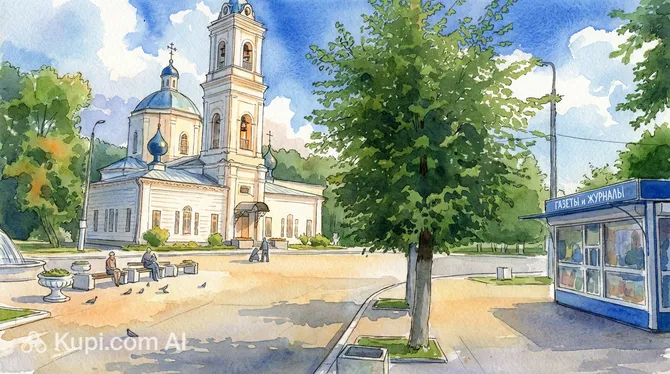
Tarusa. Illustration.
Source: Kupi.com AI

In Tarusa, a special atmosphere prevails, conducive to creativity and contemplation. Among the key attractions that draw tourists here are the Tsvetaeva Family House-Museum, where you can touch the life and work of the great poetess, and, of course, the Oka embankment itself, offering breathtaking views. It is also worth visiting local art galleries and ancient churches, which give the town a special charm.

If you are looking for a place for spiritual relaxation, inspiration, and an encounter with true Russian culture in its most peaceful manifestation, Tarusa will be a real discovery for you. Come to enjoy its tranquility, natural beauty, rich cultural heritage, and sincere hospitality!

You can find more interesting facts on the Tarusa city history page.

Weather Overview

In Tarusa, a moderate continental climate awaits you. Summer here is warm, with average temperatures in July and August around +18-19°C, while maximum values can reach +23°C. Summer precipitation, despite falling fairly often (especially in July, when there are up to 14 days with precipitation), is usually very light and sparse, with a monthly volume of no more than 2-3 mm.

Winters in Tarusa are cold, with the average temperature in January being around -6°C, and minimum values can drop to -8°C. December is the month with the highest number of days with precipitation (up to 16 days), however, these are mostly insignificant snowfalls, and the total amount of precipitation for the month rarely exceeds 2 mm. Spring and autumn are characterized by gradual temperature changes: March and October are usually cool, while May and September delight with milder weather. In general, expect a warm summer with frequent but very light rains, and cold winters with frequent but minor snowfalls, while the total amount of winter precipitation remains small. You can learn more about the Tarusa climate on a special page.

Average monthly temperature

Average monthly precipitation

Interesting Facts

In addition to its picturesque landscapes and famous literary connections, Tarusa holds many surprising stories and little-known details that make it a truly unique place. Ready to learn a few secrets of this charming town?

  • Many have heard of Tarusa as a town of the creative intelligentsia, but not everyone knows that it is often called the "Russian Montmartre." The town earned this nickname due to an incredible concentration of talent: Marina Tsvetaeva, Konstantin Paustovsky, Bella Akhmadulina, Sviatoslav Richter, and many others lived and worked here. Their house-museums remain cultural centers today, and artistic traditions continue in galleries, plein airs, and festivals.

  • The uniqueness of Tarusa lies in the fact that it was virtually untouched by the rapid industrialization of the 20th century. As Konstantin Paustovsky aptly noted, the town seemed to have "frozen" in the atmosphere of Imperial Russia, preserving to this day its charming wooden mansions, old merchant houses, and the slow pace of life that its famous residents so valued.

  • In Tarusa, there is a place steeped in legends—the famous Tsvetaeva Stone. It is believed that this was where Marina Tsvetaeva loved to retreat for reflection and creativity. Local lore says that if you sit on this stone and make a heartfelt wish, it will surely come true.

  • Despite its modest size, Tarusa boasts a surprisingly high concentration of house-museums. Many of the buildings where outstanding figures of art once lived and worked are carefully preserved and turned into memorial museums, turning a walk through the town into a true immersion in its rich cultural history.

How to Get There

There are several ways to reach Tarusa. Although the town itself does not have its own airport, travelers can use the major airports of Moscow or the regional airport in Kaluga. There is also a railway connection linking Tarusa and nearby towns to the country's transport network.

Among the air hubs, Moscow's airports are the most popular for trips to Tarusa. Domodedovo International Airport (DME), one of the largest in Russia, is about 90 km from Tarusa. A trip by car or taxi from here will take about 2-2.5 hours. Another significant capital option is Vnukovo International Airport (VKO), located at a distance of about 97 km. The travel time to Tarusa will be approximately 2.5-3 hours. The closest airport to Tarusa is Grabtsevo Airport (KLF) in Kaluga, about 55 km away. This is a small regional airport, from where you can reach Tarusa by taxi or bus (possibly with transfers) in approximately 1.5-2 hours.

For clarity, here is a summary of the main airports through which you can reach Tarusa:

AirportPassenger trafficDistance
Grabtsevo100 00055 km
Domodedovo15.6 mln90 km
Vnukovo16 mln97 km
Zhukovsky1.7 mln112 km
Sheremetyevo36.3 mln140 km

The railway connection is also a convenient way to reach Tarusa. The town is served by the Tarusskaya station, which is located about 15 km from its center. From the station to Tarusa, you can get by local bus or taxi in 20-30 minutes. For those who prefer larger railway hubs, the Serpukhov station can be an alternative. It is located in the town of the same name, about 30 km from Tarusa. Buses run regularly from Serpukhov to Tarusa, and taxi services are also available; the trip will take about 40-60 minutes.

For convenience, here is information on the railway stations that may be useful when planning a trip to Tarusa:

StationPassenger trafficDistance
Tarusskaya Station15 km
Aleksin Railway Station75 00025 km
Serpukhov Railway Station1.5 mln30 km
Yasnogorsk Railway Station43 km
Chekhov Railway Station52 km
Obninskoye Station1.5 mln54 km

From all mentioned transport hubs, you can reach Tarusa by taxi or public transport (buses), depending on your specific arrival point and preferences. It is also worth considering traveling by private car, as Tarusa has good road connections with neighboring regions.

Main Attractions

Tarusa, a charming town on the Oka, is famous for its rich cultural history and connection with famous figures of art and literature. A visit to Tarusa is an opportunity to experience the unique atmosphere of creative inspiration that has reigned here for many decades.

One of the main attractions is the Tsvetaeva Family House-Museum. This place is inextricably linked with the name of the great Russian poetess Marina Tsvetaeva and her family. Visitors can immerse themselves in the atmosphere of the early 20th century, see personal belongings, photographs, and documents telling the story of the Tsvetaevs' life and work in Tarusa. The museum attracts lovers of Russian literature and everyone interested in the history of the Silver Age.

No less iconic is the Konstantin Paustovsky Memorial House-Museum. The famous writer spent many years in Tarusa, and this town became a source of inspiration for him. In the museum, you can learn about the Tarusa period of Paustovsky's life, his friends, and creative plans, and see the environment in which he worked. This place is a must-visit for fans of the writer's work and those who want to feel the connection between literature and Russian nature.

For art lovers, the Tarusa Art Gallery is of great interest. Its collection includes works by artists whose lives and work were connected with Tarusa. The town has long attracted painters with its picturesque landscapes and special atmosphere, for which it is often called the "Russian Barbizon." A visit to the gallery will allow you to see how the beauty of Tarusa was reflected in the canvases of the masters.

An important spiritual and architectural monument of the town is the Cathedral of Peter and Paul. This beautiful church, built in the late 18th century in the Neoclassical style, is the dominant feature of the historical center of Tarusa. The cathedral is active, and its doors are open to believers and tourists wishing to admire its architecture and interior decoration, as well as to feel the peaceful atmosphere of this holy place.

Local Cuisine

The gastronomic scene of Tarusa is a true immersion in the traditions of Russian cuisine, where fresh, natural products play the main role. Here, the gifts of local nature are valued: fish from the Oka, forest berries and mushrooms, vegetables and fruits from the surrounding gardens and farms. Dishes are prepared home-style, with soul, preserving authentic flavors that attract lovers of simple and hearty food to Tarusa.

Be sure to try the famous Tarusa fish soup (ukha), cooked from freshly caught river fish—it is the town's signature dish. No less popular are hearty shchi with porcini mushrooms, fragrant pies with various fillings—from berries and apples to fish and cabbage, as well as homemade pickles, which are an excellent addition to any table. These dishes reflect the richness and generosity of the local land.

In local markets and small shops, you will find many delicacies: natural honey from surrounding apiaries, fragrant forest berry jam, very fresh homemade cheeses, and cottage cheese. In summer, the counters abound with juicy apples and pears from local orchards. This is a great opportunity to take a piece of Tarusa's flavor with you and enjoy natural products.

For a quick snack, traditional Russian pirozhki with various fillings and golden blini (pancakes) are perfect, and can be found in street cafes. In cold weather, warm up with hot sbiten—an ancient Russian non-alcoholic drink based on honey and spices. During holidays and fairs, locals often offer homemade liqueurs prepared according to old recipes, allowing for a deeper acquaintance with local traditions.

You can eat in Tarusa in cozy cafes and family restaurants where a warm, welcoming atmosphere reigns. Many establishments focus specifically on traditional Russian cuisine. The town is also known for its gastronomic festivals, especially autumn fairs and honey festivals, where you can not only try various dishes but also plunge into the atmosphere of a real celebration of taste and purchase products from local farmers.

Travel Tips

Planning a trip to charming Tarusa? This cozy town on the banks of the Oka captivates with its atmosphere, but to make your trip as comfortable as possible, we have prepared some practical tips.

  1. Clothing and items for the season:

    The climate in Tarusa is moderate continental. In summer, take light clothing, but don't forget a sweater or windbreaker for evening walks and in case of rain. In winter, you'll need warm layered clothing, including a hat, gloves, and a scarf. In spring and autumn, a mid-season jacket is ideal. The key point is comfortable shoes, as the town is hilly with many cobblestones, and you will surely want to walk a lot. Don't forget sunglasses and sunscreen in summer, as well as mosquito repellent, especially if you plan to spend time by the river. When visiting churches, such as the Cathedral of Peter and Paul, women are recommended to have a scarf to cover their heads and clothes that cover shoulders and knees; men should wear trousers.

  2. Getting around the town:

    Tarusa is a small town, and the best way to explore it is on foot. This way you can enjoy its slow pace and picturesque streets. Public transport within the town is not well-developed. For trips to the surroundings or to Kaluga, you can use local buses. Taxis can be called by phone (find out the numbers of local services upon arrival) or try using popular apps if they are available in the region. Car rental is not necessary for exploring Tarusa itself, but it can be useful if you plan to travel actively around the Kaluga Region.

  3. Financial matters:

    The local currency is the Russian ruble (RUB). It is recommended to have enough cash with you, as not all small shops or private souvenir sellers can accept cards. Russian bank cards are accepted in most hotels, restaurants, and large stores. The possibility of using cards from international payment systems may be limited, so it's better to clarify this point in advance and have alternative payment methods. There are ATMs in Tarusa, but their number is small. Tips in cafes and restaurants are usually 5-10% of the bill and are left at your discretion if you enjoyed the service.

  4. Health and safety:

    Tarusa is a very quiet and safe town. Nevertheless, standard precautions won't hurt: keep an eye on personal belongings, especially in crowded places. There are pharmacies in the town, but there may not be any open 24/7, so it's better to take a small supply of necessary medications with you. If medical assistance is needed, you can contact the local hospital or clinic. Tourists from other countries are recommended to have valid health insurance.

  5. Communication and internet:

    The main language of communication is Russian. English is not widely spoken, mostly by staff in some hotels or museums. Learn a few basic Russian phrases: "Здравствуйте" (Zdravstvuyte - Hello), "Спасибо" (Spasibo - Thank you), "Пожалуйста" (Pozhaluysta - Please/You're welcome), "Сколько стоит?" (Skol'ko stoit? - How much does it cost?). For mobile communication, you can purchase a SIM card from one of the Russian operators (a passport may be required). Wi-Fi is available in most hotels and some cafes. Mobile internet usually works well.

  6. Local etiquette:

    Residents of Tarusa are generally hospitable and friendly, though they may seem reserved upon first meeting. Respectful attitude toward the older generation is valued. It is customary to take off outdoor shoes when entering a house. In public places, behave with restraint and keep the area clean. Loud talking or noisy behavior may be perceived negatively.

  7. What to avoid:

    Try not to photograph locals without their prior consent, especially older people. Also, avoid dismissive or overly critical remarks about the local way of life, traditions, or history—this may offend your interlocutor.

  8. Special tip for Tarusa:

    Be sure to visit the local market if it is open during your visit—there you can find fresh produce, unique handmade souvenirs, and feel the local flavor. Tarusa is known for its artistic traditions, so pay attention to paintings, ceramics, and other works by local masters. And, of course, don't miss the opportunity to walk along the picturesque Oka embankment, especially at sunrise or sunset—the views from there are simply magical!

We hope these tips help you better prepare for your trip and get the most out of your stay in hospitable Tarusa. Have a safe journey and bright impressions!

Entertainment & Nightlife

Tarusa, a charming town on the banks of the Oka, offers its guests a calm and peaceful holiday, and its evening life fully corresponds to this mood. Here you won't find noisy nightclubs or blocks packed with bars like in megacities. Instead, Tarusa invites you to take leisurely walks under the stars and have heartfelt conversations in cozy venues.

The main places where you can spend a pleasant evening are concentrated in the town center, especially on the streets adjacent to the main square and, of course, on the picturesque Oka embankment. This is where cafes and restaurants operating in the evening are located. There are no specialized nightlife districts in Tarusa, which emphasizes its intimate and soulful character.

The atmosphere of evening Tarusa is, above all, tranquility and coziness. The public here values quiet rest, the opportunity for leisurely conversations, and enjoying the beauty of the surrounding nature even after dusk. Local establishments usually stay open until late evening, especially during the peak tourist season (summer months) and on weekends. There is no strict dress code; the main principle is comfort. Some cafes may delight guests with live music or intimate themed evenings.

The nightlife in Tarusa has its own special charm. The town offers to spend the evening in atmospheric restaurants or cozy cafes. Among the places where you can have a pleasant evening, guests often mention, for example, the "Tarusskoye Vremya" (Tarusa Time) cafe, known for its soulful atmosphere, or the "Yakor" (Anchor) restaurant, which offers a beautiful view of the Oka. You can also take note of the "Palitra" (Palette) cafe, which is often praised for its cuisine and coziness. Since menus, opening hours, and evening programs can change, we recommend checking current information and reading recent reviews before visiting, especially if you are looking for something specific, such as local cuisine or live music.

If you are planning an evening program, the best time for it is the warm summer months and weekends, when the town is most lively. Prices in local cafes and restaurants are generally quite moderate. Tarusa is a small town, and many interesting places are easily accessible on foot. If you need a taxi late at night, we recommend ordering it in advance, as the number of available cars may be limited, especially in the low season.

Tarusa is considered a safe town for walking, including in the evening, especially if you stick to the central and well-lit streets. Nevertheless, as in any journey, it's worth taking standard precautions. The friendliness of the locals and the overall relaxed atmosphere contribute to a calm and pleasant stay.

During the day, Tarusa offers its guests a rich cultural program. You can visit iconic places such as the Tsvetaeva Family House-Museum, the Tarusa Art Gallery, or the Paustovsky House-Museum. Leisurely walks along the colorful streets, relaxing in the shady town parks or on the banks of the Oka will also bring many positive emotions. Fans of more active pastimes can consider hiking or cycling routes through the picturesque surroundings of the town.

Parks & Museums

Tarusa, comfortably situated on the banks of the Oka, offers its guests a harmonious combination of picturesque natural corners and rich cultural heritage. This town seems to be created for leisurely walks, discoveries, and inspiration, largely thanks to its green zones and iconic museums.

The main natural artery and point of attraction in Tarusa is undoubtedly the Oka River embankment. Walks along its banks offer peace and magnificent views, especially at sunset. Here you can simply sit, admiring the flow of water, or have a small picnic. The Town Garden and other squares also offer pleasant places for outdoor relaxation, where you can hide from the summer heat and enjoy the silence.

The cultural life of Tarusa is unthinkable without its famous literary museums. The Tsvetaeva Family Museum is not just an exhibition, but a true immersion into the atmosphere of the early 20th century. Here, among authentic items and recreated interiors, you can feel the spirit of the time and understand how the Tarusa land nurtured the creativity of Marina Tsvetaeva and her loved ones. Visiting the museum allows you not so much to learn biographical facts but to experience the daily life and creative aura of the legendary family.

No less attractive is the Konstantin Paustovsky Memorial House-Museum. This is a place where the beauty of nature and the literary word merge into one. The house itself, surrounded by a garden that the writer lovingly tended, is a living testament to his deep connection with Tarusa. The exhibition emphasizes how the surrounding landscapes, silence, and measured way of life inspired Paustovsky to create his poignant works. A walk through the estate provides an opportunity to see the world through the writer's eyes.

For lovers of visual arts, the Tarusa Art Gallery is a must-visit. Its collection is a kind of artistic chronicle of the town and its surroundings. It features canvases celebrating the picturesque bends of the Oka, cozy streets, and portraits of people connected with Tarusa. The gallery allows you to see how this small town inspired and continues to inspire artists of different generations and to trace the development of local artistic traditions.

The historical appearance of Tarusa is complemented by the majestic Cathedral of Peter and Paul, an important architectural landmark of the town. And a walk through the old streets with their characteristic wooden houses decorated with intricate carvings becomes a fascinating excursion into the past in itself, allowing you to feel the unique atmosphere of a Russian merchant province.

To deeper penetrate the spirit of Tarusa, do not limit yourself to only the most famous routes. Pay attention to small monuments, such as the monument to Bella Akhmadulina or Marina Tsvetaeva, scattered throughout the town, look into quiet courtyards, and just enjoy the slow pace of life that so many creative personalities valued here.

Getting Around

Getting around Tarusa is quite simple, given its compact size. Public transport here is not very diverse, but it manages the task of moving around the town and its immediate surroundings quite well.

The main form of public transport in Tarusa is buses. They run on several routes, connecting the town center with its various parts. You may also encounter fixed-route taxis (marshrutkas), which often duplicate bus routes or offer faster travel options to popular destinations. There are no metros, trams, or trolleybuses in Tarusa, which is typical for small towns.

The payment system in Tarusa is generally simple. Bus tickets are usually purchased directly from the driver or conductor upon boarding. Payment is most often made in cash, so tourists are recommended to have small bills and coins with them. The fare is usually low and fixed within the town. Specialized tourist passes or complex systems with transport cards and mobile apps for payment are generally not provided in small towns.

Buses in Tarusa usually start running from early morning and finish in the evening. Service intervals can vary depending on the route and time of day; buses run more frequently during peak hours. On weekends and holidays, the schedule may change, and the number of trips may be reduced. It is best to check schedule information at stops or with locals. Ticket validation happens upon purchase, unless special punchers are provided (which is unlikely).

As an alternative to public transport in Tarusa, you can always use taxi services. Both local taxi companies and aggregators through mobile apps may be available in the town. Given the small size of Tarusa, many distances can easily be covered on foot, while enjoying a walk through the picturesque streets. In the warm season, bicycle rental may be available, which would be an excellent way for a leisurely introduction to the town and its surroundings.

Accommodation

In Tarusa, travelers will find various accommodation options to suit different tastes and budgets. The town offers a choice from cozy guest houses and small private hotels to rooms for rent, apartments, and entire houses in the private sector, which is especially popular among families and groups.

Most housing options are concentrated in the central part of the town, from where it is easy to reach the main attractions, the Oka river embankment, and cafes. Options located in quiet side streets offering a more secluded holiday are also popular. The choice of a specific area depends on your preferences: proximity to the lively center or the peace of the outskirts.

Since Tarusa is a popular destination, especially in the summer, on weekends and holidays, it is highly recommended to book accommodation in advance. This will allow you to choose the best option in terms of price and quality and avoid the lack of vacancies upon arrival.

The price range for accommodation in Tarusa is quite wide: from budget rooms to more expensive and comfortable cottages or hotel rooms with good service. You can book accommodation through popular online booking platforms, which feature a large selection of options with reviews and photos, or by contacting the owners of guest houses and apartments directly, which sometimes allows you to find better deals.

Nearby Cities

For those who want to explore the surroundings, Tarusa serves as an excellent starting point for day trips to several interesting nearby places:

Among the closest cities you can visit in one day, Serpukhov, Chekhov, and Obninsk particularly stand out. Serpukhov, located just 27 km away, attracts with its rich history, remnants of an ancient kremlin, and significant spiritual centers such as the Vysotsky and Vvedensky Vladychny monasteries. A trip to Chekhov (51 km) will be a real gift for lovers of Russian literature, as it is here that the famous Melikhovo estate of A.P. Chekhov is located, where the writer created many of his famous works. Obninsk (57 km), known as Russia's first science city, offers a unique opportunity to touch the history of national science and technology—for example, to learn more about the world's first nuclear power plant, which was launched right here.

CityPopulationDistance
Protvino35 80717 km
Aleksin57 89225 km
Serpukhov125 81727 km
Pushchino21 28132 km
Yasnogorsk15 70644 km

These nearby destinations provide an insight into the diverse culture, history, and landscapes of the region, complementing the experience of visiting Tarusa.

Shopping & Souvenirs

Tarusa, a charming town with a rich cultural history, offers its guests a leisurely search for authentic items rather than busy shopping in large shopping centers. Here you won't find a wealth of global brand boutiques, but you can purchase unique works by local craftsmen and souvenirs that carry the warmth of this cozy place. The town is famous for its artistic traditions, and this is reflected in the assortment of local shops.

The main shopping opportunities in Tarusa are concentrated in the central part of the town. Walking along the main streets, such as Lenin Street or Lenin Square, you will find small shops, souvenir stalls, and outlets selling folk crafts. This is where you can find the most interesting and original goods.

There are no large modern shopping centers in Tarusa, which matches its intimate atmosphere. Shopping here is more about the pleasure of visiting small, cozy shops and talking to the sellers than a trip to multi-story malls. Instead, attention should be paid to local galleries and art salons, where works by Tarusa artists and artisans are often sold.

There may be a town market in Tarusa where you can buy fresh local products—vegetables, fruits, dairy products, and honey. Sometimes at the market or at temporary fairs, locals sell handmade items, knitted goods, and souvenirs. This is a great place to feel the local flavor and buy something truly Tarusan.

From Tarusa, it is worth bringing back souvenirs reflecting its creative spirit. Pay attention to:

  • Tarusa embroidery: famous patterns decorating tablecloths, towels, and clothing.
  • Ceramic and clay items: local masters create beautiful tableware and decorative items.
  • Paintings and watercolors: works by local artists inspired by the beauty of Tarusa's nature.
  • Books and postcards: related to the names of Marina Tsvetaeva, Konstantin Paustovsky, and other cultural figures whose lives were connected with Tarusa.
  • Woodwork and other folk crafts.

Most shops in Tarusa operate on a standard schedule: from approximately 10:00 to 18:00 or 19:00. Some small shops may close for a lunch break. On weekends, working hours may be reduced. Regarding payment, most stores accept bank cards (especially the "Mir" system), but at the market or in small souvenir points, it's better to have cash with you.

The possibility of Tax Free for tourists in small towns like Tarusa is generally not common and is mainly oriented toward large retail chains in big cities of Russia. Therefore, you should usually not count on a tax refund when shopping in Tarusa.

Reached the end of the page?

That means the route is fully explored